Loading...
Manuel Quezon vs Napoleon Bonaparte
Napoleon Bonaparte leads by 18.6 pts · 2 figures compared
…
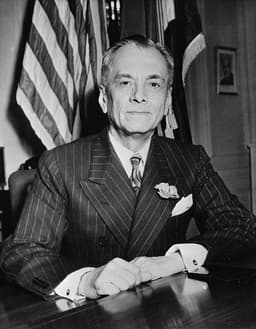
Manuel Quezon
Politician · Modern
52.3Total

Napoleon Bonaparte
General · Modern
70.9Total
Basic Information
Born
1878
1769
Died
1944
1821
Era
Modern
Modern
Nationality
Philippines
France
Occupation
Politician
General
Civilization
Eastern
Western
Score Comparison
Military (10%)
18.8
94.0
Political (20%)
55.0
72.0
Influence (20%)
55.0
40.0
Legacy (20%)
56.0
80.0
Leadership (15%)
72.0
78.0
Strategy (15%)
36.4
90.0
TOTAL
52.3
70.9
Manuel Quezon — Complete Timeline
1935 AD
Approved the National Defense Act of 1935Reform◆ Major
Quezon signed the National Defense Act, creating the Philippine Army under General Douglas MacArthur. The act established a system of military training and reserves to prepare the Philippines for self-defense after independence.
National DefenseMilitaryMacArthur
Impact: nationalconstructive
Elected President of the Philippine CommonwealthPolitical Action
Quezon was elected as the first president of the Philippine Commonwealth under the Tydings-McDuffie Act, which established a ten-year transition period to full independence from the United States. His administration focused on national defense, social justice, and economic development.
Philippine CommonwealthIndependenceElection
Impact: nationalconstructive
1936 AD
Implemented the Social Justice ProgramReform◆ Major
Quezon launched a social justice program that included land reform, minimum wage laws, and the creation of the Court of Industrial Relations. The program aimed to address rural poverty and labor exploitation but faced implementation challenges.
Social JusticeLand ReformLabor
Impact: nationalprogressive
1937 AD
Established the National Language InstituteCultural◆ Major
Quezon created the National Language Institute to develop a national language based on Tagalog. This decision promoted national unity but sparked debates over linguistic diversity and regional representation.
National LanguageTagalogCultural Policy
Impact: nationalconstructive
1942 AD
Fled to the United States during Japanese OccupationPolitical Action◆ Major
After the Japanese invasion of the Philippines, Quezon evacuated to the United States to lead the Philippine government-in-exile. He continued to advocate for Philippine independence and Allied support from Washington, D.C.
World War IIExileJapanese Occupation
Impact: nationaltragic
1944 AD
Signed the Philippine Rehabilitation Act (Tydings–McDuffie Act amendments)Political Action◆ Major
Quezon negotiated with the U.S. Congress for post-war rehabilitation funds, resulting in the Philippine Rehabilitation Act. The act provided financial aid for reconstruction after the war, though Quezon died before its full implementation.
RehabilitationU.S. RelationsPost-War
Impact: nationalconstructive
Napoleon Bonaparte — Complete Timeline
1799 AD
Coup of 18 BrumaireOther◆ Major
Napoleon Bonaparte, with support from his brother Lucien and key political figures, overthrew the Directory in a bloodless coup. He established the Consulate with himself as First Consul, effectively becoming the ruler of France. This event ended the French Revolution's most unstable period.
French RevolutionCoupRise to Power
Impact: regional
1804 AD
Promulgation of the Napoleonic CodeOther◆ Major
Napoleon enacted the Civil Code of the French, known as the Napoleonic Code, a comprehensive set of laws that replaced the fragmented feudal legal systems. The code established legal equality, protected property rights, and secularized law. It became the basis for legal systems in many European and world countries.
Legal ReformNapoleonic CodeCivil Law
Impact: globalconstructive
1805 AD
Battle of AusterlitzWar◆ Major
Napoleon's Grande Arm
Napoleonic WarsBattleDecisive Victory
Impact: global
1812 AD
Invasion of RussiaWar◆ Major
Napoleon led the Grande Arm
Napoleonic WarsInvasionDisaster
Impact: globaldestructive
1815 AD
Battle of WaterlooWar◆ Major
Napoleon's French army was defeated by the combined forces of the Duke of Wellington's Anglo-Allied army and Gebhard Leberecht von Bl
Napoleonic WarsBattleFinal Defeat
Impact: globaldestructive
Expert Analysis
manuel-quezon-vs-napoleon-bonaparte
# The Emperor and the Exile
On a June morning in 1815, Napoleon Bonaparte watched his imperial guard crumble under the combined fire of Wellington’s infantry and Blücher’s arriving Prussians at Waterloo. Less than a decade earlier, he had stood atop the Marengo battlefield, a young general whose name already made kings tremble. Across the world and a century later, in 1942, Manuel Quezon boarded a submarine off the coast of the Philippines, fleeing the Japanese invasion that would consume his fragile commonwealth. One man conquered continents; the other could not hold his own archipelago. Yet both shaped the modern world in ways that still echo. Why did one end in exile on a remote Atlantic island and the other in exile in a Washington hotel? The answer lies not merely in their ambitions, but in the worlds that forged them.
Origins
Born in 1769 on the Mediterranean island of Corsica, Napoleon entered a France trembling on the edge of revolution. His family was minor nobility, his education paid for by the French state, and his identity a tangled knot of Corsican resentment and French ambition. The Revolution of 1789 shattered the old order and opened paths unimaginable under the Bourbon monarchy. A young artillery officer with talent and no patience for aristocratic privilege could rise—and rise fast.
Manuel Quezon, born in 1878 in the town of Baler on the island of Luzon, grew up under Spanish colonial rule. His father was a schoolteacher, his mother a devout Catholic, and his world was one of subjugation. When the Philippine Revolution broke out in 1896, Quezon was still a law student. By the time the United States defeated Spain and took control of the archipelago in 1898, he had learned a bitter lesson: small nations do not choose their masters. His generation’s great task was not conquest but negotiation—wringing independence from foreign powers who held all the cards.
Napoleon’s France was the strongest state on the European continent, armed with revolutionary fervor and the largest army in the West. Quezon’s Philippines was a colony with no army, no navy, and no seat at the table of great powers. The difference in their starting points was not just personal but structural: one man inherited a cannon, the other a petition.
Rise to Power
Napoleon’s ascent was a masterpiece of military audacity and political opportunism. In 1795, he dispersed a royalist mob in Paris with a “whiff of grapeshot,” earning the gratitude of the revolutionary government. By 1796, at age twenty-six, he commanded the Army of Italy and proceeded to smash Austrian forces in a campaign that still dazzles military historians. His 1798 Egyptian expedition, though a strategic failure, made him a legend. In 1799, he returned to a France weary of corruption and instability, staged a coup, and made himself First Consul. By 1804, he crowned himself Emperor.
Quezon rose through the machinery of colonial politics. He served as a provincial governor, then as a representative to the U.S.-controlled Philippine Assembly. In 1916, the Jones Law promised eventual independence, and Quezon maneuvered to become the dominant figure in Philippine politics. His path was not one of battlefield glory but of legislative cunning, backroom deals, and careful cultivation of American patrons. When the Tydings-McDuffie Act of 1934 established the Philippine Commonwealth, Quezon was the natural choice for its first president in 1935. He did not storm a capital; he waited for one to be handed to him.
Leadership & Governance
Napoleon governed with the same energy he brought to war. He centralized the French state, created the Bank of France, established the Napoleonic Code—a legal framework that still underpins civil law across Europe and beyond—and reformed education. His military genius, with a Strategy score of 93 and Military score of 94, was undeniable. He could read a battlefield, exploit an enemy’s weakness, and inspire men to die for his eagles. But his Political score of 75 reflects a fatal flaw: he could not stop. Victory demanded more victory. Each conquest bred new enemies, and his system of rule depended on his personal presence. When he was absent, the empire crumbled.
Quezon’s governance was a study in compromise. His Political score of 82.6 reflects his skill in navigating the impossible: preparing a nation for independence while still answering to Washington. In 1935, he approved the National Defense Act, creating the Philippine Army under General Douglas MacArthur—a force that would prove tragically inadequate against Japan. In 1936, he launched a Social Justice Program, redistributing land, setting minimum wages, and establishing labor courts. In 1937, he created the National Language Institute, choosing Tagalog as the basis for a unified national tongue. These were not the acts of a conqueror but of a builder, laying foundations for a nation that did not yet fully exist.
Triumph & Tragedy
Napoleon’s greatest moment came at Austerlitz in 1805, where he destroyed a combined Russian-Austrian army and ended the Holy Roman Empire. His greatest tragedy was the 1812 invasion of Russia, where he lost half a million men to winter, distance, and guerrilla warfare. He never recovered. Exiled to Elba in 1814, he returned for a Hundred Days in 1815, only to meet final defeat at Waterloo. He died in 1821 on Saint Helena, a British prisoner, at age fifty-one.
Quezon’s triumph was the peaceful establishment of the Commonwealth itself—a transition from colony to self-rule that, by 1937, had no precedent in Asia. His tragedy came with the Japanese invasion of 1941. The Philippine Army, despite MacArthur’s training, collapsed. Quezon evacuated to the United States in 1942, leading a government in exile from Washington. In 1944, he negotiated the Philippine Rehabilitation Act, securing post-war funds from the U.S. Congress. But he never saw his homeland free. He died that same year, in exile, at age sixty-five.
Character & Destiny
Napoleon believed he was destiny. “I am not a man,” he once said, “but a thing.” His ambition was boundless, his will iron, his ego absolute. He could not share power, could not accept limits, could not build lasting alliances. His character drove him to conquer Europe—and to lose it. His Leadership score of 80 is strong, but his strategy was ultimately self-defeating: he won battles but lost the peace.
Quezon was a pragmatist. He knew the limits of his power. “I would rather have a government run like hell by Filipinos,” he once said, “than a government run like heaven by Americans.” He understood that independence was not a gift but a process. His Leadership score of 71.8 reflects a man who led not by crushing enemies but by persuading friends and managing patrons. He was not a Napoleon; he was a navigator, steering a small ship through a storm of empires.
Legacy
Napoleon’s legacy is written across Europe: the Code, the centralized state, the metric system, the very idea of the modern nation-state. His Influence score of 82 and Legacy score of 78 place him among the giants of history. But he also left a trail of war, destruction, and reaction. The Congress of Vienna that followed his defeat tried to erase him—and failed.
Quezon’s legacy is less visible but no less real. The Philippine Commonwealth became the independent Republic in 1946, a year after his death. The national language he championed, Filipino, is spoken by millions. His social reforms, though incomplete, set a standard for post-colonial governance. His Influence score of 68.8 and Legacy score of 66.6 reflect a quieter but enduring impact. He is remembered not as a conqueror but as a father of his nation.
Conclusion
Napoleon and Quezon never met, never corresponded, never shared a world. One commanded armies that reshaped a continent; the other led a government in exile that could not defend its own capital. Yet both faced the same fundamental question: what does it mean to lead when the forces around you are larger than yourself? Napoleon answered with war, Quezon with patience. One died in a cage of rock and ocean, the other in a hotel room far from home. Their lives remind us that history is not a contest of scores but a drama of circumstances. The great man theory of history is a myth; the great man is always, first, a child of his time. Napoleon’s time gave him an empire to win. Quezon’s gave him a nation to build. Both did what they could with what they had—and that, perhaps, is the only measure that matters.
Rankings
🥇
Napoleon BonaparteLeader
Mil: 94.0Pol: 72.0Inf: 40.0
70.9
🥈
Manuel Quezon
Mil: 18.8Pol: 55.0Inf: 55.0
52.3
+18.6 behind
How This Comparison Works
Algorithm
Each figure is scored on 6 dimensions (0—100 scale) based on structured historical data: Military (10%), Political (20%), Influence (20%), Legacy (20%), Leadership (15%), Strategy (15%). The weighted total produces the final ranking.
Data Sources
Scores are computed from structured sub-indicators in the database. Scale factors adjust for era (Ancient ×0.85, Modern ×1.0) and civilization size (Eastern ×1.05, Other ×0.80) to account for differences in population and military scale.
Maximum 3 Figures
Comparisons are limited to 2—3 figures to ensure readability and statistical meaningfulness.
Error Margins
±5 points per dimension — Sub-scores are derived from historical records with inherent uncertainty. Two figures within 5 points on a dimension should be considered roughly equivalent in that area.
Total Score Accuracy
±3 points overall — The weighted combination of 6 dimensions produces a total score with approximately ±3 points of uncertainty. Differences of less than 3 points are not statistically significant— the figures are effectively tied.
Known Limitations
- Historical records are incomplete and uneven across civilizations
- Figures from oral-tradition societies may be underrepresented
- Occupation labels can misclassify multi-role figures
- Scores measure capability and impact, not moral character
- Quantitative scoring is a comparison tool, not absolute truth
Capability Radar
Military (10%) — Battles & Warfare
Battles
13
95
Win Rate
16
90
Expansion
18
95
Political (20%) — Governance & Reform
Reform
70
95
Diplomacy
75
80
Economy
55
85
Influence (20%) — Cultural & Global Reach
Cultural
60
85
Global
55
90
Legacy (20%) — Historical Impact
Historical
65
95
Longevity
55
90
Leadership (15%) — Power & Stability
Tenure
65
85
Stability
60
70
Strategy (15%) — Tactics & Innovation
Strategy
23
95
Tactics
25
98
Reform
28
92
Similar Comparisons
Comments & Discussion
战史刀客6/17/2026
拿破仑在滑铁卢的错误根本不是战术失误,而是迷信了老近卫军的不可战胜。魁松呢?1941年马尼拉陷落前,他还在美国国会演讲要"准备战斗",转头就坐潜艇跑路。这就是大帝和外岛政客的本质差别——一个死战不降,一个拿美国支票当庇护所。|
DataSkeptic6/17/2026
Quezon's Philippines had 52 million in US aid pre-WWII versus Napoleon's 600,000-man Grande Armée. Apples to oranges. One commanded industrial economies; the other begged. Comparison's laughable. But if we're ranking, Napoleon's occupation of Egypt (1798) shaped modern Middle East; Quezon's 1935 Commonwealth created zero global ripples.|
海战史疯子6/17/2026
拿破仑在特拉法尔加输掉法国海军时,完全不理解制海权,这是一个陆地思维者的致命漏洞。魁松在1942年逃亡时,至少明白菲律宾是岛屿,靠海岸线撑不住——所以他跑路美国来求救反攻。一个是不懂海的欧陆征服者,一个是认命的海岛孤儿。拿破仑的失败是史诗级的傲慢,魁松的失败是殖民地的宿命。|
冷战观察家6/17/2026
拿破仑的滑铁卢是军事史上的教科书,但魁松的逃离其实更符合现代殖民模式——当菲律宾游击队独自抗日时,这位"总统"在华盛顿玩政治游戏,靠承诺反攻换取美国贷款。魁松比拿破仑精明太多:拿破仑坚持到最后才投降,魁松早早就知道帝国伞兵不会来救他。政治生存术上,魁松赢了。|
Historian1126/17/2026
Both ended in exile, but Napoleon's St. Helena vs. Quezon's Washington hotel tells everything. The Corsican was shackled by the British navy; the Filipino died in a luxury suite. Napoleon reshaped Europe with the Civil Code; Quezon left a constitution so flawed the Americans had to rewrite it in 1946. One's legacy is granite; the other's, wet sand.|
RomanRes6/17/2026
Waterloo was won by Wellington and Blucher, not Napoleon's incompetence—he actually outperformed his enemies tactically that day. Quezon fled to the U.S. like a colonial administrator running from his own people's mobilizing revolution. Napoleon built an empire that rewrote European law; Quezon couldn't even secure Philippine neutrality. The difference? One gambled on destiny, the other on American pity.|