Loading...
Mangosuthu Buthelezi vs Napoleon Bonaparte
Napoleon Bonaparte leads by 15.6 pts · 2 figures compared
…
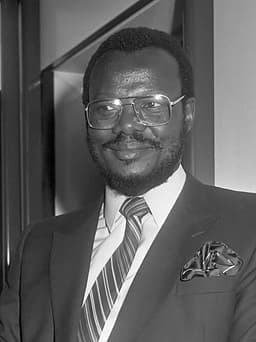
Mangosuthu Buthelezi
Politician · Modern
55.3Total

Napoleon Bonaparte
General · Modern
70.9Total
Basic Information
Born
1928
1769
Died
—
1821
Era
Modern
Modern
Nationality
South Africa
France
Occupation
Politician
General
Civilization
Other
Western
Score Comparison
Military (10%)
34.9
94.0
Political (20%)
61.3
72.0
Influence (20%)
59.0
40.0
Legacy (20%)
49.2
80.0
Leadership (15%)
68.0
78.0
Strategy (15%)
53.8
90.0
TOTAL
55.3
70.9
Mangosuthu Buthelezi — Complete Timeline
1975 AD
Founded Inkatha Freedom PartyPolitical Action◆ Major
Buthelezi revived the Zulu cultural movement Inkatha as a political party, the Inkatha Freedom Party (IFP). He positioned it as a moderate alternative to the ANC, advocating for federalism and Zulu autonomy within a democratic South Africa.
InkathaZuluPolitical Party
Impact: nationalconstructive
1976 AD
Chief Minister of KwaZulu BantustanPolitical Action◆ Major
Buthelezi became Chief Minister of the KwaZulu bantustan, a nominally self-governing territory under apartheid. He used this position to resist incorporation into South Africa while cooperating with the system, a stance criticized by anti-apartheid activists.
BantustanApartheidZulu
Impact: regional
1990 AD
IFP-ANC Violence EscalationWar◆ Major
Following the unbanning of the ANC, violent conflict erupted between IFP and ANC supporters in KwaZulu-Natal and the Transvaal, resulting in thousands of deaths. Buthelezi's IFP was accused of collaborating with apartheid security forces.
Political ViolenceTransitionZulu
Impact: nationaldestructive
1994 AD
Participated in 1994 ElectionsPolitical Action◆ Major
Buthelezi agreed to participate in South Africa's first democratic elections after last-minute negotiations, allowing the IFP to be included on the ballot. The IFP won 10.5% of the vote, and Buthelezi became Minister of Home Affairs.
ElectionsTransitionDemocracy
Impact: nationalconstructive
Napoleon Bonaparte — Complete Timeline
1799 AD
Coup of 18 BrumaireOther◆ Major
Napoleon Bonaparte, with support from his brother Lucien and key political figures, overthrew the Directory in a bloodless coup. He established the Consulate with himself as First Consul, effectively becoming the ruler of France. This event ended the French Revolution's most unstable period.
French RevolutionCoupRise to Power
Impact: regional
1804 AD
Promulgation of the Napoleonic CodeOther◆ Major
Napoleon enacted the Civil Code of the French, known as the Napoleonic Code, a comprehensive set of laws that replaced the fragmented feudal legal systems. The code established legal equality, protected property rights, and secularized law. It became the basis for legal systems in many European and world countries.
Legal ReformNapoleonic CodeCivil Law
Impact: globalconstructive
1805 AD
Battle of AusterlitzWar◆ Major
Napoleon's Grande Arm
Napoleonic WarsBattleDecisive Victory
Impact: global
1812 AD
Invasion of RussiaWar◆ Major
Napoleon led the Grande Arm
Napoleonic WarsInvasionDisaster
Impact: globaldestructive
1815 AD
Battle of WaterlooWar◆ Major
Napoleon's French army was defeated by the combined forces of the Duke of Wellington's Anglo-Allied army and Gebhard Leberecht von Bl
Napoleonic WarsBattleFinal Defeat
Impact: globaldestructive
Expert Analysis
mangosuthu-buthelezi-vs-napoleon-bonaparte
# The Emperor and the Chief: Two Visions of Power in a World Transformed
In the winter of 1796, a twenty-six-year-old artillery officer from Corsica stood before the ragged, starving Army of Italy and promised his men glory, riches, and honor. Two centuries later, in the heat of a South African summer in 1994, a Zulu chief in a dark suit stood before a television camera and made a different kind of promise: not conquest, but participation; not empire, but a place at the table. Napoleon Bonaparte and Mangosuthu Buthelezi never met, never fought, never shared a continent or a century. Yet both men faced the same fundamental question: when history cracks open, how do you seize the moment without being crushed by it? Their answers could not have been more different, and the difference reveals something profound about power, personality, and the strange mathematics of fate.
Origins
Napoleon was born into the minor Corsican nobility in 1769, a year after the island was sold to France by Genoa. His family was neither wealthy nor influential, but they were ambitious. His father, Carlo, maneuvered his way into French favor, securing a scholarship for young Napoleon to attend military school in mainland France. There, the boy with the thick Italian accent was mocked by his aristocratic classmates for his poverty and his provincial origins. He devoured books on military history, on the campaigns of Alexander and Caesar, on the art of siege warfare. He was a loner, proud, resentful, and burning with a cold fire that would one day consume Europe.
Mangosuthu Buthelezi was born in 1928 into the Zulu royal family, a prince of a people who had once defied the British Empire. His grandfather was King Dinuzulu, who had led the Zulu rebellion of 1906. His uncle was King Solomon kaDinuzulu. Buthelezi grew up in the shadow of a conquered kingdom, in a South Africa where his people were stripped of land, dignity, and political power. He was educated at Fort Hare University, the same institution that produced Nelson Mandela and Robert Mugabe, where he studied history and politics. He understood, from boyhood, that the Zulu nation was a memory waiting to be reborn—but that rebirth would have to happen in a world that no longer allowed kings to ride into battle with spears.
Rise to Power
Napoleon’s rise was a whirlwind. In 1793, he was a captain in the revolutionary army when the royalist port of Toulon rebelled against the Republic. The British fleet anchored in the harbor. The French generals dithered. Napoleon, then only twenty-four, saw the solution: a battery of artillery placed on a hill overlooking the harbor, shelling the British ships until they fled. He was promoted to brigadier general overnight. In 1795, when a royalist mob threatened the revolutionary government in Paris, Napoleon ordered his cannons to fire grapeshot into the crowd—the “whiff of grapeshot” that saved the Directory and made him a national hero. By 1799, he was First Consul, the effective dictator of France. He was thirty years old.
Buthelezi’s path was slower, more cautious, more constrained by the brutal realities of apartheid. In 1975, he revived the Zulu cultural movement Inkatha as a political party, the Inkatha Freedom Party (IFP). The following year, he became Chief Minister of the KwaZulu bantustan, a nominally self-governing territory carved out by the apartheid regime. This was a poisoned gift: the bantustans were designed to fragment black South Africans, to deny them citizenship in a unified country. But Buthelezi accepted the position, arguing that he could use the platform to defend Zulu interests and resist apartheid from within. Critics called him a collaborator. He called himself a pragmatist. The truth, as always, was somewhere in between.
Leadership & Governance
Napoleon ruled like a force of nature. He reorganized French law into the Napoleonic Code, a rational, secular system that abolished feudal privileges and enshrined equality before the law—at least for men. He created the Bank of France, stabilized the currency, and built roads and canals that connected the nation. He appointed officials based on merit, not birth, and opened careers to talent. But he also crowned himself Emperor in 1804, placed his brothers on thrones across Europe, and suppressed dissent with a secret police network. His governance was a paradox: enlightened reform married to authoritarian ambition, progress purchased at the price of liberty.
Buthelezi governed in a very different key. As Chief Minister of KwaZulu, he administered a territory that was poor, overcrowded, and dependent on the apartheid state. He built schools and clinics, but he could not build an economy. He negotiated with the white government while simultaneously demanding the release of Nelson Mandela. He cultivated Zulu identity, wearing traditional leopard skins at ceremonial events, but he also spoke the language of Western democracy. His governance was a tightrope walk between collaboration and resistance, between ethnic loyalty and national unity.
Triumph & Tragedy
Napoleon’s greatest triumph was Austerlitz, December 2, 1805. The combined armies of Russia and Austria outnumbered his forces, but he lured them into attacking his deliberately weakened right flank, then smashed through their center with a massive assault. The battle was a masterpiece of deception, timing, and courage. The French lost fewer than nine thousand men; the allies lost over twenty-five thousand. The Holy Roman Empire collapsed. Napoleon was master of Europe.
His greatest tragedy was Russia, 1812. He invaded with over 600,000 men; fewer than 100,000 returned. The Russians refused to fight a decisive battle, retreating and burning the countryside behind them. Napoleon reached Moscow, but the city was in flames. He waited for a surrender that never came. Then came the winter, the starvation, the Cossack raids, the frozen corpses stacked like cordwood along the road. He abandoned his army and fled to Paris. The empire never recovered.
Buthelezi’s greatest triumph was the 1994 election. For years, he had boycotted negotiations with the African National Congress, demanding greater autonomy for the Zulu kingdom and a federal South Africa. Tensions exploded into violence between IFP and ANC supporters in KwaZulu-Natal and the Transvaal, a conflict that by 1990 had claimed thousands of lives. But in the final hours before the election, Buthelezi agreed to participate, placing his name on the ballot. The election went forward peacefully. South Africa became a democracy. Buthelezi became Minister of Home Affairs.
His greatest tragedy was that same violence. The IFP-ANC conflict was not a conventional war but a brutal, intimate struggle between neighbors, often fueled by political rivalry and ethnic grievance. Buthelezi has been accused of arming his supporters and collaborating with the apartheid security forces to undermine the ANC. He denies this, but the bloodshed remains a stain on his legacy. He won a place in the new South Africa, but at a terrible cost.
Character & Destiny
Napoleon was a man of immense will, restless energy, and profound self-belief. “Impossible,” he once said, “is a word to be found only in the dictionary of fools.” He trusted no one fully, worked eighteen-hour days, and demanded absolute loyalty. His ambition was limitless, and it destroyed him. He could not stop. He could not share power. He could not accept a Europe that was not his. Exiled to Saint Helena, he dictated his memoirs and blamed everyone but himself. He died at fifty-one, alone on a rock in the South Atlantic.
Buthelezi is a man of different temper. He is patient, calculating, and deeply conscious of history. He has outlived apartheid, outlasted Mandela, and watched the ANC dominate South African politics for three decades. He has been called a warlord, a sellout, a tribalist, and a statesman. He has survived because he knows when to fight and when to negotiate. He is still alive, still speaking, still insisting that the Zulu nation deserves its place in the sun.
Legacy
Napoleon’s legacy is written across the map of modern Europe. The Napoleonic Code influenced civil law from Brazil to Japan. He destroyed the Holy Roman Empire and created the conditions for German and Italian unification. He spread the ideals of the French Revolution—nationalism, meritocracy, secularism—even as he betrayed them. He is remembered as a military genius, a tyrant, a reformer, and a cautionary tale about the seduction of power.
Buthelezi’s legacy is more contested, more ambiguous. He is a hero to many Zulus, who see him as the defender of their culture and identity in a nation dominated by the ANC. He is a villain to many South Africans, who see him as a spoiler who prolonged apartheid through violence. The truth is more complicated. He was a prince who learned to live in a republic, a nationalist who had to compromise with his enemies, a man who wanted to lead his people but could not decide whether to fight or to talk. In the end, he did both.
Conclusion
Napoleon and Buthelezi are separated by more than time and geography. They represent two poles of political ambition: the conqueror who would reshape the world in his own image, and the survivor who would carve out a space for his people within a world he could not control. Napoleon’s story ends in exile and defeat, a tragedy of unchecked ambition. Buthelezi’s story is still being written, a drama of endurance and compromise. One sought to master history; the other sought to endure it. Perhaps the lesson is that power is not always about winning. Sometimes it is about staying alive long enough to see the world change.
Rankings
🥇
Napoleon BonaparteLeader
Mil: 94.0Pol: 72.0Inf: 40.0
70.9
🥈
Mangosuthu Buthelezi
Mil: 34.9Pol: 61.3Inf: 59.0
55.3
+15.6 behind
How This Comparison Works
Algorithm
Each figure is scored on 6 dimensions (0—100 scale) based on structured historical data: Military (10%), Political (20%), Influence (20%), Legacy (20%), Leadership (15%), Strategy (15%). The weighted total produces the final ranking.
Data Sources
Scores are computed from structured sub-indicators in the database. Scale factors adjust for era (Ancient ×0.85, Modern ×1.0) and civilization size (Eastern ×1.05, Other ×0.80) to account for differences in population and military scale.
Maximum 3 Figures
Comparisons are limited to 2—3 figures to ensure readability and statistical meaningfulness.
Error Margins
±5 points per dimension — Sub-scores are derived from historical records with inherent uncertainty. Two figures within 5 points on a dimension should be considered roughly equivalent in that area.
Total Score Accuracy
±3 points overall — The weighted combination of 6 dimensions produces a total score with approximately ±3 points of uncertainty. Differences of less than 3 points are not statistically significant— the figures are effectively tied.
Known Limitations
- Historical records are incomplete and uneven across civilizations
- Figures from oral-tradition societies may be underrepresented
- Occupation labels can misclassify multi-role figures
- Scores measure capability and impact, not moral character
- Quantitative scoring is a comparison tool, not absolute truth
Capability Radar
Military (10%) — Battles & Warfare
Battles
5
95
Win Rate
5
90
Expansion
10
95
Political (20%) — Governance & Reform
Reform
40
95
Diplomacy
60
80
Economy
30
85
Influence (20%) — Cultural & Global Reach
Cultural
55
85
Global
40
90
Legacy (20%) — Historical Impact
Historical
50
95
Longevity
45
90
Leadership (15%) — Power & Stability
Tenure
70
85
Stability
35
70
Strategy (15%) — Tactics & Innovation
Strategy
10
95
Tactics
10
98
Reform
15
92
Similar Comparisons
Comments & Discussion
CorsicanCannon6/17/2026
Comparing Buthelezi to Napoleon is like comparing a village headman to a world conqueror. One rose from Corsican obscurity to dominate Europe—winning 60 battles, codifying laws, and reshaping nations. The other spent decades as a homeland leader under apartheid, a collaborator whose power depended on Pretoria’s permission. Buthelezi was a politician; Napoleon was a force of nature. Let’s not confuse survival with greatness.
数据刺猬6/17/2026
但历史统计可不是故事会。拿破仑横扫欧洲,十次战役八次赢,统治面积超75万平方公里。布特莱齐呢?夸祖鲁地区人口不过800万,从没独立指挥过任何一支军队。把一个大洲的征服者和一个地方政客放一起比,数据上说不过去。堆砌形容词不如看数字。
ClassicistQuill6/17/2026
Napoleon saw himself as Caesar reborn—crowning himself emperor, annexing territories, and forcing Europe into a new mold. Buthelezi, by contrast, played the statesman, negotiating within a system rather than overturning it. One is an epic in marble, the other a footnote in a democracy’s appendix. There’s nobility in building a nation, but no one writes epics about coalition governments.
铁幕迷6/17/2026
但布特莱齐也有他的战争。1990年代夸祖鲁-纳塔尔的血腥冲突,数千人丧生,IFP与ANC的对抗堪比小规模内战。他领导了一支传统祖鲁战士武装“因卡塔自由党”,这不是政客的笔杆子,是真实的权力。拿破仑用大炮说话,布特莱齐用祖鲁矛阵和谈判桌双重工具。别小看他的铁腕手段。