Loading...
Mahmud I of Great Seljuk vs Otto IV
Mahmud I of Great Seljuk leads by 0.8 pts · 2 figures compared
…

Mahmud I of Great Seljuk
Emperor · Medieval
39.4Total
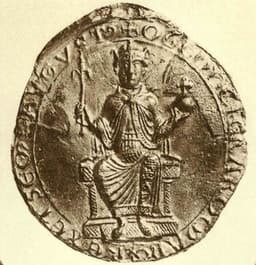
Otto IV
Emperor · Medieval
38.6Total
Basic Information
Born
1087
1175
Died
1094
1218
Era
Medieval
Medieval
Nationality
Seljuk Empire
Holy Roman Empire
Occupation
Emperor
Emperor
Civilization
Middle Eastern
Western
Score Comparison
Military (10%)
20.0
50.0
Political (20%)
35.0
27.9
Influence (20%)
45.5
46.3
Legacy (20%)
35.0
38.3
Leadership (15%)
49.9
34.6
Strategy (15%)
45.0
30.3
TOTAL
39.4
38.6
Mahmud I of Great Seljuk — Complete Timeline
1092 AD
Accession as SultanPolitical Action◆ Major
Following the death of his father Malik Shah I, Mahmud I was proclaimed sultan at age five. His mother Terken Khatun acted as regent, but the succession was contested by his half-brothers Barkiyaruq and others, leading to civil war.
SuccessionRegencyCivil War
Impact: national
1093 AD
Battle of Al-RuhaymiWar◆ Major
Forces loyal to Mahmud I, led by his mother Terken Khatun and general Kerbogha, fought against Barkiyaruq's army near Al-Ruhaymi in Iraq. Mahmud's forces were defeated, weakening his claim to the sultanate.
Civil WarBarkiyaruqKerbogha
Impact: nationaldestructive
1094 AD
Death of Mahmud IPolitical Action
Mahmud I died at age seven, likely from illness. His death ended his brief reign and allowed Barkiyaruq to consolidate power as the sole Seljuk sultan, though the empire remained divided by ongoing succession conflicts.
DeathChild SultanSuccession
Impact: nationaltragic
Otto IV — Complete Timeline
1198 AD
Election as King of GermanyPolitical Action◆ Major
Otto IV was elected King of Germany in June 1198 by Welf supporters, opposing Philip of Swabia. His election sparked a civil war with the Hohenstaufen faction that lasted a decade.
SuccessionCivil War
Impact: regional
1209 AD
Coronation as Holy Roman EmperorPolitical Action◆ Major
Pope Innocent III crowned Otto IV Holy Roman Emperor in Rome on October 4, 1209, after Otto promised to respect papal territories. The coronation ended the civil war and made Otto the sole ruler.
CoronationPapal Alliance
Impact: regionalconstructive
1210 AD
Excommunication by Pope Innocent IIIPolitical Action◆ Major
Pope Innocent III excommunicated Otto IV in 1210 after Otto invaded the Kingdom of Sicily, violating his promises. The exclamation led to the election of Frederick II as rival king and Otto's decline.
ExcommunicationPapal Conflict
Impact: regionaldestructive
1214 AD
Battle of BouvinesWar
Otto IV was decisively defeated by King Philip II of France at the Battle of Bouvines on July 27, 1214. This defeat ended Otto's imperial ambitions and led to his loss of the German throne to Frederick II.
BattleDefeatFrench Victory
Impact: regionaltragic
Expert Analysis
Origins
Mahmud I of Great Seljuk was born in 1088 as the son of Sultan Malik Shah I and Terken Khatun. His early life was shaped by the imperial court of the Seljuk Empire at its zenith. At age five, he was thrust into power following his father's death in 1092, with his mother acting as regent. The succession was contested by his half-brothers, Barkiyaruq and others, leading to a civil war. Mahmud's brief life ended at age seven, leaving little personal agency.
Otto IV was born around 1175 as the second son of Henry the Lion, Duke of Saxony and Bavaria, and Matilda Plantagenet. He belonged to the Welf dynasty, which had a long-standing rivalry with the Hohenstaufen. His upbringing in the courts of England and Germany exposed him to the complex politics of the Holy Roman Empire. He was educated in military and administrative matters, preparing him for a role in the imperial struggle.
Rise to Power
Mahmud I's rise was entirely passive: upon Malik Shah I's death, his mother Terken Khatun proclaimed him sultan in Baghdad in 1092, with support from the caliph and key generals. His coronation was a political maneuver to secure the regency for Terken Khatun. However, Barkiyaruq, his elder half-brother, contested the succession, leading to the Battle of Al-Ruhaymi in 1093. Mahmud's forces, led by general Kerbogha, were defeated, and Mahmud was captured briefly. He was restored as sultan in a nominal capacity but died in 1095, effectively ending his reign.
Otto IV was elected King of Germany in June 1198 by Welf supporters, opposing Philip of Swabia of the Hohenstaufen. This election sparked a civil war that lasted over a decade. Otto's position was bolstered by his alliance with King Richard I of England and Pope Innocent III. In 1208, after Philip's assassination, Otto was recognized as sole king. He was crowned Holy Roman Emperor by Pope Innocent III on October 4, 1209, after promising to respect papal territories. However, his invasion of Sicily in 1210 violated these promises, leading to his excommunication in 1210 and the election of Frederick II as rival king.
Leadership & Governance
Mahmud I, as a child, had no personal leadership. Governance was exercised by his mother Terken Khatun and her advisors. Their rule was marked by efforts to consolidate power against Barkiyaruq, but they lacked effective control over the empire. The Seljuk Empire under Mahmud's nominal rule saw administrative decay as factions fought for dominance. No reforms or lasting policies were enacted during his reign.
Otto IV's leadership was characterized by ambition and tactical miscalculation. He scored 34.6 in leadership and 30.3 in strategy, reflecting his inability to maintain alliances. His governance focused on consolidating imperial authority in Germany and Italy, but his aggressive expansion into Sicily alienated the pope. He alienated powerful nobles and failed to build a stable base. His military score of 50.0 indicates some competence, but his political score of 27.9 highlights his poor diplomatic decisions.
Triumph & Tragedy
Mahmud I's greatest triumph was being proclaimed sultan and maintaining nominal authority for two years despite his youth. His tragedy was his early death and the loss of the succession war, which allowed Barkiyaruq to dominate. His reign was overshadowed by his mother's regency and the empire's fragmentation.
Otto IV's greatest triumph was his coronation as Holy Roman Emperor in 1209, a high point of Welf power. He also successfully secured the German throne after years of civil war. His tragedy was his defeat at the Battle of Bouvines on July 27, 1214, which ended his imperial ambitions. He was excommunicated and lost support, dying in 1218 with his legacy overshadowed by the Hohenstaufen resurgence.
Character & Destiny
Mahmud I's character is unknown due to his age; his destiny was shaped by his mother's ambition and the brutal politics of the Seljuk succession. He was a pawn in a larger game, and his early death was a result of the instability around him.
Otto IV was ambitious and determined but impulsive and politically naive. His decision to invade Sicily despite papal warnings showed poor judgment. His character, marked by stubbornness and overconfidence, led to his downfall. Historians describe him as a capable military leader but a poor politician, unable to secure lasting support.
Legacy
Mahmud I left no significant legacy. His brief reign is a footnote in Seljuk history, overshadowed by his father Malik Shah I and his half-brother Barkiyaruq. He scored 35.0 in legacy and 45.5 in influence, reflecting his minor impact.
Otto IV's legacy is more substantial but negative. His defeat at Bouvines cemented French dominance and weakened the Holy Roman Empire. He is remembered as a failed emperor whose actions allowed the Hohenstaufen to regain power. His influence score of 46.3 reflects his role in European politics, but his legacy score of 38.3 indicates limited enduring impact.
Conclusion
Comparing Mahmud I and Otto IV reveals two rulers who failed to achieve lasting power, but Otto IV had greater impact due to his longer reign and involvement in major European events. Mahmud I scored 39.4 total versus Otto's 38.6, but the gap is negligible. Otto IV's defeat at Bouvines shaped the balance of power in Europe, while Mahmud I's reign was a brief interlude in Seljuk succession wars. Therefore, Otto IV had the greater historical impact, despite his failures.
Rankings
🥇
Mahmud I of Great SeljukLeader
Mil: 20.0Pol: 35.0Inf: 45.5
39.4
🥈
Otto IV
Mil: 50.0Pol: 27.9Inf: 46.3
38.6
+0.8 behind
How This Comparison Works
Algorithm
Each figure is scored on 6 dimensions (0—100 scale) based on structured historical data: Military (10%), Political (20%), Influence (20%), Legacy (20%), Leadership (15%), Strategy (15%). The weighted total produces the final ranking.
Data Sources
Scores are computed from structured sub-indicators in the database. Scale factors adjust for era (Ancient ×0.85, Modern ×1.0) and civilization size (Eastern ×1.05, Other ×0.80) to account for differences in population and military scale.
Maximum 3 Figures
Comparisons are limited to 2—3 figures to ensure readability and statistical meaningfulness.
Error Margins
±5 points per dimension — Sub-scores are derived from historical records with inherent uncertainty. Two figures within 5 points on a dimension should be considered roughly equivalent in that area.
Total Score Accuracy
±3 points overall — The weighted combination of 6 dimensions produces a total score with approximately ±3 points of uncertainty. Differences of less than 3 points are not statistically significant— the figures are effectively tied.
Known Limitations
- Historical records are incomplete and uneven across civilizations
- Figures from oral-tradition societies may be underrepresented
- Occupation labels can misclassify multi-role figures
- Scores measure capability and impact, not moral character
- Quantitative scoring is a comparison tool, not absolute truth
Capability Radar
Military (10%) — Battles & Warfare
Battles
5
25
Win Rate
5
20
Expansion
5
10
Political (20%) — Governance & Reform
Reform
5
10
Diplomacy
10
20
Economy
5
15
Influence (20%) — Cultural & Global Reach
Cultural
5
10
Global
5
5
Legacy (20%) — Historical Impact
Historical
5
20
Longevity
5
10
Leadership (15%) — Power & Stability
Tenure
10
30
Stability
5
10
Strategy (15%) — Tactics & Innovation
Strategy
5
15
Tactics
5
20
Reform
5
5
Similar Comparisons
Comments & Discussion
No comments yet. Be the first to share your thoughts!