Loading...
Askia Ishaq I vs Otto IV
Askia Ishaq I leads by 15.6 pts · 2 figures compared
…

Askia Ishaq I
Emperor · Medieval
54.2Total
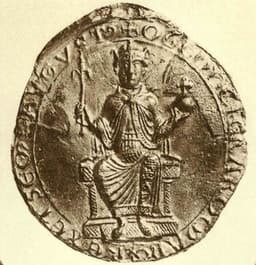
Otto IV
Emperor · Medieval
38.6Total
Basic Information
Born
1500
1175
Died
1549
1218
Era
Medieval
Medieval
Nationality
Songhai Empire
Holy Roman Empire
Occupation
Emperor
Emperor
Civilization
Other
Western
Score Comparison
Military (10%)
72.5
50.0
Political (20%)
48.0
27.9
Influence (20%)
54.9
46.3
Legacy (20%)
45.0
38.3
Leadership (15%)
65.0
34.6
Strategy (15%)
50.0
30.3
TOTAL
54.2
38.6
Askia Ishaq I — Complete Timeline
1539 AD
Accession as Askia of SonghaiPolitical Action◆ Major
Askia Ishaq I seized power by deposing his brother, Askia Ismail. His reign was characterized by effective but harsh rule, maintaining the territorial integrity of the Songhai Empire through military force and strict administration.
SuccessionCoup
Impact: national
1549 AD
Death of Askia Ishaq IOther◆ Major
Askia Ishaq I died, ending his reign of approximately 10 years. His death led to a succession struggle, eventually resulting in the accession of his brother, Askia Daoud, who would become the longest-reigning Songhai ruler.
DeathSuccession
Impact: national
Otto IV — Complete Timeline
1198 AD
Election as King of GermanyPolitical Action◆ Major
Otto IV was elected King of Germany in June 1198 by Welf supporters, opposing Philip of Swabia. His election sparked a civil war with the Hohenstaufen faction that lasted a decade.
SuccessionCivil War
Impact: regional
1209 AD
Coronation as Holy Roman EmperorPolitical Action◆ Major
Pope Innocent III crowned Otto IV Holy Roman Emperor in Rome on October 4, 1209, after Otto promised to respect papal territories. The coronation ended the civil war and made Otto the sole ruler.
CoronationPapal Alliance
Impact: regionalconstructive
1210 AD
Excommunication by Pope Innocent IIIPolitical Action◆ Major
Pope Innocent III excommunicated Otto IV in 1210 after Otto invaded the Kingdom of Sicily, violating his promises. The exclamation led to the election of Frederick II as rival king and Otto's decline.
ExcommunicationPapal Conflict
Impact: regionaldestructive
1214 AD
Battle of BouvinesWar
Otto IV was decisively defeated by King Philip II of France at the Battle of Bouvines on July 27, 1214. This defeat ended Otto's imperial ambitions and led to his loss of the German throne to Frederick II.
BattleDefeatFrench Victory
Impact: regionaltragic
Expert Analysis
Origins
Askia Ishaq I, born in the early 16th century, was a member of the Askia dynasty of the Songhai Empire, one of the largest empires in West African history. He came to power through a coup against his brother, Askia Ismail, in 1539. Little is known of his early life, but his reign was marked by a continuation of the empire's expansionist policies. Otto IV, born around 1175, was a member of the Welf dynasty in the Holy Roman Empire. He was the son of Henry the Lion, Duke of Saxony and Bavaria, and Matilda of England, daughter of King Henry II. His upbringing was shaped by the Guelph-Ghibelline conflicts that plagued medieval Germany.
Rise to Power
Askia Ishaq I seized power in 1539 by deposing his brother Askia Ismail, who had ruled for only a few years. His accession was swift and violent, as he eliminated rivals to consolidate control. He maintained the Songhai Empire's dominance over the trans-Saharan trade routes, particularly salt and gold, through military campaigns and harsh administration. Otto IV's rise was more contested. He was elected King of Germany in June 1198 by Welf supporters, opposing Philip of Swabia of the Hohenstaufen dynasty. This sparked a civil war that lasted until Philip's assassination in 1208. Otto then secured his coronation as Holy Roman Emperor by Pope Innocent III on October 4, 1209, after promising to respect papal territories.
Leadership & Governance
Askia Ishaq I ruled with an iron fist, employing brutal methods to enforce his authority. He was known for his cruelty, executing rivals and imposing heavy taxes. Despite this, he maintained the empire's administrative structure and military strength, scoring 65.0 in leadership and 72.5 in military. His governance focused on centralization and control, with little tolerance for dissent. In contrast, Otto IV's leadership was weak and indecisive, scoring 34.6. He alienated key allies, including Pope Innocent III, by invading the Kingdom of Sicily in 1210, violating his coronation oaths. This led to his excommunication in 1210 and the election of Frederick II as rival king. Otto's political score of 27.9 reflects his inability to navigate the complex power dynamics of the Holy Roman Empire.
Triumph & Tragedy
Askia Ishaq I's greatest triumph was maintaining the Songhai Empire's territorial integrity and economic prosperity during his reign. He successfully defended against external threats and kept trade routes open. His greatest tragedy was his legacy of cruelty, which fostered resentment and instability. His death around 1549 triggered a succession crisis, leading to the eventual decline of the Songhai Empire. Otto IV's triumph was his coronation as Holy Roman Emperor in 1209, a peak that soon crumbled. His tragedy was the Battle of Bouvines on July 27, 1214, where he was decisively defeated by King Philip II of France. This defeat ended his imperial ambitions and led to his downfall, with his influence score dropping to 46.3.
Character & Destiny
Askia Ishaq I was ruthless and pragmatic, prioritizing power and control over diplomacy. His character shaped a reign of fear but also stability. He scored 50.0 in strategy, reflecting a focus on military might rather than long-term planning. Otto IV was ambitious but politically inept, often making decisions that alienated his supporters. His character led to a series of miscalculations, from the invasion of Sicily to the disastrous battle at Bouvines. Historians view him as a failed emperor who could not capitalize on his early successes.
Legacy
Askia Ishaq I's legacy is mixed: he is remembered as a harsh ruler who maintained Songhai's power but also contributed to its decline. His influence score of 54.9 reflects limited lasting impact outside of West African history. Otto IV's legacy is primarily as the emperor who lost at Bouvines, marking the rise of French supremacy. His political score of 27.9 and total score of 38.6 place him among the less successful Holy Roman Emperors. Neither figure left enduring institutions or ideas.
Conclusion
Askia Ishaq I had a greater impact than Otto IV, as evidenced by his higher total score of 54.2 versus 38.6. While both were flawed rulers, Askia Ishaq I effectively governed a major empire for a decade, maintaining its power through military strength (72.5) and harsh leadership (65.0). Otto IV's reign was marked by civil war, excommunication, and a decisive defeat that ended his ambitions. Askia Ishaq I's control over trans-Saharan trade routes and territorial integrity, despite his cruelty, outweighs Otto IV's brief imperial coronation and subsequent collapse. The 15.6-point score gap reflects Askia Ishaq I's superior military and leadership, making him the more consequential figure in their respective contexts.
Rankings
🥇
Askia Ishaq ILeader
Mil: 72.5Pol: 48.0Inf: 54.9
54.2
🥈
Otto IV
Mil: 50.0Pol: 27.9Inf: 46.3
38.6
+15.6 behind
How This Comparison Works
Algorithm
Each figure is scored on 6 dimensions (0—100 scale) based on structured historical data: Military (10%), Political (20%), Influence (20%), Legacy (20%), Leadership (15%), Strategy (15%). The weighted total produces the final ranking.
Data Sources
Scores are computed from structured sub-indicators in the database. Scale factors adjust for era (Ancient ×0.85, Modern ×1.0) and civilization size (Eastern ×1.05, Other ×0.80) to account for differences in population and military scale.
Maximum 3 Figures
Comparisons are limited to 2—3 figures to ensure readability and statistical meaningfulness.
Error Margins
±5 points per dimension — Sub-scores are derived from historical records with inherent uncertainty. Two figures within 5 points on a dimension should be considered roughly equivalent in that area.
Total Score Accuracy
±3 points overall — The weighted combination of 6 dimensions produces a total score with approximately ±3 points of uncertainty. Differences of less than 3 points are not statistically significant— the figures are effectively tied.
Known Limitations
- Historical records are incomplete and uneven across civilizations
- Figures from oral-tradition societies may be underrepresented
- Occupation labels can misclassify multi-role figures
- Scores measure capability and impact, not moral character
- Quantitative scoring is a comparison tool, not absolute truth
Capability Radar
Military (10%) — Battles & Warfare
Battles
65
25
Win Rate
60
20
Expansion
55
10
Political (20%) — Governance & Reform
Reform
45
10
Diplomacy
40
20
Economy
50
15
Influence (20%) — Cultural & Global Reach
Cultural
40
10
Global
30
5
Legacy (20%) — Historical Impact
Historical
45
20
Longevity
35
10
Leadership (15%) — Power & Stability
Tenure
70
30
Stability
30
10
Strategy (15%) — Tactics & Innovation
Strategy
60
15
Tactics
55
20
Reform
50
5
Similar Comparisons
Comments & Discussion
No comments yet. Be the first to share your thoughts!