Loading...
Mahatma Gandhi vs Nelson Mandela
Mahatma Gandhi leads by 11.7 pts · 2 figures compared
…
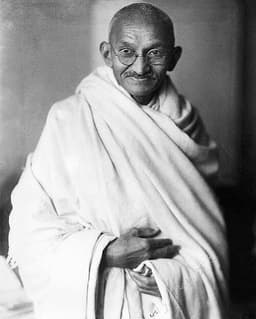
Mahatma Gandhi
Politician · Modern
68.7Total
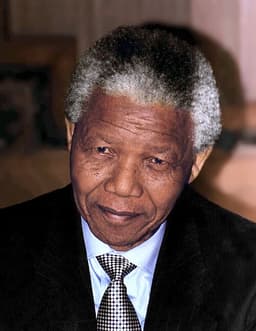
Nelson Mandela
Politician · Modern
57.0Total
Basic Information
Born
1869
1918
Died
1948
2013
Era
Modern
Modern
Nationality
India
South Africa
Occupation
Politician
Politician
Civilization
Indian
Other
Score Comparison
Military (10%)
42.3
10.0
Political (20%)
65.0
78.0
Influence (20%)
80.0
40.0
Legacy (20%)
75.0
68.0
Leadership (15%)
70.0
82.0
Strategy (15%)
55.0
50.0
TOTAL
68.7
57.0
Mahatma Gandhi — Complete Timeline
1917 AD
Champaran SatyagrahaPolitical Action
Gandhi led his first nonviolent protest in India, supporting indigo farmers in Champaran, Bihar, against exploitative British planters. He organized a campaign of civil disobedience and negotiations, resulting in the abolition of the oppressive tinkathia system.
Civil disobedienceFarmers' rightsBritish Raj
Impact: nationalprogressive
1919 AD
Jallianwala Bagh massacre aftermathPolitical Action◆ Major
After British troops killed hundreds of unarmed civilians in Amritsar, Gandhi organized a nationwide hartal (strike) and nonviolent protests. He returned his medals and launched the Rowlatt Satyagraha, marking a shift from cooperation to non-cooperation with British rule.
ProtestBritish RajMassacre
Impact: nationaltragic
1930 AD
Salt MarchPolitical Action
Gandhi led a 240-mile march from Sabarmati to Dandi, Gujarat, to defy the British salt monopoly. Thousands joined him, making salt from seawater. This act of civil disobedience sparked mass protests across India and drew global attention to the independence movement.
Civil disobedienceSalt taxIndependence movement
Impact: globalprogressive
1942 AD
Quit India Movement launchPolitical Action◆ Major
Gandhi launched the Quit India Movement, calling for an end to British rule with the slogan 'Do or Die'. The British arrested him and other leaders, but the movement led to widespread protests and repression, accelerating the end of colonial rule.
IndependenceCivil disobedienceBritish Raj
Impact: nationalprogressive
1948 AD
AssassinationPolitical Action
Gandhi was shot and killed by Nathuram Godse, a Hindu nationalist, during a prayer meeting in New Delhi. His assassination shocked the world and led to a wave of grief and violence, but also reinforced his legacy as a martyr for nonviolence.
AssassinationMartyrdomNonviolence
Impact: globaltragic
Nelson Mandela — Complete Timeline
1964 AD
Rivonia TrialPolitical Action
Nelson Mandela and other anti-apartheid leaders were tried for sabotage and conspiracy. Mandela was sentenced to life imprisonment, delivering a speech from the dock that became a rallying cry against apartheid. The trial drew international attention to the anti-apartheid struggle.
Impact: global
1990 AD
Release from PrisonPolitical Action
After 27 years of imprisonment, Mandela was released from Victor Verster Prison by President F.W. de Klerk. His release was a pivotal moment in South Africa's transition from apartheid to multiracial democracy, leading to negotiations for a new constitution.
Impact: globalprogressive
1993 AD
Awarding of the Nobel Peace PrizeCultural◆ Major
Mandela and F.W. de Klerk were jointly awarded the Nobel Peace Prize for their roles in ending apartheid and laying the foundations for a democratic South Africa. The award recognized their peaceful transition and commitment to reconciliation.
Impact: globalprogressive
1994 AD
Inauguration as President of South AfricaPolitical Action
Mandela was inaugurated as South Africa's first Black president after the country's first fully democratic elections. His presidency focused on national reconciliation, establishing the Truth and Reconciliation Commission, and dismantling the legacy of apartheid.
Impact: globalprogressive
Expert Analysis
Nelson Mandela vs Mahatma Gandhi
# The Saint and the Statesman
On a winter evening in 1948, a frail old man in a white dhoti walked toward a prayer ground in New Delhi, his hands clasped in greeting. Moments later, three bullets tore through his chest. Half a world away and half a century later, another old man, gray-haired and dignified, walked out of a prison gate in Paarl, South Africa, his fist raised in victory. One died a martyr, his dream of unity shattered by the very hatred he fought. The other lived to see his dream realized, presiding over a nation reborn. Mahatma Gandhi and Nelson Mandela—two titans of the twentieth century, both warriors for justice, both believers in peace—yet their journeys ended in such different keys. Why did one fall at the hands of a countryman, while the other rose to lead his? The answer lies not in luck, but in the currents of history, the nature of their enemies, and the quiet architecture of their souls.
Origins
Mohandas Karamchand Gandhi was born in 1869 in Porbandar, a coastal town in western India, into a devout Hindu family of the merchant caste. His father was a chief minister in a princely state; his mother was deeply religious, fasting and praying with a discipline that marked her son for life. Young Gandhi was shy, a mediocre student, terrified of speaking in public. He married at thirteen, sailed to London at nineteen to study law, and returned to India a qualified barrister—but a failed one. He could not cross-examine witnesses; he fled the courtroom in embarrassment. This was not the stuff of revolutionaries.
Nelson Rolihlahla Mandela was born in 1918 in Mvezo, a tiny village in the Eastern Cape of South Africa, into the Thembu royal family. His father was a chief and counselor to the king; his mother was a devout Christian. Unlike Gandhi, young Mandela was a fighter from the start—literally. He wrestled, boxed, and ran with a crowd of rebels. He was expelled from university for leading a student strike. He arrived in Johannesburg as a young lawyer, handsome and confident, already dreaming of freedom. Where Gandhi stumbled into leadership, Mandela seemed to stride toward it.
Their eras, too, shaped them differently. Gandhi came of age under the British Raj at its zenith—an empire that seemed unshakable, a system that was both oppressive and paternalistic. Mandela came of age under apartheid, a system so nakedly brutal and irrational that it could not long survive the moral awakening of the world. Gandhi faced a colonial empire; Mandela faced a settler regime. The difference would prove decisive.
Rise to Power
Gandhi’s path to leadership was slow and accidental. In 1893, he went to South Africa as a young lawyer and was thrown off a train at Pietermaritzburg for refusing to leave a first-class compartment. That night, shivering in the cold, he made a decision: he would fight this injustice, not with anger, but with truth and nonviolence. He called it *Satyagraha*—soul-force. For twenty years, he experimented with this weapon in South Africa, organizing Indians against discriminatory laws. He returned to India in 1915, a hero to a small community, but unknown to the masses.
Then came 1917. In Champaran, Bihar, indigo farmers were being forced to grow cash crops under brutal contracts. Gandhi arrived, set up a tent, and began taking statements. The British ordered him to leave; he refused. The magistrate arrested him, and Gandhi pleaded guilty, asking for the maximum penalty. The courtroom erupted. The case collapsed. It was his first victory on Indian soil, and it changed everything. Overnight, the shy lawyer became a national figure.
Mandela’s rise was more deliberate. In 1944, he joined the African National Congress (ANC) Youth League, a group of young firebrands who believed the old leadership was too timid. They wanted mass action—boycotts, strikes, civil disobedience. Mandela became a leader of the Defiance Campaign in 1952, organizing volunteers to break apartheid laws. But the government struck back. In 1956, Mandela and 155 others were arrested for treason. The trial dragged on for four years; all were acquitted. By then, Mandela knew that nonviolence alone would not work. In 1961, he co-founded Umkhonto we Sizwe, the armed wing of the ANC, and went underground. He was the most wanted man in South Africa.
Leadership & Governance
Gandhi’s leadership was that of a moral prophet, not a politician. He had no official position, no army, no treasury. His power came from his person—his simple life, his spinning wheel, his willingness to suffer. When he led the Salt March in 1930, walking 240 miles from Sabarmati to Dandi, he was not marching to capture a fort. He was marching to make salt, a symbolic act of defiance. Thousands joined him, and the world watched. The British arrested him, but the moral victory was his. His strategy was to shame the empire into retreat.
Mandela’s leadership was that of a strategist and a unifier. He understood that apartheid could not be shamed away; it had to be negotiated away. In prison on Robben Island, he studied his enemies—their language, their culture, their fears. He learned Afrikaans. He memorized the poems of the Boer generals. He began secret talks with the government, insisting that the ANC would only negotiate if its leaders were released. When he walked free in 1990, after 27 years, he did not demand revenge. He invited his former jailer to his inauguration. He wore the jersey of the Springboks, the white rugby team, to win the hearts of Afrikaners.
Gandhi’s political wisdom was in his philosophy: *ahimsa* (nonviolence) and *satyagraha*. He believed that means and ends are inseparable; you cannot create peace through violence. Mandela’s wisdom was in his pragmatism: he understood that power must be shared. He formed a government of national unity, keeping F.W. de Klerk as his deputy. He did not destroy the old order; he transformed it.
Triumph & Tragedy
Gandhi’s greatest moment was the Salt March of 1930. It was a masterpiece of political theater—a frail man defying an empire with nothing but his feet and his faith. The world was captivated. The British were humiliated. It was the turning point of the independence movement.
His greatest tragedy was the partition of India in 1947. He had dreamed of a united, secular India. Instead, the British divided the subcontinent along religious lines, and a million people died in the violence that followed. Gandhi walked through the refugee camps, fasting and praying, trying to stop the bloodshed. He succeeded in Calcutta, but failed in Delhi. On January 30, 1948, a Hindu nationalist named Nathuram Godse shot him dead, shouting that Gandhi had betrayed Hindus. The saint was killed by one of his own.
Mandela’s greatest moment was his inauguration as president on May 10, 1994. The world watched as a Black man, once a prisoner, took the oath of office in a country that had denied his humanity. It was a triumph of forgiveness over vengeance.
His tragedy was not personal but structural. He inherited a country with vast inequalities—a white minority that owned most of the land and wealth, a Black majority that lived in poverty. He could not fix it in one term. The Rainbow Nation he promised remained fractured. He retired after one term, a rare act of self-restraint, but the problems he left behind—corruption, unemployment, inequality—would haunt his successors.
Character & Destiny
Gandhi was an ascetic, a man who controlled his body with iron discipline. He ate only fruit and nuts, slept on the floor, and took vows of celibacy. He was also a control freak, micromanaging his followers, even his wife. His strength was his moral clarity; his weakness was his rigidity. He could not compromise on nonviolence, even when it meant accepting partition. He believed in the goodness of the British, even after Jallianwala Bagh. That faith was both his greatness and his blind spot.
Mandela was a man of masks. In public, he was warm and gracious; in private, he was calculating and tough. He had a temper, but he learned to control it. He was not an intellectual like Gandhi; he was a pragmatist. He understood that politics is the art of the possible. His strength was his ability to forgive without forgetting. His weakness was his tendency to trust too much—he trusted his comrades, and some of them betrayed his legacy.
Their personalities shaped their fates. Gandhi’s moral absolutism made him a martyr; Mandela’s political realism made him a statesman. Gandhi died for his ideals; Mandela lived to see his ideals tested by reality.
Legacy
Gandhi’s legacy is global. Martin Luther King Jr. called him the guiding light of the civil rights movement. Aung San Suu Kyi, Lech Wałęsa, and countless others drew inspiration from his philosophy. His image—the half-naked fakir, as Churchill called him—is a symbol of resistance against oppression. But his legacy is also contested. In India, he is revered but often ignored. His vision of a decentralized, self-sufficient village economy was abandoned for industrialization. His commitment to nonviolence is mocked by a rising tide of Hindu nationalism.
Mandela’s legacy is more immediate and more political. He is the father of the new South Africa, the man who proved that reconciliation is possible. His name is synonymous with forgiveness. But his legacy is also fragile. The ANC, once the vehicle of liberation, has become a machine of corruption. The inequality he fought remains. Young South Africans ask: what did Mandela really achieve?
Conclusion
Gandhi and Mandela were both prisoners of their times. Gandhi fought an empire that could be shamed; Mandela fought a regime that had to be negotiated with. Gandhi was a prophet who could not govern; Mandela was a politician who could not stop governing. One died with a prayer on his lips; the other died in his bed, surrounded by family. Both gave their lives to the same cause—human freedom—but they walked different paths, and history judged them differently.
What stays with the reader, perhaps, is this: Gandhi showed us that the powerless can win through moral courage. Mandela showed us that the powerful can surrender through political wisdom. Together, they remind us that the arc of history bends toward justice—but only if someone bends it.
Rankings
🥇
Mahatma GandhiLeader
Mil: 42.3Pol: 65.0Inf: 80.0
68.7
🥈
Nelson Mandela
Mil: 10.0Pol: 78.0Inf: 40.0
57.0
+11.7 behind
How This Comparison Works
Algorithm
Each figure is scored on 6 dimensions (0—100 scale) based on structured historical data: Military (10%), Political (20%), Influence (20%), Legacy (20%), Leadership (15%), Strategy (15%). The weighted total produces the final ranking.
Data Sources
Scores are computed from structured sub-indicators in the database. Scale factors adjust for era (Ancient ×0.85, Modern ×1.0) and civilization size (Eastern ×1.05, Other ×0.80) to account for differences in population and military scale.
Maximum 3 Figures
Comparisons are limited to 2—3 figures to ensure readability and statistical meaningfulness.
Error Margins
±5 points per dimension — Sub-scores are derived from historical records with inherent uncertainty. Two figures within 5 points on a dimension should be considered roughly equivalent in that area.
Total Score Accuracy
±3 points overall — The weighted combination of 6 dimensions produces a total score with approximately ±3 points of uncertainty. Differences of less than 3 points are not statistically significant— the figures are effectively tied.
Known Limitations
- Historical records are incomplete and uneven across civilizations
- Figures from oral-tradition societies may be underrepresented
- Occupation labels can misclassify multi-role figures
- Scores measure capability and impact, not moral character
- Quantitative scoring is a comparison tool, not absolute truth
Capability Radar
Military (10%) — Battles & Warfare
Battles
45
0
Win Rate
46
7
Expansion
51
9
Political (20%) — Governance & Reform
Reform
85
95
Diplomacy
80
95
Economy
40
60
Influence (20%) — Cultural & Global Reach
Cultural
85
85
Global
90
90
Legacy (20%) — Historical Impact
Historical
90
90
Longevity
85
80
Leadership (15%) — Power & Stability
Tenure
60
60
Stability
55
80
Strategy (15%) — Tactics & Innovation
Strategy
52
8
Tactics
56
12
Reform
55
17
Similar Comparisons
Comments & Discussion
GandhiGuru6/16/2026
Gandhi’s ahimsa was a luxury for the colonized elite—his fasting and celibacy experiments alienated the masses, while Mandela’s willingness to embrace armed struggle in the 1960s (Umkhonto we Sizwe) actually won freedom. The saint died irrelevant; the statesman built a nation. Love your oppressor? Fine, but it doesn’t free a single prisoner. Mandela got his hands dirty, and it worked.
现实革命家6/16/2026
甘地搞非暴力不合作,听起来很美,但他却让印度教徒和穆斯林分裂成两国,1947年大屠杀死了百万人;曼德拉在罗本岛蹲了27年,出狱后直接推动和解,1995年橄榄球世界杯上穿对手球衣,才是真团结。甘地像个空想家,曼德拉是实干派。
DataSkeptic426/16/2026
Let’s crunch numbers: Gandhi’s 1930 Salt March mobilized maybe 80,000 people across India, but Mandela’s 1980s Free Mandela campaign reached 100+ countries via sanctions that cut South Africa’s GDP by 20%. Which tactic scaled? The international pressure machine, not the spinning wheel. Statistics don’t lie—Mandela’s strategy had global ROI; Gandhi’s remained regional.
圣雄批判者6/16/2026
甘地太双标了:他反对种姓制度,却把‘不可接触者’改名叫‘哈里真’,这跟贵族赏饭有啥区别?曼德拉直接让黑人掌权,1994年大选投票率86%,这才是真平等。甘地活在自己道德神话里,曼德拉懂权力分配才是硬道理。