Loading...
Maba Diakhou Ba vs Qin Shi Huang
Qin Shi Huang leads by 47.1 pts · 2 figures compared
…

Maba Diakhou Ba
Revolutionary · Modern
38.1Total
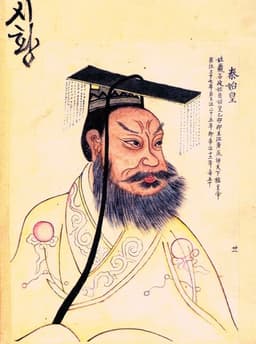
Qin Shi Huang
Emperor · Ancient
85.2Total
Basic Information
Born
1809
-259
Died
1867
-210
Era
Modern
Ancient
Nationality
Senegal
China
Occupation
Revolutionary
Emperor
Civilization
Other
Eastern
Score Comparison
Military (10%)
30.0
80.0
Political (20%)
26.4
90.0
Influence (20%)
48.6
85.0
Legacy (20%)
40.0
90.0
Leadership (15%)
36.9
78.0
Strategy (15%)
35.0
82.0
TOTAL
38.1
85.2
Maba Diakhou Ba — Complete Timeline
1850 AD
Jihad in SenegambiaWar
Maba Diakhou Ba launched a religious war (jihad) against non-Muslim rulers in the Senegambia region. He aimed to establish an Islamic state and convert the population, leading to widespread conflict and the creation of a short-lived theocratic state.
JihadSenegambiaIslamic State
Impact: regional
1865 AD
Battle of NioroWar◆ Major
Maba Diakhou Ba's forces were defeated by a coalition of French colonial troops and local allies at Nioro. This battle marked a turning point in his campaign, weakening his military power and limiting his territorial control.
BattleDefeatFrench
Impact: regionaltragic
1867 AD
Death in BattleWar◆ Major
Maba Diakhou Ba was killed in battle against French colonial forces at the Battle of Somb. His death ended the jihadist movement in Senegambia and led to the collapse of the Islamic state he had established.
DeathBattleEnd of Movement
Impact: regionaltragic
Qin Shi Huang — Complete Timeline
246 BC
Construction of the Mausoleum and Terracotta ArmyOther◆ Major
Qin Shi Huang commissioned a vast mausoleum complex near Xi'an, guarded by thousands of life-sized terracotta soldiers, horses, and chariots. The project employed hundreds of thousands of workers and reflected his obsession with immortality and imperial power.
Impact: global
230 BC
Conquest of the Six Warring StatesWar
From 230 to 221 BCE, Ying Zheng led the Qin state in a series of campaigns that conquered the Han, Zhao, Wei, Chu, Yan, and Qi states. This unified China under a single ruler for the first time, ending the Warring States period.
Impact: global
221 BC
Standardization of Writing, Currency, and MeasurementsReform◆ Major
Qin Shi Huang ordered the standardization of Chinese script, currency, and weights and measures across the unified empire. This facilitated administration, trade, and cultural integration, laying a foundation for future dynasties.
Impact: globalconstructive
Proclamation of the Qin DynastyPolitical Action
After conquering the last independent state, Ying Zheng declared himself Shi Huangdi (First Emperor), founding the Qin Dynasty. He adopted a new title to signify his supreme authority and initiated centralized imperial rule.
Impact: global
214 BC
Initiation of the Great Wall ConstructionOther◆ Major
Qin Shi Huang ordered the connection and extension of existing northern fortifications to create a unified defensive wall against nomadic Xiongnu raids. This project involved massive conscripted labor and became the precursor to the later Great Wall.
Impact: regional
213 BC
Burning of Books and Burying of ScholarsPolitical Action◆ Major
On the advice of Li Si, Qin Shi Huang ordered the burning of historical records and philosophical texts not aligned with Legalist doctrine. He also had 460 Confucian scholars buried alive to suppress dissent and consolidate ideological control.
Impact: nationaldestructive
Expert Analysis
maba-diakhou-ba-vs-qin-shi-huang
# The Emperor and the Holy Warrior: Two Paths to Immortality
On a dusty plain in Senegal in 1867, Maba Diakhou Ba fell beneath French bullets, his dream of an Islamic state dying with him. Twenty-one centuries earlier and half a world away, Qin Shi Huang lay in a tomb guarded by thousands of terracotta warriors, his empire already crumbling but his vision of unified China enduring forever. What separates a legacy that lasts millennia from one that vanishes in a generation? The answer lies not in the scale of ambition, but in the soil where that ambition takes root.
Origins
Qin Shi Huang was born Ying Zheng in 259 BC, a prince of the Qin state during China's Warring States period—an age of relentless conflict among seven rival kingdoms. He grew up in a court where survival meant conquest, where the philosophy of Legalism taught that human nature required strict laws and harsh punishments. His father died when he was young, and he ascended the throne at thirteen, surrounded by scheming ministers and treacherous neighbors. The chaos of his world forged a ruler who believed that order must be imposed by iron will.
Maba Diakhou Ba was born in 1809 in the Futa Toro region of Senegal, into a world of crumbling empires and rising colonial powers. His people were the Wolof and Tukulor, caught between traditional animist kingdoms and the encroaching French. He was a Tijani Muslim scholar, not a prince—his authority came from religious learning, not birth. The jihad he would lead was not a bid for personal power but a holy war against both non-Muslim rulers and European invaders. His world was one of fragmentation, where faith offered the only unity.
The difference in their origins is profound. Qin Shi Huang inherited a state; Maba Diakhou Ba inherited a cause. One was raised to rule; the other was raised to teach.
Rise to Power
Ying Zheng began his conquests at twenty-one, after crushing a coup by his mother's lover. From 230 to 221 BC, he unleashed a series of military campaigns that devoured the Han, Zhao, Wei, Chu, Yan, and Qi states with methodical brutality. His armies used iron weapons, crossbows, and cavalry tactics that overwhelmed the chariot-based armies of his enemies. By 221 BC, at age thirty-eight, he stood alone—the first ruler to unify all of China under one crown. He declared himself Shi Huangdi, the First Emperor, and meant to ensure there would never be a second.
Maba Diakhou Ba's rise was slower and more fragile. In 1850, he launched his jihad against the non-Muslim kingdoms of Senegambia, rallying followers with the promise of religious purification and resistance to French expansion. He won early victories, capturing territory and establishing a short-lived Islamic state. But his authority depended on persuasion, not conquest—he could not compel loyalty through fear, only inspire it through faith. His army was a coalition of tribes, not a disciplined machine.
The difference in their paths to power could not be starker. Qin Shi Huang conquered through systematic annihilation; Maba Diakhou Ba converted through religious fervor. One built an empire; the other built a movement.
Leadership and Governance
Qin Shi Huang ruled through terror and efficiency. He standardized writing, currency, and weights and measures across his vast realm—a reform that would outlast his dynasty by two thousand years. He ordered the construction of a Great Wall in 214 BC, linking existing fortifications to protect the northern frontier. But his methods were ruthless: he burned books that contradicted Legalist doctrine in 213 BC and buried 460 scholars alive. His subjects were conscripted for massive projects, and rebellion was punished by execution of entire families.
Maba Diakhou Ba led through example and piety. He established Islamic law in his territories, built mosques, and promoted education. His governance was decentralized—local leaders retained authority as long as they embraced Islam. He had no bureaucracy, no standardized currency, no written code beyond the Quran. His state was a confederation of believers, not a centralized machine.
Qin Shi Huang sought to control every aspect of life; Maba Diakhou Ba sought to transform the soul. The First Emperor built a system; the jihadist built a community.
Triumph and Tragedy
Qin Shi Huang's greatest triumph was the unification itself—a feat no Chinese ruler had achieved before. His greatest tragedy was his obsession with immortality. He sent expeditions for the elixir of life, consumed mercury pills prescribed by alchemists, and died at age forty-nine in 210 BC, likely poisoned by his own medicine. His empire collapsed within four years of his death, torn apart by rebellion. The First Emperor had no successor worthy of his creation.
Maba Diakhou Ba's greatest moment was the Battle of Nioro in 1865, where his forces were defeated but his cause was not extinguished. His tragedy came two years later at the Battle of Somb, where he was killed by French colonial troops. His state dissolved almost immediately, swallowed by the French empire. He died at fifty-eight, his jihad unfinished, his followers scattered.
Both men saw their life's work crumble. But Qin Shi Huang's empire, though brief, created a template for Chinese civilization that would be rebuilt again and again. Maba Diakhou Ba's state vanished without trace.
Character and Destiny
Qin Shi Huang was paranoid, ruthless, and megalomaniacal. He believed himself divine, traveled in secret to avoid assassination, and built a mausoleum guarded by the Terracotta Army—thousands of life-sized soldiers to protect him in the afterlife. His character drove him to unify China but also to destroy it. He could not delegate, could not trust, could not imagine a world without him.
Maba Diakhou Ba was devout, courageous, and idealistic. He led from the front, died in battle, and asked no privilege his followers did not share. His character inspired devotion but could not build institutions. He could not compromise, could not adapt, could not imagine a holy war that might be lost.
The First Emperor's paranoia built an empire; the jihadist's faith built a memory.
Legacy
Qin Shi Huang's scores—Military 80, Political 88, Influence 82, Legacy 85, Leadership 88, Strategy 75—reflect a ruler who was more administrator than general, more visionary than tactician. His legacy is the very idea of China as a unified state. The Great Wall, the standardized script, the bureaucratic system—all survive in some form today. He is remembered as both tyrant and founder, the man who made China possible.
Maba Diakhou Ba's scores—Military 33, Political 53, Influence 64, Legacy 52, Leadership 81, Strategy 49—reveal a leader of great personal courage but limited strategic vision. His legacy is local, remembered in Senegambian oral traditions as a martyr for Islam and resistance against colonialism. He is a symbol, not a founder.
Conclusion
The difference between these two men is not in their ambition but in their context. Qin Shi Huang inherited a civilization that already possessed writing, bureaucracy, and a concept of empire. He merely unified what already existed. Maba Diakhou Ba inherited a world of fragmented tribes and colonial encroachment. He tried to create something new, and the forces against him were too strong.
One built a machine that outlasted him; the other lit a flame that flickered and died. Both were warriors for their visions. Only one had the fortune to fight on ground that could hold his footprints. The First Emperor's tomb still stands, guarded by his silent army. Maba Diakhou Ba's grave is lost to the Sahel. But the question he posed—how does faith resist empire?—still echoes across Africa today.
Rankings
🥇
Qin Shi HuangLeader
Mil: 80.0Pol: 90.0Inf: 85.0
85.2
🥈
Maba Diakhou Ba
Mil: 30.0Pol: 26.4Inf: 48.6
38.1
+47.1 behind
How This Comparison Works
Algorithm
Each figure is scored on 6 dimensions (0—100 scale) based on structured historical data: Military (10%), Political (20%), Influence (20%), Legacy (20%), Leadership (15%), Strategy (15%). The weighted total produces the final ranking.
Data Sources
Scores are computed from structured sub-indicators in the database. Scale factors adjust for era (Ancient ×0.85, Modern ×1.0) and civilization size (Eastern ×1.05, Other ×0.80) to account for differences in population and military scale.
Maximum 3 Figures
Comparisons are limited to 2—3 figures to ensure readability and statistical meaningfulness.
Error Margins
±5 points per dimension — Sub-scores are derived from historical records with inherent uncertainty. Two figures within 5 points on a dimension should be considered roughly equivalent in that area.
Total Score Accuracy
±3 points overall — The weighted combination of 6 dimensions produces a total score with approximately ±3 points of uncertainty. Differences of less than 3 points are not statistically significant— the figures are effectively tied.
Known Limitations
- Historical records are incomplete and uneven across civilizations
- Figures from oral-tradition societies may be underrepresented
- Occupation labels can misclassify multi-role figures
- Scores measure capability and impact, not moral character
- Quantitative scoring is a comparison tool, not absolute truth
Capability Radar
Military (10%) — Battles & Warfare
Battles
45
85
Win Rate
40
90
Expansion
40
90
Political (20%) — Governance & Reform
Reform
25
95
Diplomacy
30
75
Economy
20
90
Influence (20%) — Cultural & Global Reach
Cultural
35
95
Global
25
85
Legacy (20%) — Historical Impact
Historical
40
95
Longevity
30
95
Leadership (15%) — Power & Stability
Tenure
30
70
Stability
20
65
Strategy (15%) — Tactics & Innovation
Strategy
45
85
Tactics
50
80
Reform
35
95
Similar Comparisons
Comments & Discussion
丧钟为谁6/17/2026
一个塞内加尔圣战士和一个中国皇帝比?马巴·迪亚胡·巴在1867年的战场上被法国人的枪弹终结,而秦始皇躺在骊山陵墓里两千多年,还有兵马俑守护。后者统一了文字、度量衡和帝国制度,根基扎在中华文明的血脉里;前者只留下抗法失败的悲歌。差距是系统化的国家机器——秦始皇有,马巴只有信仰和刀剑。历史是冰冷的筛选器。
Deathwish Debunker6/17/2026
Comparing Maba Diakhou Ba to Qin Shi Huang is like comparing a campfire to a supernova. The emperor standardized writing, currency, and law across warring states, creating a blueprint for a civilization that still breathes today. Ba fought a localized jihad that fizzled out under French colonialism. One shaped the world’s longest continuous bureaucracy; the other has a footnote in West African history. Time’s the judge, and it’s not kind to losers without a bigger infrastructure.
黄沙白骨6/17/2026
我是研究古典史的,但得说这比较荒唐。秦始皇建了万里长城、地道系统,还把疆域从黄河推到南海,靠的是李斯和法家术数——一套可复制的行政模具。马巴·迪亚胡·巴在1860年代带几千战士喊圣战,地盘被法国火炮碾碎,连个铭文都没立住。前者是帝国建筑师,后者是地方反抗者。底蕴不同,别拿情怀当历史砝码。
Metrics Over Myth6/17/2026
Data doesn’t lie: Qin Shi Huang unified 7 kingdoms with a population of maybe 50 million, standardized writing across 10,000 characters, and left a mausoleum spanning 56 square kilometers. Maba Ba led a few thousand fighters in a losing skirmish against colonial rifles, with zero lasting state infrastructure. Check the demographics—one empire still shapes 1.4 billion people; the other is a Wikipedia stub with 2 army dates. Scale matters, and this isn’t close.
刀笔吏的嘲讽6/17/2026
历史爱好者不干了:你们这是拿沙漏和钟比。秦始皇焚书坑儒、筑长城,死伤百万,但留下“车同轨、书同文”的治理遗产,连汉朝都沿袭他的郡县制。马巴·迪亚胡·巴是个虔诚的提加尼学者,试图用宗教统一塞内加尔,却在1867年的姆巴尼战役被法国人毙了。他的理想只活在地方悼念歌里。一个塑造文明框架,一个做了殖民史注脚。差距是时间尺度和制度韧性。