Loading...
This comparison has not been analyzed yet.
One-time AI generation (~1 minute). Scores and timeline are already available below.
Maaouya Ould SidAhmed Taya vs Naoe Kanetsugu
Naoe Kanetsugu leads by 5.2 pts · 2 figures compared
…

Maaouya Ould SidAhmed Taya
General · Modern
47.6Total
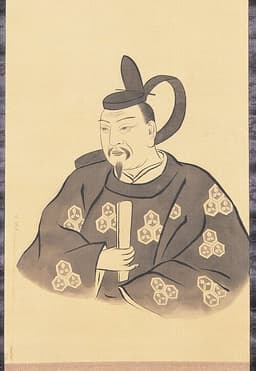
Naoe Kanetsugu
General · Modern
52.8Total
Basic Information
Born
1941
1560
Died
—
1620
Era
Modern
Modern
Nationality
Mauritania
Japan
Occupation
General
General
Civilization
Other
Eastern
Score Comparison
Military (10%)
25.9
10.0
Political (20%)
68.0
61.3
Influence (20%)
51.8
54.9
Legacy (20%)
43.3
48.3
Leadership (15%)
53.2
72.0
Strategy (15%)
30.3
60.0
TOTAL
47.6
52.8
Maaouya Ould SidAhmed Taya — Complete Timeline
1984 AD
Seizure of Power in CoupPolitical Action
Maaouya Ould SidAhmed Taya seized power in a bloodless coup on December 12, 1984, overthrowing President Mohamed Khouna Ould Haidalla. He became head of state and later president.
CoupPower Transition
Impact: national
1991 AD
Establishment of Multi-Party SystemReform◆ Major
Under pressure, Ould Taya introduced a new constitution in July 1991 that legalized political parties and established a multi-party system. This ended the one-party state but maintained his dominance.
Political ReformDemocratization
Impact: nationalprogressive
1999 AD
Recognition of IsraelPolitical Action◆ Major
Mauritania under Ould Taya established full diplomatic relations with Israel on October 28, 1999, becoming one of only three Arab League states to do so. This strained relations with other Arab nations.
Foreign PolicyArab-Israeli Relations
Impact: regional
2005 AD
Overthrow in CoupPolitical Action
Ould Taya was overthrown in a military coup on August 3, 2005, while attending the funeral of King Fahd of Saudi Arabia. The coup ended his 21-year rule and was led by the Military Council for Justice and Democracy.
CoupEnd of Rule
Impact: nationaltragic
Naoe Kanetsugu — Complete Timeline
1578 AD
Service under Uesugi KagekatsuPolitical Action
Naoe Kanetsugu served as the chief retainer of Uesugi Kagekatsu, the daimyo of the Uesugi clan. He was known for his loyalty and military skill, and famously wore a helmet adorned with a love letter from his wife, symbolizing his devotion.
RetainerUesugi ClanSengoku
Impact: regionalconstructive
1600 AD
Battle of SekigaharaWar◆ Major
Naoe Kanetsugu commanded the Uesugi clan forces at the Battle of Sekigahara, fighting on the side of the western coalition. However, the Uesugi army was delayed by engagements with Date Masamune and did not reach the main battlefield in time to influence the outcome.
SekigaharaUesugi ClanBattle
Impact: national
Defense of Aizu against Date MasamuneWar◆ Major
Naoe Kanetsugu led the defense of the Uesugi domain of Aizu against an invasion by Date Masamune during the Sekigahara campaign. He successfully repelled Date's forces, preventing the fall of the Uesugi stronghold, but this diversion kept him from joining the main battle.
DefenseUesugi ClanDate Masamune
Impact: regionalconstructive
1601 AD
Surrender to Tokugawa IeyasuPolitical Action◆ Major
After the Battle of Sekigahara, Naoe Kanetsugu negotiated the surrender of the Uesugi clan to Tokugawa Ieyasu. The Uesugi were allowed to retain their domain but were reduced in size, and Kanetsugu continued to serve the clan under the Tokugawa shogunate.
SurrenderTokugawa ShogunateUesugi Clan
Impact: regional
This comparison has not been analyzed yet.
One-time AI generation (~1 minute). Scores and timeline are already available below.
Rankings
🥇
Naoe KanetsuguLeader
Mil: 10.0Pol: 61.3Inf: 54.9
52.8
🥈
Maaouya Ould SidAhmed Taya
Mil: 25.9Pol: 68.0Inf: 51.8
47.6
+5.2 behind
How This Comparison Works
Algorithm
Each figure is scored on 6 dimensions (0—100 scale) based on structured historical data: Military (10%), Political (20%), Influence (20%), Legacy (20%), Leadership (15%), Strategy (15%). The weighted total produces the final ranking.
Data Sources
Scores are computed from structured sub-indicators in the database. Scale factors adjust for era (Ancient ×0.85, Modern ×1.0) and civilization size (Eastern ×1.05, Other ×0.80) to account for differences in population and military scale.
Maximum 3 Figures
Comparisons are limited to 2—3 figures to ensure readability and statistical meaningfulness.
Error Margins
±5 points per dimension — Sub-scores are derived from historical records with inherent uncertainty. Two figures within 5 points on a dimension should be considered roughly equivalent in that area.
Total Score Accuracy
±3 points overall — The weighted combination of 6 dimensions produces a total score with approximately ±3 points of uncertainty. Differences of less than 3 points are not statistically significant— the figures are effectively tied.
Known Limitations
- Historical records are incomplete and uneven across civilizations
- Figures from oral-tradition societies may be underrepresented
- Occupation labels can misclassify multi-role figures
- Scores measure capability and impact, not moral character
- Quantitative scoring is a comparison tool, not absolute truth
Capability Radar
Military (10%) — Battles & Warfare
Battles
10
45
Win Rate
10
40
Expansion
10
25
Political (20%) — Governance & Reform
Reform
40
30
Diplomacy
50
50
Economy
30
35
Influence (20%) — Cultural & Global Reach
Cultural
20
40
Global
20
20
Legacy (20%) — Historical Impact
Historical
30
45
Longevity
20
35
Leadership (15%) — Power & Stability
Tenure
70
55
Stability
30
45
Strategy (15%) — Tactics & Innovation
Strategy
10
50
Tactics
10
55
Reform
20
30
Similar Comparisons
Comments & Discussion
No comments yet. Be the first to share your thoughts!