Loading...
Lysimachus vs Philip II of Macedon
Philip II of Macedon leads by 18.5 pts · 2 figures compared
…
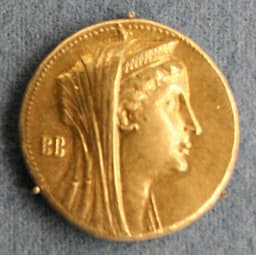
Lysimachus
Emperor · Ancient
55.4Total
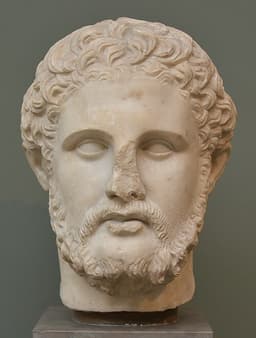
Philip II of Macedon
Emperor · Ancient
73.9Total
Basic Information
Born
-361
-382
Died
-281
-336
Era
Ancient
Ancient
Nationality
Macedon
Macedon
Occupation
Emperor
Emperor
Civilization
Western
Western
Score Comparison
Military (10%)
67.3
65.0
Political (20%)
61.3
76.0
Influence (20%)
51.0
75.0
Legacy (20%)
42.5
70.0
Leadership (15%)
74.0
78.0
Strategy (15%)
50.0
80.3
TOTAL
55.4
73.9
Lysimachus — Complete Timeline
306 BC
Foundation of the Kingdom of ThracePolitical Action◆ Major
Lysimachus declared himself king of Thrace, establishing a Hellenistic kingdom in the region. He ruled over Thrace, parts of Asia Minor, and later Macedonia, but his kingdom was short-lived and fragmented after his death.
DiadochiThraceKingship
Impact: regionalconstructive
301 BC
Battle of IpsusWar
Lysimachus fought alongside Seleucus I against Antigonus I at Ipsus. The victory allowed Lysimachus to expand his territory in Asia Minor, gaining control of much of Anatolia. However, his alliance with Seleucus later turned to conflict.
DiadochiBattleAnatolia
Impact: regional
284 BC
Execution of AgathoclesPolitical Action◆ Major
Lysimachus ordered the execution of his son Agathocles on the instigation of his wife Arsinoe II. This act caused a revolt among his subjects and led to the defection of many supporters to Seleucus, weakening Lysimachus' position before Corupedium.
DiadochiDynastic ConflictThrace
Impact: regionaldestructive
281 BC
Battle of CorupediumWar◆ Major
Lysimachus fought against Seleucus I at Corupedium in Lydia. He was defeated and killed in battle, ending his rule. This victory allowed Seleucus to claim control over Asia Minor, but Seleucus was assassinated shortly after.
DiadochiBattleDeath
Impact: regionaltragic
Philip II of Macedon — Complete Timeline
359 BC
Reforms of the Macedonian ArmyReform◆ Major
Philip II reorganized the Macedonian army, introducing the sarissa (long pike) and the phalanx formation. He also improved cavalry tactics and logistics, creating a professional, disciplined force that was superior to Greek hoplite armies.
MacedonMilitary ReformPhalanx
Impact: regionalconstructive
338 BC
Battle of ChaeroneaWar
Philip II led the Macedonian army to a decisive victory over the combined forces of Athens and Thebes at Chaeronea. The battle ended Greek independence and established Macedonian hegemony over Greece. Philip's son Alexander commanded the cavalry on the left wing.
MacedonGreeceBattle
Impact: regionaldestructive
337 BC
Formation of the League of CorinthPolitical Action◆ Major
Philip II established the League of Corinth, a federation of Greek states under Macedonian leadership. The league declared war on Persia and appointed Philip as its commander-in-chief, laying the groundwork for Alexander's later invasion.
MacedonGreeceAlliance
Impact: regionalconstructive
336 BC
Assassination at AegaePolitical Action◆ Major
Philip II was assassinated by his bodyguard Pausanias at the wedding of his daughter Cleopatra in Aegae. The motive remains unclear, but his death led to the immediate succession of his son Alexander the Great, who continued his plans for the Persian invasion.
MacedonAssassinationSuccession
Impact: regionaltragic
Expert Analysis
Origins
Lysimachus, born around 361 BCE in Pella, Macedonia, was a Thessalian nobleman who served as a bodyguard (somatophylax) to Alexander the Great. His father, Agathocles, was a minor noble. Lysimachus was among Alexander's trusted companions during the campaigns in Asia, but he lacked the royal lineage of other Diadochi. Philip II of Macedon, born in 382 BCE in Pella, was the son of King Amyntas III and Eurydice. He spent his youth as a hostage in Thebes, where he was exposed to Greek military tactics and culture. His early life was marked by instability, as Macedonia was weak and threatened by neighboring powers.
Rise to Power
Lysimachus rose after Alexander's death in 323 BCE. Initially assigned to control Thrace as a satrap, he consolidated power by defeating local tribes and rival generals. His key turning point was the Battle of Ipsus in 301 BCE, where he allied with Seleucus I to defeat Antigonus I. This victory expanded his territory into Asia Minor. He declared himself king of Thrace in 305 BCE, establishing a Hellenistic kingdom. Philip II ascended to the Macedonian throne in 359 BCE after his brother Perdiccas III died in battle. He immediately reformed the army, introduced the sarissa phalanx, and used diplomacy and marriage alliances to neutralize threats. His decisive victory at the Battle of Chaeronea in 338 BCE ended Greek independence and established Macedonian hegemony, leading to the formation of the League of Corinth in 337 BCE.
Leadership & Governance
Lysimachus ruled Thrace with a heavy hand, imposing taxes and settling Greek colonies. He minted coins bearing his image and promoted Hellenization. However, his governance was marred by paranoia and cruelty, notably the execution of his son Agathocles on the instigation of his wife Arsinoe II in 284 BCE. This act alienated his subjects and led to revolt. Philip II was a masterful diplomat and reformer. He reorganized Macedonia into a centralized state, improved infrastructure, and established the League of Corinth as a tool for control. His political score of 76.0 reflects his ability to unify Greece through a mix of force and persuasion, while Lysimachus's political score of 61.3 indicates his less effective governance.
Triumph & Tragedy
Lysimachus's greatest success was expanding his kingdom to include Thrace, parts of Asia Minor, and Macedonia after the Battle of Ipsus. His military score of 67.3 reflects competent but not exceptional generalship. His tragedy was his defeat and death at the Battle of Corupedium in 281 BCE against Seleucus I, ending his dynasty. The execution of his son sparked internal strife that weakened his realm. Philip II's triumph was the unification of Greece under Macedonian rule, achieved by the Battle of Chaeronea and the League of Corinth. His military reforms created the army that his son Alexander used to conquer Persia. His tragedy was his assassination in 336 BCE at the wedding of his daughter, leaving his empire to a young and untested successor. Despite this, his legacy endured, with his political and strategic scores of 76.0 and 80.3 far outstripping Lysimachus's 61.3 and 50.0.
Character & Destiny
Lysimachus was ambitious but ruthless and paranoid. His decision to execute his son alienated his supporters and led to his downfall. He lacked the diplomatic finesse of other Diadochi. Philip II was calculating, resilient, and visionary. His time as a hostage in Thebes taught him Greek tactics and the value of patience. He was also a skilled diplomat, using marriage alliances to secure peace. His character allowed him to build a stable kingdom, but his assassination cut short his plans for a Persian invasion. Historical assessments rank Philip II as one of history's great state-builders, while Lysimachus is seen as a lesser Diadochos who failed to build a lasting dynasty.
Legacy
Lysimachus's kingdom collapsed after his death, and Thrace fell into chaos before being absorbed by the Seleucid and Ptolemaic empires. His influence score of 51.0 reflects his limited long-term impact. He is remembered primarily as a minor figure in the Wars of the Diadochi. Philip II's legacy is immense: he transformed Macedonia from a backwater into a major power, created the army that conquered Persia, and laid the foundations for the Hellenistic world. His legacy score of 70.0 is justified by his enduring influence on military tactics and political organization. The League of Corinth served as a model for later confederations.
Conclusion
Philip II of Macedon had a far greater impact than Lysimachus. With a total score of 73.9 compared to Lysimachus's 55.4, Philip excelled in every category: political (76.0 vs 61.3), influence (75.0 vs 51.0), legacy (70.0 vs 42.5), leadership (78.0 vs 74.0), and strategy (80.3 vs 50.0). While Lysimachus was a competent general who carved out a kingdom, he failed to build a lasting state or contribute significantly to history. Philip II fundamentally changed the course of Western civilization by unifying Greece and creating the Macedonian war machine. His reforms and policies directly enabled Alexander's conquests and the spread of Hellenism. In the hierarchy of ancient leaders, Philip II stands as a pivotal figure, while Lysimachus remains a footnote.
Rankings
🥇
Philip II of MacedonLeader
Mil: 65.0Pol: 76.0Inf: 75.0
73.9
🥈
Lysimachus
Mil: 67.3Pol: 61.3Inf: 51.0
55.4
+18.5 behind
How This Comparison Works
Algorithm
Each figure is scored on 6 dimensions (0—100 scale) based on structured historical data: Military (10%), Political (20%), Influence (20%), Legacy (20%), Leadership (15%), Strategy (15%). The weighted total produces the final ranking.
Data Sources
Scores are computed from structured sub-indicators in the database. Scale factors adjust for era (Ancient ×0.85, Modern ×1.0) and civilization size (Eastern ×1.05, Other ×0.80) to account for differences in population and military scale.
Maximum 3 Figures
Comparisons are limited to 2—3 figures to ensure readability and statistical meaningfulness.
Error Margins
±5 points per dimension — Sub-scores are derived from historical records with inherent uncertainty. Two figures within 5 points on a dimension should be considered roughly equivalent in that area.
Total Score Accuracy
±3 points overall — The weighted combination of 6 dimensions produces a total score with approximately ±3 points of uncertainty. Differences of less than 3 points are not statistically significant— the figures are effectively tied.
Known Limitations
- Historical records are incomplete and uneven across civilizations
- Figures from oral-tradition societies may be underrepresented
- Occupation labels can misclassify multi-role figures
- Scores measure capability and impact, not moral character
- Quantitative scoring is a comparison tool, not absolute truth
Capability Radar
Military (10%) — Battles & Warfare
Battles
70
85
Win Rate
60
90
Expansion
75
85
Political (20%) — Governance & Reform
Reform
40
90
Diplomacy
55
92
Economy
50
80
Influence (20%) — Cultural & Global Reach
Cultural
30
80
Global
35
80
Legacy (20%) — Historical Impact
Historical
45
85
Longevity
30
85
Leadership (15%) — Power & Stability
Tenure
65
75
Stability
40
70
Strategy (15%) — Tactics & Innovation
Strategy
70
92
Tactics
65
88
Reform
30
95
Similar Comparisons
Comments & Discussion
No comments yet. Be the first to share your thoughts!