Loading...
Lysimachus vs Pepi II Neferkare
Lysimachus leads by 9.8 pts · 2 figures compared
…
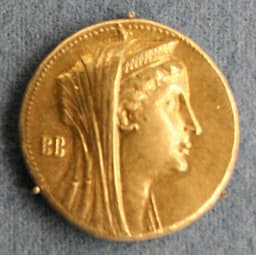
Lysimachus
Emperor · Ancient
55.4Total
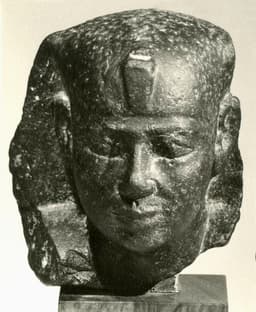
Pepi II Neferkare
Emperor · Ancient
45.6Total
Basic Information
Born
-361
-2260
Died
-281
-2170
Era
Ancient
Ancient
Nationality
Macedon
Old Kingdom Egypt
Occupation
Emperor
Emperor
Civilization
Western
Middle Eastern
Score Comparison
Military (10%)
67.3
10.2
Political (20%)
61.3
32.1
Influence (20%)
51.0
44.8
Legacy (20%)
42.5
52.0
Leadership (15%)
74.0
74.0
Strategy (15%)
50.0
45.0
TOTAL
55.4
45.6
Lysimachus — Complete Timeline
306 BC
Foundation of the Kingdom of ThracePolitical Action◆ Major
Lysimachus declared himself king of Thrace, establishing a Hellenistic kingdom in the region. He ruled over Thrace, parts of Asia Minor, and later Macedonia, but his kingdom was short-lived and fragmented after his death.
DiadochiThraceKingship
Impact: regionalconstructive
301 BC
Battle of IpsusWar
Lysimachus fought alongside Seleucus I against Antigonus I at Ipsus. The victory allowed Lysimachus to expand his territory in Asia Minor, gaining control of much of Anatolia. However, his alliance with Seleucus later turned to conflict.
DiadochiBattleAnatolia
Impact: regional
284 BC
Execution of AgathoclesPolitical Action◆ Major
Lysimachus ordered the execution of his son Agathocles on the instigation of his wife Arsinoe II. This act caused a revolt among his subjects and led to the defection of many supporters to Seleucus, weakening Lysimachus' position before Corupedium.
DiadochiDynastic ConflictThrace
Impact: regionaldestructive
281 BC
Battle of CorupediumWar◆ Major
Lysimachus fought against Seleucus I at Corupedium in Lydia. He was defeated and killed in battle, ending his rule. This victory allowed Seleucus to claim control over Asia Minor, but Seleucus was assassinated shortly after.
DiadochiBattleDeath
Impact: regionaltragic
Pepi II Neferkare — Complete Timeline
2260 BC
Accession to the thronePolitical Action◆ Major
Pepi II became pharaoh of Egypt at approximately age 6, succeeding his half-brother Merenre I. His reign began the longest documented rule of any monarch in history, lasting 94 years into the early 22nd century BC.
AccessionOld KingdomDynasty VI
Impact: national
2250 BC
Construction of pyramid complex at SaqqaraCultural
Pepi II built his pyramid complex at South Saqqara, named 'Neferkare is Established'. The pyramid, though smaller than earlier ones, included a mortuary temple and causeway. Its construction drained state resources during a period of declining central authority.
PyramidArchitectureOld Kingdom
Impact: national
2240 BC
Expedition to NubiaWar◆ Major
Pepi II ordered military campaigns into Nubia to secure trade routes and resources. These expeditions extended Egyptian control southward and brought back gold, ivory, and slaves, but also faced resistance from local tribes.
Nubian CampaignTradeMilitary
Impact: regional
2230 BC
Correspondence with HarkhufCultural
Pepi II, as a child pharaoh, wrote a letter to the explorer Harkhuf expressing excitement about bringing a dancing dwarf from Punt. This letter, preserved in Harkhuf's tomb, provides insight into the young king's personality and Egypt's trade with distant lands.
CorrespondenceTradePunt
Impact: national
2200 BC
Decline of central authorityPolitical Action◆ Major
During Pepi II's later reign, the power of the pharaoh weakened as provincial nomarchs gained autonomy. The central government's inability to control the provinces contributed to the fragmentation of the Old Kingdom after his death.
DecentralizationOld Kingdom CollapsePolitical
Impact: nationaldestructive
Expert Analysis
Origins
Lysimachus was born around 360 BCE in Pella, Macedon, to a noble family. He served as a bodyguard to Alexander the Great during the Asian campaigns, gaining military experience and royal favor. After Alexander's death in 323 BCE, Lysimachus was appointed satrap of Thrace, a region of strategic importance but limited Hellenic influence.
Pepi II Neferkare was born circa 2284 BCE into the Sixth Dynasty of Egypt. His father, Pharaoh Merenre I, died early, leaving the throne to Pepi II at about age six. His mother, Queen Ankhesenpepi II, served as regent. Pepi II's reign began during a period of relative stability but would witness the gradual erosion of central authority.
Rise to Power
Lysimachus consolidated control over Thrace by 305 BCE, declaring himself king. He expanded his territory through alliances and military campaigns, notably participating in the Battle of Ipsus in 301 BCE alongside Seleucus I against Antigonus I. The victory allowed him to annex large parts of Asia Minor. His political acumen scored 61.3, reflecting his ability to navigate the complex Hellenistic power struggles.
Pepi II ascended the throne as a child, initially under a regency. His early reign saw successful expeditions to Nubia and trade missions to Punt, as recorded in the famous letter to Harkhuf. His political score of 32.1 reflects his limited agency; much of the governance was handled by officials and nobles. His long reign, however, allowed him to become a symbol of continuity.
Leadership & Governance
Lysimachus ruled with a military leadership style, scoring 74.0 in leadership. He founded cities and minted coins, but his governance was autocratic. He executed his son Agathocles in 283 BCE on suspicion of conspiracy, instigated by his wife Arsinoe II, which sparked rebellion and weakened his support.
Pepi II's leadership score is also 74.0, but his style was passive. He relied on provincial governors (nomarchs) who gradually became independent. His pyramid complex at Saqqara was smaller than predecessors, reflecting diminished resources. The central government's decline accelerated during his later reign, leading to the First Intermediate Period after his death.
Triumph & Tragedy
Lysimachus's greatest triumph was establishing the Kingdom of Thrace, controlling territories from the Danube to the Taurus mountains. His military score of 67.3 reflects successes at Ipsus and other battles. His tragedy was his defeat and death at the Battle of Corupedium in 281 BCE against Seleucus I, ending his kingdom. The execution of his son also tarnished his reputation.
Pepi II's triumph is his record 94-year reign, the longest documented in history. He maintained Egypt's borders and conducted trade missions. However, his tragedy was the erosion of pharaonic power under his watch. By his death around 2184 BCE, Egypt fragmented into warring nomarchies, ending the Old Kingdom.
Character & Destiny
Lysimachus was ambitious and ruthless, but his paranoia led to familial strife. His decision to kill Agathocles alienated supporters, contributing to his downfall. His strategy score of 50.0 indicates average foresight; he failed to secure alliances against Seleucus.
Pepi II was likely a figurehead for much of his reign. His longevity became a liability as power decentralized. His influence score of 44.8 reflects his symbolic importance, but his political score of 32.1 shows his inability to reverse trends. Both leaders saw their realms decline after their deaths.
Legacy
Lysimachus's legacy is mixed. His kingdom dissolved after his death, and he is often remembered as a secondary Diadochus. His total score of 55.4 places him slightly above Pepi II's 45.6, but his impact was limited to the Hellenistic period. He contributed to the spread of Greek culture in Thrace.
Pepi II's legacy is more enduring as the longest-reigning monarch. His pyramid and inscriptions provide historical data. However, his reign marked the end of the Old Kingdom, and his failure to maintain central authority led to centuries of turmoil. His influence score of 44.8 and legacy score of 52.0 reflect his symbolic rather than substantive impact.
Conclusion
While Lysimachus has a higher total score (55.4 vs 45.6), Pepi II's reign had a greater long-term impact on history. Lysimachus's achievements were ephemeral; his kingdom vanished within a generation. Pepi II's 94-year rule, though passive, set records and signaled the transition from the Old to the First Intermediate Period, a pivotal shift in Egyptian civilization. Therefore, Pepi II Neferkare had greater historical impact, despite lower scores in military and political metrics.
Rankings
🥇
LysimachusLeader
Mil: 67.3Pol: 61.3Inf: 51.0
55.4
🥈
Pepi II Neferkare
Mil: 10.2Pol: 32.1Inf: 44.8
45.6
+9.8 behind
How This Comparison Works
Algorithm
Each figure is scored on 6 dimensions (0—100 scale) based on structured historical data: Military (10%), Political (20%), Influence (20%), Legacy (20%), Leadership (15%), Strategy (15%). The weighted total produces the final ranking.
Data Sources
Scores are computed from structured sub-indicators in the database. Scale factors adjust for era (Ancient ×0.85, Modern ×1.0) and civilization size (Eastern ×1.05, Other ×0.80) to account for differences in population and military scale.
Maximum 3 Figures
Comparisons are limited to 2—3 figures to ensure readability and statistical meaningfulness.
Error Margins
±5 points per dimension — Sub-scores are derived from historical records with inherent uncertainty. Two figures within 5 points on a dimension should be considered roughly equivalent in that area.
Total Score Accuracy
±3 points overall — The weighted combination of 6 dimensions produces a total score with approximately ±3 points of uncertainty. Differences of less than 3 points are not statistically significant— the figures are effectively tied.
Known Limitations
- Historical records are incomplete and uneven across civilizations
- Figures from oral-tradition societies may be underrepresented
- Occupation labels can misclassify multi-role figures
- Scores measure capability and impact, not moral character
- Quantitative scoring is a comparison tool, not absolute truth
Capability Radar
Military (10%) — Battles & Warfare
Battles
70
5
Win Rate
60
5
Expansion
75
5
Political (20%) — Governance & Reform
Reform
40
10
Diplomacy
55
10
Economy
50
10
Influence (20%) — Cultural & Global Reach
Cultural
30
15
Global
35
10
Legacy (20%) — Historical Impact
Historical
45
30
Longevity
30
90
Leadership (15%) — Power & Stability
Tenure
65
95
Stability
40
10
Strategy (15%) — Tactics & Innovation
Strategy
70
5
Tactics
65
5
Reform
30
5
Similar Comparisons
Comments & Discussion
No comments yet. Be the first to share your thoughts!