Loading...
Gilgamesh of Uruk vs Lysimachus
Gilgamesh of Uruk leads by 11.4 pts · 2 figures compared
…
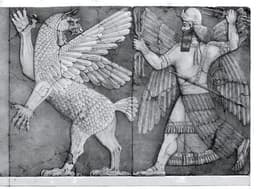
Gilgamesh of Uruk
Emperor · Ancient
66.8Total
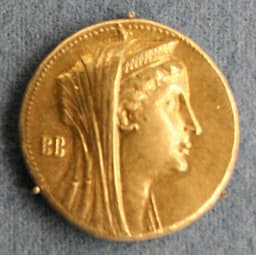
Lysimachus
Emperor · Ancient
55.4Total
Basic Information
Born
-2700
-361
Died
-2650
-281
Era
Ancient
Ancient
Nationality
Sumer
Macedon
Occupation
Emperor
Emperor
Civilization
Middle Eastern
Western
Score Comparison
Military (10%)
30.0
67.3
Political (20%)
48.0
61.3
Influence (20%)
68.0
51.0
Legacy (20%)
90.0
42.5
Leadership (15%)
74.0
74.0
Strategy (15%)
60.0
50.0
TOTAL
66.8
55.4
Gilgamesh of Uruk — Complete Timeline
2700 BC
Journey to the Cedar ForestWar◆ Major
Gilgamesh and Enkidu journeyed to the Cedar Forest to slay the monster Humbaba. They succeeded, but this act angered the gods and set in motion Enkidu's death.
QuestMonsterHumbaba
Impact: global
Reign as King of UrukPolitical Action◆ Major
Gilgamesh ruled as the fifth king of Uruk, a major Sumerian city-state. He is listed in the Sumerian King List and is the central figure of the Epic of Gilgamesh.
Sumerian KingUruk
Impact: regional
Construction of the Walls of UrukCultural◆ Major
Gilgamesh is credited with building the massive defensive walls of Uruk, which are described in the epic as a great achievement. These walls symbolized his power and the city's prosperity.
ArchitectureDefenseUruk
Impact: regionalconstructive
Friendship with EnkiduOther◆ Major
Gilgamesh befriended Enkidu, a wild man created by the gods to challenge him. Their friendship became a central theme of the epic, leading to their adventures together.
FriendshipEpicEnkidu
Impact: global
Quest for ImmortalityOther
After Enkidu's death, Gilgamesh embarked on a quest to find the secret of immortality. He journeyed to the ends of the earth and met Utnapishtim, the flood survivor, but ultimately failed to gain eternal life.
ImmortalityQuestMortality
Impact: globaltragic
Lysimachus — Complete Timeline
306 BC
Foundation of the Kingdom of ThracePolitical Action◆ Major
Lysimachus declared himself king of Thrace, establishing a Hellenistic kingdom in the region. He ruled over Thrace, parts of Asia Minor, and later Macedonia, but his kingdom was short-lived and fragmented after his death.
DiadochiThraceKingship
Impact: regionalconstructive
301 BC
Battle of IpsusWar
Lysimachus fought alongside Seleucus I against Antigonus I at Ipsus. The victory allowed Lysimachus to expand his territory in Asia Minor, gaining control of much of Anatolia. However, his alliance with Seleucus later turned to conflict.
DiadochiBattleAnatolia
Impact: regional
284 BC
Execution of AgathoclesPolitical Action◆ Major
Lysimachus ordered the execution of his son Agathocles on the instigation of his wife Arsinoe II. This act caused a revolt among his subjects and led to the defection of many supporters to Seleucus, weakening Lysimachus' position before Corupedium.
DiadochiDynastic ConflictThrace
Impact: regionaldestructive
281 BC
Battle of CorupediumWar◆ Major
Lysimachus fought against Seleucus I at Corupedium in Lydia. He was defeated and killed in battle, ending his rule. This victory allowed Seleucus to claim control over Asia Minor, but Seleucus was assassinated shortly after.
DiadochiBattleDeath
Impact: regionaltragic
Expert Analysis
Origins
Gilgamesh of Uruk, according to the Sumerian King List, was the fifth king of Uruk, ruling around 2700 BCE. He was the son of King Lugalbanda and the goddess Ninsun, making him two-thirds divine. His early life is shrouded in myth, but he is credited with building the walls of Uruk, a massive defensive structure that symbolized his power. Lysimachus was born around 360 BCE in Pella, Macedon, to a noble family. He served as a bodyguard (somatophylax) to Alexander the Great, gaining military experience in the campaigns against Persia. His early career was defined by loyalty to Alexander, but after Alexander's death in 323 BCE, he became a key figure in the Wars of the Diadochi.
Rise to Power
Gilgamesh's rise was hereditary, but his reputation grew through his exploits. He consolidated power in Uruk, but his oppressive rule led the gods to create Enkidu to challenge him. Their friendship marked a turning point, leading to adventures like the slaying of Humbaba and the Bull of Heaven. These feats elevated his status, but also incurred divine wrath. Lysimachus rose through military prowess. He became satrap of Thrace in 323 BCE, but his position was precarious. He expanded his territory through alliances and battles, notably at the Battle of Ipsus in 301 BCE, where he sided with Seleucus I against Antigonus I. This victory gave him control over Asia Minor, allowing him to declare himself king. His political acumen (score 61.3) was evident in his ability to navigate the complex Hellenistic power struggles.
Leadership & Governance
Gilgamesh's leadership (score 74.0) evolved from a tyrannical ruler to a wise king after his quest for immortality. The epic portrays him as initially abusing his power, but later becoming a just ruler who prioritized his city's welfare. He built the walls of Uruk, which provided security and symbolized his commitment to his people. Lysimachus also scored 74.0 in leadership, but his governance was more practical. He founded cities like Lysimachia, minted coins, and maintained control over Thrace and parts of Asia Minor. However, his later years were marked by paranoia and cruelty, such as the execution of his son Agathocles on the instigation of his wife Arsinoe II. This act undermined his political stability and led to revolts.
Triumph & Tragedy
Gilgamesh's greatest success was his transformation from a tyrant to a wise ruler, but his failure was his inability to achieve immortality. He returned to Uruk with the wisdom that true immortality lies in legacy and good works. The epic ends with him taking pride in the walls of Uruk, symbolizing his enduring impact. Lysimachus's triumph was his expansion of Thrace into a significant Hellenistic kingdom, controlling territory from the Danube to the Taurus mountains. His tragedy was his defeat and death at the Battle of Corupedium in 281 BCE, where he fought Seleucus I. He had outlived many rivals but fell to his former ally. His execution of Agathocles also tarnished his reputation and led to internal strife.
Character & Destiny
Gilgamesh's character was defined by his quest for meaning. He started as a proud, oppressive king, but the death of Enkidu forced him to confront mortality. His journey reshaped his values, leading to wisdom and humility. Lysimachus was a capable soldier and administrator, but his ambition and later paranoia drove him to make fatal errors. He trusted his wife Arsinoe II too much, leading to the murder of his son. This act alienated his supporters and gave Seleucus the opportunity to strike. His character, while resilient, lacked the moral growth seen in Gilgamesh.
Legacy
Gilgamesh's legacy is immense (score 90.0). The Epic of Gilgamesh is one of the earliest known works of literature, influencing later myths and religious texts. He became a symbol of the quest for eternal life and the value of friendship. The walls of Uruk, though now ruins, attest to his historical existence. Lysimachus's legacy (score 42.5) is more limited. He is remembered as one of the Diadochi, but his kingdom did not outlast him. His coinage and city foundations are studied by historians, but he lacks the cultural resonance of Gilgamesh. The Battle of Corupedium marked the end of his line, and his territories were absorbed by the Seleucid Empire.
Conclusion
While Lysimachus achieved more in terms of tangible power and territorial control during his lifetime, Gilgamesh's impact on culture and literature far exceeds that of the Macedonian general. Gilgamesh scored 66.8 total, versus Lysimachus's 55.4, a gap of 11.4 points. Gilgamesh's legacy score of 90.0 dwarfs Lysimachus's 42.5, reflecting his enduring influence across millennia. Lysimachus was a competent ruler but ultimately a footnote in the Hellenistic period, while Gilgamesh, whether mythical or historical, shaped human storytelling and philosophy. Therefore, Gilgamesh had greater impact, not through military or political might, but through the power of myth and literature.
Rankings
🥇
Gilgamesh of UrukLeader
Mil: 30.0Pol: 48.0Inf: 68.0
66.8
🥈
Lysimachus
Mil: 67.3Pol: 61.3Inf: 51.0
55.4
+11.4 behind
How This Comparison Works
Algorithm
Each figure is scored on 6 dimensions (0—100 scale) based on structured historical data: Military (10%), Political (20%), Influence (20%), Legacy (20%), Leadership (15%), Strategy (15%). The weighted total produces the final ranking.
Data Sources
Scores are computed from structured sub-indicators in the database. Scale factors adjust for era (Ancient ×0.85, Modern ×1.0) and civilization size (Eastern ×1.05, Other ×0.80) to account for differences in population and military scale.
Maximum 3 Figures
Comparisons are limited to 2—3 figures to ensure readability and statistical meaningfulness.
Error Margins
±5 points per dimension — Sub-scores are derived from historical records with inherent uncertainty. Two figures within 5 points on a dimension should be considered roughly equivalent in that area.
Total Score Accuracy
±3 points overall — The weighted combination of 6 dimensions produces a total score with approximately ±3 points of uncertainty. Differences of less than 3 points are not statistically significant— the figures are effectively tied.
Known Limitations
- Historical records are incomplete and uneven across civilizations
- Figures from oral-tradition societies may be underrepresented
- Occupation labels can misclassify multi-role figures
- Scores measure capability and impact, not moral character
- Quantitative scoring is a comparison tool, not absolute truth
Capability Radar
Military (10%) — Battles & Warfare
Battles
40
70
Win Rate
35
60
Expansion
45
75
Political (20%) — Governance & Reform
Reform
50
40
Diplomacy
40
55
Economy
45
50
Influence (20%) — Cultural & Global Reach
Cultural
95
30
Global
85
35
Legacy (20%) — Historical Impact
Historical
95
45
Longevity
95
30
Leadership (15%) — Power & Stability
Tenure
60
65
Stability
50
40
Strategy (15%) — Tactics & Innovation
Strategy
40
70
Tactics
45
65
Reform
30
30
Similar Comparisons
Comments & Discussion
No comments yet. Be the first to share your thoughts!