Loading...
Lt Gen Sagat Singh vs Nian Gengyao
Lt Gen Sagat Singh leads by 0.7 pts · 2 figures compared
…

Lt Gen Sagat Singh
General · Modern
54.7Total
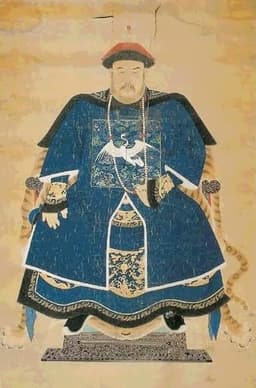
Nian Gengyao
General · Modern
54.0Total
Basic Information
Born
1918
1679
Died
2001
1726
Era
Modern
Modern
Nationality
India
China
Occupation
General
General
Civilization
Indian
Eastern
Score Comparison
Military (10%)
80.0
65.0
Political (20%)
35.1
42.2
Influence (20%)
58.0
54.1
Legacy (20%)
50.0
46.7
Leadership (15%)
50.7
68.0
Strategy (15%)
68.1
57.5
TOTAL
54.7
54.0
Lt Gen Sagat Singh — Complete Timeline
1939 AD
Service in World War IIWar◆ Major
Singh served in the Burma Campaign during World War II, fighting in the Arakan and Imphal operations. He was awarded the Military Cross for his leadership.
World War IIBurmaMilitary Cross
Impact: regional
Commissioned into Indian ArmyPolitical Action◆ Major
Sagat Singh was commissioned as a second lieutenant in the British Indian Army. He served in the 1st Gorkha Rifles, beginning a military career known for bold tactics.
Indian ArmyCommissionMilitary career
Impact: national
1971 AD
Command of 4th Corps in 1971 warWar◆ Major
Singh commanded the Indian Army's 4th Corps during the 1971 war. He led a rapid advance into East Pakistan, using helicopter-borne troops and bold maneuvers to bypass Pakistani defenses.
1971 war4th CorpsManeuver warfare
Impact: regionalconstructive
Helicopter assault on SylhetWar◆ Major
Singh ordered a helicopter-borne assault on Sylhet in East Pakistan on December 7, 1971, landing troops behind enemy lines. This bold move cut off Pakistani forces and accelerated the Indian advance.
1971 warSylhetHelicopter assault
Impact: regionalconstructive
Capture of DhakaWar
Singh's 4th Corps was the first to enter Dhaka on December 16, 1971, after a rapid advance. His forces secured the city, leading to the Pakistani surrender later that day.
1971 warDhakaCapture
Impact: globalconstructive
Nian Gengyao — Complete Timeline
1720 AD
Suppressed Tibetan revolt in LhasaWar◆ Major
Nian Gengyao led Qing forces to expel Dzungar invaders from Tibet and restore the Dalai Lama's authority. This campaign secured Qing control over Tibet and demonstrated his military capability.
TibetMilitary CampaignQing Expansion
Impact: regional
1723 AD
Appointed Grand Secretary and Governor-General of SichuanPolitical Action◆ Major
Nian Gengyao was appointed to high civil and military posts, including Grand Secretary and Governor-General of Sichuan. This made him one of the most powerful officials in the Qing empire.
AppointmentHigh OfficeQing Administration
Impact: national
1726 AD
Arrested and forced to commit suicidePolitical Action
The Yongzheng Emperor accused Nian Gengyao of corruption, treason, and overstepping authority. He was arrested, stripped of rank, and forced to commit suicide, ending his career abruptly.
ExecutionPurgeImperial Disfavor
Impact: nationaltragic
Expert Analysis
Origins
Lt Gen Sagat Singh (1919–2001) was born in a Rajput family in Jodhpur, Rajasthan. He was commissioned into the 1st Gorkha Rifles in 1939 and served in the Burma Campaign during World War II, where he earned a Military Cross for leading patrols behind Japanese lines. His early experience in jungle warfare and airborne operations shaped his later preference for rapid, unconventional maneuvers.
Nian Gengyao (1679–1726) hailed from a prominent Han Chinese family in Anhui. His father, Nian Xialing, was a high-ranking official. Nian passed the imperial examinations and entered the civil service, but soon shifted to military affairs. He served under Emperor Kangxi and later became a key commander for Yongzheng, known for his ruthless suppression of revolts in Tibet and the northwest.
Rise to Power
Sagat Singh rose through the ranks in the Indian Army, commanding a brigade during the 1965 war with Pakistan. His decisive moment came in 1971, when he was given command of the 4th Corps in East Pakistan. He orchestrated a series of rapid advances, using helicopter-borne troops to bypass Pakistani defenses. On December 7, 1971, he ordered the heliborne assault on Sylhet, landing troops behind enemy lines and forcing the Pakistani garrison to surrender. His corps reached Dhaka on December 16, the first to enter the city, effectively ending the war.
Nian Gengyao rose to power under Emperor Yongzheng, who relied on him to secure the empire's borders. In 1723, he led a campaign to expel Dzungar forces from Tibet, restoring the Dalai Lama's authority. He was appointed Grand Secretary and Governor-General of Sichuan, making him one of the most powerful officials in the Qing court. His military successes earned him immense prestige, but also made him a target for court intrigues.
Leadership & Governance
Sagat Singh's leadership was characterized by boldness and speed. He scored 68.1 in strategy, reflecting his use of vertical envelopment and psychological warfare. He told his troops, "Go forward, don't worry about your flanks—the enemy will be too busy running to attack you." His governance was limited to military command, but he emphasized morale and initiative among junior officers.
Nian Gengyao, scoring 68.0 in leadership, was a strict disciplinarian who demanded absolute obedience. He governed Sichuan with an iron hand, suppressing local rebellions and enforcing Qing authority. His political score of 42.2 reflects his inability to navigate the imperial court, where his arrogance and accumulation of power alarmed the emperor.
Triumph & Tragedy
Sagat Singh's greatest triumph was the capture of Dhaka in 1971, which led to the creation of Bangladesh. He achieved this with minimal casualties—Indian losses were around 2,500, while Pakistani forces surrendered 93,000. His tragedy was that he never reached the highest rank of Army Chief, partly due to his blunt personality. He retired in 1974, his contributions often overshadowed by other senior commanders.
Nian Gengyao's triumph was the successful pacification of Tibet and his role in securing Qing control over the northwest. However, his tragedy was his downfall: in 1725, Yongzheng accused him of 92 crimes, including corruption and treason. He was forced to commit suicide in 1726. His legacy is that of a brilliant general undone by his own ambition.
Character & Destiny
Sagat Singh was known for his daring and unconventional thinking. He took risks that other generals avoided, like the helicopter assault on Sylhet. His character—bold, impatient with bureaucracy—shaped his destiny as a war hero but not a peacetime leader. Historians note that his style was ahead of its time, influencing Indian military doctrine.
Nian Gengyao was arrogant and ruthless. He once executed a subordinate for disobeying an order, and he flaunted his power, even mimicking imperial rituals. His character made him invaluable in war but dangerous in peace. The Yongzheng Emperor, initially trusting, saw him as a threat and eliminated him. His fate illustrates the precariousness of power in the Qing court.
Legacy
Sagat Singh's legacy endures in the Indian Army's emphasis on maneuver warfare. The 1971 war is studied in military academies for its rapid execution. He scored 50.0 in legacy, reflecting his recognition as a tactical innovator but limited global fame. In India, he is honored as a hero, with a statue in Kolkata and his name on military buildings.
Nian Gengyao's legacy is more mixed. In China, he is remembered as a capable general who overreached. His campaigns secured Qing control over Tibet, but his downfall is a cautionary tale. He scored 46.7 in legacy. His story appears in historical novels and operas, often as a tragic figure.
Conclusion
Between Lt Gen Sagat Singh and Nian Gengyao, Singh had greater impact. His military score of 80.0, compared to Nian's 65.0, reflects his decisive role in a war that reshaped South Asia—creating Bangladesh and altering the balance of power. Nian's contributions were significant but ultimately ephemeral, as Qing control over Tibet was later contested. Singh's total score of 54.7 edges out Nian's 54.0, and his legacy of innovative warfare has broader relevance. While Nian was undone by his character, Singh's legacy endures in modern military doctrine. The historical verdict: Singh's maneuver warfare had a more lasting and positive impact on the world.
Rankings
🥇
Lt Gen Sagat SinghLeader
Mil: 80.0Pol: 35.1Inf: 58.0
54.7
🥈
Nian Gengyao
Mil: 65.0Pol: 42.2Inf: 54.1
54.0
+0.7 behind
How This Comparison Works
Algorithm
Each figure is scored on 6 dimensions (0—100 scale) based on structured historical data: Military (10%), Political (20%), Influence (20%), Legacy (20%), Leadership (15%), Strategy (15%). The weighted total produces the final ranking.
Data Sources
Scores are computed from structured sub-indicators in the database. Scale factors adjust for era (Ancient ×0.85, Modern ×1.0) and civilization size (Eastern ×1.05, Other ×0.80) to account for differences in population and military scale.
Maximum 3 Figures
Comparisons are limited to 2—3 figures to ensure readability and statistical meaningfulness.
Error Margins
±5 points per dimension — Sub-scores are derived from historical records with inherent uncertainty. Two figures within 5 points on a dimension should be considered roughly equivalent in that area.
Total Score Accuracy
±3 points overall — The weighted combination of 6 dimensions produces a total score with approximately ±3 points of uncertainty. Differences of less than 3 points are not statistically significant— the figures are effectively tied.
Known Limitations
- Historical records are incomplete and uneven across civilizations
- Figures from oral-tradition societies may be underrepresented
- Occupation labels can misclassify multi-role figures
- Scores measure capability and impact, not moral character
- Quantitative scoring is a comparison tool, not absolute truth
Capability Radar
Military (10%) — Battles & Warfare
Battles
75
65
Win Rate
80
70
Expansion
65
50
Political (20%) — Governance & Reform
Reform
20
20
Diplomacy
25
40
Economy
15
25
Influence (20%) — Cultural & Global Reach
Cultural
40
30
Global
40
25
Legacy (20%) — Historical Impact
Historical
55
40
Longevity
35
30
Leadership (15%) — Power & Stability
Tenure
30
45
Stability
20
30
Strategy (15%) — Tactics & Innovation
Strategy
80
55
Tactics
85
60
Reform
60
30
Similar Comparisons
Comments & Discussion
No comments yet. Be the first to share your thoughts!