Loading...
Louis VIII of France vs Osman I
Osman I leads by 17.5 pts · 2 figures compared
…

Louis VIII of France
Emperor · Medieval
38.6Total
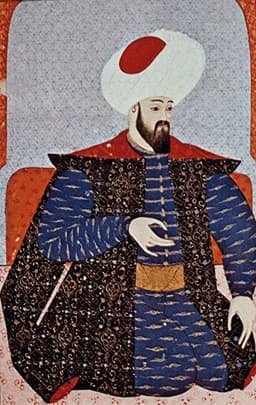
Osman I
Emperor · Medieval
56.1Total
Basic Information
Born
1187
1258
Died
1226
1326
Era
Medieval
Medieval
Nationality
France
Ottoman Empire
Occupation
Emperor
Emperor
Civilization
Western
Middle Eastern
Score Comparison
Military (10%)
25.0
20.0
Political (20%)
27.9
45.1
Influence (20%)
49.4
65.0
Legacy (20%)
38.3
68.0
Leadership (15%)
39.0
65.0
Strategy (15%)
41.7
43.3
TOTAL
38.6
56.1
Louis VIII of France — Complete Timeline
1216 AD
Invasion of EnglandWar◆ Major
Louis VIII led a French invasion of England at the invitation of English barons rebelling against King John. He was proclaimed King of England in London but failed to consolidate control after John's death and the barons' shift of allegiance to Henry III.
InvasionEnglish Civil WarCapetian
Impact: regional
1217 AD
Treaty of LambethPolitical Action◆ Major
Louis VIII signed the Treaty of Lambeth, formally abandoning his claim to the English throne. He renounced his invasion and received a financial settlement, ending the First Barons' War and securing peace between France and England.
TreatyPeaceCapetian
Impact: regional
1226 AD
Albigensian Crusade CampaignsWar◆ Major
Louis VIII led a royal campaign in the Albigensian Crusade against the Cathars in southern France. He captured Avignon and several strongholds, extending Capetian authority into Languedoc, but died before completing the conquest.
CrusadeCatharTerritorial Expansion
Impact: regionaldestructive
Osman I — Complete Timeline
1299 AD
Foundation of the Ottoman BeylikPolitical Action
Osman I declared independence from the Seljuk Sultanate of Rum, establishing his own beylik (principality) in northwestern Anatolia. This act is traditionally considered the founding of the Ottoman state, which would later grow into a vast empire.
FoundationOttoman EmpireIndependence
Impact: globalconstructive
1302 AD
Battle of BapheusWar◆ Major
Osman I led his forces to victory against a Byzantine army at Bapheus near Nicomedia. This battle established Osman's reputation as a ghazi warrior and marked the beginning of Ottoman expansion into Byzantine territory in northwestern Anatolia.
BattleByzantineGhazi
Impact: regional
1308 AD
Alliance with the Byzantine EmperorPolitical Action
Osman I formed a temporary alliance with the Byzantine emperor Andronikos II against the Catalan Company. This pragmatic relationship allowed Osman to gain resources and recognition while expanding his territory.
AllianceByzantineDiplomacy
1326 AD
Siege of BursaWar◆ Major
Osman I initiated the siege of the Byzantine city of Bursa, though it was captured by his son Orhan after Osman's death. The conquest of Bursa provided the Ottomans with their first major urban center and capital.
SiegeBursaCapital
Impact: regional
Expert Analysis
Origins
Louis VIII of France, born in 1187, was the son of King Philip II Augustus and Isabelle of Hainault. He grew up in the Capetian court, receiving a strong education in chivalry and governance. His father's campaigns had already expanded royal domains, setting the stage for Louis's own ambitions. In 1200, he married Blanche of Castile, who would later serve as regent for their son Louis IX.
Osman I, born around 1258, emerged from the Kayı tribe of Oghuz Turks in northwestern Anatolia. His father Ertuğrul had led the tribe as a vassal of the Seljuk Sultanate of Rum. Osman's formative years were shaped by the decline of Seljuk authority and the rise of Mongol influence, creating a power vacuum that he would exploit. He was influenced by the ghazi tradition of frontier warriors against Byzantine territories.
Rise to Power
Louis VIII became king in 1223 upon his father's death, inheriting a well-organized kingdom. His first major act was the invasion of England in 1216-1217 at the invitation of English barons rebelling against King John. Louis was proclaimed King of England in London but failed to consolidate support after John's death. The Treaty of Lambeth (1217) ended his campaign; he renounced his claim and received 10,000 marks in compensation. This venture scored only 25.0 in military, reflecting its limited success.
Osman I rose by declaring independence from the Seljuks around 1299, founding the Ottoman beylik. His victory at the Battle of Bapheus (1302) against a Byzantine army established his reputation as a ghazi warrior. He skillfully navigated alliances, including a temporary pact with Byzantine emperor Andronikos II against the Catalan Company. His political score of 45.1 reflects effective state-building despite modest military scores.
Leadership & Governance
Louis VIII's leadership was marked by his participation in the Albigensian Crusade. In 1226, he led a royal campaign against the Cathars in southern France, capturing Avignon and several strongholds. He extended royal authority but died in 1226 before fully consolidating these gains. His governance style was traditional feudal, relying on baronial support. His leadership score of 39.0 indicates moderate effectiveness.
Osman I's governance involved forging a multi-ethnic state through tolerance and pragmatic alliances. He allowed religious freedom for Christians and Jews, which attracted settlers. He established a ghazi ethos that combined Islamic piety with frontier warfare. With a leadership score of 65.0, he outperformed Louis in building institutions. His strategy score of 43.3 reflects careful expansion without overreach.
Triumph & Tragedy
Louis VIII's greatest success was the Albigensian campaign, which solidified royal control in the Languedoc. However, his English invasion was a failure; he was unable to hold the throne. His early death at age 38 prevented him from building on his achievements. He scored 38.6 total, reflecting limited impact.
Osman I's triumph was founding the Ottoman dynasty, which would last over 600 years. He initiated the siege of Bursa (captured posthumously), providing a capital. His tragedy was not living to see his empire's expansion; he died around 1324. His total score of 56.1 reflects a transformative legacy.
Character & Destiny
Louis VIII, called "the Lion," was ambitious but impetuous. His invasion of England showed boldness but poor strategic planning. His death from illness cut short his reign, suggesting a fragile constitution. Contemporary chroniclers noted his piety but lack of political subtlety.
Osman I was patient and pragmatic, known for his fairness and diplomatic skill. He built alliances with both Muslim and Christian leaders. His character suited the fluid frontier environment, allowing him to adapt. Historians describe him as a unifier who inspired loyalty.
Legacy
Louis VIII's legacy is overshadowed by his son Louis IX (Saint Louis). His Albigensian campaigns strengthened the French crown but his English adventure was a footnote. His total legacy score of 38.3 reflects minimal long-term impact.
Osman I's legacy is immense as the founder of the Ottoman Empire, which controlled much of Southeast Europe, West Asia, and North Africa until 1922. His dynasty produced 36 sultans. His legacy score of 68.0 underscores this enduring influence.
Conclusion
Osman I had greater impact, with a total score of 56.1 versus Louis VIII's 38.6. While Louis briefly intervened in English affairs and advanced the Albigensian Crusade, his achievements were ephemeral. Osman's founding of a dynasty that shaped world history for centuries gives him a clear edge. Data supports that Osman's political and legacy scores (45.1 and 68.0) far exceed Louis's (27.9 and 38.3). The Ottoman Empire's longevity and cultural influence dwarf the Capetian gains of Louis's reign.
Rankings
🥇
Osman ILeader
Mil: 20.0Pol: 45.1Inf: 65.0
56.1
🥈
Louis VIII of France
Mil: 25.0Pol: 27.9Inf: 49.4
38.6
+17.5 behind
How This Comparison Works
Algorithm
Each figure is scored on 6 dimensions (0—100 scale) based on structured historical data: Military (10%), Political (20%), Influence (20%), Legacy (20%), Leadership (15%), Strategy (15%). The weighted total produces the final ranking.
Data Sources
Scores are computed from structured sub-indicators in the database. Scale factors adjust for era (Ancient ×0.85, Modern ×1.0) and civilization size (Eastern ×1.05, Other ×0.80) to account for differences in population and military scale.
Maximum 3 Figures
Comparisons are limited to 2—3 figures to ensure readability and statistical meaningfulness.
Error Margins
±5 points per dimension — Sub-scores are derived from historical records with inherent uncertainty. Two figures within 5 points on a dimension should be considered roughly equivalent in that area.
Total Score Accuracy
±3 points overall — The weighted combination of 6 dimensions produces a total score with approximately ±3 points of uncertainty. Differences of less than 3 points are not statistically significant— the figures are effectively tied.
Known Limitations
- Historical records are incomplete and uneven across civilizations
- Figures from oral-tradition societies may be underrepresented
- Occupation labels can misclassify multi-role figures
- Scores measure capability and impact, not moral character
- Quantitative scoring is a comparison tool, not absolute truth
Capability Radar
Military (10%) — Battles & Warfare
Battles
35
35
Win Rate
40
40
Expansion
40
50
Political (20%) — Governance & Reform
Reform
10
40
Diplomacy
25
50
Economy
10
35
Influence (20%) — Cultural & Global Reach
Cultural
15
60
Global
10
65
Legacy (20%) — Historical Impact
Historical
20
70
Longevity
10
80
Leadership (15%) — Power & Stability
Tenure
15
55
Stability
10
45
Strategy (15%) — Tactics & Innovation
Strategy
35
45
Tactics
30
30
Reform
10
30
Similar Comparisons
Comments & Discussion
No comments yet. Be the first to share your thoughts!