Loading...
Louis the German vs Napoleon Bonaparte
Napoleon Bonaparte leads by 22.3 pts · 2 figures compared
…
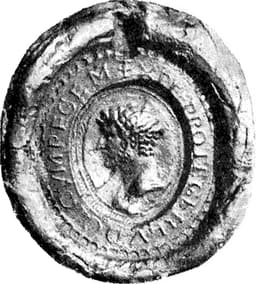
Louis the German
Emperor · Medieval
48.6Total

Napoleon Bonaparte
General · Modern
70.9Total
Basic Information
Born
806
1769
Died
876
1821
Era
Medieval
Modern
Nationality
East Francia
France
Occupation
Emperor
General
Civilization
Western
Western
Score Comparison
Military (10%)
30.0
94.0
Political (20%)
54.7
72.0
Influence (20%)
54.1
40.0
Legacy (20%)
47.5
80.0
Leadership (15%)
40.0
78.0
Strategy (15%)
60.0
90.0
TOTAL
48.6
70.9
Louis the German — Complete Timeline
841 AD
Battle of Fontenoy (841)War◆ Major
Louis the German allied with Charles the Bald to defeat their brother Lothair I at the Battle of Fontenoy. This battle was a decisive conflict in the Carolingian civil war that followed the death of Louis the Pious. The victory led to the Treaty of Verdun.
Civil WarBattleCarolingian
Impact: regional
842 AD
Oaths of Strasbourg (842)Political Action◆ Major
Louis the German and Charles the Bald swore mutual allegiance against Lothair I at Strasbourg. The oaths were recorded in both Old High German and Old French, providing early evidence of the linguistic divergence between German and French. This alliance solidified their partnership.
AllianceOathLinguistic Record
Impact: regionalconstructive
843 AD
Treaty of Verdun (843)Political Action
Louis the German, along with his brothers Lothair I and Charles the Bald, signed the Treaty of Verdun, dividing the Carolingian Empire into three kingdoms. Louis received East Francia, comprising roughly modern Germany, laying the foundation for a distinct German kingdom.
TreatyDivision of EmpireEast Francia
Impact: global
844 AD
Campaigns against the SlavsWar◆ Major
Louis the German led multiple campaigns against Slavic tribes along his eastern borders, including the Obotrites, Sorbs, and Bohemians. These campaigns expanded East Frankish influence and secured the frontier, but faced mixed success and frequent rebellions.
ExpansionSlavic WarsFrontier
Impact: regional
876 AD
Death of Louis the GermanOther
Louis the German died on August 28, 876, at Frankfurt. His kingdom of East Francia was divided among his three sons: Carloman, Louis the Younger, and Charles the Fat. His death led to further fragmentation of the Carolingian realm.
DeathSuccessionDivision
Impact: regional
Napoleon Bonaparte — Complete Timeline
1799 AD
Coup of 18 BrumaireOther◆ Major
Napoleon Bonaparte, with support from his brother Lucien and key political figures, overthrew the Directory in a bloodless coup. He established the Consulate with himself as First Consul, effectively becoming the ruler of France. This event ended the French Revolution's most unstable period.
French RevolutionCoupRise to Power
Impact: regional
1804 AD
Promulgation of the Napoleonic CodeOther◆ Major
Napoleon enacted the Civil Code of the French, known as the Napoleonic Code, a comprehensive set of laws that replaced the fragmented feudal legal systems. The code established legal equality, protected property rights, and secularized law. It became the basis for legal systems in many European and world countries.
Legal ReformNapoleonic CodeCivil Law
Impact: globalconstructive
1805 AD
Battle of AusterlitzWar◆ Major
Napoleon's Grande Arm
Napoleonic WarsBattleDecisive Victory
Impact: global
1812 AD
Invasion of RussiaWar◆ Major
Napoleon led the Grande Arm
Napoleonic WarsInvasionDisaster
Impact: globaldestructive
1815 AD
Battle of WaterlooWar◆ Major
Napoleon's French army was defeated by the combined forces of the Duke of Wellington's Anglo-Allied army and Gebhard Leberecht von Bl
Napoleonic WarsBattleFinal Defeat
Impact: globaldestructive
Expert Analysis
Origins
Louis the German, born around 806, was a grandson of Charlemagne and son of Emperor Louis the Pious. Raised in the Carolingian court, he received a traditional Frankish education and was appointed King of Bavaria in 817 at age 11. His early life was shaped by the internal conflicts of the Carolingian dynasty, particularly the struggle for power among his brothers. In contrast, Napoleon Bonaparte was born in 1769 on the island of Corsica, then part of France, to a modest noble family. He attended military schools in mainland France, graduating from the École Militaire in 1785. His Corsican heritage and the French Revolution provided a backdrop of upheaval that defined his formative years.
Rise to Power
Louis the German's rise was tied to the Carolingian civil wars. In 841, he allied with his brother Charles the Bald to defeat Lothair I at the Battle of Fontenoy. The following year, they swore the Oaths of Strasbourg, recorded in both Old High German and Old French, marking a linguistic divide. The Treaty of Verdun in 843 partitioned the empire, granting Louis the eastern portion, which became East Francia. His power was consolidated through campaigns against Slavic tribes and managing his own sons' revolts. Napoleon's ascent was meteoric. After distinguished service in the Italian campaign (1796), he staged the Coup of 18 Brumaire in 1799 (November 9), overthrowing the Directory. He became First Consul, then Emperor in 1804. His military genius was displayed at Austerlitz in 1805, where he crushed the Austrian and Russian armies. Political maneuvering, including the Concordat of 1801 with the Church, solidified his control.
Leadership & Governance
Louis the German ruled as a traditional Frankish king, relying on personal relationships with nobles and the Church. He focused on consolidating his realm, issuing charters, and defending borders against Slavic incursions. His governance was decentralized, with power shared among local counts. He scored 40.0 in leadership and 54.7 in political. Napoleon, in contrast, was a centralizing reformer. He implemented the Napoleonic Code (1804), a uniform legal system, reorganized education, and established the Bank of France. His leadership style was autocratic, with a meritocratic bureaucracy. He scored 78.0 in leadership and 72.0 in political. While Louis maintained existing structures, Napoleon transformed them.
Triumph & Tragedy
Louis the German's greatest success was establishing East Francia, which evolved into the Holy Roman Empire and modern Germany. He successfully defended his realm and expanded eastward against the Slavs. However, his kingdom was divided among his three sons after his death, leading to fragmentation. Napoleon's triumphs include military victories like Austerlitz (scoring 94.0 in military), the spread of revolutionary ideals, and the Napoleonic Code. His tragic failure was the 1812 invasion of Russia, where his Grande Armée of over 600,000 men was decimated by winter and scorched-earth tactics. He was exiled to Elba, returned, but was finally defeated at Waterloo in 1815. His empire collapsed, but his reforms endured.
Character & Destiny
Louis the German was pragmatic and cautious, focusing on stability. His decision to ally with Charles the Bald showed strategic sense (scoring 60.0 in strategy), but he struggled with family rebellions. His character was that of a consolidator, not a conqueror. Napoleon was ambitious, charismatic, and ruthless. His strategic brilliance (score 90.0) was matched by overreach. Historians note his inability to stop after victories, leading to his downfall. As the historian David Chandler observed, Napoleon's hubris was his undoing. Louis's destiny was to be a founder; Napoleon's to be a world-shaker who fell.
Legacy
Louis the German's legacy is foundational: he created the core of the German nation. His reign established East Francia as a distinct political entity, influencing German history for centuries. However, his scores in influence (54.1) and legacy (47.5) reflect limited direct impact outside his era. Napoleon's legacy is immense. The Napoleonic Code influenced legal systems worldwide. His military campaigns reshaped warfare. Nationalism spread across Europe. He scored 80.0 in legacy and 40.0 in influence (perhaps underrated). His impact on modern state-building, administration, and law is undeniable.
Conclusion
While Louis the German founded a kingdom that would become Germany, his impact was regional and medieval. Napoleon Bonaparte, with a total score of 70.9 against Louis's 48.6, transformed Europe and the world through his military campaigns, legal reforms, and administrative innovations. Napoleon's influence on modern institutions and national boundaries far exceeds Louis's. Therefore, Napoleon Bonaparte had greater historical impact, despite the difference in their eras and contexts.
Rankings
🥇
Napoleon BonaparteLeader
Mil: 94.0Pol: 72.0Inf: 40.0
70.9
🥈
Louis the German
Mil: 30.0Pol: 54.7Inf: 54.1
48.6
+22.3 behind
How This Comparison Works
Algorithm
Each figure is scored on 6 dimensions (0—100 scale) based on structured historical data: Military (10%), Political (20%), Influence (20%), Legacy (20%), Leadership (15%), Strategy (15%). The weighted total produces the final ranking.
Data Sources
Scores are computed from structured sub-indicators in the database. Scale factors adjust for era (Ancient ×0.85, Modern ×1.0) and civilization size (Eastern ×1.05, Other ×0.80) to account for differences in population and military scale.
Maximum 3 Figures
Comparisons are limited to 2—3 figures to ensure readability and statistical meaningfulness.
Error Margins
±5 points per dimension — Sub-scores are derived from historical records with inherent uncertainty. Two figures within 5 points on a dimension should be considered roughly equivalent in that area.
Total Score Accuracy
±3 points overall — The weighted combination of 6 dimensions produces a total score with approximately ±3 points of uncertainty. Differences of less than 3 points are not statistically significant— the figures are effectively tied.
Known Limitations
- Historical records are incomplete and uneven across civilizations
- Figures from oral-tradition societies may be underrepresented
- Occupation labels can misclassify multi-role figures
- Scores measure capability and impact, not moral character
- Quantitative scoring is a comparison tool, not absolute truth
Capability Radar
Military (10%) — Battles & Warfare
Battles
45
95
Win Rate
50
90
Expansion
35
95
Political (20%) — Governance & Reform
Reform
40
95
Diplomacy
55
80
Economy
45
85
Influence (20%) — Cultural & Global Reach
Cultural
35
85
Global
30
90
Legacy (20%) — Historical Impact
Historical
45
95
Longevity
40
90
Leadership (15%) — Power & Stability
Tenure
65
85
Stability
50
70
Strategy (15%) — Tactics & Innovation
Strategy
45
95
Tactics
40
98
Reform
30
92
Similar Comparisons
Comments & Discussion
No comments yet. Be the first to share your thoughts!