Loading...
This comparison has not been analyzed yet.
One-time AI generation (~1 minute). Scores and timeline are already available below.
Louis the German vs Munjong of Goryeo
Munjong of Goryeo leads by 10.2 pts · 2 figures compared
…
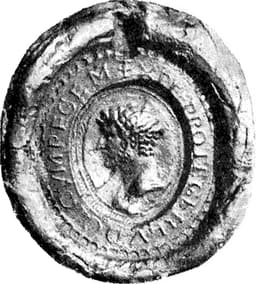
Louis the German
Emperor · Medieval
48.6Total

Munjong of Goryeo
Emperor · Medieval
58.8Total
Basic Information
Born
806
1019
Died
876
1083
Era
Medieval
Medieval
Nationality
East Francia
Korea
Occupation
Emperor
Emperor
Civilization
Western
Eastern
Score Comparison
Military (10%)
30.0
50.0
Political (20%)
54.7
62.7
Influence (20%)
54.1
58.3
Legacy (20%)
47.5
55.0
Leadership (15%)
40.0
78.0
Strategy (15%)
60.0
43.3
TOTAL
48.6
58.8
Louis the German — Complete Timeline
841 AD
Battle of Fontenoy (841)War◆ Major
Louis the German allied with Charles the Bald to defeat their brother Lothair I at the Battle of Fontenoy. This battle was a decisive conflict in the Carolingian civil war that followed the death of Louis the Pious. The victory led to the Treaty of Verdun.
Civil WarBattleCarolingian
Impact: regional
842 AD
Oaths of Strasbourg (842)Political Action◆ Major
Louis the German and Charles the Bald swore mutual allegiance against Lothair I at Strasbourg. The oaths were recorded in both Old High German and Old French, providing early evidence of the linguistic divergence between German and French. This alliance solidified their partnership.
AllianceOathLinguistic Record
Impact: regionalconstructive
843 AD
Treaty of Verdun (843)Political Action
Louis the German, along with his brothers Lothair I and Charles the Bald, signed the Treaty of Verdun, dividing the Carolingian Empire into three kingdoms. Louis received East Francia, comprising roughly modern Germany, laying the foundation for a distinct German kingdom.
TreatyDivision of EmpireEast Francia
Impact: global
844 AD
Campaigns against the SlavsWar◆ Major
Louis the German led multiple campaigns against Slavic tribes along his eastern borders, including the Obotrites, Sorbs, and Bohemians. These campaigns expanded East Frankish influence and secured the frontier, but faced mixed success and frequent rebellions.
ExpansionSlavic WarsFrontier
Impact: regional
876 AD
Death of Louis the GermanOther
Louis the German died on August 28, 876, at Frankfurt. His kingdom of East Francia was divided among his three sons: Carloman, Louis the Younger, and Charles the Fat. His death led to further fragmentation of the Carolingian realm.
DeathSuccessionDivision
Impact: regional
Munjong of Goryeo — Complete Timeline
1046 AD
Reign During Goryeo's Golden AgePolitical Action
King Munjong ascended the throne and presided over the most prosperous period of Goryeo history. His reign saw political stability, economic growth, cultural flourishing, and successful diplomacy with neighboring states, including the Liao and Song dynasties.
Golden AgeStabilityGoryeo
Impact: nationalconstructive
1050 AD
Promotion of Confucian Scholarship and CultureCultural◆ Major
Under Munjong's patronage, Confucian scholarship and literature flourished in Goryeo. He supported the compilation of historical records, the development of the civil service examination, and the construction of educational institutions, cementing Confucianism as the state ideology.
ConfucianismScholarshipGoryeo
Impact: nationalprogressive
This comparison has not been analyzed yet.
One-time AI generation (~1 minute). Scores and timeline are already available below.
Rankings
🥇
Munjong of GoryeoLeader
Mil: 50.0Pol: 62.7Inf: 58.3
58.8
🥈
Louis the German
Mil: 30.0Pol: 54.7Inf: 54.1
48.6
+10.2 behind
How This Comparison Works
Algorithm
Each figure is scored on 6 dimensions (0—100 scale) based on structured historical data: Military (10%), Political (20%), Influence (20%), Legacy (20%), Leadership (15%), Strategy (15%). The weighted total produces the final ranking.
Data Sources
Scores are computed from structured sub-indicators in the database. Scale factors adjust for era (Ancient ×0.85, Modern ×1.0) and civilization size (Eastern ×1.05, Other ×0.80) to account for differences in population and military scale.
Maximum 3 Figures
Comparisons are limited to 2—3 figures to ensure readability and statistical meaningfulness.
Error Margins
±5 points per dimension — Sub-scores are derived from historical records with inherent uncertainty. Two figures within 5 points on a dimension should be considered roughly equivalent in that area.
Total Score Accuracy
±3 points overall — The weighted combination of 6 dimensions produces a total score with approximately ±3 points of uncertainty. Differences of less than 3 points are not statistically significant— the figures are effectively tied.
Known Limitations
- Historical records are incomplete and uneven across civilizations
- Figures from oral-tradition societies may be underrepresented
- Occupation labels can misclassify multi-role figures
- Scores measure capability and impact, not moral character
- Quantitative scoring is a comparison tool, not absolute truth
Capability Radar
Military (10%) — Battles & Warfare
Battles
45
20
Win Rate
50
25
Expansion
35
15
Political (20%) — Governance & Reform
Reform
40
85
Diplomacy
55
75
Economy
45
90
Influence (20%) — Cultural & Global Reach
Cultural
35
70
Global
30
50
Legacy (20%) — Historical Impact
Historical
45
75
Longevity
40
65
Leadership (15%) — Power & Stability
Tenure
65
80
Stability
50
85
Strategy (15%) — Tactics & Innovation
Strategy
45
35
Tactics
40
30
Reform
30
40
Similar Comparisons
Comments & Discussion
No comments yet. Be the first to share your thoughts!