Loading...
Abu Said Mirza vs Louis IX
Louis IX leads by 28.3 pts · 2 figures compared
…
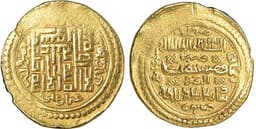
Abu Said Mirza
Emperor · Medieval
41.5Total
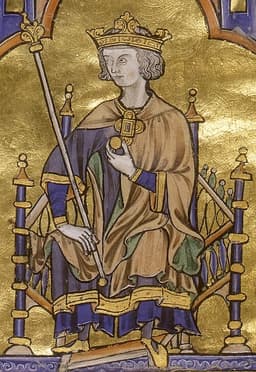
Louis IX
Emperor · Medieval
69.8Total
Basic Information
Born
1424
1214
Died
1469
1270
Era
Medieval
Medieval
Nationality
Timurid Empire
France
Occupation
Emperor
Emperor
Civilization
Eastern
Western
Score Comparison
Military (10%)
25.0
46.7
Political (20%)
30.8
72.0
Influence (20%)
48.6
82.0
Legacy (20%)
40.0
68.0
Leadership (15%)
41.5
72.0
Strategy (15%)
60.0
60.0
TOTAL
41.5
69.8
Abu Said Mirza — Complete Timeline
1451 AD
Reunification of Khorasan and TransoxianaPolitical Action◆ Major
Abu Said Mirza, a Timurid prince, conquered Samarkand and reunited the Timurid territories of Khorasan and Transoxiana under his rule. This ended a period of fragmentation following the death of Shah Rukh and restored a centralized Timurid state.
Timurid EmpireReunificationSamarkand
Impact: regionalconstructive
1468 AD
Campaign against the Aq QoyunluWar◆ Major
Abu Said Mirza launched a military campaign against the Aq Qoyunlu confederation under Uzun Hasan. The campaign aimed to expand Timurid influence into western Iran but ended in defeat for Abu Said.
Timurid EmpireWarAq Qoyunlu
Impact: regionaldestructive
1469 AD
Capture and execution by Uzun HasanWar◆ Major
Abu Said Mirza was captured by Uzun Hasan of the Aq Qoyunlu after a failed campaign. He was executed, ending his rule and the united Timurid state. His death led to the final fragmentation of the Timurid Empire in Khorasan and Transoxiana.
Timurid EmpireDeathAq Qoyunlu
Impact: regionaltragic
Louis IX — Complete Timeline
1248 AD
Seventh CrusadeWar◆ Major
Louis IX led the Seventh Crusade to Egypt. He captured Damietta but was later defeated at the Battle of Al Mansurah. Louis was captured and held for ransom. He spent four years in the Holy Land after his release, fortifying crusader positions.
CrusadeEgyptCapture
Impact: globaltragic
1254 AD
Reforms of Royal JusticeReform◆ Major
Louis IX issued a series of ordinances reforming the French royal administration and judicial system. He established the Parlement of Paris as a supreme court, prohibited private warfare, and introduced the presumption of innocence in criminal trials.
Legal ReformJusticeAdministration
Impact: nationalconstructive
1270 AD
Eighth Crusade and DeathWar◆ Major
Louis IX launched the Eighth Crusade, targeting Tunis in North Africa. Shortly after arriving, an epidemic (likely dysentery or plague) swept through the crusader camp. Louis died of the disease. The crusade was abandoned soon after his death.
CrusadeDeathTunis
Impact: globaltragic
Expert Analysis
Origins
Abu Said Mirza (c. 1424–1469) was born into the Timurid dynasty, a grandson of Timur's son Miran Shah. His early life was shaped by the fragmented state of the Timurid Empire after his grandfather's death. He spent his youth navigating the chaotic politics of Central Asia, where rival princes and tribal leaders vied for control. His education was typical of Timurid nobility, focusing on military tactics, Persian culture, and Islamic jurisprudence.
Louis IX (1214–1270) was born at Poissy, France, the son of King Louis VIII and Blanche of Castile. His mother, a formidable regent, ensured he received a rigorous religious and political education. From childhood, Louis was steeped in the ideals of Christian kingship, with an emphasis on piety, justice, and the duty to defend Christendom. His upbringing contrasted sharply with Abu Said's, as Louis was groomed for a stable, centralized monarchy, while Abu Said inherited a fractious empire.
Rise to Power
Abu Said Mirza rose to power through military and diplomatic maneuvering. In 1451, he allied with the Uzbek leader Abu'l-Khayr Khan to defeat his rival Abdal-Latif Mirza, capturing Samarkand. This victory allowed him to reunite Khorasan and Transoxiana, ending a period of fragmentation. However, his power base was fragile, relying on shifting alliances. By 1457, he controlled most of the Timurid heartland, but his rule was constantly challenged by relatives and external foes like the Aq Qoyunlu.
Louis IX became king at age 12 in 1226, with his mother acting as regent until 1234. Upon assuming power, he moved quickly to assert royal authority over rebellious nobles. His marriage to Margaret of Provence strengthened ties with southern France. Louis's rise was characterized by consolidation rather than conquest; he focused on administrative reforms and expanding royal justice. His reputation for piety and fairness grew, culminating in his decision to lead the Seventh Crusade in 1248.
Leadership & Governance
Abu Said Mirza governed as a traditional Timurid ruler, relying on a network of tribal allies and military commanders. He attempted to centralize power but faced constant rebellion. His governance was marked by short-term military campaigns rather than lasting institutions. For example, he minted coins in his name and promoted Persian culture, but his administrative reforms were limited. His leadership score of 41.5 reflects his inability to sustain unity.
Louis IX revolutionized French governance. He established the Parlement of Paris as a supreme court, standardized coinage, and issued ordinances that curbed feudal abuses. His concept of "royal justice" extended the king's authority into local affairs. Louis also personally heard petitions, earning a reputation for fairness. His political score of 72.0 and leadership score of 72.0 highlight his effectiveness. Unlike Abu Said, Louis built institutions that outlasted his reign.
Triumph & Tragedy
Abu Said's greatest triumph was reuniting the Timurid territories, a feat scored at 60.0 in strategy. He temporarily restored the empire's borders and patronized arts, including the construction of the Registan square in Samarkand. However, his tragedy was his overreach: his campaign against the Aq Qoyunlu in 1469 ended in defeat and capture. He was executed by Uzun Hasan, and his death led to the final disintegration of the Timurid state. His military score of 25.0 underscores his failure in this campaign.
Louis IX's triumph was his model of Christian kingship and his judicial reforms, which influenced French law for centuries. He was canonized in 1297, a rare honor for a monarch. However, his crusades were disasters. The Seventh Crusade ended with his capture and ransom, and the Eighth Crusade killed him before any battle. His military score of 46.7 reflects mixed results. His death in Tunis was a tragedy that ended his domestic reforms prematurely.
Character & Destiny
Abu Said Mirza was ambitious but impulsive. His decision to attack the Aq Qoyunlu without securing his rear reveals a strategic flaw. He was a capable diplomat, but his reliance on alliances made him vulnerable. His character, scored at 60.0 in strategy, shows a man who could plan but not execute. His fate—execution by a rival—was a direct result of his miscalculations.
Louis IX was deeply religious and moralistic, which shaped his destiny. His piety drove him to crusade, but also to reform justice. He was known for his humility and personal asceticism. His character earned him sainthood, but his crusading zeal led to his death. Historians note that his leadership style was more administrative than military, and his legacy as a saint overshadowed his political achievements.
Legacy
Abu Said Mirza's legacy is mixed. He is remembered as the last Timurid ruler to unite the empire, but his failure led to its collapse. His patronage of the arts influenced later Mughal and Safavid cultures. His overall score of 41.5 reflects his limited long-term impact. The Timurid revival under his grandson Babur (founder of the Mughal Empire) owes something to his efforts, but his direct legacy is weak.
Louis IX's legacy is vast. He became the model of a Christian king, influencing monarchs like Edward I of England. His judicial reforms laid the groundwork for the French state. He was canonized, and his reign is seen as a golden age of medieval France. With a total score of 69.8, he far outstrips Abu Said. The Parlement of Paris and the concept of royal justice endured for centuries.
Conclusion
Louis IX had a greater impact than Abu Said Mirza. While Abu Said briefly reunited a fractured empire, his achievements were ephemeral, undone by his own failures. Louis, despite his military disasters, built institutions that shaped France for generations. His scores in political (72.0 vs 30.8), influence (82.0 vs 48.6), and legacy (68.0 vs 40.0) are decisively higher. The 28.3-point gap in total scores reflects this. Louis's model of kingship and administrative reforms created a lasting legacy, while Abu Said's rule ended in disintegration. Louis IX is the more consequential figure.
Rankings
🥇
Louis IXLeader
Mil: 46.7Pol: 72.0Inf: 82.0
69.8
🥈
Abu Said Mirza
Mil: 25.0Pol: 30.8Inf: 48.6
41.5
+28.3 behind
How This Comparison Works
Algorithm
Each figure is scored on 6 dimensions (0—100 scale) based on structured historical data: Military (10%), Political (20%), Influence (20%), Legacy (20%), Leadership (15%), Strategy (15%). The weighted total produces the final ranking.
Data Sources
Scores are computed from structured sub-indicators in the database. Scale factors adjust for era (Ancient ×0.85, Modern ×1.0) and civilization size (Eastern ×1.05, Other ×0.80) to account for differences in population and military scale.
Maximum 3 Figures
Comparisons are limited to 2—3 figures to ensure readability and statistical meaningfulness.
Error Margins
±5 points per dimension — Sub-scores are derived from historical records with inherent uncertainty. Two figures within 5 points on a dimension should be considered roughly equivalent in that area.
Total Score Accuracy
±3 points overall — The weighted combination of 6 dimensions produces a total score with approximately ±3 points of uncertainty. Differences of less than 3 points are not statistically significant— the figures are effectively tied.
Known Limitations
- Historical records are incomplete and uneven across civilizations
- Figures from oral-tradition societies may be underrepresented
- Occupation labels can misclassify multi-role figures
- Scores measure capability and impact, not moral character
- Quantitative scoring is a comparison tool, not absolute truth
Capability Radar
Military (10%) — Battles & Warfare
Battles
45
45
Win Rate
40
30
Expansion
30
20
Political (20%) — Governance & Reform
Reform
20
75
Diplomacy
30
65
Economy
25
60
Influence (20%) — Cultural & Global Reach
Cultural
20
80
Global
10
60
Legacy (20%) — Historical Impact
Historical
25
85
Longevity
15
75
Leadership (15%) — Power & Stability
Tenure
35
70
Stability
15
70
Strategy (15%) — Tactics & Innovation
Strategy
35
35
Tactics
40
40
Reform
20
50
Similar Comparisons
Comments & Discussion
No comments yet. Be the first to share your thoughts!