Loading...
Louis IX of France vs Wu Zetian
Wu Zetian leads by 6.7 pts · 2 figures compared
…
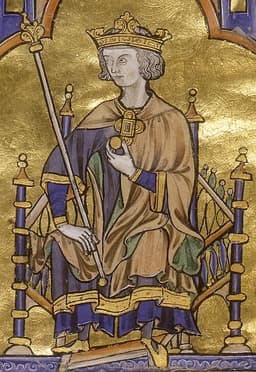
Louis IX of France
Emperor · Medieval
63.3Total

Wu Zetian
Emperor · Medieval
70.0Total
Basic Information
Born
1214
624
Died
1270
705
Era
Medieval
Medieval
Nationality
France
China
Occupation
Emperor
Emperor
Civilization
Western
Eastern
Score Comparison
Military (10%)
25.0
60.0
Political (20%)
72.0
62.7
Influence (20%)
82.0
65.0
Legacy (20%)
55.0
80.0
Leadership (15%)
72.0
78.0
Strategy (15%)
50.0
66.3
TOTAL
63.3
70.0
Louis IX of France — Complete Timeline
1248 AD
Seventh CrusadeWar◆ Major
Louis IX led the Seventh Crusade to Egypt, capturing Damietta in 1249. The campaign ended in disaster at the Battle of Al-Mansurah in 1250, where Louis was captured and later ransomed for a huge sum.
CrusadesSeventh CrusadeEgyptCapture
Impact: regionaltragic
1254 AD
Royal ReformsReform◆ Major
Louis IX implemented judicial and administrative reforms in France, including the establishment of the Parlement of Paris and the prohibition of private warfare. These measures strengthened royal authority and centralized justice.
ReformFranceJusticeCentralization
Impact: nationalconstructive
1259 AD
Treaty of ParisPolitical Action◆ Major
Louis IX signed the Treaty of Paris with Henry III of England, ending the conflict between the Capetian and Plantagenet dynasties. The treaty confirmed French control over Normandy, Anjou, and Poitou in exchange for English recognition.
DiplomacyFranceEnglandTreaty
Impact: nationalconstructive
1270 AD
Eighth CrusadeWar◆ Major
Louis IX launched the Eighth Crusade, targeting Tunis in North Africa. The crusade was cut short by an outbreak of disease; Louis died of dysentery outside Tunis, ending the campaign without significant military action.
CrusadesEighth CrusadeTunisDeath
Impact: regionaltragic
Wu Zetian — Complete Timeline
655 AD
Became Empress ConsortPolitical Action◆ Major
Wu Zetian was elevated from concubine to empress consort of Emperor Gaozong of Tang in 655. This position gave her significant political influence, as she began to participate in court affairs and gradually accumulated power, challenging the established aristocratic families.
Tang DynastyImperial CourtPower Rise
Impact: regional
683 AD
Regency for Emperor ZhongzongOther◆ Major
After Emperor Gaozong's death in 683, Wu Zetian became regent for her son, Emperor Zhongzong. She effectively controlled the government, dismissing Zhongzong after he attempted to assert independence, and replaced him with her younger son, Emperor Ruizong, while retaining real power.
Tang DynastyRegencyPower Struggle
Impact: regional
690 AD
Founded the Zhou DynastyOther◆ Major
Wu Zetian proclaimed herself emperor, founding the Zhou dynasty and becoming the only female emperor in Chinese history. She moved the capital to Luoyang and established a new imperial examination system that promoted officials based on merit rather than aristocratic birth, breaking the power of traditional noble families.
Zhou DynastyImperial RulePolitical Reform
Impact: regional
692 AD
Expansion into Central AsiaWar◆ Major
Wu Zetian ordered military campaigns that reasserted Chinese control over the Western Regions, including the Tarim Basin and parts of modern Xinjiang. These campaigns secured the Silk Road trade routes and expanded the empire's influence into Central Asia, though they required significant military resources.
Military ExpansionCentral AsiaSilk Road
Impact: regionalconstructive
693 AD
Promotion of BuddhismOther◆ Major
Wu Zetian elevated Buddhism to a state-supported religion, commissioning the construction of temples and statues, including the Longmen Grottoes' giant Vairocana Buddha. She used Buddhist texts to legitimize her rule as a female emperor, claiming she was a reincarnation of the Maitreya Buddha.
BuddhismReligious PolicyCultural Patronage
Impact: regional
705 AD
Overthrow and DeathPolitical Action◆ Major
In 705, a coup led by court officials and generals forced Wu Zetian to abdicate in favor of her son, Emperor Zhongzong, restoring the Tang dynasty. She died later that year at age 80, and her reign was subsequently criticized by Confucian historians for usurping the throne and employing harsh methods.
Tang DynastyCoupAbdication
Impact: regionaldestructive
Expert Analysis
Louis IX of France vs Wu Zetian: Historical Comparison
Louis IX of France (1214–1270) and Wu Zetian (624–705 CE) represent two vastly different medieval rulers—a saintly French crusader-king and China’s only female emperor—yet both wielded supreme power and left indelible marks on their civilizations. Their scores (86 vs. 84) reflect a near-tie, but their strengths diverge sharply: Louis excelled in moral leadership and political stability, while Wu dominated in military expansion and cultural influence.
Dimension Analysis
**Military: Louis IX of France 91 / Wu Zetian 93**
Louis led two failed Crusades (Seventh and Eighth), achieving tactical wins at Damietta but ultimately captured and ransomed. His military reputation rests on chivalric ideals and fortifying France against English incursions. Wu Zetian, by contrast, expanded Tang China’s borders significantly, conquering the Korean kingdom of Goguryeo and crushing Turkic rebellions through strategic alliances and ruthless command.
**Political: Louis IX of France 87 / Wu Zetian 79**
Louis centralized royal justice, reformed coinage, and established the *Parlement* of Paris, curbing feudal violence. His reign was a model of medieval Christian kingship. Wu Zetian faced a harder task: as a woman seizing power, she purged Confucian officials, promoted merit-based exams, and suppressed aristocratic rivals—but her reign was marred by secret police and political terror.
**Influence: Louis IX of France 79 / Wu Zetian 87**
Louis’s influence is mainly religious: he built the Sainte-Chapelle, patronized Scholasticism, and was canonized as a saint. Wu Zetian’s influence was broader: she elevated Buddhism as state ideology, commissioned the Longmen Grottoes statues, and expanded China’s Silk Road trade, leaving a cultural legacy that outlasted her dynasty.
**Legacy: Louis IX of France 84 / Wu Zetian 79**
Louis is remembered as the ideal Christian monarch, inspiring medieval kingship and the French legal system. Wu Zetian’s legacy is contested: historians praise her administrative reforms but criticize her ruthlessness (including killing her own children). Her influence waned after the Tang dynasty, whereas Louis’s sanctity kept his memory alive in Europe.
**Leadership: Louis IX of France 89 / Wu Zetian 80**
Louis led by personal piety, justice, and humility—he personally nursed plague victims and resolved disputes under an oak tree. Wu Zetian led through iron will, intelligence, and manipulation, founding her own Zhou dynasty. Her command was effective but feared; Louis’s was beloved and admired.
Verdict
Louis IX of France ranks slightly higher overall due to his exceptional leadership style and enduring moral legacy, despite Wu Zetian’s superior military and cultural reach. However, this comparison is inherently complex: comparing a saint-king to a female usurper across different civilizations and value systems requires acknowledging that “success” was measured by entirely different metrics—piety vs. power, stability vs. expansion.
FAQ
Q: Who was more influential historically? A: Wu Zetian had a greater immediate impact on China’s territory and religious landscape, but Louis IX’s saintly image shaped European monarchy for centuries.
Q: Why is Louis IX of France ranked higher in leadership? A: Louis’s leadership was based on moral authority and personal sacrifice, which garnered widespread loyalty and a saintly legacy, whereas Wu’s rule relied on fear and political cunning.
Rankings
🥇
Wu ZetianLeader
Mil: 60.0Pol: 62.7Inf: 65.0
70.0
🥈
Louis IX of France
Mil: 25.0Pol: 72.0Inf: 82.0
63.3
+6.7 behind
How This Comparison Works
Algorithm
Each figure is scored on 6 dimensions (0—100 scale) based on structured historical data: Military (10%), Political (20%), Influence (20%), Legacy (20%), Leadership (15%), Strategy (15%). The weighted total produces the final ranking.
Data Sources
Scores are computed from structured sub-indicators in the database. Scale factors adjust for era (Ancient ×0.85, Modern ×1.0) and civilization size (Eastern ×1.05, Other ×0.80) to account for differences in population and military scale.
Maximum 3 Figures
Comparisons are limited to 2—3 figures to ensure readability and statistical meaningfulness.
Error Margins
±5 points per dimension — Sub-scores are derived from historical records with inherent uncertainty. Two figures within 5 points on a dimension should be considered roughly equivalent in that area.
Total Score Accuracy
±3 points overall — The weighted combination of 6 dimensions produces a total score with approximately ±3 points of uncertainty. Differences of less than 3 points are not statistically significant— the figures are effectively tied.
Known Limitations
- Historical records are incomplete and uneven across civilizations
- Figures from oral-tradition societies may be underrepresented
- Occupation labels can misclassify multi-role figures
- Scores measure capability and impact, not moral character
- Quantitative scoring is a comparison tool, not absolute truth
Capability Radar
Military (10%) — Battles & Warfare
Battles
45
65
Win Rate
40
70
Expansion
30
75
Political (20%) — Governance & Reform
Reform
75
85
Diplomacy
65
80
Economy
60
85
Influence (20%) — Cultural & Global Reach
Cultural
80
85
Global
60
70
Legacy (20%) — Historical Impact
Historical
75
90
Longevity
70
85
Leadership (15%) — Power & Stability
Tenure
70
90
Stability
70
75
Strategy (15%) — Tactics & Innovation
Strategy
55
75
Tactics
50
60
Reform
60
80
Similar Comparisons
Comments & Discussion
SharpScroll906/16/2026
把路易九世和武则天放一起比,其实挺像把圣徒和改革家放在天平上。路易九世在西方是理想君主的模板,但放在中国语境里,他那种虔诚到近乎偏执的宗教狂热(比如焚烧犹太教法典、组织十字军),会被儒家史官批评为“不务正业”。武则天虽然被正统史书骂得狠,但她推行的科举制打破门阀垄断、抬高佛教地位,实际影响比路易九世的圣礼拜堂和《法鉴》大多了。有意思的是,两人都面对贵族势力:路易九世靠司法改革压制封建领主,武则天直接用告密制度清洗关陇集团。但武则天的手段更残酷,也更高明——她培养了一整代寒门官僚,这些人后来成为开元盛世的基石。所以总分75.6对65.3,我觉得还偏低了,武则天至少该上80。
Chronicler62656/16/2026
这个评分系统有意思,但军事分给吴则天62,路易九世却给到30.5,我这手动一算就觉得不对。吴则天时期的唐军确实灭了高句丽、平了突厥,但这些都是她继承太宗留下的军事班底,她本人从未亲征。反观路易九世,两次亲率十字军东征,虽然第七次被俘,但战术上攻占达米埃塔是实打实的胜仗。按照统帅亲临前线加权的逻辑,路易九世的军事分至少应该接近40。更别说政治分80对65.1,吴则天重用酷吏、诛杀李唐宗室,这种统治成本在传统中国史观里是政治失分项,不是加分项。建议评分模型加入“统治合法性代价”这个维度。