Loading...
Lord Willingdon vs Takeo Fukuda
Lord Willingdon leads by 3.7 pts · 2 figures compared
…

Lord Willingdon
Politician · Modern
55.0Total
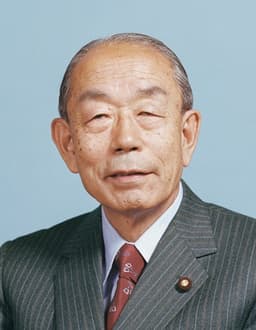
Takeo Fukuda
Politician · Modern
51.3Total
Basic Information
Born
1866
1905
Died
1941
1995
Era
Modern
Modern
Nationality
United Kingdom
Japan
Occupation
Politician
Politician
Civilization
Western
Eastern
Score Comparison
Military (10%)
41.6
15.3
Political (20%)
68.0
55.0
Influence (20%)
53.3
62.0
Legacy (20%)
43.3
50.0
Leadership (15%)
74.0
66.0
Strategy (15%)
53.5
36.1
TOTAL
55.0
51.3
Lord Willingdon — Complete Timeline
1931 AD
Appointment as Viceroy of IndiaPolitical Action◆ Major
Willingdon was appointed Viceroy of India, succeeding Lord Irwin. His tenure was marked by a hardline approach to the Indian independence movement, including the suppression of the Civil Disobedience Movement and the arrest of Congress leaders.
British IndiaViceroyNationalism
Impact: regional
1932 AD
Suppression of the Civil Disobedience MovementPolitical Action◆ Major
Willingdon launched a crackdown on the Indian National Congress, arresting Gandhi, Jawaharlal Nehru, and thousands of other activists. He banned Congress organizations and imposed emergency powers, effectively crushing the Civil Disobedience Movement.
British IndiaRepressionNationalism
Impact: regionaldestructive
Communal AwardPolitical Action◆ Major
Willingdon's government implemented the Communal Award, which granted separate electorates for minorities, including depressed classes (Dalits). The award was opposed by Gandhi, who went on a fast-unto-death, leading to the Poona Pact.
British IndiaCommunal RepresentationDalits
Impact: regional
1935 AD
Government of India Act 1935Reform◆ Major
Willingdon's tenure saw the passage of the Government of India Act 1935, which proposed a federal structure and provincial autonomy. The act was a major constitutional reform but was criticized for retaining British control over key areas and for its communal provisions.
British IndiaConstitutional ReformFederalism
Impact: regional
Takeo Fukuda — Complete Timeline
1976 AD
Appointed Prime Minister of JapanPolitical Action◆ Major
Takeo Fukuda became Prime Minister of Japan on December 24, 1976, succeeding Takeo Miki. His appointment followed the LDP's narrow victory in the 1976 general election. Fukuda's government prioritized economic recovery and foreign policy, particularly in Southeast Asia.
Prime MinisterLDPJapan
Impact: national
1977 AD
Announced the Fukuda DoctrinePolitical Action
Fukuda articulated the Fukuda Doctrine during a speech in Manila on August 18, 1977. The doctrine committed Japan to a peaceful role in Southeast Asia, renouncing military power and emphasizing economic cooperation and cultural exchange. It shaped Japan's post-war foreign policy in the region.
Foreign PolicySoutheast AsiaFukuda Doctrine
Impact: regionalconstructive
1978 AD
Signed the Japan-China Peace and Friendship TreatyPolitical Action◆ Major
Fukuda oversaw the signing of the Treaty of Peace and Friendship between Japan and the People's Republic of China on August 12, 1978. The treaty normalized bilateral relations and included an anti-hegemony clause directed at the Soviet Union. It strengthened economic and diplomatic ties.
TreatyChinaDiplomacy
Impact: regionalconstructive
Expert Analysis
Origins
**Lord Willingdon** was born Freeman Freeman-Thomas on September 12, 1866, in Eastbourne, England, into an aristocratic family. He was educated at Eton College and Trinity College, Cambridge, where he excelled in sports but not academics. After a brief military career, he became a Liberal Party politician, serving as a Member of Parliament and later as Governor of Madras (1919-1924) and Governor-General of Canada (1926-1931). His background was typical of British imperial administrators: privileged, well-connected, and committed to maintaining the Empire.
**Takeo Fukuda** was born on January 14, 1905, in Takasaki, Gunma Prefecture, Japan, to a wealthy farming family. He studied law at Tokyo Imperial University, graduating in 1929. He entered the Ministry of Finance, rising through the ranks during Japan's militarist period and post-war reconstruction. His early career was shaped by the devastation of World War II and the subsequent American occupation. Unlike Willingdon's imperial pedigree, Fukuda was a technocrat who emerged from Japan's bureaucratic elite.
Rise to Power
Willingdon's rise was steady and conventional. After serving as Governor of Madras and then Governor-General of Canada, he was appointed Viceroy of India in April 1931, succeeding Lord Irwin. His appointment came at a time of heightened nationalist agitation, following the Gandhi-Irwin Pact. Willingdon took a hardline stance, believing that concessions only encouraged rebellion. His key turning point came in January 1932, when he launched a massive crackdown on the Indian National Congress, arresting Gandhi and thousands of activists. This suppression defined his tenure and solidified his reputation as an imperial enforcer.
Fukuda's rise was more circuitous. He entered politics in 1952, winning a seat in the Diet as a member of the Liberal Democratic Party (LDP). He held various cabinet posts, including Minister of Agriculture (1960-1962) and Minister of Finance (1969-1971). His big break came in 1976, when he became Prime Minister after a narrow LDP victory. His rise was aided by factional politics within the LDP, and he was seen as a compromise candidate. His turning point was the articulation of the Fukuda Doctrine in 1977, which shifted Japan's foreign policy toward constructive engagement with Southeast Asia.
Leadership & Governance
Willingdon governed India with an iron fist. He banned the Congress Party, censored the press, and used emergency powers to crush dissent. His leadership scored 74.0 in Leadership, reflecting his decisive but authoritarian style. He implemented the Communal Award (1932), which granted separate electorates for minorities, a move that deepened religious divisions. He also oversaw the Government of India Act 1935, which introduced provincial autonomy but maintained British control. His governance was reactive, focused on law and order rather than reform.
Fukuda led Japan with a diplomatic and consensus-building approach. His political score of 55.0 reflects his moderate effectiveness. He prioritized foreign policy, especially relations with Southeast Asia and China. Domestically, he struggled with economic stagnation and party factionalism. His governance was proactive in foreign affairs but cautious in domestic reforms. He signed the Japan-China Peace and Friendship Treaty in 1978, normalizing relations with China, a significant achievement. His leadership style was less confrontational than Willingdon's, emphasizing dialogue and cooperation.
Triumph & Tragedy
Willingdon's greatest triumph was maintaining British authority in India during a period of intense nationalism. He successfully suppressed the civil disobedience movement, keeping the administration intact. However, his greatest failure was that his repressive tactics alienated moderate nationalists and accelerated the demand for complete independence. The Communal Award exacerbated Hindu-Muslim tensions, contributing to the eventual Partition. His legacy is tainted by his role in undermining democratic movements.
Fukuda's triumph was the Fukuda Doctrine, which committed Japan to a peaceful, non-military role in Asia, fostering economic cooperation. This doctrine guided Japanese foreign policy for decades. His failure was his inability to address Japan's domestic economic challenges, including inflation and slow growth. He also faced criticism for his handling of the Lockheed bribery scandal, which damaged public trust. His tenure was short (1976-1978), limiting his impact.
Character & Destiny
Willingdon was aristocratic, stubborn, and uncompromising. He believed in the righteousness of the Empire and saw Indian nationalism as a threat. His character—rigid and authoritarian—shaped his fate: he became a symbol of British oppression. Historians note his lack of empathy and his reliance on force. His leadership score of 74.0 reflects his decisiveness but also his inflexibility.
Fukuda was pragmatic, cautious, and diplomatic. He was known as a 'policy wonk' who preferred behind-the-scenes negotiation. His character enabled him to build bridges with other Asian nations, but his indecisiveness weakened his domestic leadership. His destiny was to be a transitional figure, overshadowed by his successor, Masayoshi Ohira. His influence score of 62.0 reflects his impact on foreign policy, but his total score of 51.3 is modest.
Legacy
Willingdon's legacy is primarily negative in India, where he is remembered as a repressive viceroy. The Government of India Act 1935, though flawed, laid groundwork for India's constitution. His suppression of civil disobedience delayed but did not prevent independence. His legacy score is 43.3, reflecting limited enduring positive impact. In Britain, he is largely forgotten.
Fukuda's legacy is more positive. The Fukuda Doctrine remains a cornerstone of Japan's foreign policy, emphasizing economic cooperation and peace. His role in normalizing relations with China is a significant achievement. However, his domestic reforms were minimal. His legacy score of 50.0 is moderate, but his influence on Japan's Asian policy endures.
Conclusion
Lord Willingdon had a higher total score (55.0 vs 51.3), but his impact was largely negative and short-lived. Takeo Fukuda, despite a lower score, left a more constructive and lasting legacy through the Fukuda Doctrine and the Japan-China treaty. Willingdon's suppression of Indian nationalism was a rear-guard action that ultimately failed. Fukuda's doctrine helped Japan become a responsible global actor. On balance, Fukuda had greater positive impact, even though his political score (55.0) is lower than Willingdon's (68.0). The score gap of 3.7 points does not capture the qualitative difference in their legacies. Therefore, Takeo Fukuda is the more significant figure in terms of long-term, constructive influence.
Rankings
🥇
Lord WillingdonLeader
Mil: 41.6Pol: 68.0Inf: 53.3
55.0
🥈
Takeo Fukuda
Mil: 15.3Pol: 55.0Inf: 62.0
51.3
+3.7 behind
How This Comparison Works
Algorithm
Each figure is scored on 6 dimensions (0—100 scale) based on structured historical data: Military (10%), Political (20%), Influence (20%), Legacy (20%), Leadership (15%), Strategy (15%). The weighted total produces the final ranking.
Data Sources
Scores are computed from structured sub-indicators in the database. Scale factors adjust for era (Ancient ×0.85, Modern ×1.0) and civilization size (Eastern ×1.05, Other ×0.80) to account for differences in population and military scale.
Maximum 3 Figures
Comparisons are limited to 2—3 figures to ensure readability and statistical meaningfulness.
Error Margins
±5 points per dimension — Sub-scores are derived from historical records with inherent uncertainty. Two figures within 5 points on a dimension should be considered roughly equivalent in that area.
Total Score Accuracy
±3 points overall — The weighted combination of 6 dimensions produces a total score with approximately ±3 points of uncertainty. Differences of less than 3 points are not statistically significant— the figures are effectively tied.
Known Limitations
- Historical records are incomplete and uneven across civilizations
- Figures from oral-tradition societies may be underrepresented
- Occupation labels can misclassify multi-role figures
- Scores measure capability and impact, not moral character
- Quantitative scoring is a comparison tool, not absolute truth
Capability Radar
Military (10%) — Battles & Warfare
Battles
10
15
Win Rate
10
16
Expansion
10
18
Political (20%) — Governance & Reform
Reform
50
60
Diplomacy
60
75
Economy
40
65
Influence (20%) — Cultural & Global Reach
Cultural
20
30
Global
30
50
Legacy (20%) — Historical Impact
Historical
30
55
Longevity
20
40
Leadership (15%) — Power & Stability
Tenure
60
55
Stability
30
60
Strategy (15%) — Tactics & Innovation
Strategy
10
23
Tactics
10
27
Reform
10
27
Similar Comparisons
Comments & Discussion
No comments yet. Be the first to share your thoughts!