Loading...
Hector Jose Campora vs Takeo Fukuda
Takeo Fukuda leads by 12.3 pts · 2 figures compared
…

Hector Jose Campora
Politician · Modern
39.0Total
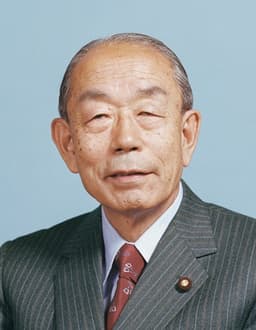
Takeo Fukuda
Politician · Modern
51.3Total
Basic Information
Born
1909
1905
Died
1980
1995
Era
Modern
Modern
Nationality
Argentina
Japan
Occupation
Politician
Politician
Civilization
Western
Eastern
Score Comparison
Military (10%)
50.0
15.3
Political (20%)
26.4
55.0
Influence (20%)
47.1
62.0
Legacy (20%)
37.5
50.0
Leadership (15%)
31.2
66.0
Strategy (15%)
41.6
36.1
TOTAL
39.0
51.3
Hector Jose Campora — Complete Timeline
1973 AD
Election as President of ArgentinaPolitical Action◆ Major
Héctor José Cámpora was elected President of Argentina on March 11, 1973, as a stand-in for Juan Perón, who was banned from running. Cámpora's victory marked the return of Peronism to power after 18 years of military rule.
ElectionPeronism
Impact: national
Resignation to enable Perón's returnPolitical Action◆ Major
After only 49 days in office, C
ResignationPolitical Maneuver
Impact: national
Pardon of political prisonersPolitical Action◆ Major
During his brief presidency, C
AmnestyPolitical Prisoners
Impact: nationalconstructive
Takeo Fukuda — Complete Timeline
1976 AD
Appointed Prime Minister of JapanPolitical Action◆ Major
Takeo Fukuda became Prime Minister of Japan on December 24, 1976, succeeding Takeo Miki. His appointment followed the LDP's narrow victory in the 1976 general election. Fukuda's government prioritized economic recovery and foreign policy, particularly in Southeast Asia.
Prime MinisterLDPJapan
Impact: national
1977 AD
Announced the Fukuda DoctrinePolitical Action
Fukuda articulated the Fukuda Doctrine during a speech in Manila on August 18, 1977. The doctrine committed Japan to a peaceful role in Southeast Asia, renouncing military power and emphasizing economic cooperation and cultural exchange. It shaped Japan's post-war foreign policy in the region.
Foreign PolicySoutheast AsiaFukuda Doctrine
Impact: regionalconstructive
1978 AD
Signed the Japan-China Peace and Friendship TreatyPolitical Action◆ Major
Fukuda oversaw the signing of the Treaty of Peace and Friendship between Japan and the People's Republic of China on August 12, 1978. The treaty normalized bilateral relations and included an anti-hegemony clause directed at the Soviet Union. It strengthened economic and diplomatic ties.
TreatyChinaDiplomacy
Impact: regionalconstructive
Expert Analysis
Origins
Héctor José Cámpora was born on March 26, 1909, in Buenos Aires, Argentina, into a middle-class family. He studied dentistry at the University of Buenos Aires, graduating in 1934. His early political involvement began with the Radical Civic Union, but he later joined the Peronist movement after Juan Perón's rise in the 1940s. Cámpora served as a dentist in the Peronist administration and was elected to the Chamber of Deputies in 1946.
Takeo Fukuda was born on January 14, 1905, in Takasaki, Gunma Prefecture, Japan, to a landowning family. He studied law at Tokyo Imperial University, graduating in 1929. Fukuda entered the Ministry of Finance in 1931, rising through the ranks. After World War II, he became a bureaucrat and later entered politics, winning a seat in the House of Representatives in 1952 as a member of the Liberal Democratic Party (LDP).
Rise to Power
Cámpora's rise was tied to Juan Perón's exile after the 1955 coup. As a loyal Peronist, he was chosen as a placeholder candidate for the 1973 presidential election because Perón was banned from running. Cámpora campaigned on a platform of Peronist unity and won the March 11, 1973 election with 49.5% of the vote. His victory was a turning point, allowing Peronism to return to power.
Fukuda rose through the LDP ranks, serving as Minister of Agriculture, Finance, and Foreign Affairs under various premiers. He was a key figure in the LDP's factional politics, leading the Fukuda faction. After the 1976 election, he became Prime Minister on December 24, 1976, succeeding Takeo Miki. His appointment came during economic challenges and shifting geopolitical dynamics in Asia.
Leadership & Governance
Cámpora's presidency lasted only 49 days, from May 25 to July 13, 1973. His main acts included granting amnesty to political prisoners, including leftist guerrillas and Peronist activists, and legalizing Peronist activities. He also appointed left-leaning ministers, which alarmed conservatives. His governance score of 31.2 reflects his lack of independent leadership; he was essentially a proxy for Perón. His resignation on July 13 paved the way for Perón's return and new elections.
Fukuda's tenure as PM lasted from 1976 to 1978. He focused on economic stability, tackling inflation, and promoting détente in Asia. His most significant foreign policy achievement was the Fukuda Doctrine, announced in Manila on August 18, 1977, which committed Japan to a peaceful role in Southeast Asia, emphasizing non-military aid and cultural exchange. He also signed the Japan-China Peace and Friendship Treaty on August 12, 1978, normalizing relations with China. His leadership score of 66.0 indicates a more independent and effective governance style.
Triumph & Tragedy
Cámpora's triumph was enabling Perón's return to Argentina, fulfilling the Peronist movement's goal. His amnesty for political prisoners was seen as a humanitarian act. However, his tragedy was his short, dependent presidency; he was a transitional figure with no lasting policy impact. His influence score of 47.1 reflects his role as a facilitator rather than a shaper of history.
Fukuda's triumph was the Fukuda Doctrine, which became a cornerstone of Japanese foreign policy, and the China treaty, which ended the state of war and fostered economic ties. His tragedy was his inability to secure a second term due to LDP factionalism; he lost the 1978 party leadership to Masayoshi Ōhira. His legacy score of 50.0 is balanced by his significant diplomatic achievements.
Character & Destiny
Cámpora was a loyal Peronist, often described as a subordinate figure. His decision to resign after 49 days shows his commitment to Perón's return, but also his lack of personal ambition. His character was shaped by deference to the leader, which ultimately limited his historical footprint. He scored 26.4 in political skill, reflecting his role as a placeholder.
Fukuda was a pragmatic conservative, known for his diplomatic acumen and fiscal conservatism. He navigated factional politics effectively but failed to maintain power. His character was marked by careful deliberation, as seen in the Fukuda Doctrine's gradual formulation. His political score of 55.0 and leadership score of 66.0 indicate a more assertive and strategic figure.
Legacy
Cámpora's legacy is tied to the Peronist movement's return; he is remembered as the president who paved the way for Perón. His brief rule had no enduring policies, and he is often overshadowed by Perón's later presidency. His legacy score of 37.5 reflects his minor impact.
Fukuda's legacy is substantial: the Fukuda Doctrine guided Japan's Southeast Asian diplomacy for decades, and the China treaty laid the foundation for economic cooperation. He is remembered as a key architect of Japan's post-war foreign policy. His legacy score of 50.0, combined with influence of 62.0, shows a lasting effect.
Conclusion
Takeo Fukuda had greater impact than Héctor Cámpora. Fukuda's total score of 51.3 compared to Cámpora's 39.0 reflects his more significant contributions to diplomacy and governance. While Cámpora enabled a historic return, his role was transitory. Fukuda's policies shaped Japan's regional relations for decades. Therefore, Fukuda's influence and legacy are substantially more enduring.
Rankings
🥇
Takeo FukudaLeader
Mil: 15.3Pol: 55.0Inf: 62.0
51.3
🥈
Hector Jose Campora
Mil: 50.0Pol: 26.4Inf: 47.1
39.0
+12.3 behind
How This Comparison Works
Algorithm
Each figure is scored on 6 dimensions (0—100 scale) based on structured historical data: Military (10%), Political (20%), Influence (20%), Legacy (20%), Leadership (15%), Strategy (15%). The weighted total produces the final ranking.
Data Sources
Scores are computed from structured sub-indicators in the database. Scale factors adjust for era (Ancient ×0.85, Modern ×1.0) and civilization size (Eastern ×1.05, Other ×0.80) to account for differences in population and military scale.
Maximum 3 Figures
Comparisons are limited to 2—3 figures to ensure readability and statistical meaningfulness.
Error Margins
±5 points per dimension — Sub-scores are derived from historical records with inherent uncertainty. Two figures within 5 points on a dimension should be considered roughly equivalent in that area.
Total Score Accuracy
±3 points overall — The weighted combination of 6 dimensions produces a total score with approximately ±3 points of uncertainty. Differences of less than 3 points are not statistically significant— the figures are effectively tied.
Known Limitations
- Historical records are incomplete and uneven across civilizations
- Figures from oral-tradition societies may be underrepresented
- Occupation labels can misclassify multi-role figures
- Scores measure capability and impact, not moral character
- Quantitative scoring is a comparison tool, not absolute truth
Capability Radar
Military (10%) — Battles & Warfare
Battles
28
15
Win Rate
32
16
Expansion
35
18
Political (20%) — Governance & Reform
Reform
15
60
Diplomacy
20
75
Economy
10
65
Influence (20%) — Cultural & Global Reach
Cultural
10
30
Global
10
50
Legacy (20%) — Historical Impact
Historical
15
55
Longevity
10
40
Leadership (15%) — Power & Stability
Tenure
10
55
Stability
5
60
Strategy (15%) — Tactics & Innovation
Strategy
39
23
Tactics
39
27
Reform
42
27
Similar Comparisons
Comments & Discussion
No comments yet. Be the first to share your thoughts!