Loading...
Carlos P. Romulo vs Takeo Fukuda
Takeo Fukuda leads by 0.9 pts · 2 figures compared
…

Carlos P. Romulo
Politician · Modern
50.4Total
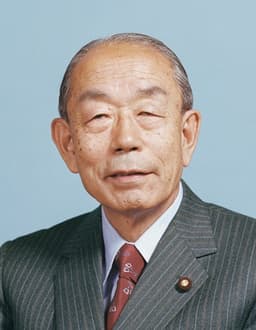
Takeo Fukuda
Politician · Modern
51.3Total
Basic Information
Born
1898
1905
Died
1985
1995
Era
Modern
Modern
Nationality
Philippines
Japan
Occupation
Politician
Politician
Civilization
Eastern
Eastern
Score Comparison
Military (10%)
13.7
15.3
Political (20%)
45.0
55.0
Influence (20%)
58.3
62.0
Legacy (20%)
52.0
50.0
Leadership (15%)
72.0
66.0
Strategy (15%)
39.1
36.1
TOTAL
50.4
51.3
Carlos P. Romulo — Complete Timeline
1942 AD
Awarded Pulitzer Prize for CorrespondenceCultural◆ Major
Romulo was awarded the Pulitzer Prize for Correspondence in 1942 for his reporting on World War II in the Pacific. His dispatches from the Philippines and other war zones provided critical coverage of the Japanese invasion and the fall of Bataan.
JournalismPulitzer PrizeWorld War II
Impact: global
1945 AD
Signed the UN CharterPolitical Action◆ Major
Romulo was a delegate to the San Francisco Conference in 1945 and signed the United Nations Charter on behalf of the Philippines. He played a key role in drafting the charter, particularly in including provisions for human rights and self-determination.
United NationsCharterHuman Rights
Impact: globalconstructive
1949 AD
Elected President of the UN General AssemblyPolitical Action◆ Major
Romulo was elected President of the United Nations General Assembly on September 20, 1949, for the fourth session. He was the first Asian to hold the position, representing the Philippines and advocating for decolonization and human rights.
United NationsDiplomacyDecolonization
Impact: globalconstructive
1967 AD
Co-founded the Association of Southeast Asian Nations (ASEAN)Political Action◆ Major
Romulo was a key figure in the founding of ASEAN on August 8, 1967, as the Philippine representative. He helped draft the Bangkok Declaration, establishing the organization to promote economic cooperation and regional stability in Southeast Asia.
ASEANRegional CooperationDiplomacy
Impact: regionalconstructive
1968 AD
Appointed Secretary of Foreign AffairsPolitical Action◆ Major
Romulo was appointed Secretary of Foreign Affairs of the Philippines on December 30, 1968, under President Ferdinand Marcos. He served until 1984, shaping Philippine foreign policy during the Cold War, including relations with the US and ASEAN.
Philippine PoliticsForeign PolicyCold War
Impact: national
Takeo Fukuda — Complete Timeline
1976 AD
Appointed Prime Minister of JapanPolitical Action◆ Major
Takeo Fukuda became Prime Minister of Japan on December 24, 1976, succeeding Takeo Miki. His appointment followed the LDP's narrow victory in the 1976 general election. Fukuda's government prioritized economic recovery and foreign policy, particularly in Southeast Asia.
Prime MinisterLDPJapan
Impact: national
1977 AD
Announced the Fukuda DoctrinePolitical Action
Fukuda articulated the Fukuda Doctrine during a speech in Manila on August 18, 1977. The doctrine committed Japan to a peaceful role in Southeast Asia, renouncing military power and emphasizing economic cooperation and cultural exchange. It shaped Japan's post-war foreign policy in the region.
Foreign PolicySoutheast AsiaFukuda Doctrine
Impact: regionalconstructive
1978 AD
Signed the Japan-China Peace and Friendship TreatyPolitical Action◆ Major
Fukuda oversaw the signing of the Treaty of Peace and Friendship between Japan and the People's Republic of China on August 12, 1978. The treaty normalized bilateral relations and included an anti-hegemony clause directed at the Soviet Union. It strengthened economic and diplomatic ties.
TreatyChinaDiplomacy
Impact: regionalconstructive
Expert Analysis
Origins
Carlos P. Romulo was born on January 14, 1899, in Camiling, Philippines, to a middle-class family. He earned a bachelor's degree from the University of the Philippines and later a master's from Columbia University. His early career as a journalist and educator shaped his diplomatic skills. In contrast, Takeo Fukuda was born on January 14, 1905, in Takasaki, Japan, into a wealthy landowning family. He studied law at the University of Tokyo and entered the Ministry of Finance in 1929. Fukuda's bureaucratic background gave him a methodical approach to policy.
Rise to Power
Romulo's rise began as a journalist; he won the Pulitzer Prize for Correspondence in 1942 for his reports on World War II in the Pacific. He became a key figure in Philippine diplomacy, serving as a delegate to the San Francisco Conference in 1945 where he signed the UN Charter. His political influence peaked when he was elected President of the UN General Assembly on September 20, 1949, the first Asian to hold that position. Fukuda's rise was more gradual. He entered politics in 1952, serving in various ministerial posts including Agriculture and Finance. He became Prime Minister on December 24, 1976, after the LDP's narrow victory. His appointment followed internal party politics.
Leadership & Governance
Romulo's leadership style was charismatic and globalist. As Secretary of Foreign Affairs from 1968 to 1984, he shaped Philippine foreign policy, focusing on regional cooperation. He co-founded ASEAN on August 8, 1967, helping draft the Bangkok Declaration. His governance scores 45.0 in political and 72.0 in leadership. Fukuda's governance was pragmatic and cautious. He announced the Fukuda Doctrine on August 18, 1977, committing Japan to a peaceful, non-military role in Southeast Asia. He also signed the Japan-China Peace and Friendship Treaty on August 12, 1978, normalizing relations. His political score is 55.0.
Triumph & Tragedy
Romulo's greatest triumph was his role in founding ASEAN and his UN presidency. His Pulitzer Prize win was a personal achievement. However, his later service under Ferdinand Marcos's authoritarian rule tarnished his legacy; he failed to oppose Marcos's human rights abuses. Fukuda's triumph was the Fukuda Doctrine, which guided Japan's foreign aid and diplomacy for decades. His China treaty was a major diplomatic success. His tragedy was his short tenure—only two years—and his inability to address Japan's economic stagnation. He lost the party leadership to Masayoshi Ohira in 1978.
Character & Destiny
Romulo was ambitious and eloquent, using his oratory to promote international cooperation. His decision to align with Marcos showed a pragmatic streak that compromised his ideals. His character led to a legacy of both achievement and controversy. Fukuda was cautious and consensus-driven, earning the nickname "the weathervane" for his political agility. His careful approach secured the China treaty but limited his domestic impact. His destiny was to be a transitional figure.
Legacy
Romulo's legacy includes the ASEAN organization, which has grown into a major regional bloc. His scores: influence 58.3, legacy 52.0. Fukuda's Fukuda Doctrine shaped Japan's post-war foreign policy, emphasizing economic cooperation over military power. His influence score is 62.0, legacy 50.0. Both left institutional frameworks that endure.
Conclusion
While both were significant, Fukuda's impact on Japan's foreign policy direction was more concrete and long-lasting. The Fukuda Doctrine became a cornerstone of Japan's regional strategy, while Romulo's achievements were more diffuse. Fukuda's total score of 51.3 narrowly edges Romulo's 50.4, reflecting his slightly greater influence. Therefore, Takeo Fukuda had a greater impact on international relations.
Rankings
🥇
Takeo FukudaLeader
Mil: 15.3Pol: 55.0Inf: 62.0
51.3
🥈
Carlos P. Romulo
Mil: 13.7Pol: 45.0Inf: 58.3
50.4
+0.9 behind
How This Comparison Works
Algorithm
Each figure is scored on 6 dimensions (0—100 scale) based on structured historical data: Military (10%), Political (20%), Influence (20%), Legacy (20%), Leadership (15%), Strategy (15%). The weighted total produces the final ranking.
Data Sources
Scores are computed from structured sub-indicators in the database. Scale factors adjust for era (Ancient ×0.85, Modern ×1.0) and civilization size (Eastern ×1.05, Other ×0.80) to account for differences in population and military scale.
Maximum 3 Figures
Comparisons are limited to 2—3 figures to ensure readability and statistical meaningfulness.
Error Margins
±5 points per dimension — Sub-scores are derived from historical records with inherent uncertainty. Two figures within 5 points on a dimension should be considered roughly equivalent in that area.
Total Score Accuracy
±3 points overall — The weighted combination of 6 dimensions produces a total score with approximately ±3 points of uncertainty. Differences of less than 3 points are not statistically significant— the figures are effectively tied.
Known Limitations
- Historical records are incomplete and uneven across civilizations
- Figures from oral-tradition societies may be underrepresented
- Occupation labels can misclassify multi-role figures
- Scores measure capability and impact, not moral character
- Quantitative scoring is a comparison tool, not absolute truth
Capability Radar
Military (10%) — Battles & Warfare
Battles
17
15
Win Rate
17
16
Expansion
17
18
Political (20%) — Governance & Reform
Reform
55
60
Diplomacy
85
75
Economy
40
65
Influence (20%) — Cultural & Global Reach
Cultural
55
30
Global
65
50
Legacy (20%) — Historical Impact
Historical
60
55
Longevity
50
40
Leadership (15%) — Power & Stability
Tenure
70
55
Stability
50
60
Strategy (15%) — Tactics & Innovation
Strategy
23
23
Tactics
27
27
Reform
28
27
Similar Comparisons
Comments & Discussion
No comments yet. Be the first to share your thoughts!