Loading...
Lord Dalhousie vs Napoleon Bonaparte
Napoleon Bonaparte leads by 12.5 pts · 2 figures compared
…
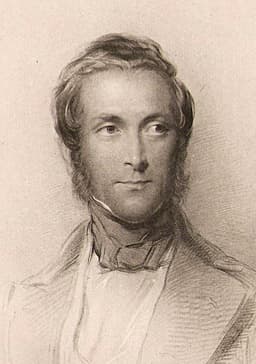
Lord Dalhousie
Politician · Modern
58.4Total

Napoleon Bonaparte
General · Modern
70.9Total
Basic Information
Born
1812
1769
Died
1860
1821
Era
Modern
Modern
Nationality
United Kingdom
France
Occupation
Politician
General
Civilization
Western
Western
Score Comparison
Military (10%)
40.0
94.0
Political (20%)
60.0
72.0
Influence (20%)
58.3
40.0
Legacy (20%)
55.0
80.0
Leadership (15%)
74.0
78.0
Strategy (15%)
60.0
90.0
TOTAL
58.4
70.9
Lord Dalhousie — Complete Timeline
1848 AD
Second Anglo-Sikh WarWar◆ Major
Dalhousie oversaw the Second Anglo-Sikh War in 1848-1849, which resulted in the British annexation of the Punjab. The Sikh army was defeated at the Battle of Gujrat, and the Treaty of Lahore in 1849 formally annexed the region, ending Sikh sovereignty and extending British rule to the northwest frontier.
Anglo-Sikh WarAnnexationPunjab
Impact: regional
Doctrine of LapsePolitical Action
Lord Dalhousie, as Governor-General of India, implemented the Doctrine of Lapse, a policy that allowed the British to annex any princely state where the ruler died without a natural heir. This policy led to the annexation of states like Satara, Jhansi, and Nagpur, causing widespread resentment among Indian rulers and contributing to the 1857 Rebellion.
AnnexationPolicy1857 Rebellion
Impact: regionaldestructive
1853 AD
Railway and Telegraph ExpansionInvention◆ Major
Dalhousie championed the development of railways and telegraphs in India. The first railway line from Bombay to Thane opened in 1853, and a telegraph network was established connecting major cities. These projects aimed to improve communication, trade, and military control, laying the foundation for India's modern infrastructure.
InfrastructureRailwayTelegraph
Impact: regionalconstructive
1856 AD
Annexation of AwadhPolitical Action◆ Major
Dalhousie annexed the Kingdom of Awadh in 1856 under the pretext of misgovernment. The annexation was highly controversial and deeply resented by the local population and nobility. It became a major cause of the 1857 Indian Rebellion, as Awadh's soldiers and landlords joined the uprising against British rule.
AnnexationAwadh1857 Rebellion
Impact: regionaldestructive
Napoleon Bonaparte — Complete Timeline
1799 AD
Coup of 18 BrumaireOther◆ Major
Napoleon Bonaparte, with support from his brother Lucien and key political figures, overthrew the Directory in a bloodless coup. He established the Consulate with himself as First Consul, effectively becoming the ruler of France. This event ended the French Revolution's most unstable period.
French RevolutionCoupRise to Power
Impact: regional
1804 AD
Promulgation of the Napoleonic CodeOther◆ Major
Napoleon enacted the Civil Code of the French, known as the Napoleonic Code, a comprehensive set of laws that replaced the fragmented feudal legal systems. The code established legal equality, protected property rights, and secularized law. It became the basis for legal systems in many European and world countries.
Legal ReformNapoleonic CodeCivil Law
Impact: globalconstructive
1805 AD
Battle of AusterlitzWar◆ Major
Napoleon's Grande Arm
Napoleonic WarsBattleDecisive Victory
Impact: global
1812 AD
Invasion of RussiaWar◆ Major
Napoleon led the Grande Arm
Napoleonic WarsInvasionDisaster
Impact: globaldestructive
1815 AD
Battle of WaterlooWar◆ Major
Napoleon's French army was defeated by the combined forces of the Duke of Wellington's Anglo-Allied army and Gebhard Leberecht von Bl
Napoleonic WarsBattleFinal Defeat
Impact: globaldestructive
Expert Analysis
lord-dalhousie-vs-napoleon-bonaparte
# The Emperor and the Administrator
On a June morning in 1815, Napoleon Bonaparte watched his legions march toward the Duke of Wellington’s squares at Waterloo. He had staked everything on one final gamble—and lost. Forty-one years later, in 1856, Lord Dalhousie sat in his study in Calcutta, signing the proclamation that annexed the Kingdom of Awadh. He believed he was securing British supremacy forever. Within a year, India would erupt in the Great Rebellion of 1857. Two men, both architects of vast imperial projects, both undone by the very forces they sought to control. Yet their stories could not be more different—one a comet that blazed across the sky and burned out, the other a bureaucrat who built railroads while planting the seeds of revolt.
Origins
Napoleon Bonaparte was born in 1769 on Corsica, an island that had just passed from Genoese to French control. His family was minor nobility, but his father’s political maneuvering secured him a scholarship to French military school. There, the awkward, accented boy was mocked by aristocratic classmates—but he outworked them all. The French Revolution shattered the old order, and Napoleon, a child of the Revolution, rose through merit rather than birth.
James Andrew Broun-Ramsay, the 10th Earl of Dalhousie, was born in 1812 into the Scottish peerage. His father was a governor-general of Canada. Young Dalhousie grew up in the corridors of power, attended Harrow and Christ Church, Oxford, then entered Parliament as a Tory. He was not a soldier but a manager—a man of committees and dispatches. The Industrial Revolution was reshaping Britain, and Dalhousie believed that railways, telegraphs, and efficient administration would transform India into a modern colony.
The difference in their origins was not merely one of class. Napoleon came from a world of revolutionary upheaval, where a man could conquer a continent through sheer audacity. Dalhousie came from a world of established order, where power flowed through paperwork and parliamentary votes.
Rise to Power
Napoleon’s ascent was meteoric. At age 24, he drove the British out of Toulon. At 26, he crushed a royalist uprising in Paris with a “whiff of grapeshot.” At 27, he led a ragged army across the Alps into Italy and defeated the Austrians in a series of lightning campaigns. By 1799, at 30, he was First Consul of France. His rise was built on military genius and the chaos of revolution—he seized opportunities that a stable system would never have offered.
Dalhousie’s rise was methodical. He became President of the Board of Trade at 33, then Governor-General of India at 36 in 1848. His opportunity came not from war but from the Doctrine of Lapse, a policy he implemented that same year. Under this doctrine, any Indian princely state whose ruler died without a direct male heir would be annexed by the British East India Company. It was a legalistic tool, not a sword—but it proved just as deadly.
Leadership & Governance
Napoleon governed with energy and vision. He reformed French law through the Napoleonic Code, which abolished feudal privileges and established equality before the law. He created the Bank of France, reformed education, and built roads and canals across Europe. But his rule was also authoritarian—he suppressed dissent, censored the press, and crowned himself Emperor in 1804. His military strategy was revolutionary: he used speed, massed artillery, and decisive battle to shatter his enemies. At Austerlitz in 1805, he destroyed the combined armies of Austria and Russia in a single day.
Dalhousie governed as a modernizer. He championed the first railway line from Bombay to Thane in 1853, expanded the telegraph network, and built irrigation canals. He believed British technology and administration would bring progress to India. But his policies were ruthless. The Second Anglo-Sikh War of 1848-1849 resulted in the annexation of the Punjab. The annexation of Awadh in 1856, justified by alleged misgovernment, was particularly inflammatory—it dispossessed a kingdom that had been a loyal ally.
Where Napoleon led from the front, Dalhousie led from the desk. Napoleon inspired devotion; Dalhousie inspired obedience. Napoleon’s reforms were designed to create a unified French nation; Dalhousie’s were designed to create a profitable colony.
Triumph & Tragedy
Napoleon’s greatest triumph was his empire at its height in 1810—France stretched from the Pyrenees to the Baltic, and his brothers sat on thrones across Europe. His greatest tragedy was the invasion of Russia in 1812. He led 600,000 men into the vastness of Russia; fewer than 100,000 returned. The disaster broke his aura of invincibility. Exiled to Elba in 1814, he escaped in 1815 and rallied France once more—only to meet final defeat at Waterloo.
Dalhousie’s greatest triumph was the transformation of India’s infrastructure. The railway and telegraph networks he championed would eventually unite the subcontinent. His greatest tragedy was the Rebellion of 1857, which exploded just months after he left India. The Doctrine of Lapse and the annexation of Awadh had created a reservoir of resentment that burst into violence. Dalhousie, back in Scotland and dying of tuberculosis, watched from afar as the edifice he had built crumbled into bloodshed.
Character & Destiny
Napoleon was restless, ambitious, and utterly convinced of his own destiny. “Impossible is a word to be found only in the dictionary of fools,” he once said. His confidence inspired armies but also blinded him. He could not stop, could not consolidate, could not accept limits. His personality drove him to conquer—and to fall.
Dalhousie was disciplined, efficient, and arrogant. He believed in the superiority of British civilization and never questioned whether his policies were just. “I am not a man to be turned from my purpose,” he wrote. His personality drove him to reform—and to provoke a rebellion he never anticipated.
Legacy
Napoleon is remembered as one of history’s greatest military commanders and lawgivers. The Napoleonic Code influences legal systems from Europe to Latin America. But he is also remembered as a tyrant who caused the deaths of millions. His legacy is ambiguous—a genius who liberated and enslaved.
Dalhousie is remembered as a great administrator who modernized India—and as the man whose policies triggered the 1857 Rebellion. His legacy is similarly ambiguous. The railways he built still carry passengers; the resentment he created still echoes in Indian memory.
Conclusion
Two men, two empires, two visions of power. Napoleon tried to conquer the world with a sword; Dalhousie tried to annex it with a pen. Both succeeded brilliantly—and failed catastrophically. Their stories remind us that great power, whether wielded by a general on a battlefield or a governor in a study, carries consequences that no one can fully foresee. The comet burns out; the bureaucrat’s papers turn to ash. But the questions they raised—about ambition, progress, and the cost of empire—remain with us still.
Rankings
🥇
Napoleon BonaparteLeader
Mil: 94.0Pol: 72.0Inf: 40.0
70.9
🥈
Lord Dalhousie
Mil: 40.0Pol: 60.0Inf: 58.3
58.4
+12.5 behind
How This Comparison Works
Algorithm
Each figure is scored on 6 dimensions (0—100 scale) based on structured historical data: Military (10%), Political (20%), Influence (20%), Legacy (20%), Leadership (15%), Strategy (15%). The weighted total produces the final ranking.
Data Sources
Scores are computed from structured sub-indicators in the database. Scale factors adjust for era (Ancient ×0.85, Modern ×1.0) and civilization size (Eastern ×1.05, Other ×0.80) to account for differences in population and military scale.
Maximum 3 Figures
Comparisons are limited to 2—3 figures to ensure readability and statistical meaningfulness.
Error Margins
±5 points per dimension — Sub-scores are derived from historical records with inherent uncertainty. Two figures within 5 points on a dimension should be considered roughly equivalent in that area.
Total Score Accuracy
±3 points overall — The weighted combination of 6 dimensions produces a total score with approximately ±3 points of uncertainty. Differences of less than 3 points are not statistically significant— the figures are effectively tied.
Known Limitations
- Historical records are incomplete and uneven across civilizations
- Figures from oral-tradition societies may be underrepresented
- Occupation labels can misclassify multi-role figures
- Scores measure capability and impact, not moral character
- Quantitative scoring is a comparison tool, not absolute truth
Capability Radar
Military (10%) — Battles & Warfare
Battles
20
95
Win Rate
30
90
Expansion
85
95
Political (20%) — Governance & Reform
Reform
75
95
Diplomacy
55
80
Economy
65
85
Influence (20%) — Cultural & Global Reach
Cultural
40
85
Global
70
90
Legacy (20%) — Historical Impact
Historical
75
95
Longevity
60
90
Leadership (15%) — Power & Stability
Tenure
70
85
Stability
20
70
Strategy (15%) — Tactics & Innovation
Strategy
60
95
Tactics
15
98
Reform
40
92
Similar Comparisons
Comments & Discussion
Napoleon'sComet6/17/2026
Napoleon wins by a mile. Dalhousie annexed Awadh through bureaucratic paperwork; Napoleon conquered Italy with speed and genius. At Waterloo, Napoleon faced 3 allied armies and still almost broke Wellington’s squares. Dalhousie couldn’t even keep India calm after annexation. One man rewired Europe; the other just upgraded British railways. No contest.
数据铁锤6/17/2026
比个锤子数据。拿破仑1812年远征俄国损失50万军队,但之前横扫欧洲大陆;达尔豪西1856年吞并奥德,印度1857年就爆发大起义。后者效率低太多了,一个是降维打击,一个是引火烧身。纸上谈兵和实战大师的区别,清楚得很。