Loading...
Anastasius I Dicorus vs Liu Bei
Liu Bei leads by 4.3 pts · 2 figures compared
…

Anastasius I Dicorus
Emperor · Ancient
55.2Total
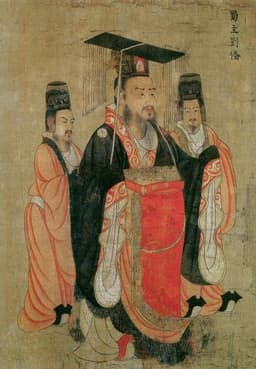
Liu Bei
Emperor · Ancient
59.5Total
Basic Information
Born
431
161
Died
518
223
Era
Ancient
Ancient
Nationality
Byzantine Empire
China
Occupation
Emperor
Emperor
Civilization
Western
Eastern
Score Comparison
Military (10%)
38.3
65.0
Political (20%)
62.7
68.0
Influence (20%)
50.2
55.0
Legacy (20%)
46.7
72.0
Leadership (15%)
78.0
40.0
Strategy (15%)
60.0
50.0
TOTAL
55.2
59.5
Anastasius I Dicorus — Complete Timeline
492 AD
Isaurian WarWar◆ Major
Anastasius I fought a six-year war against the Isaurians, who had been a powerful faction in the empire. The war ended with the defeat of the Isaurian rebels and the removal of their influence from Constantinople. This strengthened Anastasius's control and reduced internal instability.
Civil WarIsauriansInternal Conflict
Impact: national
498 AD
Abolition of the Chrysargyron TaxReform◆ Major
Anastasius I abolished the chrysargyron, a hated tax on trade and commerce that was collected every four years. The tax was widely resented for its harsh collection methods. Its abolition was celebrated by the population and improved economic conditions in the empire.
Tax ReformEconomic PolicyPopular Measure
Impact: nationalconstructive
Monetary Reform and Introduction of the FollisReform◆ Major
Anastasius I implemented a major monetary reform, introducing the follis, a large copper coin, and standardizing the bronze coinage. This reform stabilized the Byzantine economy, improved trade, and left the imperial treasury with a substantial surplus at his death.
Monetary ReformEconomyCoinage
Impact: nationalconstructive
507 AD
Construction of the Anastasian WallOther
Anastasius I ordered the construction of the Anastasian Wall, a long defensive wall stretching across the Thracian peninsula to protect Constantinople from barbarian invasions. The wall was 56 kilometers long and fortified with towers and forts, though it was later abandoned as impractical.
FortificationsDefenseConstantinople
Impact: regionalconstructive
Liu Bei — Complete Timeline
208 AD
Battle of Red CliffsWar
Liu Bei and Sun Quan's combined forces defeated Cao Cao's navy at the Battle of Red Cliffs on the Yangtze River. The victory prevented Cao Cao from conquering the south and allowed Liu Bei to establish a base in Jing Province.
BattleRed CliffsAlliance
Impact: regional
Formation of the Alliance with Sun QuanPolitical Action◆ Major
Liu Bei, advised by Zhuge Liang, formed a strategic alliance with Sun Quan of Wu against the northern warlord Cao Cao. This alliance was crucial for the upcoming Battle of Red Cliffs and established the basis for the Three Kingdoms division.
AllianceSun QuanCao Cao
Impact: regionalconstructive
214 AD
Conquest of Yi ProvinceWar◆ Major
Liu Bei, with the help of Zhuge Liang and other advisors, conquered Yi Province (modern Sichuan) from its ruler Liu Zhang. This provided a wealthy and defensible base for his kingdom, fulfilling a key part of the Longzhong Plan.
ConquestYi ProvinceShu Han
Impact: regional
221 AD
Proclamation of the Shu Han DynastyPolitical Action
After Cao Pi usurped the Han throne, Liu Bei declared himself emperor of Shu Han in Chengdu, claiming to continue the Han dynasty. This formalized the Three Kingdoms period, with Shu, Wei, and Wu as rival states.
DynastyShu HanThree Kingdoms
Impact: national
222 AD
Battle of YilingWar◆ Major
Liu Bei launched a campaign against Sun Quan to avenge the death of his sworn brother Guan Yu. His forces were defeated by Wu general Lu Xun at the Battle of Yiling, resulting in heavy losses and Liu Bei's retreat to Baidi Cheng.
BattleDefeatWu
Impact: regionaltragic
Expert Analysis
Origins
Anastasius I Dicorus was born around 430 AD in Dyrrhachium (modern Durrës, Albania) to a humble Illyrian family. Little is known of his early life; he worked as a silentiary (court official) before being elevated to emperor. His background was administrative, not military. Liu Bei was born in 161 AD in Zhuo Commandery (modern Hebei) to a declining Han dynasty noble family. His father died early, leaving him poor; he supported himself by weaving mats and selling sandals. Despite his lineage, he had no formal education but was known for his ambition to restore the Han dynasty.
Rise to Power
Anastasius was chosen as emperor by Empress Ariadne after the death of Zeno in 491 AD. He was seen as a compromise candidate, acceptable to both the court and the church. His reign began with a revolt by the Isaurians, Zeno's supporters, which he suppressed after six years (492-498 AD). Liu Bei rose through the chaos of the Yellow Turban Rebellion (184 AD), gathering a small band of followers. He gained a reputation for benevolence but lacked a strong power base. His key turning point was the Battle of Red Cliffs (208 AD), where he allied with Sun Quan to defeat Cao Cao, securing Jingzhou. Later, he conquered Yi Province (214 AD) and declared himself emperor of Shu Han in 221 AD after Cao Pi usurped the Han throne.
Leadership & Governance
Anastasius was a financial reformer who focused on economic stability. He abolished the chrysargyron tax, a hated levy on trade, and introduced the follis, a stable copper coin, which standardized currency and reduced inflation. His governance was centralized and efficient, but he neglected military expansion. Liu Bei governed with a Confucian ethos, emphasizing benevolence and moral rule. He appointed capable ministers like Zhuge Liang and relied on personal relationships. However, his leadership was marred by impulsive decisions, such as the campaign against Sun Quan to avenge Guan Yu, which led to defeat at Yiling (222 AD). In terms of scores, Anastasius scored 78.0 in leadership, while Liu Bei scored 40.0, reflecting their different styles: Anastasius's administrative competence versus Liu Bei's charismatic but flawed command.
Triumph & Tragedy
Anastasius's greatest triumph was leaving a full treasury and a stable economy. His monetary reform and tax abolition boosted trade and popular support. His tragedy was the failure of his foreign policy: his war against the Isaurians was costly, and his construction of the Anastasian Wall failed to prevent later invasions. Liu Bei's triumph was founding the Shu Han dynasty and achieving his dream of a Han restoration, however partial. His tragedy was the disastrous Battle of Yiling, where he lost most of his army and died soon after. His personal vendetta outweighed strategic sense, undermining his legacy.
Character & Destiny
Anastasius was cautious, frugal, and methodical. His nickname "Dicorus" (two-pupiled) refers to his heterochromia, which some saw as a sign of duplicity. His character led to a stable reign but limited ambition. Liu Bei was charismatic, compassionate, but also stubborn. He was known for weeping to win allies, a tactic that worked in the short term but revealed emotional decision-making. Historians note that his benevolence was genuine but often impractical. Anastasius's scores show a political acumen of 62.7 and strategy of 60.0, while Liu Bei scored 68.0 in political and 50.0 in strategy, indicating Liu Bei was more politically skilled but less strategic.
Legacy
Anastasius's monetary reforms influenced Byzantine coinage for centuries. The follis remained a standard coin until the 7th century. His financial policies set a precedent for sound administration. However, his military weakness (scoring 38.3) meant his legacy is that of a caretaker. Liu Bei's legacy is immense in Chinese culture: he is idealized in the novel "Romance of the Three Kingdoms" as the epitome of a righteous ruler. His kingdom of Shu Han is remembered for its moral legitimacy. His military score of 65.0 and influence of 55.0 reflect his mixed success. Overall, Liu Bei's legacy score of 72.0 surpasses Anastasius's 46.7, indicating greater long-term cultural impact.
Conclusion
While Anastasius I Dicorus achieved remarkable financial stability and left a surplus, Liu Bei's impact on Chinese history and culture is far more profound. Liu Bei's total score of 59.5 edges out Anastasius's 55.2, but the gap is in legacy and influence. Anastasius's reforms were important but confined to a single empire; Liu Bei's story shaped the identity of an entire civilization. Therefore, Liu Bei had the greater impact, despite his lower leadership score. His blend of myth and reality continues to inspire, whereas Anastasius remains a footnote even in Byzantine history.
Rankings
🥇
Liu BeiLeader
Mil: 65.0Pol: 68.0Inf: 55.0
59.5
🥈
Anastasius I Dicorus
Mil: 38.3Pol: 62.7Inf: 50.2
55.2
+4.3 behind
How This Comparison Works
Algorithm
Each figure is scored on 6 dimensions (0—100 scale) based on structured historical data: Military (10%), Political (20%), Influence (20%), Legacy (20%), Leadership (15%), Strategy (15%). The weighted total produces the final ranking.
Data Sources
Scores are computed from structured sub-indicators in the database. Scale factors adjust for era (Ancient ×0.85, Modern ×1.0) and civilization size (Eastern ×1.05, Other ×0.80) to account for differences in population and military scale.
Maximum 3 Figures
Comparisons are limited to 2—3 figures to ensure readability and statistical meaningfulness.
Error Margins
±5 points per dimension — Sub-scores are derived from historical records with inherent uncertainty. Two figures within 5 points on a dimension should be considered roughly equivalent in that area.
Total Score Accuracy
±3 points overall — The weighted combination of 6 dimensions produces a total score with approximately ±3 points of uncertainty. Differences of less than 3 points are not statistically significant— the figures are effectively tied.
Known Limitations
- Historical records are incomplete and uneven across civilizations
- Figures from oral-tradition societies may be underrepresented
- Occupation labels can misclassify multi-role figures
- Scores measure capability and impact, not moral character
- Quantitative scoring is a comparison tool, not absolute truth
Capability Radar
Military (10%) — Battles & Warfare
Battles
30
65
Win Rate
40
55
Expansion
20
65
Political (20%) — Governance & Reform
Reform
85
45
Diplomacy
60
75
Economy
90
50
Influence (20%) — Cultural & Global Reach
Cultural
30
80
Global
30
70
Legacy (20%) — Historical Impact
Historical
50
85
Longevity
40
85
Leadership (15%) — Power & Stability
Tenure
70
60
Stability
75
55
Strategy (15%) — Tactics & Innovation
Strategy
40
70
Tactics
35
60
Reform
50
40
Similar Comparisons
Comments & Discussion
No comments yet. Be the first to share your thoughts!