Loading...
Li Siyuan vs Liutprand
Liutprand leads by 4.0 pts · 2 figures compared
…
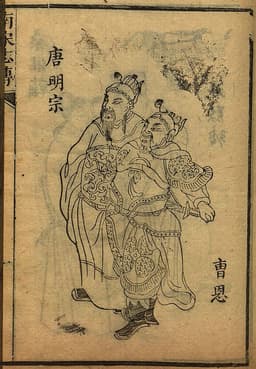
Li Siyuan
Emperor · Medieval
54.9Total

Liutprand
Emperor · Medieval
58.9Total
Basic Information
Born
867
690
Died
933
744
Era
Medieval
Medieval
Nationality
China
Lombards
Occupation
Emperor
Emperor
Civilization
Eastern
Western
Score Comparison
Military (10%)
70.0
61.7
Political (20%)
68.0
68.0
Influence (20%)
51.8
57.2
Legacy (20%)
45.0
49.2
Leadership (15%)
53.2
66.0
Strategy (15%)
55.0
60.7
TOTAL
54.9
58.9
Li Siyuan — Complete Timeline
926 AD
Seized Power in a CoupPolitical Action
Li Siyuan, a general of Shatuo origin, led a mutiny against Emperor Li Cunxu (Zhuangzong) after the emperor's excessive cruelty and mismanagement. The mutiny succeeded, and Li Siyuan was proclaimed emperor of the Later Tang dynasty, restoring order.
CoupLater TangShatuo
Impact: national
927 AD
Implemented Frugal and Benevolent ReformsReform◆ Major
Despite being illiterate, Li Siyuan reduced taxes, curbed corruption, and promoted capable officials. He cut court expenses and distributed grain during famines, earning a reputation as a wise and just ruler who stabilized the Later Tang state.
ReformsGood GovernanceFrugality
Impact: nationalconstructive
Liutprand — Complete Timeline
713 AD
Issued the Laws of LiutprandReform◆ Major
Liutprand issued a comprehensive code of laws, the Edictus Rothari, updating Lombard legal traditions. These laws covered property, inheritance, and criminal justice, and helped unify the Lombard kingdom under a single legal framework.
Legal ReformLombard KingdomCode of Law
Impact: nationalconstructive
728 AD
Donation of SutriPolitical Action
Liutprand donated the town of Sutri to Pope Gregory II. This act, known as the Donation of Sutri, is considered the first territorial grant to the Papacy, establishing the Papal States and setting a precedent for future papal temporal power.
Papal StatesChurch-State RelationsDonation
Impact: regionalconstructive
739 AD
Conquest of the Duchy of SpoletoWar◆ Major
Liutprand captured the Duchy of Spoleto, a Lombard duchy that had been in rebellion. This conquest consolidated Lombard control over central Italy and expanded the kingdom's territory, demonstrating Liutprand's military strength.
Lombard KingdomConquestItaly
Impact: regional
743 AD
Defeat at the Battle of the Unnamed RiverWar
Liutprand was defeated by the Frankish mayor of the palace, Pepin the Short, near the Alps. This battle halted Lombard expansion into Provence and forced Liutprand to abandon claims to Frankish territory, limiting his ambitions.
Frankish-Lombard WarDefeatExpansion Halted
Impact: regional
Expert Analysis
Origins
Li Siyuan (born 867) was a general of Shatuo Turkic origin who served under the Later Tang dynasty. His early life was marked by military service; he was adopted by the warlord Li Keyong and rose through the ranks due to his competence. He was illiterate, relying on oral briefings and trusted advisors. His background in the frontier exposed him to the harsh realities of war and governance.
Liutprand (born c. 680) was a Lombard king, ruling from 712 to 744. He was born into the Lombard nobility, likely in Pavia, and succeeded his father Ansprand. His early life was shaped by Lombard expansionism and the complex relationship with the Byzantine Empire and the Papacy. He was educated in the Lombard court and trained in warfare.
Rise to Power
Li Siyuan's rise began when he led a mutiny against Emperor Li Cunxu (Zhuangzong) in 926, after the emperor's cruelty and mismanagement. His forces captured the capital Luoyang, and he was proclaimed emperor, taking the reign name Mingzong. He consolidated power by executing corrupt officials and rewarding loyal generals.
Liutprand became king in 712 after his father's brief reign. He immediately faced a rebellion from the dukes of Spoleto and Benevento. He suppressed them and then turned to external expansion. His key turning point was the Donation of Sutri in 728, where he gave the town of Sutri to Pope Gregory II, gaining papal support and legitimacy.
Leadership & Governance
Li Siyuan governed with a focus on frugality and benevolence. He reduced taxes, cut court expenses, and distributed grain during famines. Despite his illiteracy, he promoted capable officials based on merit and listened to advisors. He scores 53.2 in leadership and 68.0 in political skill. His reforms curbed corruption and stabilized the Later Tang.
Liutprand was a strong military leader and lawgiver. He issued the Laws of Liutprand, updating the Edictus Rothari, covering property and inheritance. He expanded the Lombard kingdom to its greatest extent, conquering the Duchy of Spoleto and parts of Byzantine Italy. His leadership score is 66.0, reflecting his ability to command and legislate.
Triumph & Tragedy
Li Siyuan's triumphs include stabilizing the Later Tang after a coup, implementing tax relief, and promoting competent officials. His greatest failure was the inability to secure a stable succession; after his death in 933, his son Li Conghou was quickly overthrown, leading to the dynasty's collapse in 936. His military score is 70.0, but his strategy score is only 55.0, indicating limitations in long-term planning.
Liutprand's triumphs include the Donation of Sutri, which set a precedent for papal territories, and the conquest of Spoleto and Benevento. His defeat at the Battle of the Unnamed River by Pepin the Short halted Lombard expansion into Provence. He also failed to fully integrate the Lombard duchies, which later rebelled. His military score is 61.7, but his strategy is 60.7.
Character & Destiny
Li Siyuan was pragmatic and self-aware, compensating for his illiteracy with delegation. He was known for his humility and concern for commoners. However, his lack of education limited his ability to project authority and control the bureaucracy, leading to factionalism. His character shaped a relatively peaceful reign but a weak legacy.
Liutprand was ambitious and diplomatic, using both war and alliances. His donation to the Pope showed political acumen, but his aggressive expansion provoked Frankish intervention. His character combined Lombard warrior ethos with legal reform. He died in 744, leaving a kingdom at its zenith but vulnerable.
Legacy
Li Siyuan's legacy is mixed: he is remembered as a benevolent but illiterate emperor who briefly revived the Later Tang. His reforms were undone after his death. He scores 45.0 in legacy and 51.8 in influence. No major institutions survived his reign.
Liutprand's legacy is more enduring: the Donation of Sutri is considered the first territorial grant to the Papacy, influencing the Papal States. His laws influenced later Lombard and Italian legal traditions. He expanded the Lombard kingdom to its greatest extent. His legacy score is 49.2, and influence 57.2.
Conclusion
Liutprand had a greater impact than Li Siyuan. Despite a total score of 58.9 vs 54.9, Liutprand's political and legal contributions outlasted his reign. The Donation of Sutri had lasting consequences for the Papacy and European history. Li Siyuan's reforms were temporary and did not prevent the Later Tang's fall. Liutprand's expansion and laws shaped medieval Italy, while Li Siyuan's rule was a brief interlude in Chinese history. Therefore, Liutprand is the more significant historical figure.
Rankings
🥇
LiutprandLeader
Mil: 61.7Pol: 68.0Inf: 57.2
58.9
🥈
Li Siyuan
Mil: 70.0Pol: 68.0Inf: 51.8
54.9
+4.0 behind
How This Comparison Works
Algorithm
Each figure is scored on 6 dimensions (0—100 scale) based on structured historical data: Military (10%), Political (20%), Influence (20%), Legacy (20%), Leadership (15%), Strategy (15%). The weighted total produces the final ranking.
Data Sources
Scores are computed from structured sub-indicators in the database. Scale factors adjust for era (Ancient ×0.85, Modern ×1.0) and civilization size (Eastern ×1.05, Other ×0.80) to account for differences in population and military scale.
Maximum 3 Figures
Comparisons are limited to 2—3 figures to ensure readability and statistical meaningfulness.
Error Margins
±5 points per dimension — Sub-scores are derived from historical records with inherent uncertainty. Two figures within 5 points on a dimension should be considered roughly equivalent in that area.
Total Score Accuracy
±3 points overall — The weighted combination of 6 dimensions produces a total score with approximately ±3 points of uncertainty. Differences of less than 3 points are not statistically significant— the figures are effectively tied.
Known Limitations
- Historical records are incomplete and uneven across civilizations
- Figures from oral-tradition societies may be underrepresented
- Occupation labels can misclassify multi-role figures
- Scores measure capability and impact, not moral character
- Quantitative scoring is a comparison tool, not absolute truth
Capability Radar
Military (10%) — Battles & Warfare
Battles
65
65
Win Rate
70
70
Expansion
50
70
Political (20%) — Governance & Reform
Reform
65
60
Diplomacy
60
65
Economy
55
55
Influence (20%) — Cultural & Global Reach
Cultural
30
50
Global
20
35
Legacy (20%) — Historical Impact
Historical
40
55
Longevity
30
40
Leadership (15%) — Power & Stability
Tenure
70
75
Stability
50
60
Strategy (15%) — Tactics & Innovation
Strategy
75
65
Tactics
60
60
Reform
55
55
Similar Comparisons
Comments & Discussion
No comments yet. Be the first to share your thoughts!