Loading...
Li Siyuan vs Ly Thai To
Li Siyuan leads by 0.3 pts · 2 figures compared
…
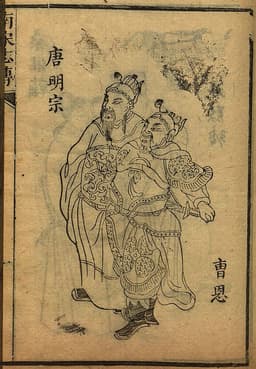
Li Siyuan
Emperor · Medieval
54.9Total
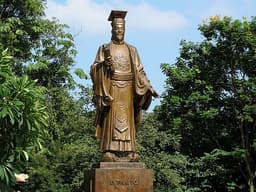
Ly Thai To
Emperor · Medieval
54.6Total
Basic Information
Born
867
974
Died
933
1028
Era
Medieval
Medieval
Nationality
China
Vietnam
Occupation
Emperor
Emperor
Civilization
Eastern
Eastern
Score Comparison
Military (10%)
70.0
45.0
Political (20%)
68.0
68.0
Influence (20%)
51.8
61.0
Legacy (20%)
45.0
58.0
Leadership (15%)
53.2
40.0
Strategy (15%)
55.0
41.7
TOTAL
54.9
54.6
Li Siyuan — Complete Timeline
926 AD
Seized Power in a CoupPolitical Action
Li Siyuan, a general of Shatuo origin, led a mutiny against Emperor Li Cunxu (Zhuangzong) after the emperor's excessive cruelty and mismanagement. The mutiny succeeded, and Li Siyuan was proclaimed emperor of the Later Tang dynasty, restoring order.
CoupLater TangShatuo
Impact: national
927 AD
Implemented Frugal and Benevolent ReformsReform◆ Major
Despite being illiterate, Li Siyuan reduced taxes, curbed corruption, and promoted capable officials. He cut court expenses and distributed grain during famines, earning a reputation as a wise and just ruler who stabilized the Later Tang state.
ReformsGood GovernanceFrugality
Impact: nationalconstructive
Ly Thai To — Complete Timeline
1009 AD
Foundation of the Ly DynastyPolitical Action
Ly Cong Uan, later known as Ly Thai To, was proclaimed emperor after the death of the last Le dynasty ruler. He founded the Ly dynasty, which would rule Vietnam for over 200 years. His accession was supported by Buddhist monks and the court.
Dynasty FoundingLy DynastyBuddhist Influence
Impact: nationalconstructive
1010 AD
Move of the Capital to Thang Long (Hanoi)Political Action
Ly Thai To moved the capital from Hoa Lu to Dai La, renaming it Thang Long (Rising Dragon), now Hanoi. The move was intended to centralize power and promote economic development. Thang Long became the political and cultural center of Vietnam for centuries.
Capital MoveThang LongHanoi
Impact: nationalconstructive
Promotion of Buddhism and EducationCultural◆ Major
Ly Thai To promoted Buddhism as the state religion and built many pagodas and temples. He also established the first Vietnamese university, the Quoc Tu Giam, to educate scholars in Confucian classics. These policies laid the foundation for Vietnamese culture and governance.
BuddhismEducationCultural Development
Impact: nationalconstructive
Expert Analysis
Origins
Li Siyuan (867-933) was born into the Shatuo Turks, a nomadic group serving the Tang dynasty. His early life was marked by military service under Li Keyong, where he rose through the ranks despite being illiterate. He was adopted by Li Keyong and became a trusted general. Ly Thai To (974-1028), born Ly Cong Uan, was of humble origins in Co Phap village, Vietnam. He was raised by Buddhist monks and became a temple orphan. His intelligence and virtue caught the attention of the Le dynasty court, leading to his appointment as commander of the palace guard.
Rise to Power
Li Siyuan's rise came through a coup in 926. Emperor Li Cunxu (Zhuangzong) had become tyrannical, and Li Siyuan led a mutiny of troops at Ye. After the emperor's death, Li Siyuan was proclaimed emperor, founding the Later Tang dynasty. He secured power by executing corrupt officials and rewarding loyalists. Ly Thai To's rise was more peaceful. In 1009, the last Le ruler died, and Ly Cong Uan was acclaimed emperor by the court and military. He established the Ly dynasty, which would rule for 216 years. His legitimacy was reinforced by a prophecy and his reputation for wisdom.
Leadership & Governance
Li Siyuan, despite illiteracy, implemented frugal and benevolent reforms. He reduced taxes, cut court expenses, distributed grain during famines, and promoted capable officials. He curbed corruption by executing dishonest ministers. His governance score of 68.0 reflects his pragmatic approach. Ly Thai To focused on centralization and cultural development. He moved the capital from Hoa Lu to Thang Long (Hanoi) in 1010, a strategic move that centralized power and fostered economic growth. He promoted Buddhism as the state religion and built pagodas. He also established the Quoc Tu Giam, Vietnam's first university, in 1076 (though after his reign, his foundation for education was key). His political score is also 68.0, matching Li Siyuan.
Triumph & Tragedy
Li Siyuan's greatest success was stabilizing the Later Tang after the chaos of the late Liang. His reforms restored prosperity and order. However, his failure to secure a clear succession led to civil war after his death. His son Li Conghou was overthrown within months. Li Siyuan's military score of 70.0 reflects his successful campaigns, but his inability to choose a capable heir was a major flaw. Ly Thai To's triumph was founding a dynasty that lasted over two centuries and establishing Hanoi as a cultural center. His tragedy was internal strife: his son Ly Phat Ma (Ly Thai Tong) faced rebellions, and the early Ly dynasty had to suppress uprisings. Ly Thai To's military score of 45.0 reflects his limited military campaigns, focusing on diplomacy and consolidation.
Character & Destiny
Li Siyuan was pragmatic and hardworking, but his illiteracy limited his direct involvement in administration. He relied on literate advisors and was known for his personal frugality. His character of discipline and justice earned him respect, but his indecisiveness in succession planning doomed his legacy. Ly Thai To was visionary and religious, deeply influenced by Buddhism. His decision to move the capital was bold and forward-thinking. He was more of a statesman than a warrior, which shaped his dynasty's peaceful character. However, his reliance on Buddhist monks and lack of military assertiveness may have left the kingdom vulnerable to external threats.
Legacy
Li Siyuan's reforms influenced later Chinese dynasties, but his dynasty was short-lived. His legacy is overshadowed by the Later Tang's collapse. His political and military scores (68.0 and 70.0) are higher than Ly Thai To's (68.0 and 45.0), but his overall influence score is lower (51.8 vs 61.0). Ly Thai To's legacy is immense: he founded the Ly dynasty, which saw Vietnam's independence and cultural flourishing. The move to Hanoi made it the enduring capital. His promotion of education and Buddhism shaped Vietnamese identity. His influence and legacy scores (61.0 and 58.0) exceed Li Siyuan's (51.8 and 45.0).
Conclusion
While Li Siyuan achieved more in military and political governance during his reign, Ly Thai To's long-term impact on Vietnam is greater. Li Siyuan's reforms were temporary, and his dynasty fell quickly. Ly Thai To's foundation of the Ly dynasty and Hanoi's capital had lasting effects for centuries. Therefore, Ly Thai To has greater historical impact, despite a slightly lower total score (54.6 vs 54.9). The score gap is negligible, but legacy and influence favor Ly Thai To.
Rankings
🥇
Li SiyuanLeader
Mil: 70.0Pol: 68.0Inf: 51.8
54.9
🥈
Ly Thai To
Mil: 45.0Pol: 68.0Inf: 61.0
54.6
+0.3 behind
How This Comparison Works
Algorithm
Each figure is scored on 6 dimensions (0—100 scale) based on structured historical data: Military (10%), Political (20%), Influence (20%), Legacy (20%), Leadership (15%), Strategy (15%). The weighted total produces the final ranking.
Data Sources
Scores are computed from structured sub-indicators in the database. Scale factors adjust for era (Ancient ×0.85, Modern ×1.0) and civilization size (Eastern ×1.05, Other ×0.80) to account for differences in population and military scale.
Maximum 3 Figures
Comparisons are limited to 2—3 figures to ensure readability and statistical meaningfulness.
Error Margins
±5 points per dimension — Sub-scores are derived from historical records with inherent uncertainty. Two figures within 5 points on a dimension should be considered roughly equivalent in that area.
Total Score Accuracy
±3 points overall — The weighted combination of 6 dimensions produces a total score with approximately ±3 points of uncertainty. Differences of less than 3 points are not statistically significant— the figures are effectively tied.
Known Limitations
- Historical records are incomplete and uneven across civilizations
- Figures from oral-tradition societies may be underrepresented
- Occupation labels can misclassify multi-role figures
- Scores measure capability and impact, not moral character
- Quantitative scoring is a comparison tool, not absolute truth
Capability Radar
Military (10%) — Battles & Warfare
Battles
65
20
Win Rate
70
25
Expansion
50
30
Political (20%) — Governance & Reform
Reform
65
60
Diplomacy
60
50
Economy
55
55
Influence (20%) — Cultural & Global Reach
Cultural
30
55
Global
20
30
Legacy (20%) — Historical Impact
Historical
40
60
Longevity
30
55
Leadership (15%) — Power & Stability
Tenure
70
55
Stability
50
60
Strategy (15%) — Tactics & Innovation
Strategy
75
25
Tactics
60
20
Reform
55
30
Similar Comparisons
Comments & Discussion
No comments yet. Be the first to share your thoughts!