Loading...
Henry IV of England vs Liutprand
Liutprand leads by 11.2 pts · 2 figures compared
…
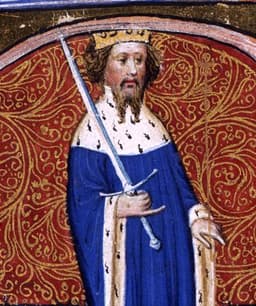
Henry IV of England
Emperor · Medieval
47.7Total

Liutprand
Emperor · Medieval
58.9Total
Basic Information
Born
1367
690
Died
1413
744
Era
Medieval
Medieval
Nationality
England
Lombards
Occupation
Emperor
Emperor
Civilization
Western
Western
Score Comparison
Military (10%)
55.0
61.7
Political (20%)
35.1
68.0
Influence (20%)
53.3
57.2
Legacy (20%)
45.8
49.2
Leadership (15%)
55.3
66.0
Strategy (15%)
38.3
60.7
TOTAL
47.7
58.9
Henry IV of England — Complete Timeline
1399 AD
Usurpation of the ThronePolitical Action◆ Major
Henry Bolingbroke deposed Richard II and claimed the English throne as Henry IV. This usurpation established the Lancastrian dynasty but created a legitimacy crisis that led to future conflicts.
UsurpationLancasterSuccession
Impact: national
1403 AD
Battle of ShrewsburyWar◆ Major
Henry IV defeated a rebellion led by Henry Percy (Hotspur) at the Battle of Shrewsbury. Hotspur was killed, and the rebellion was crushed, but the king suffered heavy casualties and ongoing challenges.
BattleRebellionPercy
Impact: nationaldestructive
1405 AD
Execution of Archbishop ScropePolitical Action◆ Major
Henry IV ordered the execution of Richard Scrope, Archbishop of York, for leading a rebellion. This act shocked the church and nobility, damaging Henry's reputation and legitimacy.
ExecutionChurchRebellion
Impact: nationaldestructive
Illness and DeclineOther
Henry IV suffered from a debilitating illness, possibly leprosy or epilepsy, which weakened his rule. He became increasingly unable to govern effectively, leading to factionalism and his son's growing influence.
IllnessDecline
Impact: nationaltragic
Liutprand — Complete Timeline
713 AD
Issued the Laws of LiutprandReform◆ Major
Liutprand issued a comprehensive code of laws, the Edictus Rothari, updating Lombard legal traditions. These laws covered property, inheritance, and criminal justice, and helped unify the Lombard kingdom under a single legal framework.
Legal ReformLombard KingdomCode of Law
Impact: nationalconstructive
728 AD
Donation of SutriPolitical Action
Liutprand donated the town of Sutri to Pope Gregory II. This act, known as the Donation of Sutri, is considered the first territorial grant to the Papacy, establishing the Papal States and setting a precedent for future papal temporal power.
Papal StatesChurch-State RelationsDonation
Impact: regionalconstructive
739 AD
Conquest of the Duchy of SpoletoWar◆ Major
Liutprand captured the Duchy of Spoleto, a Lombard duchy that had been in rebellion. This conquest consolidated Lombard control over central Italy and expanded the kingdom's territory, demonstrating Liutprand's military strength.
Lombard KingdomConquestItaly
Impact: regional
743 AD
Defeat at the Battle of the Unnamed RiverWar
Liutprand was defeated by the Frankish mayor of the palace, Pepin the Short, near the Alps. This battle halted Lombard expansion into Provence and forced Liutprand to abandon claims to Frankish territory, limiting his ambitions.
Frankish-Lombard WarDefeatExpansion Halted
Impact: regional
Expert Analysis
Origins
Henry IV of England was born in 1367 as Henry Bolingbroke, the son of John of Gaunt, Duke of Lancaster, and Blanche of Lancaster. He was educated in chivalric traditions and became a skilled knight. His early life was marked by conflict with Richard II, who exiled him in 1398. Liutprand, born around 690, was the son of King Ansprand of the Lombards. He grew up in a period of Lombard consolidation in Italy, learning military and administrative skills. After his father's short reign, Liutprand ascended the throne in 712, inheriting a kingdom facing internal divisions and external threats from the Byzantines and Franks.
Rise to Power
Henry IV's rise was abrupt and violent. In 1399, while Richard II was in Ireland, Henry landed in England with a small force, claiming his inheritance. He quickly gained support from nobles disaffected with Richard's rule. By September 1399, Richard was captured and forced to abdicate. Henry was crowned on October 13, 1399, establishing the Lancastrian dynasty. Liutprand's rise was smoother; he became king in 712 after his father's death. He immediately faced a rebellion from the Duchy of Spoleto, which he crushed. His political acumen (scoring 68.0) was evident in his handling of the papacy. In 728, he donated the town of Sutri to Pope Gregory II, a turning point that secured papal support and legitimized his rule.
Leadership & Governance
Henry IV's leadership (scoring 55.3) was marked by constant rebellion. He faced the Percy family's revolt (Battle of Shrewsbury, 1403), the Welsh uprising under Owain Glyndŵr, and the execution of Archbishop Scrope in 1405, which alienated the church. His governance was reactive, focusing on suppressing revolts rather than reforms. In contrast, Liutprand's leadership (66.0) was proactive. He issued the Laws of Liutprand, updating the Edictus Rothari, which regulated property, inheritance, and criminal justice. This legal codification strengthened Lombard society. Politically, he expanded the kingdom, conquering the Duchy of Spoleto and the Exarchate of Ravenna, though he failed to take Rome. His strategy (60.7) involved alliances with the papacy and careful military campaigns.
Triumph & Tragedy
Henry IV's greatest triumph was securing the throne despite being a usurper. He defeated major rebellions and maintained control for 14 years. However, his legacy was tarnished by his illness (possibly leprosy) after 1405, which incapacitated him and led to factionalism. His execution of Scrope was a major failure, damaging his moral authority. Liutprand's triumphs include the Donation of Sutri, which set a precedent for papal temporal power, and the conquest of Spoleto. His legal reforms were enduring. His tragedy was the defeat by Pepin the Short at the Battle of the Unnamed River (c. 756), which halted Lombard expansion into Provence and foreshadowed Lombard decline. He also failed to capture Rome, limiting his influence.
Character & Destiny
Henry IV was pragmatic but insecure. His usurpation created a legitimacy crisis that plagued his reign. He was decisive in battle but hesitant in politics, often alienating allies. His health decline mirrored the decline of his authority. Liutprand was ambitious and diplomatic. He skillfully played the papacy against the Byzantines and Franks. His legal mind and military capability (61.7) made him the greatest Lombard king. However, his expansionist policies eventually provoked Frankish intervention, leading to Lombard subjugation. Historians note that Liutprand's character was more suited to state-building than Henry's reactive kingship.
Legacy
Henry IV's legacy is mixed. He established the Lancastrian dynasty, but his reign sowed seeds for the Wars of the Roses. His usurpation weakened the monarchy's moral authority. In contrast, Liutprand's legacy is more positive. His laws influenced later Italian legal traditions. The Donation of Sutri is a foundational event in the Papal States' history. He scored 49.2 in legacy, higher than Henry's 45.8, reflecting his lasting impact on Italian political structures. Henry's legacy score is dragged down by the instability he caused.
Conclusion
Liutprand had greater impact. His overall score of 58.9 versus Henry's 47.7 reflects his superior leadership, political skill, and strategic vision. While Henry's usurpation changed English history, it was largely negative, leading to decades of civil war. Liutprand's legal reforms and territorial consolidation strengthened Lombard Italy and shaped the medieval papacy. Liutprand's influence (57.2) also exceeds Henry's (53.3). Therefore, Liutprand is the more significant historical figure.
Rankings
🥇
LiutprandLeader
Mil: 61.7Pol: 68.0Inf: 57.2
58.9
🥈
Henry IV of England
Mil: 55.0Pol: 35.1Inf: 53.3
47.7
+11.2 behind
How This Comparison Works
Algorithm
Each figure is scored on 6 dimensions (0—100 scale) based on structured historical data: Military (10%), Political (20%), Influence (20%), Legacy (20%), Leadership (15%), Strategy (15%). The weighted total produces the final ranking.
Data Sources
Scores are computed from structured sub-indicators in the database. Scale factors adjust for era (Ancient ×0.85, Modern ×1.0) and civilization size (Eastern ×1.05, Other ×0.80) to account for differences in population and military scale.
Maximum 3 Figures
Comparisons are limited to 2—3 figures to ensure readability and statistical meaningfulness.
Error Margins
±5 points per dimension — Sub-scores are derived from historical records with inherent uncertainty. Two figures within 5 points on a dimension should be considered roughly equivalent in that area.
Total Score Accuracy
±3 points overall — The weighted combination of 6 dimensions produces a total score with approximately ±3 points of uncertainty. Differences of less than 3 points are not statistically significant— the figures are effectively tied.
Known Limitations
- Historical records are incomplete and uneven across civilizations
- Figures from oral-tradition societies may be underrepresented
- Occupation labels can misclassify multi-role figures
- Scores measure capability and impact, not moral character
- Quantitative scoring is a comparison tool, not absolute truth
Capability Radar
Military (10%) — Battles & Warfare
Battles
35
65
Win Rate
40
70
Expansion
15
70
Political (20%) — Governance & Reform
Reform
30
60
Diplomacy
35
65
Economy
25
55
Influence (20%) — Cultural & Global Reach
Cultural
30
50
Global
20
35
Legacy (20%) — Historical Impact
Historical
45
55
Longevity
30
40
Leadership (15%) — Power & Stability
Tenure
50
75
Stability
20
60
Strategy (15%) — Tactics & Innovation
Strategy
25
65
Tactics
30
60
Reform
10
55
Similar Comparisons
Comments & Discussion
No comments yet. Be the first to share your thoughts!