Loading...
Li Peng vs Napoleon Bonaparte
Napoleon Bonaparte leads by 18.9 pts · 2 figures compared
…
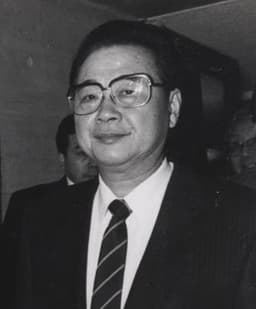
Li Peng
Politician · Modern
52.0Total

Napoleon Bonaparte
General · Modern
70.9Total
Basic Information
Born
1928
1769
Died
—
1821
Era
Modern
Modern
Nationality
China
France
Occupation
Politician
General
Civilization
Eastern
Western
Score Comparison
Military (10%)
13.0
94.0
Political (20%)
68.0
72.0
Influence (20%)
58.0
40.0
Legacy (20%)
50.0
80.0
Leadership (15%)
72.0
78.0
Strategy (15%)
26.9
90.0
TOTAL
52.0
70.9
Li Peng — Complete Timeline
1987 AD
Became Premier of the People's Republic of ChinaPolitical Action◆ Major
Li Peng was appointed Premier, succeeding Zhao Ziyang. He was a conservative leader who emphasized economic stability and political control, opposing rapid political reforms.
PremierEconomic PolicyConservatism
Impact: national
1988 AD
Implemented austerity measures to control inflationReform◆ Major
Li Peng introduced austerity measures to curb double-digit inflation, including price controls and credit tightening. These measures slowed economic growth but stabilized prices, though they were unpopular.
Economic PolicyInflationAusterity
Impact: nationalconstructive
1989 AD
Ordered the Tiananmen Square crackdownPolitical Action
As Premier, Li Peng was a key figure in the decision to use military force against the Tiananmen Square protests. He signed the order declaring martial law and authorized the People's Liberation Army to clear the square.
Tiananmen SquareCrackdownMartial Law
Impact: globaldestructive
1992 AD
Oversaw the Three Gorges Dam project approvalPolitical Action◆ Major
Li Peng pushed through the National People's Congress approval for the Three Gorges Dam, the world's largest hydroelectric project. The project was controversial due to environmental and displacement concerns.
Three Gorges DamInfrastructureHydroelectric
Impact: nationalconstructive
1998 AD
Retired from active politicsPolitical Action
Li Peng stepped down as Premier and was succeeded by Zhu Rongji. He remained a member of the Politburo Standing Committee until 2002, but his influence waned.
RetirementPolitical TransitionElder Statesman
Impact: national
Napoleon Bonaparte — Complete Timeline
1799 AD
Coup of 18 BrumaireOther◆ Major
Napoleon Bonaparte, with support from his brother Lucien and key political figures, overthrew the Directory in a bloodless coup. He established the Consulate with himself as First Consul, effectively becoming the ruler of France. This event ended the French Revolution's most unstable period.
French RevolutionCoupRise to Power
Impact: regional
1804 AD
Promulgation of the Napoleonic CodeOther◆ Major
Napoleon enacted the Civil Code of the French, known as the Napoleonic Code, a comprehensive set of laws that replaced the fragmented feudal legal systems. The code established legal equality, protected property rights, and secularized law. It became the basis for legal systems in many European and world countries.
Legal ReformNapoleonic CodeCivil Law
Impact: globalconstructive
1805 AD
Battle of AusterlitzWar◆ Major
Napoleon's Grande Arm
Napoleonic WarsBattleDecisive Victory
Impact: global
1812 AD
Invasion of RussiaWar◆ Major
Napoleon led the Grande Arm
Napoleonic WarsInvasionDisaster
Impact: globaldestructive
1815 AD
Battle of WaterlooWar◆ Major
Napoleon's French army was defeated by the combined forces of the Duke of Wellington's Anglo-Allied army and Gebhard Leberecht von Bl
Napoleonic WarsBattleFinal Defeat
Impact: globaldestructive
Expert Analysis
li-peng-vs-napoleon-bonaparte
# The Eagle and the Engineer
On a June morning in 1815, Napoleon Bonaparte watched his Imperial Guard march toward the smoking fields of Waterloo, their bearskin caps bobbing through the rain. He had gambled everything on one final, crushing blow against the British line. One hundred and seventy-four years later, in the summer of 1989, Li Peng sat in Zhongnanhai as the rumble of tanks replaced the voices of students in Tiananmen Square. Two men, two continents, two radically different definitions of order. What drove one to conquer and the other to control? The answer lies not in their shared ambition, but in the worlds that made them.
Origins
Napoleon was born in 1769 on Corsica, an island of blood feuds and mountain clans, only recently annexed by France. His father was a minor noble with more pride than property, and young Napoleone Buonaparte grew up speaking Italian, not French. He entered a military academy at nine, a short, intense outsider mocked by aristocratic classmates. The French Revolution, which erupted when he was twenty, shattered the old world and handed him a sword. In the chaos of 1793, a twenty-four-year-old artillery officer recaptured Toulon from the British and became a general overnight. He was a child of revolution—and revolution rewards the bold.
Li Peng was born in 1928 in Shanghai, the son of a revolutionary martyr executed by the Nationalists. Orphaned at three, he was raised by the Communist Party itself, sent to Yan’an, the revolutionary redoubt, and educated in the Soviet Union. Where Napoleon learned war from cannons and maps, Li learned politics from cadres and comrades. The Party was his family; stability was his creed. By the time he became Premier of the People’s Republic of China in 1987, he had spent six decades inside a system that demanded absolute loyalty and feared nothing more than chaos.
Rise to Power
Napoleon’s ascent was a series of audacious bets. In 1796, at twenty-six, he took command of a starving, mutinous army in Italy and turned it into a lightning force that humiliated the Austrians. He negotiated his own treaties, printed his own newspapers, and sent back stolen art as proof of genius. By 1799, he had abandoned his army in Egypt, slipped past the British navy, and staged a coup that made him First Consul. He crowned himself Emperor in 1804, snatching the crown from the Pope’s hands and placing it on his own head. The message was clear: I owe nothing to God or king.
Li Peng’s rise was quieter, more bureaucratic. He climbed through the Ministry of Electric Power, mastering the engineering of dams and grids. When Deng Xiaoping launched economic reforms in the late 1970s, Li was the technocrat who could make the trains run on time. He became Premier in 1987, succeeding the more reformist Zhao Ziyang. But his real test came not from economics but from the street.
Leadership & Governance
Napoleon governed with the energy of a man who believed he could remake the world. He overhauled French law with the Napoleonic Code, standardizing justice and abolishing feudal privileges. He created the Bank of France, stabilized the currency, and built roads and canals. He also centralized power ruthlessly, censored the press, and restored slavery in the colonies. His military genius was unmatched: at Austerlitz in 1805, he destroyed a combined Russian-Austrian army with a feigned retreat that remains a textbook maneuver. He won battles through speed, deception, and the psychological terror of his presence.
Li Peng governed with the caution of an engineer. In 1988, facing double-digit inflation, he imposed austerity measures—price controls and credit tightening—that slowed the economy but stabilized it. His signature achievement was the Three Gorges Dam, the world’s largest hydroelectric project, approved in 1992. He saw it as a monument to order and progress, a way to control the Yangtze’s floods and power China’s factories. But his defining act came in 1989. When student protests swelled into a nationwide movement, Li Peng signed the order for military force. The Tiananmen Square crackdown killed hundreds, perhaps thousands, and crushed dissent for a generation.
Triumph & Tragedy
Napoleon’s greatest moment was Austerlitz, where he defeated two emperors in a single day. His worst was the invasion of Russia in 1812, a catastrophe of hubris and logistics. He marched six hundred thousand men into the snow; fewer than forty thousand returned. Exiled to Elba, he escaped, raised another army, and was finally beaten at Waterloo. His tragedy was not that he failed, but that he could not stop.
Li Peng’s triumph was the Three Gorges Dam, a project that displaced 1.3 million people but now generates enough electricity to power entire provinces. His tragedy was Tiananmen. He never apologized, never wavered. In his memoirs, he described the crackdown as necessary to preserve stability. He died in 2019, unrepentant, a figure of fear and contempt to millions.
Character & Destiny
Napoleon was a man of boundless energy and bottomless ego. He slept four hours a night, dictated to multiple secretaries simultaneously, and believed he was destiny’s instrument. “Impossible,” he once said, “is a word only to be found in the dictionary of fools.” That confidence created an empire and destroyed it.
Li Peng was cautious, methodical, and deeply conservative. He had seen the Cultural Revolution tear China apart; he feared chaos more than tyranny. Where Napoleon charged forward, Li Peng built walls. One sought glory; the other sought control.
Legacy
Napoleon’s legacy is written in the law codes of Europe, the shape of modern warfare, and the romantic imagination. He is remembered as both liberator and tyrant, genius and monster. Li Peng’s legacy is narrower: a dam that lights cities, a crackdown that haunts a nation. In China, his name is rarely spoken in public. In the West, it is synonymous with repression.
Conclusion
Two men, separated by a century and a half, each faced a moment of choice. Napoleon chose conquest and fell. Li Peng chose control and endured. One changed the world; the other froze it in place. History remembers both, but for very different reasons. The eagle died in exile; the engineer died in power. Which is the greater tragedy depends on what you value—freedom or order, glory or safety. In the end, both men remind us that the line between hero and villain is often drawn in blood.
Rankings
🥇
Napoleon BonaparteLeader
Mil: 94.0Pol: 72.0Inf: 40.0
70.9
🥈
Li Peng
Mil: 13.0Pol: 68.0Inf: 58.0
52.0
+18.9 behind
How This Comparison Works
Algorithm
Each figure is scored on 6 dimensions (0—100 scale) based on structured historical data: Military (10%), Political (20%), Influence (20%), Legacy (20%), Leadership (15%), Strategy (15%). The weighted total produces the final ranking.
Data Sources
Scores are computed from structured sub-indicators in the database. Scale factors adjust for era (Ancient ×0.85, Modern ×1.0) and civilization size (Eastern ×1.05, Other ×0.80) to account for differences in population and military scale.
Maximum 3 Figures
Comparisons are limited to 2—3 figures to ensure readability and statistical meaningfulness.
Error Margins
±5 points per dimension — Sub-scores are derived from historical records with inherent uncertainty. Two figures within 5 points on a dimension should be considered roughly equivalent in that area.
Total Score Accuracy
±3 points overall — The weighted combination of 6 dimensions produces a total score with approximately ±3 points of uncertainty. Differences of less than 3 points are not statistically significant— the figures are effectively tied.
Known Limitations
- Historical records are incomplete and uneven across civilizations
- Figures from oral-tradition societies may be underrepresented
- Occupation labels can misclassify multi-role figures
- Scores measure capability and impact, not moral character
- Quantitative scoring is a comparison tool, not absolute truth
Capability Radar
Military (10%) — Battles & Warfare
Battles
15
95
Win Rate
15
90
Expansion
22
95
Political (20%) — Governance & Reform
Reform
55
95
Diplomacy
50
80
Economy
60
85
Influence (20%) — Cultural & Global Reach
Cultural
30
85
Global
50
90
Legacy (20%) — Historical Impact
Historical
55
95
Longevity
40
90
Leadership (15%) — Power & Stability
Tenure
65
85
Stability
45
70
Strategy (15%) — Tactics & Innovation
Strategy
25
95
Tactics
28
98
Reform
26
92
Similar Comparisons
Comments & Discussion
No comments yet. Be the first to share your thoughts!