Loading...
Li Heng vs Ramathibodi II
Ramathibodi II leads by 1.0 pts · 2 figures compared
…
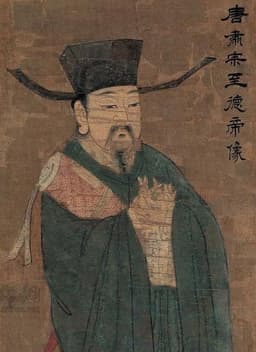
Li Heng
Emperor · Medieval
53.7Total
Ramathibodi II
Emperor · Medieval
54.7Total
Basic Information
Born
711
1472
Died
762
1529
Era
Medieval
Medieval
Nationality
China
Thailand
Occupation
Emperor
Emperor
Civilization
Eastern
Eastern
Score Comparison
Military (10%)
55.0
55.0
Political (20%)
43.7
68.0
Influence (20%)
56.4
52.5
Legacy (20%)
50.0
42.5
Leadership (15%)
62.2
68.0
Strategy (15%)
57.5
50.0
TOTAL
53.7
54.7
Li Heng — Complete Timeline
756 AD
Accession during the An Lushan RebellionPolitical Action
Li Heng ascended the throne at Lingwu after his father, Emperor Xuanzong, fled the capital during the An Lushan Rebellion. He assumed command of the loyalist forces and began organizing resistance against the rebel state of Yan.
An Lushan RebellionAccessionCrisis
Impact: national
757 AD
Recruitment of Uyghur MercenariesWar◆ Major
Li Heng secured a military alliance with the Uyghur Khaganate, who provided cavalry to fight the rebels. The Uyghur forces played a crucial role in recapturing Chang'an and Luoyang, but their looting of the capitals caused resentment.
Uyghur AllianceMercenariesCivil War
Impact: regional
Recapture of Chang'an and LuoyangWar◆ Major
Tang forces, aided by Uyghur cavalry, recaptured the western capital Chang'an and then the eastern capital Luoyang from the Yan rebels. These victories marked the turning point of the rebellion, though the war continued for years.
An Lushan RebellionCapital RecaptureTurning Point
Impact: nationalconstructive
762 AD
Death of Li HengOther
Li Heng died in 762, shortly before the final suppression of the An Lushan Rebellion. His reign was entirely consumed by the civil war, and he did not live to see the full restoration of Tang authority.
DeathUnfinished War
Impact: nationaltragic
Ramathibodi II — Complete Timeline
1492 AD
Construction of Wat Phra Si SanphetCultural◆ Major
Ramathibodi II ordered the construction of Wat Phra Si Sanphet, the holiest temple in the Ayutthaya royal palace complex. The temple housed a large standing Buddha image and served as the site for royal ceremonies. Its construction demonstrated the king's piety and reinforced the link between Buddhism and monarchy.
Temple ConstructionBuddhismRoyal Patronage
Impact: nationalconstructive
1511 AD
First Portuguese Contact with AyutthayaPolitical Action
Ramathibodi II received the first Portuguese diplomatic mission to Ayutthaya, led by Duarte Fernandes. This initial contact established formal relations between the two kingdoms, leading to a treaty in 1516 that allowed Portuguese trade and settlement in Ayutthaya, marking the beginning of European involvement in Siam.
European ContactPortugalDiplomacy
Impact: regionalconstructive
1516 AD
Treaty of 1516 with PortugalPolitical Action◆ Major
Ramathibodi II signed a treaty with the Portuguese Empire, granting them permission to establish a trading post and reside in Ayutthaya. In exchange, the Portuguese provided firearms and military advisors. This treaty opened Ayutthaya to European trade and introduced Western military technology to the kingdom.
TreatyPortugalTrade
Impact: regionalconstructive
Introduction of Firearms to Ayutthayan MilitaryInvention◆ Major
Following the treaty with Portugal, Ramathibodi II incorporated Portuguese-supplied firearms and cannon into the Ayutthayan military. This adoption of gunpowder weapons transformed the kingdom's warfare capabilities, giving Ayutthaya a technological advantage over neighboring states for several decades.
Military TechnologyFirearmsInnovation
Impact: regionalconstructive
Expert Analysis
Origins
Li Heng (711–762) was the third son of Emperor Xuanzong of Tang, born into a dynasty that had ruled China for over a century. His mother, Consort Yang, died when he was young. He received a traditional Confucian education and was appointed crown prince in 738 after the death of his elder brother. His early life was overshadowed by the growing influence of the consort Yang Yuhuan and the general An Lushan, who later rebelled.
Ramathibodi II (1473–1529), born Prince Chettathirat, was the son of King Borommatrailokanat of Ayutthaya. He grew up in a kingdom consolidating its power in mainland Southeast Asia. His father had reformed the bureaucracy and military, laying groundwork for expansion. Ramathibodi II was appointed as king of Sukhothai, a vassal state, before succeeding his father as king of Ayutthaya in 1491.
Rise to Power
Li Heng ascended the throne in 756 under dire circumstances. During the An Lushan Rebellion, Emperor Xuanzong fled Chang'an, and the crown prince remained behind. At Lingwu, he was declared emperor by loyalist forces, assuming command of the fragmented Tang loyalist army. His rise was a desperate measure to rally resistance against the rebels.
Ramathibodi II became king after his father's death in 1488, but his reign officially began in 1491 after his brother's brief rule. He had already governed Sukhothai, proving his administrative skills. His rise was smooth, with no major internal opposition, allowing him to focus on foreign relations and military modernization.
Leadership & Governance
Li Heng's leadership was reactive. He governed from Lingwu, unable to return to Chang'an until 757. His key decision was hiring Uyghur mercenaries, offering them loot in exchange for cavalry. This recaptured the capitals but weakened Tang sovereignty. He also appointed eunuchs and generals like Li Fuguo, leading to factional strife. His governance score of 43.7 reflects his limited control, as the rebellion consumed his reign.
Ramathibodi II scored 68.0 in political and leadership. He centralized royal authority by reducing noble power and standardizing administration. He signed the 1516 Treaty with Portugal, granting trade rights and firearms in exchange for military support. This pragmatic diplomacy boosted Ayutthaya's economy and military. He also built Wat Phra Si Sanphet, symbolizing religious patronage.
Triumph & Tragedy
Li Heng's triumph was reconquering Chang'an and Luoyang with Uyghur help, preserving the Tang dynasty. However, the cost was high: Uyghur looting devastated the cities, and the rebellion continued after his death. His failure was his inability to suppress the rebellion fully, and his reliance on foreign troops set a precedent for future interference. He died in 762, before the final victory.
Ramathibodi II's triumph was establishing Ayutthaya as a regional power through Portuguese alliance. The introduction of firearms gave the military a strategic edge. His greatest failure was perhaps the over-reliance on foreign technology, and he did not significantly expand territory. His legacy score of 42.5 is lower due to limited lasting impact compared to later kings.
Character & Destiny
Li Heng was cautious and indecisive. He lacked the boldness of his father or later Tang emperors. His destiny was to be a transitional figure, ruling during a crisis he could not fully resolve. Historians note his piety and reliance on eunuchs, which weakened the throne.
Ramathibodi II was pragmatic and visionary. He recognized the value of European alliances and modernized accordingly. His character was more diplomatic than military, as seen in his strategic scores of 50.0. He died naturally in 1529, having secured Ayutthaya's place in global trade.
Legacy
Li Heng's legacy is mixed. He saved the Tang dynasty but at a cost of imperial authority. The reliance on eunuchs and regional military governors persisted, leading to later fragmentation. His reign is often overshadowed by the larger rebellion.
Ramathibodi II's legacy is more positive: he opened Ayutthaya to the West, introducing firearms and trade that fueled its growth. The treaty with Portugal set a pattern for later exchanges. However, his influence score of 52.5 is moderate because later kings like Naresuan overshadow him.
Conclusion
Comparing total scores, Ramathibodi II edges Li Heng 54.7 to 53.7, but impact diverges. Li Heng's actions preserved a dynasty that lasted another century, while Ramathibodi II's reforms modernized a kingdom that thrived for two more centuries. Li Heng faced a greater existential crisis but left a more fragile state. Ramathibodi II's proactive diplomacy had longer-lasting economic and military effects. Considering breadth of impact, Ramathibodi II had greater influence on Ayutthaya's trajectory. Therefore, Ramathibodi II is the more impactful leader.
Rankings
🥇
Ramathibodi IILeader
Mil: 55.0Pol: 68.0Inf: 52.5
54.7
🥈
Li Heng
Mil: 55.0Pol: 43.7Inf: 56.4
53.7
+1.0 behind
How This Comparison Works
Algorithm
Each figure is scored on 6 dimensions (0—100 scale) based on structured historical data: Military (10%), Political (20%), Influence (20%), Legacy (20%), Leadership (15%), Strategy (15%). The weighted total produces the final ranking.
Data Sources
Scores are computed from structured sub-indicators in the database. Scale factors adjust for era (Ancient ×0.85, Modern ×1.0) and civilization size (Eastern ×1.05, Other ×0.80) to account for differences in population and military scale.
Maximum 3 Figures
Comparisons are limited to 2—3 figures to ensure readability and statistical meaningfulness.
Error Margins
±5 points per dimension — Sub-scores are derived from historical records with inherent uncertainty. Two figures within 5 points on a dimension should be considered roughly equivalent in that area.
Total Score Accuracy
±3 points overall — The weighted combination of 6 dimensions produces a total score with approximately ±3 points of uncertainty. Differences of less than 3 points are not statistically significant— the figures are effectively tied.
Known Limitations
- Historical records are incomplete and uneven across civilizations
- Figures from oral-tradition societies may be underrepresented
- Occupation labels can misclassify multi-role figures
- Scores measure capability and impact, not moral character
- Quantitative scoring is a comparison tool, not absolute truth
Capability Radar
Military (10%) — Battles & Warfare
Battles
60
30
Win Rate
55
35
Expansion
30
40
Political (20%) — Governance & Reform
Reform
40
40
Diplomacy
45
50
Economy
35
45
Influence (20%) — Cultural & Global Reach
Cultural
40
30
Global
40
25
Legacy (20%) — Historical Impact
Historical
55
35
Longevity
45
30
Leadership (15%) — Power & Stability
Tenure
50
55
Stability
30
50
Strategy (15%) — Tactics & Innovation
Strategy
55
30
Tactics
50
30
Reform
40
25
Similar Comparisons
Comments & Discussion
No comments yet. Be the first to share your thoughts!