Loading...
Li Heng vs Napoleon Bonaparte
Napoleon Bonaparte leads by 17.2 pts · 2 figures compared
…
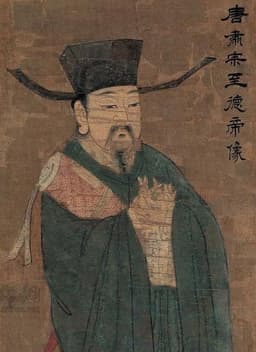
Li Heng
Emperor · Medieval
53.7Total

Napoleon Bonaparte
General · Modern
70.9Total
Basic Information
Born
711
1769
Died
762
1821
Era
Medieval
Modern
Nationality
China
France
Occupation
Emperor
General
Civilization
Eastern
Western
Score Comparison
Military (10%)
55.0
94.0
Political (20%)
43.7
72.0
Influence (20%)
56.4
40.0
Legacy (20%)
50.0
80.0
Leadership (15%)
62.2
78.0
Strategy (15%)
57.5
90.0
TOTAL
53.7
70.9
Li Heng — Complete Timeline
756 AD
Accession during the An Lushan RebellionPolitical Action
Li Heng ascended the throne at Lingwu after his father, Emperor Xuanzong, fled the capital during the An Lushan Rebellion. He assumed command of the loyalist forces and began organizing resistance against the rebel state of Yan.
An Lushan RebellionAccessionCrisis
Impact: national
757 AD
Recruitment of Uyghur MercenariesWar◆ Major
Li Heng secured a military alliance with the Uyghur Khaganate, who provided cavalry to fight the rebels. The Uyghur forces played a crucial role in recapturing Chang'an and Luoyang, but their looting of the capitals caused resentment.
Uyghur AllianceMercenariesCivil War
Impact: regional
Recapture of Chang'an and LuoyangWar◆ Major
Tang forces, aided by Uyghur cavalry, recaptured the western capital Chang'an and then the eastern capital Luoyang from the Yan rebels. These victories marked the turning point of the rebellion, though the war continued for years.
An Lushan RebellionCapital RecaptureTurning Point
Impact: nationalconstructive
762 AD
Death of Li HengOther
Li Heng died in 762, shortly before the final suppression of the An Lushan Rebellion. His reign was entirely consumed by the civil war, and he did not live to see the full restoration of Tang authority.
DeathUnfinished War
Impact: nationaltragic
Napoleon Bonaparte — Complete Timeline
1799 AD
Coup of 18 BrumaireOther◆ Major
Napoleon Bonaparte, with support from his brother Lucien and key political figures, overthrew the Directory in a bloodless coup. He established the Consulate with himself as First Consul, effectively becoming the ruler of France. This event ended the French Revolution's most unstable period.
French RevolutionCoupRise to Power
Impact: regional
1804 AD
Promulgation of the Napoleonic CodeOther◆ Major
Napoleon enacted the Civil Code of the French, known as the Napoleonic Code, a comprehensive set of laws that replaced the fragmented feudal legal systems. The code established legal equality, protected property rights, and secularized law. It became the basis for legal systems in many European and world countries.
Legal ReformNapoleonic CodeCivil Law
Impact: globalconstructive
1805 AD
Battle of AusterlitzWar◆ Major
Napoleon's Grande Arm
Napoleonic WarsBattleDecisive Victory
Impact: global
1812 AD
Invasion of RussiaWar◆ Major
Napoleon led the Grande Arm
Napoleonic WarsInvasionDisaster
Impact: globaldestructive
1815 AD
Battle of WaterlooWar◆ Major
Napoleon's French army was defeated by the combined forces of the Duke of Wellington's Anglo-Allied army and Gebhard Leberecht von Bl
Napoleonic WarsBattleFinal Defeat
Impact: globaldestructive
Expert Analysis
Origins
Li Heng (711–762), born Li Jun, was the third son of Emperor Xuanzong of Tang. His mother was Consort Yang, but she died early, and he was raised by his uncle. He received a traditional Confucian education and was appointed crown prince in 738 after his elder brother was deposed. His early life was marked by court intrigue, as he navigated the powerful influence of Chancellor Li Linfu and the favored consort Yang Guifei.
Napoleon Bonaparte (1769–1821) was born on Corsica to a minor noble family. He studied at military schools in mainland France, graduating from the École Militaire in 1785. His early career was shaped by the French Revolution, which opened opportunities for rapid advancement. He embraced revolutionary ideals and became a general at age 24 after his success at the Siege of Toulon in 1793.
Rise to Power
Li Heng's rise was forced by crisis. In 755, the An Lushan Rebellion erupted, and Emperor Xuanzong fled Chang'an. During the flight, soldiers mutinied and forced Xuanzong to execute Yang Guifei. Xuanzong abdicated, and Li Heng ascended the throne at Lingwu on August 12, 756, without formal ceremony. His authority was initially limited to the northwest, as rebels controlled the capitals.
Napoleon's rise was meteoric. After Toulon, he suppressed a royalist uprising in Paris in 1795 (13 Vendémiaire). He married Joséphine de Beauharnais and led the Italian campaign (1796–1797), defeating Austria. His Egyptian campaign (1798–1799) failed strategically but boosted his fame. On November 9, 1799 (18 Brumaire), he overthrew the Directory and became First Consul, effectively dictator of France.
Leadership & Governance
Li Heng's leadership was reactive. He focused on military coordination, appointing generals like Guo Ziyi and Li Guangbi. His key decision was recruiting Uyghur mercenaries in 757, promising them plunder. The Uyghur cavalry helped recapture Chang'an and Luoyang, but their looting alienated Chinese civilians. Li Heng also faced fiscal crisis, minting debased coins to fund the war. He failed to establish stable governance, leaving his son Daizong to end the rebellion.
Napoleon centralized power. He reformed French administration, created the Bank of France, and established the Napoleonic Code, which influenced civil law worldwide. He negotiated the Concordat of 1801 with the Catholic Church, stabilizing religious relations. His governance was efficient but authoritarian, suppressing dissent and curtailing press freedom. He crowned himself Emperor in 1804, creating a new nobility based on merit.
Triumph & Tragedy
Li Heng's greatest triumph was recapturing the capitals. In 757, Tang-Uyghur forces retook Chang'an and Luoyang, restoring imperial authority. However, the rebellion continued until 763, and Li Heng died in 762 before its end. His reliance on foreign troops weakened the Tang dynasty, and the Uyghur alliance set a precedent for foreign intervention. His reign saw the permanent loss of the Western Regions and the rise of provincial military governors (jiedushi) who later fragmented China.
Napoleon's triumphs include Austerlitz (1805), where he scored 90 in strategy, defeating a larger Russo-Austrian army. He dominated Europe until 1812, creating the Confederation of the Rhine and abolishing the Holy Roman Empire. His tragedy was the invasion of Russia (1812), where he lost over 400,000 men. He was exiled to Elba in 1814, returned for 100 days, and was finally defeated at Waterloo (1815), scoring 94 in military but failing politically.
Character & Destiny
Li Heng was cautious and indecisive. He relied heavily on eunuchs, like Li Fuguo, who later dominated the court. His character was shaped by survival instinct rather than ambition. His destiny was to preside over a dynasty in decline, and he died of illness at age 51, possibly from depression or exhaustion.
Napoleon was brilliant, ambitious, and overconfident. His strategic genius (score 90) was paired with political skill (score 72). However, his hubris led to overreach. He refused to limit his ambitions, leading to multiple coalitions against him. Historians like David Chandler note that his character combined rational planning with impulsive risk-taking.
Legacy
Li Heng's legacy is mixed. He is remembered for his role in the An Lushan Rebellion, but his reign marked the Tang's turning point from prosperity to decline. The Tang dynasty survived another 150 years, but never regained its former power. His scores: Military 55.0, Political 43.7, Influence 56.4, Legacy 50.0, Leadership 62.2, total 53.7.
Napoleon's legacy is vast. The Napoleonic Code, modern warfare tactics, and the spread of nationalism are his enduring impacts. He sold Louisiana to the US, reshaping North America. His conquests dismantled feudalism in Europe. His scores: Military 94.0, Political 72.0, Influence 40.0, Legacy 80.0, Leadership 78.0, total 70.9.
Conclusion
Napoleon had greater impact. His total score of 70.9 versus Li Heng's 53.7 reflects his transformative role. Li Heng was a crisis manager who preserved a dynasty but accelerated its decline. Napoleon reshaped law, war, and politics across an entire continent. While Li Heng operated within a decaying system, Napoleon created new systems. The score gap of 17.2 points is decisive. Napoleon's influence on modern institutions far exceeds Li Heng's localized legacy.
Rankings
🥇
Napoleon BonaparteLeader
Mil: 94.0Pol: 72.0Inf: 40.0
70.9
🥈
Li Heng
Mil: 55.0Pol: 43.7Inf: 56.4
53.7
+17.2 behind
How This Comparison Works
Algorithm
Each figure is scored on 6 dimensions (0—100 scale) based on structured historical data: Military (10%), Political (20%), Influence (20%), Legacy (20%), Leadership (15%), Strategy (15%). The weighted total produces the final ranking.
Data Sources
Scores are computed from structured sub-indicators in the database. Scale factors adjust for era (Ancient ×0.85, Modern ×1.0) and civilization size (Eastern ×1.05, Other ×0.80) to account for differences in population and military scale.
Maximum 3 Figures
Comparisons are limited to 2—3 figures to ensure readability and statistical meaningfulness.
Error Margins
±5 points per dimension — Sub-scores are derived from historical records with inherent uncertainty. Two figures within 5 points on a dimension should be considered roughly equivalent in that area.
Total Score Accuracy
±3 points overall — The weighted combination of 6 dimensions produces a total score with approximately ±3 points of uncertainty. Differences of less than 3 points are not statistically significant— the figures are effectively tied.
Known Limitations
- Historical records are incomplete and uneven across civilizations
- Figures from oral-tradition societies may be underrepresented
- Occupation labels can misclassify multi-role figures
- Scores measure capability and impact, not moral character
- Quantitative scoring is a comparison tool, not absolute truth
Capability Radar
Military (10%) — Battles & Warfare
Battles
60
95
Win Rate
55
90
Expansion
30
95
Political (20%) — Governance & Reform
Reform
40
95
Diplomacy
45
80
Economy
35
85
Influence (20%) — Cultural & Global Reach
Cultural
40
85
Global
40
90
Legacy (20%) — Historical Impact
Historical
55
95
Longevity
45
90
Leadership (15%) — Power & Stability
Tenure
50
85
Stability
30
70
Strategy (15%) — Tactics & Innovation
Strategy
55
95
Tactics
50
98
Reform
40
92
Similar Comparisons
Comments & Discussion
No comments yet. Be the first to share your thoughts!