Loading...
Li Deyu vs Qin Shi Huang
Qin Shi Huang leads by 31.2 pts · 2 figures compared
…

Li Deyu
Politician · Medieval
54.0Total
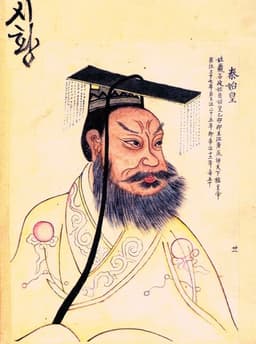
Qin Shi Huang
Emperor · Ancient
85.2Total
Basic Information
Born
787
-259
Died
850
-210
Era
Medieval
Ancient
Nationality
China
China
Occupation
Politician
Emperor
Civilization
Eastern
Eastern
Score Comparison
Military (10%)
22.5
80.0
Political (20%)
72.0
90.0
Influence (20%)
56.4
85.0
Legacy (20%)
50.0
90.0
Leadership (15%)
72.0
78.0
Strategy (15%)
36.0
82.0
TOTAL
54.0
85.2
Li Deyu — Complete Timeline
833 AD
Appointed Chancellor under Emperor WuzongPolitical Action◆ Major
Li Deyu was appointed as chancellor during the reign of Emperor Wuzong of Tang. He implemented policies to centralize authority and suppress the power of military governors, but his tenure was marked by intense factional conflict with the Niu faction led by Niu Sengru.
Tang DynastyFactional StrifeChancellorship
Impact: national
845 AD
Suppression of the Huichang Persecution of BuddhismReform◆ Major
Under Emperor Wuzong, Li Deyu oversaw the Huichang Persecution, a state campaign to suppress Buddhism. Thousands of monasteries were destroyed, monks and nuns were forced to return to lay life, and temple lands were confiscated, severely weakening Buddhist institutions in Tang China.
Religious PersecutionBuddhismTang Dynasty
Impact: nationaldestructive
846 AD
Exiled after Emperor Xuanzong's AscensionPolitical Action◆ Major
When Emperor Xuanzong ascended the throne, Li Deyu was dismissed from his chancellorship and exiled to remote Hainan Island. This marked the definitive victory of the Niu faction over the Li faction, ending Li Deyu's political career and leading to his death in exile.
ExileFactional StrifeTang Dynasty
Impact: nationaltragic
Qin Shi Huang — Complete Timeline
246 BC
Construction of the Mausoleum and Terracotta ArmyOther◆ Major
Qin Shi Huang commissioned a vast mausoleum complex near Xi'an, guarded by thousands of life-sized terracotta soldiers, horses, and chariots. The project employed hundreds of thousands of workers and reflected his obsession with immortality and imperial power.
Impact: global
230 BC
Conquest of the Six Warring StatesWar
From 230 to 221 BCE, Ying Zheng led the Qin state in a series of campaigns that conquered the Han, Zhao, Wei, Chu, Yan, and Qi states. This unified China under a single ruler for the first time, ending the Warring States period.
Impact: global
221 BC
Standardization of Writing, Currency, and MeasurementsReform◆ Major
Qin Shi Huang ordered the standardization of Chinese script, currency, and weights and measures across the unified empire. This facilitated administration, trade, and cultural integration, laying a foundation for future dynasties.
Impact: globalconstructive
Proclamation of the Qin DynastyPolitical Action
After conquering the last independent state, Ying Zheng declared himself Shi Huangdi (First Emperor), founding the Qin Dynasty. He adopted a new title to signify his supreme authority and initiated centralized imperial rule.
Impact: global
214 BC
Initiation of the Great Wall ConstructionOther◆ Major
Qin Shi Huang ordered the connection and extension of existing northern fortifications to create a unified defensive wall against nomadic Xiongnu raids. This project involved massive conscripted labor and became the precursor to the later Great Wall.
Impact: regional
213 BC
Burning of Books and Burying of ScholarsPolitical Action◆ Major
On the advice of Li Si, Qin Shi Huang ordered the burning of historical records and philosophical texts not aligned with Legalist doctrine. He also had 460 Confucian scholars buried alive to suppress dissent and consolidate ideological control.
Impact: nationaldestructive
Expert Analysis
li-deyu-vs-qin-shi-huang
# The Unifier and the Factionalist: Two Visions of Power in Ancient China
In the winter of 210 BC, a massive funeral procession wound its way eastward from the Qin capital, carrying the body of the man who had conquered all of China. The emperor’s death was a secret; his chief eunuch had filled the imperial carriage with rotting fish to mask the smell of decay. Meanwhile, over a thousand years later, in the year 846 AD, an aging chancellor named Li Deyu stepped onto a boat in the South China Sea, bound for exile on the tropical island of Hainan. He would never return. These two men—one who forged an empire, the other who tried to save one—represent the starkest contrast in Chinese political history: the difference between absolute power and its tragic limits.
Origins
Qin Shi Huang was born into a world of war. In 259 BC, the seven kingdoms of ancient China had been fighting for centuries. His father, King Zhuangxiang of Qin, ruled a state that had already embraced Legalist philosophy—a ruthless doctrine that prioritized state power over all else. Young Ying Zheng grew up in a palace where efficiency and discipline were gods. By the time he took the throne at thirteen, he had absorbed the lesson that would define his life: order must be imposed, or chaos will reign.
Li Deyu, born in 787 AD, came from a very different China. The Tang Dynasty had already enjoyed 170 years of glorious civilization. Poetry flourished, trade routes stretched to Persia, and Buddhism had become a spiritual bedrock. Li was born into the aristocratic elite—his father was a chancellor before him. But this world was fracturing. Powerful military governors defied the throne, eunuchs manipulated emperors, and court officials formed bitter factions. Li Deyu grew up not on a battlefield, but in the corridors of power, where the weapons were words and alliances shifted like sand.
Rise to Power
Qin Shi Huang’s ascent was a story of raw conquest. From 230 to 221 BC, he unleashed a series of military campaigns that devoured the six rival kingdoms one by one. He did not negotiate; he annihilated. When the last independent state, Qi, fell in 221 BC, Ying Zheng did something unprecedented: he declared himself *Shi Huangdi*—the First Emperor. The title was a declaration of cosmic ambition, claiming a mandate not just over land but over history itself.
Li Deyu’s rise was a tale of factional maneuvering. He first became chancellor in 833 AD under Emperor Wuzong, but his path had been blocked for years by the rival Niu faction. His appointment came only when the emperor needed a strong hand against Buddhist monasteries that had grown wealthy and powerful. Li Deyu did not conquer armies; he outmaneuvered rivals. His power was contingent on imperial favor, and he knew it.
Leadership & Governance
Qin Shi Huang governed like a force of nature. He standardized writing, currency, and weights and measures across his empire—a revolution that made unified administration possible. He ordered the connection of existing walls into what would become the Great Wall, a project that consumed millions of lives. His Legalist philosophy, implemented by his chancellor Li Si, demanded absolute obedience. Historical records were burned, and scholars who resisted were buried alive. The First Emperor believed that the past must be erased to make way for his eternal order.
Li Deyu governed as a reformer within a system he could not control. Under Emperor Wuzong, he launched the Huichang Persecution of Buddhism in 845 AD, confiscating monastery lands, forcing monks and nuns to return to secular life, and reasserting Confucian state ideology. He centralized tax collection and curbed the power of military governors. But his reforms were fragile. They depended entirely on the emperor’s support, and when Emperor Wuzong died in 846, everything collapsed.
Triumph & Tragedy
Qin Shi Huang’s greatest triumph was the unification itself—a feat that had eluded all previous Chinese rulers. His greatest tragedy was the fragility of his achievement. He died in 210 BC while on a tour of his empire, and within three years, the Qin Dynasty had fallen to rebellion. The Terracotta Army he had commissioned—thousands of life-sized soldiers guarding his mausoleum near Xi’an—stood silent witness to a dynasty that lasted only fifteen years.
Li Deyu’s triumph was the Huichang Persecution, a moment when he successfully imposed state authority over religion. His tragedy was the exile that followed. When Emperor Xuanzong took the throne in 846, the new ruler reversed every policy Li Deyu had championed. The chancellor was stripped of his titles and banished to Hainan, where he died in obscurity. His reforms, like Qin Shi Huang’s empire, evaporated almost overnight.
Character & Destiny
Qin Shi Huang was driven by an obsession with immortality—literal and political. He sent expeditions for the elixir of life and built a mausoleum that mirrored the cosmos. His personality was tyrannical, paranoid, and visionary. He could not tolerate dissent because he believed his vision was the only possible order. This made him a conqueror but a poor founder; he built a machine that no one else could operate.
Li Deyu was a man of principle in an age of shifting loyalties. His determination to crush Buddhist influence and centralize power came from a genuine belief in Confucian statecraft. But he was also a factionalist, unable to rise above the court’s poisonous divisions. His personality was that of a righteous warrior—but in the Tang court, righteousness without allies was a death sentence.
Legacy
Qin Shi Huang’s legacy is monumental. He gave China its name, its administrative structure, and the idea of a unified empire that would last for two millennia. The Terracotta Army, discovered in 1974, made him a global icon. Yet his methods—book burnings, mass conscription, legal terror—cast a long shadow. He is remembered as both the First Emperor and a tyrant.
Li Deyu’s legacy is more ambiguous. His political score of 82.9 reflects a capable administrator, but his influence score of 74.2 and legacy score of 67.9 reveal the limits of his impact. He is studied by historians as a symbol of Tang factionalism, a cautionary tale about how personal rivalries can destroy good governance. His reforms were undone, his name half-forgotten.
Conclusion
These two men embody the central paradox of Chinese political history. Qin Shi Huang achieved the impossible—unifying China—but could not make it last. Li Deyu tried to reform a glorious dynasty but was crushed by the very system he served. One built with iron and fire, the other with ink and policy. Their different outcomes were not just a matter of talent but of circumstance: the First Emperor lived in an age when one man could reshape the world; Li Deyu lived in an age when no man could escape the web of court intrigue. In the end, both were consumed by the forces they sought to control—one by death, the other by exile. Their stories remind us that power, in any era, is never as absolute as it seems.
Rankings
🥇
Qin Shi HuangLeader
Mil: 80.0Pol: 90.0Inf: 85.0
85.2
🥈
Li Deyu
Mil: 22.5Pol: 72.0Inf: 56.4
54.0
+31.2 behind
How This Comparison Works
Algorithm
Each figure is scored on 6 dimensions (0—100 scale) based on structured historical data: Military (10%), Political (20%), Influence (20%), Legacy (20%), Leadership (15%), Strategy (15%). The weighted total produces the final ranking.
Data Sources
Scores are computed from structured sub-indicators in the database. Scale factors adjust for era (Ancient ×0.85, Modern ×1.0) and civilization size (Eastern ×1.05, Other ×0.80) to account for differences in population and military scale.
Maximum 3 Figures
Comparisons are limited to 2—3 figures to ensure readability and statistical meaningfulness.
Error Margins
±5 points per dimension — Sub-scores are derived from historical records with inherent uncertainty. Two figures within 5 points on a dimension should be considered roughly equivalent in that area.
Total Score Accuracy
±3 points overall — The weighted combination of 6 dimensions produces a total score with approximately ±3 points of uncertainty. Differences of less than 3 points are not statistically significant— the figures are effectively tied.
Known Limitations
- Historical records are incomplete and uneven across civilizations
- Figures from oral-tradition societies may be underrepresented
- Occupation labels can misclassify multi-role figures
- Scores measure capability and impact, not moral character
- Quantitative scoring is a comparison tool, not absolute truth
Capability Radar
Military (10%) — Battles & Warfare
Battles
36
85
Win Rate
38
90
Expansion
45
90
Political (20%) — Governance & Reform
Reform
75
95
Diplomacy
65
75
Economy
70
90
Influence (20%) — Cultural & Global Reach
Cultural
50
95
Global
30
85
Legacy (20%) — Historical Impact
Historical
60
95
Longevity
50
95
Leadership (15%) — Power & Stability
Tenure
70
70
Stability
55
65
Strategy (15%) — Tactics & Innovation
Strategy
46
85
Tactics
53
80
Reform
54
95
Similar Comparisons
Comments & Discussion
历史是个杠精6/17/2026
说Li Deyu不如秦始皇格局大,这没问题,但要说他完全没用,那也偏了。秦始皇是开天辟地,但秦朝十五年就崩了——嬴政自己留下的烂摊子,三公九卿搞成太监专政,结果呢?Li Deyu在唐武宗时期整顿了藩镇和宦官,至少让晚唐回光返照几年。你非要比谁“牛逼”,那是纬度不同:一个造核弹,一个修水管,但没了水管,核弹炸了也白搭。别双标,行吗?
The Fish Decay Strategist6/17/2026
Let's not romanticize Qin Shi Huang's fish trick too much—it was a propaganda stunt born of desperation. The man died in his forties from mercury poison (he was ingesting it thinking it granted immortality), and his empire collapsed within three years. Li Deyu's exile at least lasted longer than the Qin Dynasty. I'm not saying Li Deyu was a better ruler, but I am saying absolute power has a way of producing spectacular failures. The First Emperor's "unification" was actually a brutal occupation
扎心老秦6/17/2026
我替秦始皇说句话:你们老揪着秦朝短命说事,但你们想过没有,没有他统一文字度量衡,中国今天可能就是七八个国家说七八种话。Li Deyu写《会昌一品集》再漂亮,他也只能在唐朝框架里打转。秦始皇是重新定义了“中国”这个概念本身,这不是修修补补能比的。他吃汞是蠢,但你们要是活在战国那种年年打仗的日子,估计也会觉得一个能给你太平的暴君比十个温和的宰相强。
Chronicler42746/17/2026
Li Deyu's problem wasn't that he lacked vision—it was that he thought managing a decline was the same as governing. Qin Shi Huang didn't negotiate with reality; he rewrote it. One man abolished the old order and standardized the written language. The other spent his career purging factional rivals and writing essays about moral decay. If history measures by transformation, there's no contest: the First Emperor built a template China still uses. Li Deyu just tried to slow the Tang's collapse. Tha