Loading...
Hojo Masako vs Qin Shi Huang
Qin Shi Huang leads by 27.9 pts · 2 figures compared
…

Hojo Masako
Politician · Medieval
57.3Total
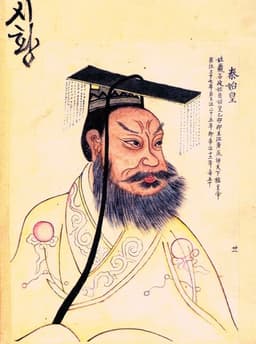
Qin Shi Huang
Emperor · Ancient
85.2Total
Basic Information
Born
1156
-259
Died
1225
-210
Era
Medieval
Ancient
Nationality
Japan
China
Occupation
Politician
Emperor
Civilization
Eastern
Eastern
Score Comparison
Military (10%)
29.3
80.0
Political (20%)
72.0
90.0
Influence (20%)
55.0
85.0
Legacy (20%)
58.0
90.0
Leadership (15%)
78.0
78.0
Strategy (15%)
35.8
82.0
TOTAL
57.3
85.2
Hojo Masako — Complete Timeline
1177 AD
Married Minamoto no YoritomoPolitical Action◆ Major
Hojo Masako married Minamoto no Yoritomo, the future founder of the Kamakura shogunate. This marriage allied the Hojo clan with the Minamoto, giving Masako political influence from the start of the shogunate.
MarriageMinamotoKamakura
Impact: nationalconstructive
1199 AD
Became a Buddhist NunCultural◆ Major
After Yoritomo's death in 1199, Hojo Masako took Buddhist vows and became a nun. However, she continued to wield political power, acting as a regent for her son and later her grandson, earning the title 'Nun Shogun'.
BuddhismRegencyNun Shogun
Impact: national
1203 AD
Consolidated Hojo Clan Power as RegentPolitical Action
Hojo Masako, as regent for her son Minamoto no Sanetomo, consolidated the Hojo clan's control over the Kamakura shogunate. She eliminated rivals, including her father Hojo Tokimasa, and established the Hojo as de facto rulers.
RegencyHojo ClanPower Consolidation
Impact: national
1213 AD
Defeated the Wada RebellionWar◆ Major
Hojo Masako helped suppress the Wada Rebellion, a challenge to Hojo rule led by Wada Yoshimori. The victory solidified Hojo dominance and eliminated a major military threat to the shogunate.
RebellionMilitaryHojo
Impact: national
Qin Shi Huang — Complete Timeline
246 BC
Construction of the Mausoleum and Terracotta ArmyOther◆ Major
Qin Shi Huang commissioned a vast mausoleum complex near Xi'an, guarded by thousands of life-sized terracotta soldiers, horses, and chariots. The project employed hundreds of thousands of workers and reflected his obsession with immortality and imperial power.
Impact: global
230 BC
Conquest of the Six Warring StatesWar
From 230 to 221 BCE, Ying Zheng led the Qin state in a series of campaigns that conquered the Han, Zhao, Wei, Chu, Yan, and Qi states. This unified China under a single ruler for the first time, ending the Warring States period.
Impact: global
221 BC
Standardization of Writing, Currency, and MeasurementsReform◆ Major
Qin Shi Huang ordered the standardization of Chinese script, currency, and weights and measures across the unified empire. This facilitated administration, trade, and cultural integration, laying a foundation for future dynasties.
Impact: globalconstructive
Proclamation of the Qin DynastyPolitical Action
After conquering the last independent state, Ying Zheng declared himself Shi Huangdi (First Emperor), founding the Qin Dynasty. He adopted a new title to signify his supreme authority and initiated centralized imperial rule.
Impact: global
214 BC
Initiation of the Great Wall ConstructionOther◆ Major
Qin Shi Huang ordered the connection and extension of existing northern fortifications to create a unified defensive wall against nomadic Xiongnu raids. This project involved massive conscripted labor and became the precursor to the later Great Wall.
Impact: regional
213 BC
Burning of Books and Burying of ScholarsPolitical Action◆ Major
On the advice of Li Si, Qin Shi Huang ordered the burning of historical records and philosophical texts not aligned with Legalist doctrine. He also had 460 Confucian scholars buried alive to suppress dissent and consolidate ideological control.
Impact: nationaldestructive
Expert Analysis
hojo-masako-vs-qin-shi-huang
# The First Emperor and the Nun Shogun: Two Paths to Absolute Power
On a winter morning in 221 BC, Ying Zheng stood before the conquered palaces of Qi, the last of the Warring States to fall beneath his armies. He declared himself Shi Huangdi—the First Emperor—and set in motion a revolution that would define China for two millennia. Thirteen centuries later and a thousand miles away, a woman in black robes sat in a Kamakura temple, her shaved head bowed in prayer. But Hojo Masako, the "Nun Shogun," was not praying for peace. She was plotting how to keep her family's grip on Japan's warrior government, a grip she would never loosen until her death in 1225.
These two figures, born worlds apart, each forged a new order from chaos. Yet their methods, their motivations, and their ultimate fates could not have been more different.
Origins
Qin Shi Huang was born in 259 BC into a world of endless war. The seven Warring States had been fighting for supremacy for two centuries, and his father was a hostage in a rival court. Young Ying Zheng ascended the throne of Qin at thirteen, surrounded by eunuchs, spies, and ambitious ministers. His childhood was a survival course in paranoia and ruthlessness.
Hojo Masako was born in 1156 into a Japan torn by the Genpei War between the Taira and Minamoto clans. Her father, Hojo Tokimasa, was a minor lord who knew that survival meant choosing the right side. When Masako married Minamoto no Yoritomo in 1177, she was not simply a bride—she was a political alliance made flesh. Where Qin Shi Huang inherited a throne, Masako had to build her power from the marriage bed.
Rise to Power
Qin Shi Huang's rise was swift and absolute. From 230 to 221 BC, his armies conquered six kingdoms with terrifying efficiency. He standardized chariot axles so his armies could roll on any road, and he enforced a legalist philosophy that punished failure with death. When he proclaimed the Qin Dynasty in 221 BC, he did not ask for loyalty—he demanded it.
Hojo Masako's path was more subtle. When Yoritomo died in 1199, she took Buddhist vows and became a nun. But she did not retreat from the world. Instead, she used her religious status as a shield, operating behind the scenes while her son, Minamoto no Sanetomo, served as a figurehead shogun. In 1203, she consolidated Hojo clan power as regent, transforming her family from mere in-laws into the true rulers of Japan.
Leadership & Governance
Qin Shi Huang governed through terror and uniformity. He standardized writing, currency, and measurements across his empire, forcing China to speak one language of commerce and law. He ordered the burning of books and the burying of scholars in 213 BC, crushing any philosophy that challenged his authority. The Great Wall, begun in 214 BC, was a monument not just to defense but to his power to command millions of laborers.
Hojo Masako governed through patience and alliances. She could not command armies like a general, but she could whisper in the right ears. When Wada Yoshimori rebelled against Hojo rule in 1213, Masako helped rally the shogunate's forces and crushed the rebellion. She built a system where the Hojo family ruled as regents, the shogun remained a figurehead, and the emperor in Kyoto was a distant, powerless symbol. It was a delicate balance, but it lasted for generations.
Triumph & Tragedy
Qin Shi Huang's triumph was the conquest itself—the first unification of China. But his tragedy was his obsession with immortality. He sent expeditions for the elixir of life, built a mausoleum guarded by the Terracotta Army, and died in 210 BC at age forty-nine, poisoned by mercury pills meant to preserve him. His dynasty collapsed within four years of his death.
Hojo Masako's triumph was the survival of her family's power through the Kamakura period. Her tragedy was more intimate: her sons died young, her husband was assassinated, and she watched the Minamoto line that she had married into fade into extinction. Yet she never wavered. When she died in 1225, the Hojo regency was secure.
Character & Destiny
Qin Shi Huang was a man of fire and iron. He believed that unity could only be achieved through absolute control, and he was willing to burn libraries and bury scholars to prove it. His paranoia drove him to build walls—literal and metaphorical—around his empire and himself.
Hojo Masako was a woman of water and stone. She adapted, bent, and outlasted. She knew that in a warrior society, direct confrontation would destroy her. So she worked through husbands, sons, and regents, never seeking the title of ruler but always wielding the power. Her nickname, the "Nun Shogun," captures this paradox: she renounced the world to rule it.
Legacy
Qin Shi Huang's legacy is carved into China's bones. The standardized script he imposed is still used today. The Great Wall still stands. The administrative model he created—centralized, bureaucratic, ruthless—became the template for every Chinese dynasty that followed. He is remembered as both a unifier and a tyrant, a figure of awe and horror.
Hojo Masako's legacy is quieter but equally profound. She established the tradition of the shogun as a figurehead and the regent as the true power—a system that would define Japanese politics for centuries. She proved that a woman could rule without a throne, that power could be wielded from the shadows.
Conclusion
Two rulers, two empires, two very different kinds of power. Qin Shi Huang built walls; Hojo Masako built networks. He commanded armies; she cultivated alliances. He died seeking immortality; she found it in the dynasty she created. Their stories remind us that there is no single path to greatness—only the path that fits the time, the place, and the person who walks it.
Rankings
🥇
Qin Shi HuangLeader
Mil: 80.0Pol: 90.0Inf: 85.0
85.2
🥈
Hojo Masako
Mil: 29.3Pol: 72.0Inf: 55.0
57.3
+27.9 behind
How This Comparison Works
Algorithm
Each figure is scored on 6 dimensions (0—100 scale) based on structured historical data: Military (10%), Political (20%), Influence (20%), Legacy (20%), Leadership (15%), Strategy (15%). The weighted total produces the final ranking.
Data Sources
Scores are computed from structured sub-indicators in the database. Scale factors adjust for era (Ancient ×0.85, Modern ×1.0) and civilization size (Eastern ×1.05, Other ×0.80) to account for differences in population and military scale.
Maximum 3 Figures
Comparisons are limited to 2—3 figures to ensure readability and statistical meaningfulness.
Error Margins
±5 points per dimension — Sub-scores are derived from historical records with inherent uncertainty. Two figures within 5 points on a dimension should be considered roughly equivalent in that area.
Total Score Accuracy
±3 points overall — The weighted combination of 6 dimensions produces a total score with approximately ±3 points of uncertainty. Differences of less than 3 points are not statistically significant— the figures are effectively tied.
Known Limitations
- Historical records are incomplete and uneven across civilizations
- Figures from oral-tradition societies may be underrepresented
- Occupation labels can misclassify multi-role figures
- Scores measure capability and impact, not moral character
- Quantitative scoring is a comparison tool, not absolute truth
Capability Radar
Military (10%) — Battles & Warfare
Battles
36
85
Win Rate
39
90
Expansion
46
90
Political (20%) — Governance & Reform
Reform
75
95
Diplomacy
80
75
Economy
70
90
Influence (20%) — Cultural & Global Reach
Cultural
65
95
Global
50
85
Legacy (20%) — Historical Impact
Historical
70
95
Longevity
65
95
Leadership (15%) — Power & Stability
Tenure
85
70
Stability
75
65
Strategy (15%) — Tactics & Innovation
Strategy
48
85
Tactics
50
80
Reform
54
95
Similar Comparisons
Comments & Discussion
法家门徒6/17/2026
秦始皇是彻底的革命者——焚书坑儒、修长城、统一度量衡,每一刀都砍向旧秩序。而北条政子呢?她不过是官僚化的幕后黑手。她的“尼将军”名号听着威风,但说白了就是利用佛教外衣搞宫廷内斗,一个家族联姻的棋子。没有她,镰仓幕府照样运转。没有始皇帝,中国还是七个国家。高低立判。
NumismaticNerd6/17/2026
Let's talk ratios. Qin Shi Huang's mausoleum required 700,000 laborers for 38 years—that's a death toll in the hundreds of thousands for one tomb. Hojo Masako's political maneuvers, by contrast, cost maybe a few hundred samurai lives in skirmishes. The First Emperor's brutal efficiency is staggering, but Masako's low-budget court intrigue is arguably more sustainable. Depends on your metric: body count or decades of stability.
古文隐士6/17/2026
秦始皇焚书坑儒,杀的不是术士,是思想;北条政子却是靠佛教和家族纽带软着陆。她身为女子,在日本武家政权里能活到六十九岁并执掌大权,既不称帝也不流血,靠的是隐忍和算计。始皇帝三十七岁修陵,四十九岁暴毙,身后帝国即崩。政子死后幕府又撑了百年。谁更懂权力的真谛?不言而喻。
Warlord'sWidow_Actual6/17/2026
People romanticize Masako as the "Nun Shogun," but let’s be real: she was a power-hungry matriarch who used her sons as pawns. After Yoritomo died, she sidelined her own son Yoriie, then had his family assassinated. Qin Shi Huang was at least honest about his tyranny—he built walls and burned books openly. Masako prayed in temples while signing death warrants. Hypocrisy is worse than brutal clarity. Give me the Emperor's candor any day.
Historian9136/17/2026
Qin Shi Huang was the ultimate consolidator, building an empire with iron and terror, while Hojo Masako was a master of maintenance, preserving power through widowhood and wile. The First Emperor standardized scripts, coins, and even cart axles—a relentless homogenization that lasted. Masako? She just made sure her family stayed shogun-adjacent for a generation. One changed civilization; the other kept a clan afloat. I know who made history matter.