Loading...
Cardinal Wolsey vs Qin Shi Huang
Qin Shi Huang leads by 29.7 pts · 2 figures compared
…

Cardinal Wolsey
Politician · Medieval
55.5Total
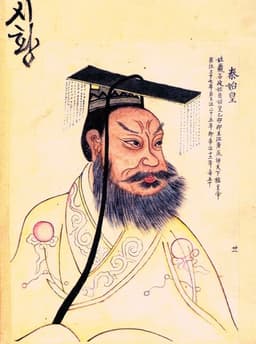
Qin Shi Huang
Emperor · Ancient
85.2Total
Basic Information
Born
1473
-259
Died
1530
-210
Era
Medieval
Ancient
Nationality
England
China
Occupation
Politician
Emperor
Civilization
Western
Eastern
Score Comparison
Military (10%)
45.4
80.0
Political (20%)
59.3
90.0
Influence (20%)
54.9
85.0
Legacy (20%)
48.3
90.0
Leadership (15%)
72.0
78.0
Strategy (15%)
54.2
82.0
TOTAL
55.5
85.2
Cardinal Wolsey — Complete Timeline
1515 AD
Appointed Lord Chancellor of EnglandPolitical Action◆ Major
Thomas Wolsey was appointed Lord Chancellor by King Henry VIII, becoming the most powerful figure in England after the king. He oversaw domestic and foreign policy, including the administration of justice and the management of the royal finances.
Lord ChancellorGovernment
Impact: nationalconstructive
1529 AD
Failed to Secure Henry VIII's Divorce from Catherine of AragonPolitical Action
Wolsey failed to obtain a papal annulment of Henry VIII's marriage to Catherine of Aragon. The Pope, under pressure from Holy Roman Emperor Charles V, refused. This failure led to Wolsey's fall from favor and the beginning of the English Reformation.
DivorceEnglish Reformation
Impact: global
1530 AD
Arrested for TreasonPolitical Action◆ Major
Wolsey was arrested on charges of treason by Henry VIII, after being stripped of his offices. He was ordered to London for trial but died en route. His arrest marked the complete reversal of his political fortunes.
TreasonFall from Grace
Impact: nationaltragic
Died at Leicester AbbeyOther◆ Major
Wolsey died at Leicester Abbey while traveling to London for his treason trial. His death prevented a formal trial. He was buried at the abbey, and his fall from power became a cautionary tale about the dangers of royal favor.
DeathLeicester
Impact: nationaltragic
Qin Shi Huang — Complete Timeline
246 BC
Construction of the Mausoleum and Terracotta ArmyOther◆ Major
Qin Shi Huang commissioned a vast mausoleum complex near Xi'an, guarded by thousands of life-sized terracotta soldiers, horses, and chariots. The project employed hundreds of thousands of workers and reflected his obsession with immortality and imperial power.
Impact: global
230 BC
Conquest of the Six Warring StatesWar
From 230 to 221 BCE, Ying Zheng led the Qin state in a series of campaigns that conquered the Han, Zhao, Wei, Chu, Yan, and Qi states. This unified China under a single ruler for the first time, ending the Warring States period.
Impact: global
221 BC
Standardization of Writing, Currency, and MeasurementsReform◆ Major
Qin Shi Huang ordered the standardization of Chinese script, currency, and weights and measures across the unified empire. This facilitated administration, trade, and cultural integration, laying a foundation for future dynasties.
Impact: globalconstructive
Proclamation of the Qin DynastyPolitical Action
After conquering the last independent state, Ying Zheng declared himself Shi Huangdi (First Emperor), founding the Qin Dynasty. He adopted a new title to signify his supreme authority and initiated centralized imperial rule.
Impact: global
214 BC
Initiation of the Great Wall ConstructionOther◆ Major
Qin Shi Huang ordered the connection and extension of existing northern fortifications to create a unified defensive wall against nomadic Xiongnu raids. This project involved massive conscripted labor and became the precursor to the later Great Wall.
Impact: regional
213 BC
Burning of Books and Burying of ScholarsPolitical Action◆ Major
On the advice of Li Si, Qin Shi Huang ordered the burning of historical records and philosophical texts not aligned with Legalist doctrine. He also had 460 Confucian scholars buried alive to suppress dissent and consolidate ideological control.
Impact: nationaldestructive
Expert Analysis
cardinal-wolsey-vs-qin-shi-huang
The Emperor and the Cardinal
On a cold November morning in 1530, a broken man lay dying at Leicester Abbey. Thomas Wolsey, once the most powerful figure in England after the king, whispered his famous last words: "If I had served God as diligently as I have served the king, He would not have given me over in my grey hairs." Fifteen hundred years earlier and six thousand miles away, another man of immense power—Qin Shi Huang, the First Emperor of China—had died in far different circumstances, his body already beginning to decay while his courtiers kept the news secret, hoping to preserve his dream of eternal rule. One man built an empire that would define China for two millennia; the other built a career that crumbled in a single political miscalculation. What drove such different outcomes?
Origins
Qin Shi Huang was born Ying Zheng in 259 BC, a prince of the Qin state during China's Warring States period—an era of relentless conflict among seven rival kingdoms. His childhood was shaped by violence and intrigue: his father, King Zhuangxiang, died when Ying Zheng was young, leaving him to navigate a court rife with conspiracies. The boy grew up hard, suspicious, and utterly convinced that only absolute control could prevent chaos.
Thomas Wolsey, born in 1473 in Ipswich, England, came from far humbler origins. His father was a butcher and grazier—a man of modest means but respectable standing in a small town. Unlike the Chinese prince, Wolsey had no birthright to power. His path lay through the Church, the great ladder of medieval advancement for talented commoners. He studied at Oxford, became a priest, and caught the eye of King Henry VII through his administrative brilliance. If Ying Zheng inherited a kingdom, Wolsey inherited only his wits.
Rise to Power
Ying Zheng's rise was a matter of conquest. From 230 to 221 BC, he led the Qin state in a series of brutal campaigns that crushed the six other warring kingdoms—Han, Zhao, Wei, Chu, Yan, and Qi. Each victory was methodical, each defeat of a rival state a step toward unification. When the last independent kingdom fell in 221 BC, Ying Zheng declared himself *Shi Huangdi*—the First Emperor—founding the Qin Dynasty. His path was paved with blood, but it was a path no one else in Chinese history had ever walked.
Wolsey's ascent was subtler but no less dramatic. When Henry VIII became king in 1509, Wolsey quickly proved indispensable. By 1515, he was appointed Lord Chancellor of England, becoming the king's chief minister. His genius lay in administration and diplomacy: he managed the kingdom's finances, oversaw foreign policy, and even acted as papal legate, wielding authority that made him effectively the pope's representative in England. Unlike the emperor, who ruled by the sword, Wolsey ruled by the pen and the seal—a master of courtly maneuver rather than military campaign.
Leadership & Governance
Qin Shi Huang governed through radical centralization. He standardized Chinese script, currency, and weights and measures across his vast empire—reforms that would outlast his dynasty by centuries. He ordered the connection of existing northern fortifications into what would become the Great Wall, a project of staggering ambition. But his rule had a dark side: in 213 BC, on the advice of his minister Li Si, he ordered the burning of historical records and philosophical texts not aligned with Legalist ideology, and the burial of scholars who opposed him. He believed unity required not just uniformity but the erasure of dissent.
Wolsey governed through persuasion and patronage. He built a network of loyalists, controlled the flow of information to the king, and managed parliament with skill. His domestic reforms included improvements to the justice system and the promotion of education—he founded Cardinal College at Oxford, later renamed Christ Church. But unlike the emperor, Wolsey's power was entirely derivative. He served at the king's pleasure, and his authority could vanish with a single royal whim.
Triumph & Tragedy
The emperor's greatest triumph was the unification itself—a feat that had eluded Chinese rulers for centuries. His greatest tragedy came after his death in 210 BC: the Qin Dynasty collapsed within three years, undone by the very harshness that had held it together. The terracotta army he had commissioned to guard his mausoleum for eternity stood silent witness to an empire that outlived its founder only in legend.
Wolsey's triumph was his rise from butcher's son to the second most powerful man in England. His tragedy was the divorce. In 1529, he failed to secure a papal annulment of Henry VIII's marriage to Catherine of Aragon. The Pope, under pressure from Catherine's nephew, Emperor Charles V, refused. Wolsey, who had built his career on the king's favor, suddenly found himself the target of Henry's fury. Stripped of his offices, arrested for treason in 1530, he died on the journey to London for his trial—a fall so swift it still astonishes historians.
Character & Destiny
Qin Shi Huang was driven by a vision of permanence. He believed that if he could control everything—writing, thought, even the afterlife—his empire would last forever. This obsession with control shaped every decision, from the standardization of axle widths to the search for an elixir of immortality. His paranoia was his strength and his weakness: it unified China but also crushed it.
Wolsey was driven by ambition and service. He was a man of immense energy and talent, but he never forgot that his power came from Henry. When the king's desires changed, Wolsey's world collapsed. His character—loyal, intelligent, but ultimately dependent—shaped his destiny. He could not imagine a world where Henry did not need him, and that blindness proved fatal.
Legacy
Qin Shi Huang's legacy is monumental. The administrative framework he created—centralized bureaucracy, standardized writing, unified measurements—became the foundation of imperial China for over two thousand years. The Great Wall, though rebuilt many times, still bears his mark. The terracotta army, discovered in 1974, remains one of the greatest archaeological wonders of the world. His influence score of 82 and legacy score of 85 reflect a figure who shaped civilization itself, for better and worse.
Wolsey's legacy is more modest. His political score of 84.7 and leadership score of 85.2 show a man of genuine skill, but his influence (73.1) and legacy (64.1) are shadowed by his failure. He is remembered as a cautionary tale—the brilliant minister who rose too high and fell too hard. Yet his fall inadvertently set the stage for the English Reformation, as Henry VIII, frustrated by the Pope's refusal, broke with Rome and established the Church of England. Wolsey, who had tried so hard to prevent it, helped create a world he never intended.
Conclusion
Two men, two paths, two outcomes. Qin Shi Huang built an empire that outlasted his dynasty; Wolsey built a career that did not survive his king. The emperor's story is about the terrifying power of vision, the cardinal's about the fragility of borrowed authority. One reminds us that the greatest monuments are built by those who think beyond their own lifetimes; the other, that even the most brilliant servant remains a servant. In the end, perhaps the difference is simple: Qin Shi Huang wanted to be remembered forever, and he succeeded. Wolsey wanted only to serve his king well, and he failed—not because he lacked talent, but because he served a master who could not be satisfied.
Rankings
🥇
Qin Shi HuangLeader
Mil: 80.0Pol: 90.0Inf: 85.0
85.2
🥈
Cardinal Wolsey
Mil: 45.4Pol: 59.3Inf: 54.9
55.5
+29.7 behind
How This Comparison Works
Algorithm
Each figure is scored on 6 dimensions (0—100 scale) based on structured historical data: Military (10%), Political (20%), Influence (20%), Legacy (20%), Leadership (15%), Strategy (15%). The weighted total produces the final ranking.
Data Sources
Scores are computed from structured sub-indicators in the database. Scale factors adjust for era (Ancient ×0.85, Modern ×1.0) and civilization size (Eastern ×1.05, Other ×0.80) to account for differences in population and military scale.
Maximum 3 Figures
Comparisons are limited to 2—3 figures to ensure readability and statistical meaningfulness.
Error Margins
±5 points per dimension — Sub-scores are derived from historical records with inherent uncertainty. Two figures within 5 points on a dimension should be considered roughly equivalent in that area.
Total Score Accuracy
±3 points overall — The weighted combination of 6 dimensions produces a total score with approximately ±3 points of uncertainty. Differences of less than 3 points are not statistically significant— the figures are effectively tied.
Known Limitations
- Historical records are incomplete and uneven across civilizations
- Figures from oral-tradition societies may be underrepresented
- Occupation labels can misclassify multi-role figures
- Scores measure capability and impact, not moral character
- Quantitative scoring is a comparison tool, not absolute truth
Capability Radar
Military (10%) — Battles & Warfare
Battles
53
85
Win Rate
56
90
Expansion
58
90
Political (20%) — Governance & Reform
Reform
65
95
Diplomacy
75
75
Economy
70
90
Influence (20%) — Cultural & Global Reach
Cultural
30
95
Global
30
85
Legacy (20%) — Historical Impact
Historical
50
95
Longevity
40
95
Leadership (15%) — Power & Stability
Tenure
70
70
Stability
55
65
Strategy (15%) — Tactics & Innovation
Strategy
64
85
Tactics
65
80
Reform
68
95
Similar Comparisons
Comments & Discussion
The Butcher's Boy6/17/2026
Wolsey's real tragedy isn't that he fell from power—it's that he never understood the difference between building and administering. Qin Shi Huang created a unified legal code, standardized script and measures, and connected defensive walls into the Great Wall. Wolsey? He built Hampton Court and managed Henry's divorce (badly). One left China; one left a palace that Henry could just take. Give me the emperor who built civilization over the cardinal who built a vanity project any day.
帝国铁鞭6/17/2026
比较这两位真是荒诞。沃尔西败就败在他以为政治是向上爬的梯子,而秦始皇知道统治是向下扎根的犁。嬴政22岁铲除嫪毐和吕不韦,手段狠辣但果断;沃尔西48岁还在讨好亨利八世要特赦。一个靠权力控制帝国,一个靠谄媚维持宠信。前者死后被挖坟,后者死时已被抛弃。但至少在历史的天平上,秦始皇真有分量。
Legionary's Lament6/17/2026
Wolsey might have lost his power, but he died with more decency than Qin Shi Huang will ever command. The First Emperor spent his last years chasing immortality elixirs (mercury, anyone?) while his empire rotted from paranoia and forced labor. Wolsey at least had the grace to acknowledge his failure: "If I had served God as diligently..." Meanwhile, Qin's legacy includes burying scholars alive and working millions to death on walls and tombs. I'll take the butcher's son's quiet exit over the emp
史坑挖客6/17/2026
数据会说话:秦始皇统一六国后修了7000公里长城,动用300万劳工,死了100万以上;沃尔西解散了29座修道院,为亨利八世筹款,大约影响了几千人的生计。论规模,两人根本不在一个量级。但关键在于,一个遗产存续两千年,被人当民族图腾;另一个只在教科书脚注里跟"离婚"绑定。效率上看,残暴但持久的帝国赢了温和但瞬间崩塌的权术。
Eternal Scholar6/17/2026
Both men misunderstood time—but only one paid for the lesson. Qin Shi Huang thought mercury and terra-cotta armies would secure eternity, while Wolsey thought political service in Henry's court was a permanent institution. The irony? The First Emperor's legalist framework outlasted every dynasty that followed, even if his corpse rotted in secrecy. Wolsey's legacy evaporated when Anne Boleyn smiled at court. One built for millennia, the other for an afternoon. I know which historian gets more to