Loading...
Li Cunxu vs Yelu Abaoji
Li Cunxu leads by 3.8 pts · 2 figures compared
…
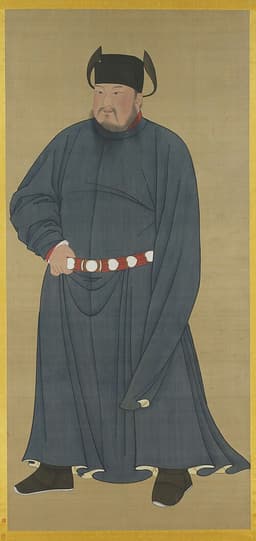
Li Cunxu
Emperor · Medieval
66.5Total
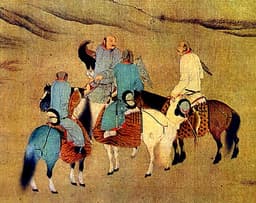
Yelu Abaoji
Emperor · Medieval
62.7Total
Basic Information
Born
885
872
Died
926
926
Era
Medieval
Medieval
Nationality
China
China
Occupation
Emperor
Emperor
Civilization
Eastern
Eastern
Score Comparison
Military (10%)
76.0
77.2
Political (20%)
68.0
59.6
Influence (20%)
62.0
68.0
Legacy (20%)
58.0
40.0
Leadership (15%)
80.0
80.3
Strategy (15%)
67.2
69.6
TOTAL
66.5
62.7
Li Cunxu — Complete Timeline
908 AD
Succeeded as Prince of JinPolitical Action◆ Major
Li Cunxu inherited the title Prince of Jin from his father Li Keyong. He continued the struggle against Later Liang, consolidating the Jin state as a major power in northern China.
JinSuccessionFive Dynasties
Impact: regional
910 AD
Battle of BaixiangWar◆ Major
Li Cunxu's Jin army defeated the Later Liang forces under Zhu Wen at Baixiang. This victory established Jin as the dominant military power in the north and marked a turning point in the war.
JinLater LiangBattle
Impact: regionalconstructive
923 AD
Conquered Later LiangWar
Li Cunxu led a successful campaign against Later Liang, capturing its capital Kaifeng and ending the dynasty. He then proclaimed himself emperor, founding the Later Tang dynasty.
Later TangConquestDynastic Change
Impact: nationalconstructive
Founded Later Tang DynastyPolitical Action
Li Cunxu declared himself emperor of the Later Tang dynasty, claiming legitimacy as the restorer of the Tang lineage. He established his capital at Luoyang and reunified much of northern China.
Later TangDynasty FoundingReunification
Impact: nationalconstructive
926 AD
Killed in mutiny at XingyuanWar◆ Major
Li Cunxu faced a mutiny by his own troops at Xingyuan during a campaign against the Khitans. He was killed in the fighting, leading to the collapse of Later Tang and the rise of Later Jin.
Later TangMutinyDeath
Impact: nationaltragic
Yelu Abaoji — Complete Timeline
907 AD
Unified Khitan tribesPolitical Action◆ Major
Yelu Abaoji was elected khagan of the Khitan tribes, unifying them under his leadership. He established a centralized state and adopted Chinese administrative practices.
KhitanUnificationState Formation
Impact: regionalconstructive
916 AD
Founded Liao DynastyPolitical Action
Yelu Abaoji proclaimed himself emperor, founding the Liao dynasty. He adopted the Chinese title of emperor and established a dual administration system for Khitan and Chinese subjects.
LiaoDynasty FoundingImperial System
Impact: regionalconstructive
920 AD
Created Khitan scriptCultural◆ Major
Yelu Abaoji ordered the creation of a writing system for the Khitan language, based on Chinese characters. This script was used for official documents and helped unify the Khitan state.
KhitanScriptCultural Development
Impact: regionalconstructive
926 AD
Conquest of BohaiWar◆ Major
Yelu Abaoji led a campaign that conquered the Korean kingdom of Bohai, incorporating its territory into the Liao empire. This expanded Liao's influence into Manchuria and Korea.
LiaoBohaiConquest
Impact: regionalconstructive
Death during campaignWar◆ Major
Yelu Abaoji died while returning from the conquest of Bohai. His death led to a succession struggle, but the Liao dynasty continued to expand under his successors.
LiaoDeathSuccession
Impact: regionaltragic
Expert Analysis
Yelu Abaoji vs Li Cunxu
# The Emperor and the Khagan
In the year 926, two men died within months of each other, their fates intertwined by ambition and violence. One was Li Cunxu, the charismatic emperor of the newly founded Later Tang dynasty, cut down by his own mutinous soldiers at Xingyuan. The other was Yelu Abaoji, the visionary founder of the Liao dynasty, who succumbed to illness while returning from his greatest conquest. Both had risen from the chaos of a fragmented China to build empires. One perished in disgrace, his dynasty tottering; the other left a legacy that would endure for two centuries. Why did their paths diverge so sharply?
Origins
Li Cunxu was born into war. His father, Li Keyong, was a Shatuo Turk chieftain who had been granted the title Prince of Jin by the dying Tang dynasty. The boy grew up in a camp, learning to ride and fight before he could read. The Tang world was collapsing, and his father's realm was a bastion of loyalty to a lost cause. When Li Keyong died in 908, the twenty-three-year-old Li Cunxu inherited not just a title but a blood feud against Zhu Wen, the usurper who had founded the Later Liang dynasty. He was a warrior prince bred for revenge.
Yelu Abaoji came from a different world. The Khitan were nomadic tribes of the Mongolian steppe, loosely organized and often at each other's throats. Abaoji was born into the Yelu clan, which held hereditary leadership over the Yiqi tribe, but power among the Khitan was earned, not inherited. He rose through cunning and force, outmaneuvering rivals and forging alliances. Where Li Cunxu inherited a cause, Abaoji had to create one.
Rise to Power
Li Cunxu's rise was a story of relentless military campaigns. In 910, at the Battle of Baixiang, he crushed the Later Liang forces under Zhu Wen himself, establishing the Jin as the dominant power in northern China. The victory was personal—Li Cunxu led from the front, his banner visible in the thick of the fighting. For thirteen years, he chipped away at the Later Liang, winning battle after battle, until in 923 he launched a final campaign that captured Kaifeng and ended the dynasty. He proclaimed himself emperor of the Later Tang, claiming legitimacy as the restorer of the Tang lineage.
Yelu Abaoji's path was more political than martial. In 907, he was elected khagan of the Khitan tribes, but the title was ceremonial. Real power required him to subdue rival chieftains, which he did through a combination of marriage alliances, strategic gifts, and ruthless purges. He did not conquer his way to empire; he built it from the inside, creating a centralized state where none had existed. In 916, he proclaimed himself emperor, founding the Liao dynasty, and adopted Chinese-style institutions to govern his nomadic subjects.
Leadership & Governance
Li Cunxu ruled as a warrior. His military genius was undeniable—his strategy score of 70.5 reflects a man who could read a battlefield and inspire his troops. But his political score of 62.0 reveals a fatal weakness: he was a poor administrator who neglected governance for glory. He surrounded himself with actors and musicians, alienated his generals, and failed to secure the loyalty of his conquered territories. The Later Tang was a one-man show, and when that man fell, so did the dynasty.
Yelu Abaoji was the opposite. His political score of 90.0 and leadership score of 89.2 mark him as a master of statecraft. He understood that an empire of nomads and settled Chinese could not be ruled by force alone. He created a dual administration—Chinese-style bureaucracy for the south, tribal governance for the north—and in 920 ordered the creation of a Khitan script, giving his people a written identity. He was a builder, not just a conqueror.
Triumph & Tragedy
Li Cunxu's greatest moment was the conquest of the Later Liang in 923. He had avenged his father and reunified northern China. It was a triumph of will and courage. But his tragedy followed swiftly. In 926, while campaigning against the Khitans, his own troops mutinied at Xingyuan. The emperor who had never lost a battle died fighting his own men. His dynasty would collapse within a decade.
Yelu Abaoji's triumph came in the same year. His conquest of the Korean kingdom of Bohai in 926 added vast territory to the Liao empire. It was the culmination of a decade of expansion. But his death on the return journey triggered a succession crisis. Unlike Li Cunxu, however, Abaoji had built institutions that outlasted him. The Liao dynasty would survive the struggle and endure for another two centuries.
Character & Destiny
Li Cunxu was a man of passion. He fought for revenge, for glory, for the thrill of the charge. But passion without prudence is a recipe for ruin. He trusted his sword more than his ministers, and his army more than his administrators. When the sword turned against him, he had nothing to fall back on.
Yelu Abaoji was a man of calculation. He thought in decades, not battles. He built a state, not just an army. His Khitan script, his dual administration, his careful balancing of tribal and Chinese elites—these were the foundations of a lasting empire. He understood that a conqueror's greatest enemy is not the foe on the battlefield but the chaos that follows victory.
Legacy
Li Cunxu is remembered as a tragic hero, a brilliant general who could not rule. His Later Tang dynasty was one of the short-lived Five Dynasties, a footnote in Chinese history. His legacy score of 66.2 reflects a man who achieved much but left little.
Yelu Abaoji is remembered as a founder. The Liao dynasty he created would rule northern China for over two hundred years, shaping the relationship between steppe and sown that defined Chinese history for centuries. His legacy score of 70.8 is modest, but his influence on the political structure of East Asia was profound.
Conclusion
The difference between Li Cunxu and Yelu Abaoji is the difference between a warrior and a statesman. One conquered a kingdom; the other built an empire. One died in a mutiny; the other in his bed. Their lives remind us that victory on the battlefield is only the beginning. What matters is what comes after—the institutions, the culture, the vision that outlasts the conqueror. Li Cunxu had the courage to win; Yelu Abaoji had the wisdom to endure.
Rankings
🥇
Li CunxuLeader
Mil: 76.0Pol: 68.0Inf: 62.0
66.5
🥈
Yelu Abaoji
Mil: 77.2Pol: 59.6Inf: 68.0
62.7
+3.8 behind
How This Comparison Works
Algorithm
Each figure is scored on 6 dimensions (0—100 scale) based on structured historical data: Military (10%), Political (20%), Influence (20%), Legacy (20%), Leadership (15%), Strategy (15%). The weighted total produces the final ranking.
Data Sources
Scores are computed from structured sub-indicators in the database. Scale factors adjust for era (Ancient ×0.85, Modern ×1.0) and civilization size (Eastern ×1.05, Other ×0.80) to account for differences in population and military scale.
Maximum 3 Figures
Comparisons are limited to 2—3 figures to ensure readability and statistical meaningfulness.
Error Margins
±5 points per dimension — Sub-scores are derived from historical records with inherent uncertainty. Two figures within 5 points on a dimension should be considered roughly equivalent in that area.
Total Score Accuracy
±3 points overall — The weighted combination of 6 dimensions produces a total score with approximately ±3 points of uncertainty. Differences of less than 3 points are not statistically significant— the figures are effectively tied.
Known Limitations
- Historical records are incomplete and uneven across civilizations
- Figures from oral-tradition societies may be underrepresented
- Occupation labels can misclassify multi-role figures
- Scores measure capability and impact, not moral character
- Quantitative scoring is a comparison tool, not absolute truth
Capability Radar
Military (10%) — Battles & Warfare
Battles
85
75
Win Rate
80
80
Expansion
75
82
Political (20%) — Governance & Reform
Reform
50
88
Diplomacy
60
75
Economy
45
70
Influence (20%) — Cultural & Global Reach
Cultural
55
60
Global
45
55
Legacy (20%) — Historical Impact
Historical
65
70
Longevity
50
65
Leadership (15%) — Power & Stability
Tenure
55
72
Stability
40
65
Strategy (15%) — Tactics & Innovation
Strategy
78
78
Tactics
82
70
Reform
60
85
Similar Comparisons
Comments & Discussion
失路英雄6/16/2026
李存勖败在太快称帝,不像阿保机熬了二十年。他923年灭梁,天天唱戏,把武将当仆人。阿保机相反,缓称王、稳扩张,先“分天子”再“据汉地”,战略差距明显。李存勖要是学阿保机,先养民练兵、拉拢沙陀旧部,而不是急着封后妃,他的死或许能改写。可惜没有如果。
Khagan's Shadow6/16/2026
Abaoji understood something Li Cunxu never did: empires aren't built on charisma alone. Conquering territory, sure, but creating institutions that outlast the founder? That's where Abaoji crushed it. He blended Khitan tribal structure with Chinese bureaucracy, invented the Khitan script, and even appointed a crown prince to secure succession. Li's Later Tang collapsed within a decade of his death because it was a personality cult, not a state. Tang loyalists didn't rebel against Abaoji. That's w
草原之狼6/16/2026
别被中原史书骗了,李存勖不是白莲花。他杀朱友谦全族、逼反李嗣源,就是咎由自取。耶律阿保机至少懂草原规矩——养子也能继承汗位,这就是为什么契丹八部打不出真正的内战。李存勖呢?他砍了郭崇韬,然后全军哗变。说他是英雄,不如说他是悲剧主角,自己写好了剧本。
Uneasy Crown6/16/2026
I smell a flawed comparison. These two died the same year, sure, but Abaoji died from illness after victory, Li Cunxu from mutiny after catastrophe. That's not a "divergence of paths"—it's luck. Abaoji's later campaigns were a mess, too (Mohé campaign, anyone?). Give me one concrete policy of Abaoji that "secured succession." Li had adopted sons, Shatuo loyalists, a whole system. Abaoji's wife Shulü Ping literally castrated herself to avoid remarriage drama—that's not an empire, that's a soap op
Paper Tiger6/16/2026
Revisionist take: The "steppe vs sown" contrast is overblown. Abaoji's Liao wasn't purely nomadic; he literally built a Chinese-style capital (Shangjing) with Confucian academies. Li Cunxu, meanwhile, was Shatuo Turkic by ancestry—didn't stop him from claiming Tang legitimacy. Both were hybrids. The real divergence? Abaoji managed to keep his military elite pacified by giving them titles in a civil bureaucracy—a trick Li never figured out. Li gave his generals swords and told them to conquer. Gu