Loading...
This comparison has not been analyzed yet.
One-time AI generation (~1 minute). Scores and timeline are already available below.
Levon I of Armenia vs Rudolf I of Germany
Levon I of Armenia leads by 1.9 pts · 2 figures compared
…
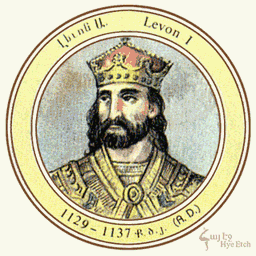
Levon I of Armenia
Emperor · Medieval
57.9Total
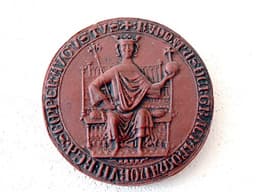
Rudolf I of Germany
Emperor · Medieval
56.0Total
Basic Information
Born
1150
1218
Died
1219
1291
Era
Medieval
Medieval
Nationality
Cilician Armenia
Holy Roman Empire
Occupation
Emperor
Emperor
Civilization
Middle Eastern
Western
Score Comparison
Military (10%)
55.0
55.0
Political (20%)
68.0
68.0
Influence (20%)
57.2
61.0
Legacy (20%)
49.2
52.0
Leadership (15%)
64.0
40.0
Strategy (15%)
60.0
60.0
TOTAL
57.9
56.0
Levon I of Armenia — Complete Timeline
1187 AD
Conquest of the Cilician PlainWar◆ Major
Levon I conquered the fertile Cilician plain from the Byzantine Empire and local Armenian lords. This territorial expansion provided the economic and agricultural base for his kingdom and secured access to the Mediterranean coast.
ConquestCiliciaExpansion
Impact: regionalconstructive
1190 AD
Alliance with the Crusader StatesPolitical Action◆ Major
Levon I formed alliances with the Crusader states, particularly the Principality of Antioch. He married Sibylla of Lusignan and established close ties with the Knights Templar and Hospitaller, integrating Cilician Armenia into the Crusader political system.
AllianceCrusadersDiplomacy
Impact: regionalconstructive
1198 AD
Promulgation of the Code of Levon IReform◆ Major
Levon I issued a legal code that combined Armenian customary law with elements of Byzantine and Frankish law. This code regulated feudal relations, trade, and criminal justice, and became the foundation of Cilician Armenian jurisprudence.
Legal CodeReformFeudalism
Impact: nationalconstructive
Coronation as First King of Armenian CiliciaPolitical Action◆ Major
Levon I was crowned King of Armenian Cilicia by the Archbishop of Mainz, acting on behalf of the Holy Roman Emperor, and also received recognition from the Byzantine Empire. This coronation established the Kingdom of Cilician Armenia as a sovereign state.
CoronationCilician ArmeniaSovereignty
Impact: regionalconstructive
Rudolf I of Germany — Complete Timeline
1273 AD
Election as King of GermanyPolitical Action
Rudolf I was elected King of Germany by the prince-electors, ending the Great Interregnum. He was the first Habsburg to hold the German throne. His election restored stability to the Holy Roman Empire after a period of civil war and weak central authority.
ElectionHabsburgInterregnum
Impact: regionalconstructive
1274 AD
Recognition of Papal AuthorityPolitical Action
Rudolf I formally renounced all imperial claims to the Papal States and recognized the temporal authority of the Pope. He also agreed to lead a crusade (which never materialized). This improved relations with the papacy and secured papal support for his rule.
PapacyImperial-Papal RelationsCrusade
Impact: regionalconstructive
1278 AD
Battle on the MarchfeldWar◆ Major
Rudolf I defeated King Ottokar II of Bohemia at the Battle on the Marchfeld in Austria. Ottokar was killed in the battle. Rudolf then secured the duchies of Austria, Styria, and Carniola for the Habsburg dynasty, laying the foundation for their future power.
BattleHabsburgAustria
Impact: regional
1282 AD
Grant of Austria to His SonsPolitical Action◆ Major
Rudolf I formally enfeoffed his sons Albert and Rudolf with the duchies of Austria and Styria at the Diet of Augsburg. This established the Habsburgs as a major territorial power in Central Europe. The grant was later confirmed by the imperial princes.
Territorial GrantHabsburgAustria
Impact: regionalconstructive
This comparison has not been analyzed yet.
One-time AI generation (~1 minute). Scores and timeline are already available below.
Rankings
🥇
Levon I of ArmeniaLeader
Mil: 55.0Pol: 68.0Inf: 57.2
57.9
🥈
Rudolf I of Germany
Mil: 55.0Pol: 68.0Inf: 61.0
56.0
+1.9 behind
How This Comparison Works
Algorithm
Each figure is scored on 6 dimensions (0—100 scale) based on structured historical data: Military (10%), Political (20%), Influence (20%), Legacy (20%), Leadership (15%), Strategy (15%). The weighted total produces the final ranking.
Data Sources
Scores are computed from structured sub-indicators in the database. Scale factors adjust for era (Ancient ×0.85, Modern ×1.0) and civilization size (Eastern ×1.05, Other ×0.80) to account for differences in population and military scale.
Maximum 3 Figures
Comparisons are limited to 2—3 figures to ensure readability and statistical meaningfulness.
Error Margins
±5 points per dimension — Sub-scores are derived from historical records with inherent uncertainty. Two figures within 5 points on a dimension should be considered roughly equivalent in that area.
Total Score Accuracy
±3 points overall — The weighted combination of 6 dimensions produces a total score with approximately ±3 points of uncertainty. Differences of less than 3 points are not statistically significant— the figures are effectively tied.
Known Limitations
- Historical records are incomplete and uneven across civilizations
- Figures from oral-tradition societies may be underrepresented
- Occupation labels can misclassify multi-role figures
- Scores measure capability and impact, not moral character
- Quantitative scoring is a comparison tool, not absolute truth
Capability Radar
Military (10%) — Battles & Warfare
Battles
45
45
Win Rate
50
50
Expansion
50
50
Political (20%) — Governance & Reform
Reform
50
55
Diplomacy
60
65
Economy
45
50
Influence (20%) — Cultural & Global Reach
Cultural
45
40
Global
30
55
Legacy (20%) — Historical Impact
Historical
55
65
Longevity
40
70
Leadership (15%) — Power & Stability
Tenure
55
60
Stability
40
55
Strategy (15%) — Tactics & Innovation
Strategy
45
55
Tactics
40
40
Reform
35
30
Similar Comparisons
Comments & Discussion
No comments yet. Be the first to share your thoughts!