Loading...
This comparison has not been analyzed yet.
One-time AI generation (~1 minute). Scores and timeline are already available below.
Leonid Kravchuk vs Ricardo Martinelli
Leonid Kravchuk leads by 9.9 pts · 2 figures compared
…
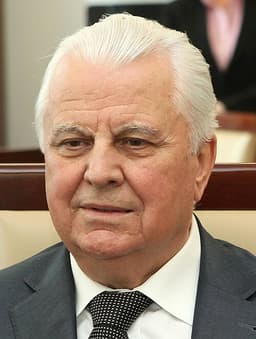
Leonid Kravchuk
Politician · Modern
57.1Total

Ricardo Martinelli
Politician · Modern
47.2Total
Basic Information
Born
1934
1952
Died
—
—
Era
Modern
Modern
Nationality
Ukraine
Panama
Occupation
Politician
Politician
Civilization
Western
Western
Score Comparison
Military (10%)
48.2
48.7
Political (20%)
68.0
53.8
Influence (20%)
58.0
53.3
Legacy (20%)
49.2
42.5
Leadership (15%)
74.0
40.0
Strategy (15%)
41.3
42.7
TOTAL
57.1
47.2
Leonid Kravchuk — Complete Timeline
1990 AD
Kravchuk's election as Chairman of the Verkhovna RadaPolitical Action◆ Major
Kravchuk was elected Chairman of the Ukrainian Supreme Soviet, effectively becoming the head of state of the Ukrainian SSR. He played a key role in the declaration of Ukrainian sovereignty.
UkraineSoviet UnionIndependence
Impact: national
1991 AD
Kravchuk's role in the Belavezha AccordsPolitical Action
Kravchuk, along with Boris Yeltsin and Stanislav Shushkevich, signed the Belavezha Accords, declaring the Soviet Union dissolved and establishing the Commonwealth of Independent States. This effectively ended the USSR.
Soviet UnionIndependenceCIS
Impact: global
Kravchuk's election as first President of UkrainePolitical Action◆ Major
Kravchuk won the first direct presidential election in Ukraine with 61.6% of the vote. He led Ukraine through its early years of independence, focusing on state-building and international recognition.
ElectionUkraineIndependence
Impact: nationalconstructive
1994 AD
Kravchuk's loss to Kuchma in 1994 electionPolitical Action◆ Major
Kravchuk lost the presidential election to Leonid Kuchma, largely due to economic crisis and dissatisfaction with his leadership. He conceded peacefully, setting a precedent for democratic transition in Ukraine.
ElectionUkraineTransition
Impact: national
Ricardo Martinelli — Complete Timeline
2009 AD
Elected President of PanamaPolitical Action◆ Major
Ricardo Martinelli, a wealthy supermarket magnate, won the 2009 presidential election as the candidate of the Alliance for Change coalition. His campaign focused on anti-corruption and economic development, and he won with a landslide majority.
ElectionBusinessLandslide
Impact: national
Presidency (2009-2014)Political Action◆ Major
Martinelli's presidency oversaw rapid economic growth, major infrastructure projects (including the Panama Metro), and a controversial crackdown on crime. His administration was marked by allegations of authoritarianism, corruption, and nepotism, but also significant public works.
PresidencyInfrastructureAuthoritarianism
Impact: national
2015 AD
Post-Presidency Legal TroublesPolitical Action◆ Major
After leaving office, Martinelli faced multiple corruption investigations. In 2015, he fled to the United States but was later extradited to Panama in 2018. He was convicted of money laundering in 2019 and sentenced to prison, though he maintained his innocence.
CorruptionExtraditionConviction
Impact: nationaldestructive
This comparison has not been analyzed yet.
One-time AI generation (~1 minute). Scores and timeline are already available below.
Rankings
🥇
Leonid KravchukLeader
Mil: 48.2Pol: 68.0Inf: 58.0
57.1
🥈
Ricardo Martinelli
Mil: 48.7Pol: 53.8Inf: 53.3
47.2
+9.9 behind
How This Comparison Works
Algorithm
Each figure is scored on 6 dimensions (0—100 scale) based on structured historical data: Military (10%), Political (20%), Influence (20%), Legacy (20%), Leadership (15%), Strategy (15%). The weighted total produces the final ranking.
Data Sources
Scores are computed from structured sub-indicators in the database. Scale factors adjust for era (Ancient ×0.85, Modern ×1.0) and civilization size (Eastern ×1.05, Other ×0.80) to account for differences in population and military scale.
Maximum 3 Figures
Comparisons are limited to 2—3 figures to ensure readability and statistical meaningfulness.
Error Margins
±5 points per dimension — Sub-scores are derived from historical records with inherent uncertainty. Two figures within 5 points on a dimension should be considered roughly equivalent in that area.
Total Score Accuracy
±3 points overall — The weighted combination of 6 dimensions produces a total score with approximately ±3 points of uncertainty. Differences of less than 3 points are not statistically significant— the figures are effectively tied.
Known Limitations
- Historical records are incomplete and uneven across civilizations
- Figures from oral-tradition societies may be underrepresented
- Occupation labels can misclassify multi-role figures
- Scores measure capability and impact, not moral character
- Quantitative scoring is a comparison tool, not absolute truth
Capability Radar
Military (10%) — Battles & Warfare
Battles
28
27
Win Rate
33
34
Expansion
37
37
Political (20%) — Governance & Reform
Reform
55
60
Diplomacy
60
50
Economy
40
65
Influence (20%) — Cultural & Global Reach
Cultural
40
30
Global
50
30
Legacy (20%) — Historical Impact
Historical
55
35
Longevity
40
20
Leadership (15%) — Power & Stability
Tenure
60
55
Stability
30
40
Strategy (15%) — Tactics & Innovation
Strategy
36
36
Tactics
38
42
Reform
46
45
Similar Comparisons
Comments & Discussion
No comments yet. Be the first to share your thoughts!