Loading...
Marquis of Pombal vs Ricardo Martinelli
Marquis of Pombal leads by 17.8 pts · 2 figures compared
…
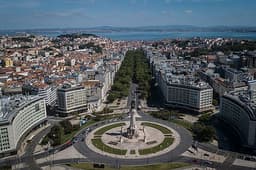
Marquis of Pombal
Politician · Modern
65.0Total

Ricardo Martinelli
Politician · Modern
47.2Total
Basic Information
Born
1699
1952
Died
1782
—
Era
Modern
Modern
Nationality
Portugal
Panama
Occupation
Politician
Politician
Civilization
Western
Western
Score Comparison
Military (10%)
41.6
48.7
Political (20%)
82.0
53.8
Influence (20%)
82.0
53.3
Legacy (20%)
52.0
42.5
Leadership (15%)
80.0
40.0
Strategy (15%)
30.3
42.7
TOTAL
65.0
47.2
Marquis of Pombal — Complete Timeline
1755 AD
1755 Lisbon earthquake reconstructionReform◆ Major
Following the devastating Lisbon earthquake, tsunami, and fires, Pombal organized the city's reconstruction. He implemented a grid-based urban plan, standardized building designs with earthquake-resistant features, and oversaw the rebuilding of the city center, the Baixa Pombalina.
Urban PlanningDisaster ResponseReconstruction
Impact: nationalconstructive
1759 AD
Expulsion of the Jesuits from PortugalPolitical Action◆ Major
Pombal expelled the Society of Jesus from Portugal and its empire, confiscating their property. This action was part of his broader anti-clerical reforms to centralize state power and reduce Church influence, and it led to a break in relations with the Papacy.
Anti-ClericalismChurch-State RelationsReform
Impact: nationaldestructive
Távora affair trial and executionsPolitical Action◆ Major
Pombal orchestrated the trial and execution of the powerful T
Political RepressionAristocracyPower Consolidation
Impact: nationaldestructive
1761 AD
Abolition of slavery in PortugalReform◆ Major
Pombal decreed the abolition of slavery in mainland Portugal, though it continued in the colonies. This was one of the earliest such acts in Europe, motivated by economic and humanitarian considerations, and it freed thousands of enslaved people within the kingdom.
AbolitionHuman RightsSocial Reform
Impact: nationalprogressive
1772 AD
Reform of Portuguese education systemReform◆ Major
Pombal implemented a comprehensive educational reform, replacing Jesuit-run schools with state-controlled institutions. He introduced new curricula emphasizing sciences, mathematics, and practical knowledge, and founded the College of Nobles and reformed the University of Coimbra.
EducationSecularizationModernization
Impact: nationalconstructive
Ricardo Martinelli — Complete Timeline
2009 AD
Elected President of PanamaPolitical Action◆ Major
Ricardo Martinelli, a wealthy supermarket magnate, won the 2009 presidential election as the candidate of the Alliance for Change coalition. His campaign focused on anti-corruption and economic development, and he won with a landslide majority.
ElectionBusinessLandslide
Impact: national
Presidency (2009-2014)Political Action◆ Major
Martinelli's presidency oversaw rapid economic growth, major infrastructure projects (including the Panama Metro), and a controversial crackdown on crime. His administration was marked by allegations of authoritarianism, corruption, and nepotism, but also significant public works.
PresidencyInfrastructureAuthoritarianism
Impact: national
2015 AD
Post-Presidency Legal TroublesPolitical Action◆ Major
After leaving office, Martinelli faced multiple corruption investigations. In 2015, he fled to the United States but was later extradited to Panama in 2018. He was convicted of money laundering in 2019 and sentenced to prison, though he maintained his innocence.
CorruptionExtraditionConviction
Impact: nationaldestructive
Expert Analysis
Origins
**Marquis of Pombal** (Sebastião José de Carvalho e Melo) was born in Lisbon in 1699 to a minor noble family. His father was a rural landowner, and his mother came from a family of jurists. He studied law at the University of Coimbra but left without a degree. He gained diplomatic experience in London (1738-1743) and Vienna (1745-1749), where he observed advanced administrative practices. His marriage to the Austrian Countess Daun gave him access to high society.
**Ricardo Martinelli** was born in Panama City in 1952 to a middle-class family of Spanish and Italian descent. His father was a businessman. Martinelli studied business administration at the University of Arkansas and later earned an MBA from INCAE Business School. He built a supermarket empire, Super 99, which made him a multimillionaire. He entered politics in the 1990s as a member of the Democratic Change party.
Rise to Power
Pombal rose through diplomatic service. In 1750, King Joseph I appointed him Secretary of State for Foreign Affairs and War. The 1755 Lisbon earthquake was his turning point: he organized relief and reconstruction with ruthless efficiency, gaining the king's trust. By 1756, he was de facto prime minister. He eliminated rivals through the Távora affair (1758-1759), executing the powerful Távora family after an alleged assassination attempt on the king.
Martinelli won the 2009 presidential election with 60% of the vote, promising to combat corruption and stimulate the economy. His wealth allowed him to self-fund a populist campaign. He took office on July 1, 2009, with a coalition majority in the National Assembly.
Leadership & Governance
Pombal centralized power, modernizing the Portuguese state. He rebuilt Lisbon with a grid plan (Baixa Pombalina) and implemented earthquake-resistant construction. He expelled the Jesuits in 1759, confiscating their property and reforming education. He abolished slavery in mainland Portugal in 1761, though it continued in colonies. His governance was authoritarian: he suppressed dissent, censored the press, and used the Inquisition against opponents. His political score of 82.0 reflects his effective but repressive rule.
Martinelli presided over rapid economic growth (averaging 8% GDP per year). He launched infrastructure projects: the Panama Metro (opened 2014), expansion of the Tocumen Airport, and the Panama City waterfront redevelopment. He cracked down on crime with heavy-handed tactics, including the use of military in policing. His leadership score of 40.0 indicates mixed effectiveness; he was criticized for corruption and authoritarian tendencies.
Triumph & Tragedy
Pombal's greatest triumph was the Lisbon reconstruction (score 41.6 military, reflecting his organizational skills). He transformed Portugal's economy and reduced church power. His tragedy: the Távora affair, where he executed innocent people (including a 70-year-old duchess) to consolidate power. His legacy score of 52.0 is tempered by his ruthless methods.
Martinelli's triumph: modernizing Panama's infrastructure and overseeing economic boom. His tragedy: post-presidency corruption scandals. In 2017, he was sentenced to 12 years for wiretapping political opponents. He fled to the US but was extradited to Panama in 2018. His legacy score of 42.5 reflects a tarnished reputation.
Character & Destiny
Pombal was pragmatic, ruthless, and reformist. His character shaped his fate: his authoritarianism alienated the nobility and clergy, but his competence kept the king's support. After King Joseph I died in 1777, Queen Maria I dismissed him, and he died in obscurity in 1782.
Martinelli was charismatic, populist, and risk-taking. His wealth and business acumen drove his rise, but his arrogance and disregard for legal norms led to his downfall. He remains a polarizing figure in Panama.
Legacy
Pombal's reforms modernized Portugal: the Lisbon grid is a UNESCO site; his educational reforms laid groundwork for secular state. His anti-Jesuit policies weakened the church's political power. However, his authoritarian methods set a precedent for later dictators.
Martinelli's infrastructure projects remain: the Panama Metro carries 200,000 passengers daily. But his corruption convictions undermine his legacy. His political score of 53.8 and influence score of 53.3 are moderate.
Conclusion
Marquis of Pombal had greater impact with a total score of 65.0 vs Martinelli's 47.2. Pombal transformed a nation after a disaster, reformed institutions, and left lasting physical and legal legacies. Martinelli's achievements were more transient and marred by scandal. Pombal's structural reforms outlasted his rule, while Martinelli's legacy is compromised by legal troubles. The 17.8-point gap reflects Pombal's deeper, more enduring influence.
Rankings
🥇
Marquis of PombalLeader
Mil: 41.6Pol: 82.0Inf: 82.0
65.0
🥈
Ricardo Martinelli
Mil: 48.7Pol: 53.8Inf: 53.3
47.2
+17.8 behind
How This Comparison Works
Algorithm
Each figure is scored on 6 dimensions (0—100 scale) based on structured historical data: Military (10%), Political (20%), Influence (20%), Legacy (20%), Leadership (15%), Strategy (15%). The weighted total produces the final ranking.
Data Sources
Scores are computed from structured sub-indicators in the database. Scale factors adjust for era (Ancient ×0.85, Modern ×1.0) and civilization size (Eastern ×1.05, Other ×0.80) to account for differences in population and military scale.
Maximum 3 Figures
Comparisons are limited to 2—3 figures to ensure readability and statistical meaningfulness.
Error Margins
±5 points per dimension — Sub-scores are derived from historical records with inherent uncertainty. Two figures within 5 points on a dimension should be considered roughly equivalent in that area.
Total Score Accuracy
±3 points overall — The weighted combination of 6 dimensions produces a total score with approximately ±3 points of uncertainty. Differences of less than 3 points are not statistically significant— the figures are effectively tied.
Known Limitations
- Historical records are incomplete and uneven across civilizations
- Figures from oral-tradition societies may be underrepresented
- Occupation labels can misclassify multi-role figures
- Scores measure capability and impact, not moral character
- Quantitative scoring is a comparison tool, not absolute truth
Capability Radar
Military (10%) — Battles & Warfare
Battles
10
27
Win Rate
10
34
Expansion
10
37
Political (20%) — Governance & Reform
Reform
90
60
Diplomacy
75
50
Economy
85
65
Influence (20%) — Cultural & Global Reach
Cultural
65
30
Global
65
30
Legacy (20%) — Historical Impact
Historical
70
35
Longevity
60
20
Leadership (15%) — Power & Stability
Tenure
85
55
Stability
70
40
Strategy (15%) — Tactics & Innovation
Strategy
15
36
Tactics
10
42
Reform
60
45
Similar Comparisons
Comments & Discussion
No comments yet. Be the first to share your thoughts!