Loading...
Asif Ali Zardari vs Ricardo Martinelli
Asif Ali Zardari leads by 2.0 pts · 2 figures compared
…
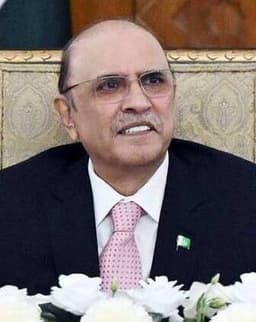
Asif Ali Zardari
Politician · Modern
49.2Total

Ricardo Martinelli
Politician · Modern
47.2Total
Basic Information
Born
1955
1952
Died
—
—
Era
Modern
Modern
Nationality
Pakistan
Panama
Occupation
Politician
Politician
Civilization
Indian
Western
Score Comparison
Military (10%)
47.5
48.7
Political (20%)
37.9
53.8
Influence (20%)
51.0
53.3
Legacy (20%)
41.7
42.5
Leadership (15%)
64.0
40.0
Strategy (15%)
60.0
42.7
TOTAL
49.2
47.2
Asif Ali Zardari — Complete Timeline
1987 AD
Married Benazir BhuttoPolitical Action
Asif Ali Zardari married Benazir Bhutto, the former Prime Minister of Pakistan. The marriage was politically significant, uniting two influential political families.
MarriageBenazir BhuttoPolitical Alliance
Impact: nationalconstructive
1996 AD
Imprisoned on Corruption ChargesPolitical Action◆ Major
Zardari was arrested and imprisoned on corruption charges following the dismissal of Benazir Bhutto's government. He spent over eight years in prison, earning the nickname 'Mr. 10 Percent' for alleged kickbacks.
ImprisonmentCorruptionPolitical Persecution
Impact: nationaldestructive
2007 AD
Assassination of Benazir BhuttoPolitical Action
Benazir Bhutto was assassinated in a suicide attack after a political rally in Rawalpindi. Zardari became the co-chairman of the Pakistan Peoples Party (PPP) following her death.
AssassinationBenazir BhuttoPPP
Impact: nationaltragic
2008 AD
Elected President of PakistanPolitical Action◆ Major
Zardari was elected as the 11th President of Pakistan by the electoral college. He served from 2008 to 2013, during a period of political instability and conflict with the judiciary.
PresidencyPPPHead of State
Impact: nationalconstructive
2010 AD
Repealed the 17th Constitutional AmendmentReform
Zardari signed the 18th Constitutional Amendment, which repealed the 17th Amendment and devolved powers from the presidency to the prime minister and provinces. This restored parliamentary democracy.
Constitutional AmendmentDevolutionParliamentary Democracy
Impact: nationalconstructive
2013 AD
End of Presidential TermPolitical Action
Zardari's presidential term ended, and he was succeeded by Mamnoon Hussain. He returned to a role in the PPP leadership, focusing on party politics.
Presidential TermSuccessionPPP
Impact: national
Ricardo Martinelli — Complete Timeline
2009 AD
Elected President of PanamaPolitical Action◆ Major
Ricardo Martinelli, a wealthy supermarket magnate, won the 2009 presidential election as the candidate of the Alliance for Change coalition. His campaign focused on anti-corruption and economic development, and he won with a landslide majority.
ElectionBusinessLandslide
Impact: national
Presidency (2009-2014)Political Action◆ Major
Martinelli's presidency oversaw rapid economic growth, major infrastructure projects (including the Panama Metro), and a controversial crackdown on crime. His administration was marked by allegations of authoritarianism, corruption, and nepotism, but also significant public works.
PresidencyInfrastructureAuthoritarianism
Impact: national
2015 AD
Post-Presidency Legal TroublesPolitical Action◆ Major
After leaving office, Martinelli faced multiple corruption investigations. In 2015, he fled to the United States but was later extradited to Panama in 2018. He was convicted of money laundering in 2019 and sentenced to prison, though he maintained his innocence.
CorruptionExtraditionConviction
Impact: nationaldestructive
Expert Analysis
Origins
Asif Ali Zardari was born on July 26, 1955, in Karachi, Pakistan, into a landowning family from Sindh. He studied at the Cadet College Petaro and later in London, but his early life was marked by a lack of political ambition. His marriage to Benazir Bhutto in 1987 thrust him into the political spotlight. Zardari's background as a businessman and polo player earned him the nickname 'Mr. Ten Percent' due to alleged corruption.
Ricardo Martinelli was born on March 11, 1952, in Panama City, Panama, to a family of Italian and Spanish descent. He studied business administration at the University of Arkansas and later founded the supermarket chain Super 99. His wealth from the retail sector provided the foundation for his political career. Martinelli's early life was focused on entrepreneurship rather than politics.
Rise to Power
Zardari rose to prominence through his marriage to Benazir Bhutto, becoming a key figure in the Pakistan Peoples Party (PPP). After Bhutto's assassination in 2007, Zardari became co-chairman of the PPP. He led the party to victory in the 2008 general elections and was elected President of Pakistan on September 9, 2008, by the electoral college. His rise was aided by the sympathy wave following Bhutto's death and his political maneuvering within the PPP.
Martinelli entered politics later in life, serving as director of the Panama Canal Authority and later as minister of Canal Affairs under President Mireya Moscoso. He ran for president in 2009 as the candidate of the Alliance for Change coalition, winning with 60% of the vote. His campaign focused on his business acumen and promises of economic growth and anti-corruption measures.
Leadership & Governance
Zardari's presidency (2008-2013) was marked by a focus on constitutional reforms. He signed the 18th Amendment in 2010, which devolved powers from the presidency to the prime minister and parliament, effectively reducing his own powers. This was a significant shift from the authoritarian tendencies of previous military rulers. However, his tenure was also plagued by allegations of corruption, inefficiency, and a weak response to terrorism and natural disasters. Zardari's leadership style was often described as behind-the-scenes, relying on coalition politics.
Martinelli's presidency (2009-2014) emphasized infrastructure development and economic growth. He oversaw the construction of the Panama Metro, expansion of the Panama Canal, and a boom in foreign investment. His government also launched a controversial crackdown on crime, which human rights groups criticized as excessive. Martinelli's leadership was characterized by a hands-on, business-oriented approach, but his administration faced accusations of authoritarianism and corruption. His political score of 53.8 reflects his effective governance but also his polarizing tactics.
Triumph & Tragedy
Zardari's greatest triumph was the passage of the 18th Amendment, which restored parliamentary supremacy and devolved powers to provinces. This was a major step towards democratization in Pakistan. His greatest tragedy was the assassination of his wife, Benazir Bhutto, and his inability to bring stability to Pakistan during his presidency. He also faced over eight years in prison on corruption charges before becoming president. His leadership score of 64.0 indicates resilience but mixed effectiveness.
Martinelli's triumph was the rapid economic growth during his term, with GDP growth averaging over 7% annually. The Panama Metro and other infrastructure projects improved urban mobility. However, his post-presidency legal troubles, including corruption convictions and extradition from the US, tarnished his legacy. In 2023, he was sentenced to over 10 years in prison for money laundering. His military score of 48.7 is low, reflecting Panama's lack of a standing army.
Character & Destiny
Zardari's character is marked by shrewdness and survival instincts. He navigated prison, political isolation, and family tragedy to become president. His decision to reduce presidential powers showed a willingness to reform, but his reputation for corruption persisted. His strategy score of 60.0 suggests calculated moves, but his political score of 37.9 indicates limited popular appeal.
Martinelli's character is defined by his business background and aggressive style. He used his wealth to campaign effectively and govern decisively, but his authoritarian tendencies led to legal troubles. His leadership score of 40.0 reflects the polarization he caused. Both men's fates were shaped by their inability to escape corruption allegations.
Legacy
Zardari's legacy is tied to the 18th Amendment, which permanently altered Pakistan's power structure. He also kept the PPP united after Bhutto's death. However, his legacy is overshadowed by corruption and his role in the 'Reconciliation Ordinance' that granted amnesty to politicians. His total score of 49.2 reflects a mixed but impactful tenure.
Martinelli's legacy is the infrastructure boom and economic growth of Panama, but also the precedent of a wealthy businessman using the presidency for personal gain. His corruption convictions may deter future populist leaders. His total score of 47.2 is slightly lower due to his legal downfall.
Conclusion
Asif Ali Zardari had a greater impact on his country's political structure through the 18th Amendment, which devolved power and strengthened democracy. While Martinelli's economic achievements were significant, they were not structural reforms. Zardari's influence on Pakistan's governance framework endures, even if his personal reputation is tarnished. Therefore, Zardari's impact is more substantial.
Rankings
🥇
Asif Ali ZardariLeader
Mil: 47.5Pol: 37.9Inf: 51.0
49.2
🥈
Ricardo Martinelli
Mil: 48.7Pol: 53.8Inf: 53.3
47.2
+2.0 behind
How This Comparison Works
Algorithm
Each figure is scored on 6 dimensions (0—100 scale) based on structured historical data: Military (10%), Political (20%), Influence (20%), Legacy (20%), Leadership (15%), Strategy (15%). The weighted total produces the final ranking.
Data Sources
Scores are computed from structured sub-indicators in the database. Scale factors adjust for era (Ancient ×0.85, Modern ×1.0) and civilization size (Eastern ×1.05, Other ×0.80) to account for differences in population and military scale.
Maximum 3 Figures
Comparisons are limited to 2—3 figures to ensure readability and statistical meaningfulness.
Error Margins
±5 points per dimension — Sub-scores are derived from historical records with inherent uncertainty. Two figures within 5 points on a dimension should be considered roughly equivalent in that area.
Total Score Accuracy
±3 points overall — The weighted combination of 6 dimensions produces a total score with approximately ±3 points of uncertainty. Differences of less than 3 points are not statistically significant— the figures are effectively tied.
Known Limitations
- Historical records are incomplete and uneven across civilizations
- Figures from oral-tradition societies may be underrepresented
- Occupation labels can misclassify multi-role figures
- Scores measure capability and impact, not moral character
- Quantitative scoring is a comparison tool, not absolute truth
Capability Radar
Military (10%) — Battles & Warfare
Battles
42
27
Win Rate
45
34
Expansion
51
37
Political (20%) — Governance & Reform
Reform
25
60
Diplomacy
40
50
Economy
20
65
Influence (20%) — Cultural & Global Reach
Cultural
20
30
Global
25
30
Legacy (20%) — Historical Impact
Historical
30
35
Longevity
20
20
Leadership (15%) — Power & Stability
Tenure
60
55
Stability
15
40
Strategy (15%) — Tactics & Innovation
Strategy
54
36
Tactics
57
42
Reform
61
45
Similar Comparisons
Comments & Discussion
No comments yet. Be the first to share your thoughts!