Loading...
Leo III the Isaurian vs Sviatoslav I
Leo III the Isaurian leads by 19.5 pts · 2 figures compared
…
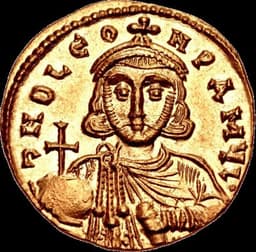
Leo III the Isaurian
Emperor · Medieval
72.3Total
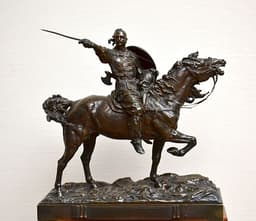
Sviatoslav I
Emperor · Medieval
52.8Total
Basic Information
Born
685
942
Died
741
972
Era
Medieval
Medieval
Nationality
Byzantine Empire
Kievan Rus
Occupation
Emperor
Emperor
Civilization
Western
Western
Score Comparison
Military (10%)
67.3
74.0
Political (20%)
65.0
32.2
Influence (20%)
82.0
60.0
Legacy (20%)
72.0
54.0
Leadership (15%)
69.6
41.5
Strategy (15%)
69.1
58.0
TOTAL
72.3
52.8
Leo III the Isaurian — Complete Timeline
717 AD
Defense of Constantinople (Second Arab Siege)War
Leo III successfully defended Constantinople from a massive Arab siege by the Umayyad Caliphate. The siege lasted from 717 to 718. Leo used Greek fire and a harsh winter to defeat the Arab fleet and army, saving the Byzantine Empire from conquest and halting Arab expansion into Europe.
Arab SiegeDefenseConstantinople
Impact: globalconstructive
720 AD
Administrative and Military ReformsReform◆ Major
Leo III reorganized the Byzantine military and administrative system, strengthening the theme system. He created new themes and improved the defense of the empire. These reforms increased the empire's military effectiveness and administrative efficiency.
Military ReformTheme SystemAdministration
Impact: nationalconstructive
726 AD
Promulgation of the EclogaReform◆ Major
Leo III issued the Ecloga, a legal code that revised and simplified Roman law. The code was written in Greek and emphasized Christian principles, including greater protection for the poor and women. It influenced later Byzantine and Slavic legal systems.
Legal ReformEclogaLaw
Impact: nationalconstructive
Institution of IconoclasmCultural◆ Major
Leo III issued an edict banning the veneration of icons, initiating the first period of Byzantine Iconoclasm. He ordered the destruction of religious images and persecuted iconodules. This policy caused deep religious divisions within the empire and strained relations with the Papacy.
IconoclasmReligious PolicyControversy
Impact: globaldestructive
740 AD
Battle of AkroinonWar◆ Major
Leo III led the Byzantine army to a decisive victory over the Umayyad Arabs at the Battle of Akroinon. The Byzantine forces destroyed the Arab army, ending the Arab threat to Anatolia for decades. This victory consolidated Byzantine control over Asia Minor.
BattleArab-Byzantine WarsVictory
Impact: regionalconstructive
Sviatoslav I — Complete Timeline
965 AD
Destruction of the Khazar KhaganateWar
Sviatoslav led a campaign against the Khazar Khaganate, capturing the fortress of Sarkel and sacking the capital, Atil. This destroyed the Khazar state, ending its dominance over the steppes and opening the Volga trade route to Rus control.
Khazar CampaignConquestSteppe Politics
Impact: regional
968 AD
Conquest of BulgariaWar◆ Major
Sviatoslav invaded the First Bulgarian Empire at the request of the Byzantine Emperor. He defeated the Bulgarian army, occupied much of the country, and established his capital at Pereyaslavets on the Danube, threatening Byzantium.
Bulgarian CampaignDanubeExpansion
Impact: regional
971 AD
Battle of DorostolonWar◆ Major
After a three-month siege by Byzantine forces under Emperor John I Tzimiskes, Sviatoslav's army was defeated at Dorostolon. He was forced to surrender, renounce claims to Bulgaria, and withdraw from the Balkans.
Byzantine-Rus WarSiegeDefeat
Impact: regionaltragic
972 AD
Death at the Dnieper RapidsWar◆ Major
Returning to Kiev, Sviatoslav was ambushed and killed by the Pechenegs at the Dnieper Rapids. The Pecheneg chief Kurya made a drinking cup from Sviatoslav's skull. His death ended his expansionist campaigns.
AssassinationPechenegsAmbush
Impact: nationaltragic
Expert Analysis
Origins
Leo III the Isaurian was born around 685 in Germanikeia (modern Kahramanmaraş, Turkey) to a Syrian family. He rose through the Byzantine military ranks, serving under Emperor Anastasius II. His early career included diplomatic missions to the Caucasus and command in the Anatolic theme. Sviatoslav I was born around 942 in Kiev, the son of Prince Igor of Kiev and Olga of Pskov. His mother Olga ruled as regent after Igor's death, and Sviatoslav was raised in the pagan warrior culture of the Rus. Unlike Leo, Sviatoslav had limited formal education but was trained in combat and statecraft from a young age.
Rise to Power
Leo III seized the Byzantine throne in 717 after a period of instability. He was proclaimed emperor by the army and patriarch, then faced the immediate crisis of the Second Arab Siege of Constantinople (717–718). His successful defense, using Greek fire and winter attrition, crushed the Umayyad fleet and army, earning him lasting prestige. Sviatoslav I became prince of Kiev upon reaching adulthood around 960, but his mother Olga remained influential. His first major campaign was against the Khazar Khaganate (965), where he captured Sarkel and sacked Atil, annihilating the Khazar state. This victory opened the Volga trade route and made Sviatoslav a feared warlord. He then invaded Bulgaria (967) at Byzantine invitation, defeating the Bulgarians and occupying Preslav.
Leadership & Governance
Leo III governed with a focus on military and administrative reform. He reorganized the theme system, strengthening provincial defenses and creating new themes like the Cibyrrhaeot. His legal code, the Ecloga (726), simplified Roman law and emphasized Christian principles, including protections for the poor. Leo also initiated Iconoclasm (726–787), banning religious images, which deepened the divide between Eastern and Western Christianity. Sviatoslav I, by contrast, was a nomadic warrior prince who disdained settled governance. He reportedly said, "I do not like to remain at home," and spent most of his reign on campaign. He divided his realm among his sons before departing for Bulgaria, a decision that led to internal strife. His leadership style was personal and brutal; he famously told his troops, "We shall not shame the land of Rus, but lay down our bones as dead."
Triumph & Tragedy
Leo III's greatest triumph was the defense of Constantinople in 717–718, which saved the Byzantine Empire from Arab conquest. His victory at the Battle of Akroinon (740) further weakened the Umayyads. His administrative reforms strengthened the empire for generations. However, his Iconoclast policies caused internal turmoil, alienating monks and iconophiles, and the controversy lasted for over a century. Sviatoslav's triumph was the destruction of the Khazar Khaganate, which removed a major rival and opened trade routes. His conquest of Bulgaria initially succeeded, but his occupation provoked Byzantine retaliation. His tragedy came at the Battle of Dorostolon (971), where he was defeated by Emperor John I Tzimiskes and forced to surrender. On his return to Kiev, he was ambushed by Pechenegs at the Dnieper Rapids and killed (972). His skull was made into a drinking cup.
Character & Destiny
Leo III was pragmatic and strategic, a skilled diplomat as well as a general. His decision to institute Iconoclasm was partly to assert imperial authority over the church and to appeal to iconoclast soldiers and bishops. He was also a reformer who sought to unify his realm. His character allowed him to survive repeated crises. Sviatoslav I was a pure warrior, disdainful of luxury and politics. He preferred raiding to ruling, and his refusal to consolidate his gains led to his downfall. His character—bold, reckless, and honor-bound—made him a legendary figure but a flawed leader. Historical assessments contrast Leo's statecraft with Sviatoslav's martial prowess.
Legacy
Leo III's legacy is profound: his defense of Constantinople ensured the survival of Byzantium for centuries. The Ecloga influenced later Byzantine law and even Slavic legal codes. Iconoclasm, though controversial, shaped the future of Eastern Orthodox theology. His military reforms laid the groundwork for the empire's medieval revival. Sviatoslav I is remembered as the archetypal Viking prince of the Rus: a conqueror who expanded Rus territory but failed to build durable institutions. His destruction of the Khazars removed a buffer state, exposing the Rus to steppe nomads. The Pechenegs, who killed him, became a persistent threat. His legacy is more romantic than practical, with scores of 74.0 in military but only 32.2 in political.
Conclusion
Leo III the Isaurian had a greater and more lasting impact than Sviatoslav I. With a total score of 72.3 against Sviatoslav's 52.8, Leo's achievements in military defense, legal reform, and imperial consolidation shaped the Byzantine Empire for centuries. Sviatoslav's conquests were dramatic but ephemeral; his failure to govern led to instability. Leo's defense of Constantinople in 717–718 was a turning point in world history, while Sviatoslav's victory over the Khazars was quickly overshadowed by his death. Leo's institutional reforms outlasted his reign; Sviatoslav left only legends. Thus, Leo III stands as the more significant historical figure.
Rankings
🥇
Leo III the IsaurianLeader
Mil: 67.3Pol: 65.0Inf: 82.0
72.3
🥈
Sviatoslav I
Mil: 74.0Pol: 32.2Inf: 60.0
52.8
+19.5 behind
How This Comparison Works
Algorithm
Each figure is scored on 6 dimensions (0—100 scale) based on structured historical data: Military (10%), Political (20%), Influence (20%), Legacy (20%), Leadership (15%), Strategy (15%). The weighted total produces the final ranking.
Data Sources
Scores are computed from structured sub-indicators in the database. Scale factors adjust for era (Ancient ×0.85, Modern ×1.0) and civilization size (Eastern ×1.05, Other ×0.80) to account for differences in population and military scale.
Maximum 3 Figures
Comparisons are limited to 2—3 figures to ensure readability and statistical meaningfulness.
Error Margins
±5 points per dimension — Sub-scores are derived from historical records with inherent uncertainty. Two figures within 5 points on a dimension should be considered roughly equivalent in that area.
Total Score Accuracy
±3 points overall — The weighted combination of 6 dimensions produces a total score with approximately ±3 points of uncertainty. Differences of less than 3 points are not statistically significant— the figures are effectively tied.
Known Limitations
- Historical records are incomplete and uneven across civilizations
- Figures from oral-tradition societies may be underrepresented
- Occupation labels can misclassify multi-role figures
- Scores measure capability and impact, not moral character
- Quantitative scoring is a comparison tool, not absolute truth
Capability Radar
Military (10%) — Battles & Warfare
Battles
75
78
Win Rate
80
82
Expansion
60
85
Political (20%) — Governance & Reform
Reform
85
20
Diplomacy
65
35
Economy
70
25
Influence (20%) — Cultural & Global Reach
Cultural
75
55
Global
65
45
Legacy (20%) — Historical Impact
Historical
80
65
Longevity
70
50
Leadership (15%) — Power & Stability
Tenure
72
30
Stability
60
20
Strategy (15%) — Tactics & Innovation
Strategy
82
75
Tactics
78
80
Reform
70
40
Similar Comparisons
Comments & Discussion
No comments yet. Be the first to share your thoughts!