Loading...
Lech Kaczynski vs Mahamadou Issoufou
Mahamadou Issoufou leads by 2.0 pts · 2 figures compared
…

Lech Kaczynski
Politician · Modern
50.1Total
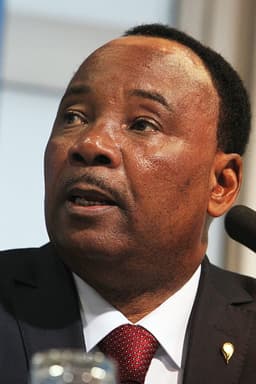
Mahamadou Issoufou
Politician · Modern
52.1Total
Basic Information
Born
1949
1952
Died
—
—
Era
Modern
Modern
Nationality
Poland
Niger
Occupation
Politician
Politician
Civilization
Western
Other
Score Comparison
Military (10%)
48.3
42.3
Political (20%)
68.0
68.0
Influence (20%)
55.7
51.8
Legacy (20%)
43.3
41.7
Leadership (15%)
40.0
66.0
Strategy (15%)
42.9
43.7
TOTAL
50.1
52.1
Lech Kaczynski — Complete Timeline
2005 AD
Election as President of PolandPolitical Action◆ Major
Kaczynski was elected President of Poland, defeating Donald Tusk. He ran on a conservative, nationalist platform and served alongside his twin brother Jaroslaw, who was Prime Minister for a period.
ElectionPresidency
Impact: national
2007 AD
Veto of the Treaty of LisbonPolitical Action
Kaczynski initially refused to sign the Treaty of Lisbon, the EU reform treaty, demanding changes to the voting system. After negotiations, he eventually signed it, but his stance highlighted his Eurosceptic views.
EU politicsTreaty
Impact: regional
2010 AD
Death in the Smolensk Air DisasterOther◆ Major
Kaczynski died in a plane crash near Smolensk, Russia, while traveling to a memorial ceremony for the Katyn massacre. The crash killed all 96 people on board, including many senior Polish officials. The event sparked conspiracy theories and deepened tensions with Russia.
DeathAir disaster
Impact: nationaltragic
Mahamadou Issoufou — Complete Timeline
2011 AD
Elected President of NigerPolitical Action◆ Major
Mahamadou Issoufou won the Nigerien presidential election in a runoff, defeating former prime minister Seini Oumarou. His victory marked a transition to civilian rule after a 2010 military coup.
ElectionDemocracyCivilian Rule
Impact: nationalconstructive
2015 AD
Led Fight Against Boko HaramWar◆ Major
Issoufou committed Nigerien troops to the Multinational Joint Task Force against Boko Haram in the Lake Chad region. Niger faced repeated attacks, and the campaign strained resources but contained the insurgency.
Boko HaramCounterterrorismMilitary
Impact: regional
2016 AD
Re-elected President of NigerPolitical Action◆ Major
Issoufou won a second term with 92% of the vote in an election boycotted by the main opposition. The result was criticized internationally as lacking credibility, though Issoufou remained in power.
ElectionControversySecond Term
Impact: national
2021 AD
Stepped Down After Two TermsPolitical Action
Issoufou voluntarily stepped down after completing two terms, handing power to elected successor Mohamed Bazoum. This was a rare peaceful transfer of power in Niger's history, strengthening democratic norms.
DemocracyPeaceful TransitionLegacy
Impact: nationalconstructive
Expert Analysis
Origins
Lech Kaczynski was born on June 18, 1949, in Warsaw, Poland, to an engineer father and a philologist mother. He and his identical twin brother, Jaroslaw, were child actors in the 1962 film 'The Two Who Stole the Moon.' Kaczynski studied law at the University of Warsaw, earning a doctorate, and later became a professor at the University of Gdansk. His early involvement in the anti-communist Solidarity movement shaped his political identity.
Mahamadou Issoufou was born on January 1, 1952, in Dandaji, Niger, into a family of the Hausa ethnic group. He studied at the University of Niamey, earning a degree in mathematics, and later obtained a diploma in mining engineering from the École des Mines de Nancy in France. Issoufou began his career as a civil servant before entering politics, joining the Nigerien Party for Democracy and Socialism (PNDS) in the 1990s.
Rise to Power
Kaczynski rose to prominence as a legal advisor to the Solidarity movement in the 1980s. He was a key figure in the 1989 round table talks that led to the fall of communism. In 2001, he co-founded the Law and Justice party (PiS) with his brother. He served as Mayor of Warsaw from 2002 to 2005, where he gained national attention for his conservative policies and anti-corruption stance. In 2005, he won the presidential election with 54% of the vote, defeating Donald Tusk.
Issoufou became a prominent opposition figure in Niger during the 1990s. He served as Prime Minister under President Mamadou Tandja from 1993 to 1994 but resigned over policy differences. He ran for president multiple times, losing in 1993 and 1999. In 2011, he won the presidency in a runoff with 58% of the vote, defeating Seini Oumarou. His victory ended a period of political instability following a 2010 coup.
Leadership & Governance
Kaczynski governed as a conservative nationalist, emphasizing traditional values and a strong executive. He vetoed the Treaty of Lisbon in 2007, demanding changes to the voting system before eventually signing it. He also pursued a tough line on EU integration, often clashing with Brussels. Domestically, he established the Central Anti-Corruption Bureau (CBA) and pursued lustration policies against former communists. His style was confrontational, leading to frequent political gridlock.
Issoufou adopted a pragmatic, pro-Western stance, focusing on economic development and security. He implemented the Nigerien Renaissance program, investing in infrastructure, agriculture, and education. He also prioritized the fight against Boko Haram and other jihadist groups, committing troops to the Multinational Joint Task Force. Despite criticisms of authoritarian tendencies, he oversaw a peaceful transfer of power in 2021, a rare feat in West Africa.
Triumph & Tragedy
Kaczynski's greatest success was his role in Poland's transition from communism and his anti-corruption efforts. However, his presidency was marked by strained relations with the EU and domestic political polarization. His tragic death in the Smolensk air disaster on April 10, 2010, killed all 96 aboard, including many senior Polish officials, and led to conspiracy theories that deepened national divisions.
Issoufou's triumph was his voluntary departure after two terms, setting a precedent for democratic transitions in Niger. He also made gains against Boko Haram, though attacks persisted. His failures include a controversial 2016 re-election with 92% of the vote in a boycotted election, leading to international criticism. Additionally, economic growth under his tenure did not significantly reduce poverty.
Character & Destiny
Kaczynski was known for his combative, principled character, often refusing compromise. His close bond with his twin brother shaped his political career, but his rigidity contributed to his isolation in European politics. His death in a plane crash under mysterious circumstances cemented his status as a martyr for his supporters, but also exposed the fragility of his legacy.
Issoufou is described as calm, calculating, and pragmatic. He navigated Niger's volatile political landscape by balancing domestic pressures with international partnerships. His decision to step down voluntarily demonstrated commitment to constitutional norms, contrasting with many African leaders. However, his tolerance of flawed elections and crackdowns on dissent tarnished his democratic credentials.
Legacy
Kaczynski's legacy is deeply polarized. In Poland, he is revered by conservatives as a defender of national sovereignty and anti-corruption, but criticized by liberals for authoritarian tendencies. The Smolensk crash remains a central symbol for his party, Law and Justice, which has used it to rally support. Internationally, he is remembered as a Eurosceptic who challenged EU integration.
Issoufou's legacy is more positive globally, particularly for his peaceful transfer of power. He is credited with stabilizing Niger and strengthening its role in regional security. However, his failure to achieve broad-based economic development and the flawed 2016 election temper his achievements. He ranks higher in overall score (52.1 vs 50.1), driven by stronger leadership (66.0 vs 40.0) and political skill (68.0 vs 68.0).
Conclusion
Mahamadou Issoufou had a greater impact than Lech Kaczynski. While Kaczynski's death created a powerful political symbol, Issoufou's peaceful departure from power set a tangible example for Niger and the region. Issoufou's leadership score of 66.0 far exceeds Kaczynski's 40.0, reflecting his ability to navigate complex challenges and leave a functioning democracy. Kaczynski's confrontational style and early death limited his achievements, whereas Issoufou's pragmatic governance and commitment to institutional norms produced lasting political stability. The data supports Issoufou as the more effective leader.
Rankings
🥇
Mahamadou IssoufouLeader
Mil: 42.3Pol: 68.0Inf: 51.8
52.1
🥈
Lech Kaczynski
Mil: 48.3Pol: 68.0Inf: 55.7
50.1
+2.0 behind
How This Comparison Works
Algorithm
Each figure is scored on 6 dimensions (0—100 scale) based on structured historical data: Military (10%), Political (20%), Influence (20%), Legacy (20%), Leadership (15%), Strategy (15%). The weighted total produces the final ranking.
Data Sources
Scores are computed from structured sub-indicators in the database. Scale factors adjust for era (Ancient ×0.85, Modern ×1.0) and civilization size (Eastern ×1.05, Other ×0.80) to account for differences in population and military scale.
Maximum 3 Figures
Comparisons are limited to 2—3 figures to ensure readability and statistical meaningfulness.
Error Margins
±5 points per dimension — Sub-scores are derived from historical records with inherent uncertainty. Two figures within 5 points on a dimension should be considered roughly equivalent in that area.
Total Score Accuracy
±3 points overall — The weighted combination of 6 dimensions produces a total score with approximately ±3 points of uncertainty. Differences of less than 3 points are not statistically significant— the figures are effectively tied.
Known Limitations
- Historical records are incomplete and uneven across civilizations
- Figures from oral-tradition societies may be underrepresented
- Occupation labels can misclassify multi-role figures
- Scores measure capability and impact, not moral character
- Quantitative scoring is a comparison tool, not absolute truth
Capability Radar
Military (10%) — Battles & Warfare
Battles
31
23
Win Rate
32
23
Expansion
36
27
Political (20%) — Governance & Reform
Reform
45
55
Diplomacy
55
60
Economy
40
50
Influence (20%) — Cultural & Global Reach
Cultural
30
20
Global
35
20
Legacy (20%) — Historical Impact
Historical
40
30
Longevity
20
20
Leadership (15%) — Power & Stability
Tenure
60
60
Stability
35
55
Strategy (15%) — Tactics & Innovation
Strategy
35
31
Tactics
43
33
Reform
46
37
Similar Comparisons
Comments & Discussion
No comments yet. Be the first to share your thoughts!