Loading...
Lech Kaczynski vs Tajuddin Ahmad
Lech Kaczynski leads by 1.6 pts · 2 figures compared
…

Lech Kaczynski
Politician · Modern
50.1Total
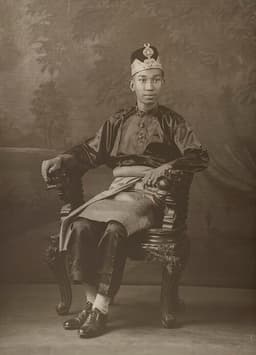
Tajuddin Ahmad
Politician · Modern
48.5Total
Basic Information
Born
1949
1925
Died
—
—
Era
Modern
Modern
Nationality
Poland
Bangladesh
Occupation
Politician
Politician
Civilization
Western
Indian
Score Comparison
Military (10%)
48.3
39.4
Political (20%)
68.0
46.6
Influence (20%)
55.7
50.2
Legacy (20%)
43.3
45.0
Leadership (15%)
40.0
51.9
Strategy (15%)
42.9
60.0
TOTAL
50.1
48.5
Lech Kaczynski — Complete Timeline
2005 AD
Election as President of PolandPolitical Action◆ Major
Kaczynski was elected President of Poland, defeating Donald Tusk. He ran on a conservative, nationalist platform and served alongside his twin brother Jaroslaw, who was Prime Minister for a period.
ElectionPresidency
Impact: national
2007 AD
Veto of the Treaty of LisbonPolitical Action
Kaczynski initially refused to sign the Treaty of Lisbon, the EU reform treaty, demanding changes to the voting system. After negotiations, he eventually signed it, but his stance highlighted his Eurosceptic views.
EU politicsTreaty
Impact: regional
2010 AD
Death in the Smolensk Air DisasterOther◆ Major
Kaczynski died in a plane crash near Smolensk, Russia, while traveling to a memorial ceremony for the Katyn massacre. The crash killed all 96 people on board, including many senior Polish officials. The event sparked conspiracy theories and deepened tensions with Russia.
DeathAir disaster
Impact: nationaltragic
Tajuddin Ahmad — Complete Timeline
1971 AD
Formation of the Mujibnagar GovernmentPolitical Action
On April 17, 1971, Tajuddin Ahmad became the first Prime Minister of the provisional government of Bangladesh, formed in Mujibnagar, India. He led the government-in-exile, coordinating the diplomatic and military efforts of the Bangladesh Liberation War.
Provisional GovernmentBangladesh Liberation WarDiplomacy
Impact: nationalconstructive
1975 AD
Assassination of Tajuddin AhmadPolitical Action◆ Major
Tajuddin Ahmad was assassinated on November 3, 1975, inside the Dhaka Central Jail along with three other top Awami League leaders. The killings occurred during a period of political turmoil following the assassination of Sheikh Mujibur Rahman.
AssassinationPolitical ViolenceBangladesh
Impact: nationaltragic
Expert Analysis
Origins
Lech Kaczynski was born on June 18, 1949, in Warsaw, Poland, into a family of engineers. He and his identical twin brother Jaroslaw gained fame as child actors in the film 'The Two Who Stole the Moon.' He studied law at the University of Warsaw, later earning a doctorate. His early career focused on labor law, and he became involved in the anti-communist Solidarity movement in the 1980s, serving as a legal advisor.
Tajuddin Ahmad was born on July 23, 1925, in Kapasia, Bengal Presidency (now Bangladesh), into a Muslim landowning family. He studied economics at the University of Calcutta and later law at Dhaka University. He was active in student politics and joined the Awami Muslim League, becoming a close associate of Sheikh Mujibur Rahman. He was imprisoned multiple times for his involvement in the Bengali language movement and the struggle for autonomy.
Rise to Power
Kaczynski rose to prominence through his legal work for Solidarity and later as a senator. He served as Minister of Justice (2000-2001) under President Aleksander Kwasniewski, gaining a reputation for tough anti-corruption measures. In 2002, he was elected Mayor of Warsaw, where he pursued conservative policies. His major breakthrough came in 2005 when he was elected President of Poland, defeating Donald Tusk. He ran on a nationalist, traditionalist platform, often clashing with EU institutions. His twin brother Jaroslaw served as Prime Minister concurrently, creating a unique power-sharing arrangement.
Ahmad's rise was tied to the Bangladesh Liberation War. After the 1970 general election, the Awami League won a majority but was blocked from forming a government by West Pakistan. On April 17, 1971, Ahmad became the first Prime Minister of the provisional government of Bangladesh (Mujibnagar Government), formed in exile in India. He led the diplomatic and administrative efforts during the war, securing international support and coordinating the Mukti Bahini (freedom fighters). His political score of 46.6 reflects his crucial role in state-building, though he operated under Sheikh Mujib's shadow.
Leadership & Governance
Kaczynski's leadership was characterized by a confrontational style, both domestically and internationally. He opposed the EU's Lisbon Treaty, initially vetoing it, though he later signed after securing concessions. He sought to purge former communists from public life and promoted a conservative social agenda. His governance was marked by frequent conflicts with the EU over judicial reforms and media freedom. In military terms, he scored 48.3, reflecting his support for NATO but limited defense initiatives. His strategy score of 42.9 indicates a reactive rather than proactive approach.
Ahmad's leadership was focused on wartime administration. He managed a government-in-exile, coordinating with India and the international community. He appointed General M.A.G. Osmani as commander of the Mukti Bahini and oversaw the creation of a civil administration. After independence, he served as Finance Minister, but his influence waned under Sheikh Mujib's increasingly authoritarian rule. His leadership score of 51.9 and strategy score of 60.0 reflect his effective planning during the war, though his post-war role was limited.
Triumph & Tragedy
Kaczynski's greatest triumph was his election as president, defeating rival Donald Tusk, and his role in shaping Poland's conservative shift. However, his greatest failure was his inability to implement lasting reforms due to political gridlock. The Smolensk air disaster on April 10, 2010, which killed him and 95 others, became a national tragedy and fueled conspiracy theories. The crash, while traveling to a Katyn memorial, remains a contentious event in Polish-Russian relations.
Ahmad's triumph was his leadership of the Mujibnagar Government, which successfully mobilized international support and secured Bangladesh's independence in 1971. His failure came after independence, as he was sidelined and eventually arrested after Sheikh Mujib's assassination. On November 3, 1975, he was killed in Dhaka Central Jail along with three other Awami League leaders in a brutal prison massacre. This event, known as the 'Jail Killing,' eliminated key architects of the liberation.
Character & Destiny
Kaczynski was known for his stubbornness and ideological rigidity. His twin brother's influence often overshadowed his presidency. Historians describe him as a principled but divisive figure. His death in the Smolensk crash, which also killed many top military and civilian officials, created a vacuum in Polish politics and deepened national trauma. His legacy score of 43.3 reflects the contested nature of his impact.
Ahmad was seen as a quiet, intellectual leader, more pragmatic than charismatic. He prioritized state-building over personal ambition. His assassination, part of a series of coups after Mujib's death, ended the lives of the liberation generation. His legacy score of 45.0 is slightly higher than Kaczynski's, possibly due to his foundational role in Bangladesh's creation.
Legacy
Kaczynski's legacy is mixed. He is remembered as a defender of Polish sovereignty and conservative values, but his presidency is often criticized for its confrontational approach. His death became a symbol of national tragedy, and his party, Law and Justice (PiS), used his memory to gain political support. In terms of influence, he scored 55.7, reflecting his impact on Polish politics, though his long-term legacy is uncertain.
Ahmad's legacy is more secure. As the first Prime Minister of independent Bangladesh (in exile), he is honored as a 'architect of independence.' His strategic acumen during the war is widely acknowledged. However, his assassination and the subsequent suppression of his contributions by later regimes have limited his recognition. His total score of 48.5 is close to Kaczynski's 50.1, but his legacy score (45.0) slightly edges Kaczynski's (43.3) due to his foundational role.
Conclusion
While Kaczynski scored higher overall (50.1 vs. 48.5), Tajuddin Ahmad's impact on Bangladesh's creation is more enduring and transformative. Kaczynski's presidency was significant but marred by conflict and an untimely death that overshadowed his achievements. Ahmad's strategic leadership during a war of independence directly shaped a nation's birth. Therefore, in terms of historical impact, Tajuddin Ahmad has the greater legacy, despite his lower total score. His legacy score of 45.0, though still modest, reflects his foundational role, whereas Kaczynski's 43.3 indicates a more contested and less transformative influence.
Rankings
🥇
Lech KaczynskiLeader
Mil: 48.3Pol: 68.0Inf: 55.7
50.1
🥈
Tajuddin Ahmad
Mil: 39.4Pol: 46.6Inf: 50.2
48.5
+1.6 behind
How This Comparison Works
Algorithm
Each figure is scored on 6 dimensions (0—100 scale) based on structured historical data: Military (10%), Political (20%), Influence (20%), Legacy (20%), Leadership (15%), Strategy (15%). The weighted total produces the final ranking.
Data Sources
Scores are computed from structured sub-indicators in the database. Scale factors adjust for era (Ancient ×0.85, Modern ×1.0) and civilization size (Eastern ×1.05, Other ×0.80) to account for differences in population and military scale.
Maximum 3 Figures
Comparisons are limited to 2—3 figures to ensure readability and statistical meaningfulness.
Error Margins
±5 points per dimension — Sub-scores are derived from historical records with inherent uncertainty. Two figures within 5 points on a dimension should be considered roughly equivalent in that area.
Total Score Accuracy
±3 points overall — The weighted combination of 6 dimensions produces a total score with approximately ±3 points of uncertainty. Differences of less than 3 points are not statistically significant— the figures are effectively tied.
Known Limitations
- Historical records are incomplete and uneven across civilizations
- Figures from oral-tradition societies may be underrepresented
- Occupation labels can misclassify multi-role figures
- Scores measure capability and impact, not moral character
- Quantitative scoring is a comparison tool, not absolute truth
Capability Radar
Military (10%) — Battles & Warfare
Battles
31
46
Win Rate
32
46
Expansion
36
48
Political (20%) — Governance & Reform
Reform
45
40
Diplomacy
55
55
Economy
40
20
Influence (20%) — Cultural & Global Reach
Cultural
30
20
Global
35
20
Legacy (20%) — Historical Impact
Historical
40
45
Longevity
20
25
Leadership (15%) — Power & Stability
Tenure
60
30
Stability
35
15
Strategy (15%) — Tactics & Innovation
Strategy
35
52
Tactics
43
57
Reform
46
61
Similar Comparisons
Comments & Discussion
No comments yet. Be the first to share your thoughts!