Loading...
Lavr Kornilov vs Raheel Sharif
Raheel Sharif leads by 14.0 pts · 2 figures compared
…
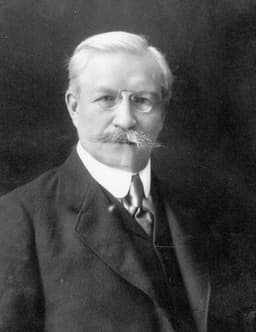
Lavr Kornilov
General · Modern
42.9Total
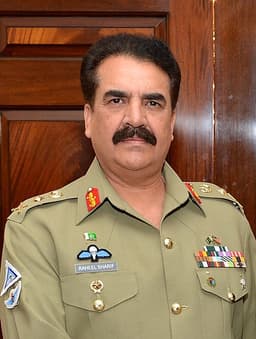
Raheel Sharif
General · Modern
56.9Total
Basic Information
Born
1870
1956
Died
1918
—
Era
Modern
Modern
Nationality
Russia
Pakistan
Occupation
General
General
Civilization
Western
Indian
Score Comparison
Military (10%)
25.0
40.0
Political (20%)
35.1
68.0
Influence (20%)
55.7
58.0
Legacy (20%)
46.7
47.5
Leadership (15%)
30.0
65.0
Strategy (15%)
50.0
65.4
TOTAL
42.9
56.9
Lavr Kornilov — Complete Timeline
1917 AD
Kornilov AffairPolitical Action
General Kornilov, as Commander-in-Chief, marched troops toward Petrograd in an attempt to seize power from the Provisional Government. The coup failed due to lack of support and resistance from workers and soldiers. Kornilov was arrested and imprisoned.
Kornilov AffairCoup AttemptProvisional Government
Impact: nationaldestructive
1918 AD
Command of the White Army in the Russian Civil WarWar◆ Major
After escaping from prison, Kornilov became the commander of the Volunteer Army, the core of the White forces in southern Russia. He led the First Kuban Campaign, a strategic retreat through hostile territory, but was killed by a shell in April 1918.
White ArmyRussian Civil WarVolunteer Army
Impact: national
Death at the Battle of YekaterinodarWar◆ Major
Kornilov was killed by a direct hit from a Bolshevik shell while besieging Yekaterinodar. His death was a severe blow to the White movement. The Bolsheviks exhumed his body and publicly displayed it before burning it.
DeathWhite ArmyYekaterinodar
Impact: nationaltragic
Raheel Sharif — Complete Timeline
2013 AD
Appointment as Chief of Army StaffPolitical Action◆ Major
General Raheel Sharif was appointed as the 15th Chief of Army Staff of the Pakistan Army, succeeding General Ashfaq Parvez Kayani. His appointment came at a time of heightened terrorism and political instability, and he was seen as a reformist leader within the military.
Military LeadershipPakistan Army
Impact: national
2014 AD
Launch of Operation Zarb-e-AzbWar◆ Major
General Raheel Sharif launched Operation Zarb-e-Azb, a large-scale military offensive against militant groups in North Waziristan. The operation targeted Tehrik-i-Taliban Pakistan and other insurgents, resulting in the clearance of the region and a significant reduction in terrorist attacks across Pakistan.
Counter-TerrorismMilitary OperationNorth Waziristan
Impact: nationalconstructive
Execution of convicted terroristsPolitical Action◆ Major
Following the Peshawar school massacre, General Raheel Sharif oversaw the lifting of a moratorium on the death penalty for terrorism-related cases. Hundreds of convicted militants were executed, and military courts were established to expedite trials. This policy was controversial but widely supported domestically.
Death PenaltyCounter-TerrorismMilitary Courts
Impact: nationaldestructive
2015 AD
Formation of the Saudi-led Islamic Military AlliancePolitical Action◆ Major
General Raheel Sharif was appointed as the first commander-in-chief of the Islamic Military Alliance to Fight Terrorism (IMAFT), a Saudi-led coalition of Muslim countries. He retired from the Pakistan Army to take this role, marking a significant international engagement for a former Pakistani army chief.
International CoalitionCounter-TerrorismSaudi Arabia
Impact: global
Expert Analysis
Origins
Lavr Kornilov was born in 1870 in Ust-Kamenogorsk, Russia, to a Cossack father and a Kazakh mother. He grew up in a military family and entered the Siberian Cadet Corps, later graduating from the Mikhailovsky Artillery School and the General Staff Academy. His early career included service in the Russo-Japanese War and as a military attaché in China, which shaped his views on order and authority.
Raheel Sharif was born in 1956 in Quetta, Pakistan, into a Punjabi family with a strong military tradition; his brother was a major general. He attended the Pakistan Military Academy and was commissioned in the Punjab Regiment. He later studied at the Command and Staff College in Quetta and the Royal College of Defence Studies in the UK. His early postings included counter-insurgency operations in Balochistan and the Kargil War.
Rise to Power
Kornilov rose to prominence during World War I as a general known for his aggressive tactics and escapes from captivity. After the February Revolution in 1917, he was appointed commander of the Petrograd Military District, then commander-in-chief of the Russian Army in July. His growing distrust of the Provisional Government led him to march on Petrograd in August 1917 in what became the Kornilov Affair, a failed coup that discredited him and weakened the government.
Sharif rose through the ranks of the Pakistan Army, serving as a brigade commander in the Kargil War and later as a corps commander. In 2013, he was appointed Chief of Army Staff, succeeding General Ashfaq Parvez Kayani. His appointment came at a time of severe terrorism challenges, including the TTP insurgency. He quickly asserted control and launched major operations.
Leadership & Governance
Kornilov's leadership was authoritarian and rigid. He believed in strong central authority and was hostile to the socialist elements in the Provisional Government. His governance approach was military-centric, seeking to impose order through force. He scored 30.0 in leadership and 35.1 in political, reflecting his inability to navigate civilian politics.
Sharif's leadership was more pragmatic and institutionally focused. He strengthened the army's role in politics while maintaining a facade of civilian control. His governance approach included supporting the National Action Plan against terrorism and engaging with international partners. He scored 65.0 in leadership and 68.0 in political, showing his effectiveness in both military and political spheres.
Triumph & Tragedy
Kornilov's greatest success was his leadership of the Volunteer Army in the Russian Civil War, where he inspired loyal troops and achieved initial victories against Bolshevik forces. However, his greatest failure was the Kornilov Affair, which alienated moderate socialists and inadvertently strengthened the Bolsheviks. His death at the Battle of Yekaterinodar in 1918 was a major blow to the White movement.
Sharif's greatest success was Operation Zarb-e-Azb (2014), which cleared North Waziristan of militant groups and significantly reduced terrorism in Pakistan. He also oversaw the execution of convicted terrorists after the Peshawar school massacre. However, critics note that his tenure saw increased military influence in civilian affairs and human rights concerns. He successfully transitioned to head the Saudi-led Islamic Military Alliance.
Character & Destiny
Kornilov was determined and inflexible, with a belief in military solutions to political problems. His character led him to confront the Provisional Government directly, a move that backfired. His destiny was cut short by a shell, ending his role in the Civil War. Historians assess him as a capable military commander but a poor political strategist.
Sharif is seen as disciplined and politically astute. He maintained unity within the army and navigated complex relations with civilian governments. His destiny saw him leave office on schedule in 2016, a rare occurrence in Pakistani military history. He is praised for his anti-terror efforts but criticized for expanding military influence.
Legacy
Kornilov's legacy is mixed: he is remembered as a symbol of counter-revolutionary resistance but his actions contributed to the Bolshevik takeover. His military scores (25.0) reflect limited tactical success. The Kornilov Affair remains a cautionary tale about military intervention in politics.
Sharif's legacy is more positive in Pakistan. He is credited with reducing terrorism and restoring public confidence in the army. His influence score (58.0) and legacy score (47.5) reflect his impact on national security. Operation Zarb-e-Azb is seen as a turning point. Internationally, he gained respect as a coalition leader.
Conclusion
Raheel Sharif had greater impact than Lavr Kornilov, with a total score of 56.9 versus 42.9. Sharif's military operations achieved tangible results in reducing terrorism, while his political maneuvering maintained stability. Kornilov's coup attempt failed and worsened the Russian political crisis. Sharif's leadership scores (65.0 vs 30.0) and political scores (68.0 vs 35.1) highlight his superior effectiveness. While Kornilov's historical moment was critical, Sharif's actions had more lasting positive impact in his country.
Rankings
🥇
Raheel SharifLeader
Mil: 40.0Pol: 68.0Inf: 58.0
56.9
🥈
Lavr Kornilov
Mil: 25.0Pol: 35.1Inf: 55.7
42.9
+14.0 behind
How This Comparison Works
Algorithm
Each figure is scored on 6 dimensions (0—100 scale) based on structured historical data: Military (10%), Political (20%), Influence (20%), Legacy (20%), Leadership (15%), Strategy (15%). The weighted total produces the final ranking.
Data Sources
Scores are computed from structured sub-indicators in the database. Scale factors adjust for era (Ancient ×0.85, Modern ×1.0) and civilization size (Eastern ×1.05, Other ×0.80) to account for differences in population and military scale.
Maximum 3 Figures
Comparisons are limited to 2—3 figures to ensure readability and statistical meaningfulness.
Error Margins
±5 points per dimension — Sub-scores are derived from historical records with inherent uncertainty. Two figures within 5 points on a dimension should be considered roughly equivalent in that area.
Total Score Accuracy
±3 points overall — The weighted combination of 6 dimensions produces a total score with approximately ±3 points of uncertainty. Differences of less than 3 points are not statistically significant— the figures are effectively tied.
Known Limitations
- Historical records are incomplete and uneven across civilizations
- Figures from oral-tradition societies may be underrepresented
- Occupation labels can misclassify multi-role figures
- Scores measure capability and impact, not moral character
- Quantitative scoring is a comparison tool, not absolute truth
Capability Radar
Military (10%) — Battles & Warfare
Battles
45
55
Win Rate
40
60
Expansion
20
10
Political (20%) — Governance & Reform
Reform
30
40
Diplomacy
20
50
Economy
10
30
Influence (20%) — Cultural & Global Reach
Cultural
25
40
Global
20
40
Legacy (20%) — Historical Impact
Historical
40
45
Longevity
30
30
Leadership (15%) — Power & Stability
Tenure
15
45
Stability
5
35
Strategy (15%) — Tactics & Innovation
Strategy
50
70
Tactics
55
65
Reform
60
75
Similar Comparisons
Comments & Discussion
No comments yet. Be the first to share your thoughts!