Loading...
Jochen Peiper vs Lavr Kornilov
Jochen Peiper leads by 1.1 pts · 2 figures compared
…

Jochen Peiper
General · Modern
44.0Total
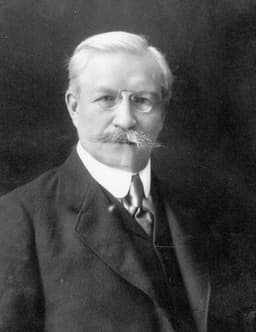
Lavr Kornilov
General · Modern
42.9Total
Basic Information
Born
1915
1870
Died
1976
1918
Era
Modern
Modern
Nationality
Germany
Russia
Occupation
General
General
Civilization
Western
Western
Score Comparison
Military (10%)
40.0
25.0
Political (20%)
26.4
35.1
Influence (20%)
56.4
55.7
Legacy (20%)
45.8
46.7
Leadership (15%)
30.0
30.0
Strategy (15%)
60.0
50.0
TOTAL
44.0
42.9
Jochen Peiper — Complete Timeline
1944 AD
Malmedy MassacreWar◆ Major
On December 17, 1944, during the Battle of the Bulge, Peiper's Kampfgruppe killed approximately 84 American prisoners of war near Malmedy, Belgium. This war crime became a major issue at the post-war Dachau trials.
World War IIWar CrimeBattle of the Bulge
Impact: regionaldestructive
1946 AD
Dachau Trial SentencingPolitical Action◆ Major
Peiper was tried by a U.S. military tribunal at Dachau for the Malmedy Massacre. He was sentenced to death, but the sentence was later commuted to life imprisonment amid allegations of coerced confessions.
War Crimes TrialPost-War Justice
Impact: national
1956 AD
Release from PrisonPolitical Action
After serving nearly 10 years, Peiper was released from Landsberg Prison following a parole decision. He later worked for Porsche and lived in France under an assumed identity.
Post-WarParole
1976 AD
Assassination in FranceOther◆ Major
Peiper was killed in a fire at his home in Traves, France, on July 14, 1976. The attack was claimed by anti-fascist groups, though the exact perpetrators remain disputed.
AssassinationPost-War Violence
tragic
Lavr Kornilov — Complete Timeline
1917 AD
Kornilov AffairPolitical Action
General Kornilov, as Commander-in-Chief, marched troops toward Petrograd in an attempt to seize power from the Provisional Government. The coup failed due to lack of support and resistance from workers and soldiers. Kornilov was arrested and imprisoned.
Kornilov AffairCoup AttemptProvisional Government
Impact: nationaldestructive
1918 AD
Command of the White Army in the Russian Civil WarWar◆ Major
After escaping from prison, Kornilov became the commander of the Volunteer Army, the core of the White forces in southern Russia. He led the First Kuban Campaign, a strategic retreat through hostile territory, but was killed by a shell in April 1918.
White ArmyRussian Civil WarVolunteer Army
Impact: national
Death at the Battle of YekaterinodarWar◆ Major
Kornilov was killed by a direct hit from a Bolshevik shell while besieging Yekaterinodar. His death was a severe blow to the White movement. The Bolsheviks exhumed his body and publicly displayed it before burning it.
DeathWhite ArmyYekaterinodar
Impact: nationaltragic
Expert Analysis
Origins
Jochen Peiper was born on January 30, 1915, in Berlin, Germany, into a middle-class family with a military tradition. His father served as an army officer. Peiper joined the Hitler Youth in 1926 and later studied at the University of Berlin before entering the SS in 1934. He was commissioned in 1936 and served in the SS-Verfügungstruppe, the precursor to the Waffen-SS.
Lavr Kornilov was born on August 30, 1870, in Ust-Kamenogorsk, Russian Empire, into a Cossack family. His father was a Cossack officer. Kornilov graduated from the Mikhailovsky Artillery School in 1892 and later from the General Staff Academy. He served as a military attaché in China and gained experience in the Russo-Japanese War and World War I.
Rise to Power
Peiper rose through the ranks of the Waffen-SS due to his efficiency and ruthlessness. He served as adjutant to Heinrich Himmler in 1938 and later commanded a battalion in the 1st SS Panzer Division Leibstandarte SS Adolf Hitler. His combat record in the invasion of France (1940) and Operation Barbarossa (1941) earned him the Knight's Cross. By 1944, he led Kampfgruppe Peiper during the Battle of the Bulge, where his unit committed the Malmedy Massacre on December 17, 1944, killing approximately 84 American prisoners of war.
Kornilov rose to prominence as a Russian general in World War I, commanding the 48th Infantry Division and later the 25th Army Corps. After the February Revolution, he was appointed Commander-in-Chief of the Russian Army in July 1917. He attempted a coup against the Provisional Government under Alexander Kerensky in August 1917, known as the Kornilov Affair. The coup failed due to lack of support from troops and railway workers, and Kornilov was arrested.
Leadership & Governance
Peiper's leadership style was aggressive and focused on rapid armored advances. He was known for his tactical initiative but also for harsh treatment of prisoners and civilians. At the tactical level, his military score of 40.0 reflects his effectiveness in combat but not in broader strategy. His governance approach was limited to commanding units; he did not hold political office.
Kornilov's leadership was authoritarian and nationalistic. He advocated for a strong central government and military discipline. As Commander-in-Chief, he attempted to impose order by force. His political score of 35.1 reflects his failed coup attempt. He later commanded the White Volunteer Army in the Russian Civil War, showing resilience but limited strategic success (strategy score 50.0).
Triumph & Tragedy
Peiper's greatest success was leading his Kampfgruppe in the Battle of the Bulge, achieving initial breakthroughs against American forces. However, the Malmedy Massacre became his defining tragedy, leading to his trial and death sentence (later commuted). After release, he was assassinated in France on July 14, 1976, by anti-fascist groups.
Kornilov's triumph was organizing the Volunteer Army after escaping prison, becoming a symbol of the White resistance. His tragedy was the failed Kornilov Affair, which weakened the Provisional Government and inadvertently helped the Bolsheviks. He was killed on April 13, 1918, by a shell at the Battle of Yekaterinodar, a severe blow to the White movement.
Character & Destiny
Peiper was characterized by ambition and brutality. He implemented harsh orders without question, contributing to his war crimes. His destiny was shaped by his involvement in the Nazi regime; after the war, he faced justice and lived in obscurity before being killed.
Kornilov was stubborn and principled, believing in a strong Russia. His attempt to seize power alienated potential allies. His death on the battlefield made him a martyr for the White cause but also highlighted his lack of political acumen.
Legacy
Peiper's legacy is tied to the Malmedy Massacre and the Waffen-SS's reputation for war crimes. He is remembered as a symbol of Nazi brutality. His influence score of 56.4 reflects the lasting notoriety of his actions. In historical assessments, he is a negative example.
Kornilov's legacy is that of a failed counter-revolutionary. His coup attempt is seen as a critical event that precipitated the Bolshevik takeover. He is remembered as a tragic figure in the Russian Civil War. His influence score of 55.7 is similar to Peiper's, but his impact on Russian history is more significant.
Conclusion
While Peiper's military score (40.0) is higher than Kornilov's (25.0), and his total score (44.0 vs 42.9) is slightly higher, Kornilov's impact on history is greater. The Kornilov Affair directly contributed to the collapse of the Provisional Government and the rise of the Bolsheviks, altering the course of the 20th century. Peiper's actions, though infamous, were part of a larger war machine. Thus, Lavr Kornilov had a more consequential historical impact.
Rankings
🥇
Jochen PeiperLeader
Mil: 40.0Pol: 26.4Inf: 56.4
44.0
🥈
Lavr Kornilov
Mil: 25.0Pol: 35.1Inf: 55.7
42.9
+1.1 behind
How This Comparison Works
Algorithm
Each figure is scored on 6 dimensions (0—100 scale) based on structured historical data: Military (10%), Political (20%), Influence (20%), Legacy (20%), Leadership (15%), Strategy (15%). The weighted total produces the final ranking.
Data Sources
Scores are computed from structured sub-indicators in the database. Scale factors adjust for era (Ancient ×0.85, Modern ×1.0) and civilization size (Eastern ×1.05, Other ×0.80) to account for differences in population and military scale.
Maximum 3 Figures
Comparisons are limited to 2—3 figures to ensure readability and statistical meaningfulness.
Error Margins
±5 points per dimension — Sub-scores are derived from historical records with inherent uncertainty. Two figures within 5 points on a dimension should be considered roughly equivalent in that area.
Total Score Accuracy
±3 points overall — The weighted combination of 6 dimensions produces a total score with approximately ±3 points of uncertainty. Differences of less than 3 points are not statistically significant— the figures are effectively tied.
Known Limitations
- Historical records are incomplete and uneven across civilizations
- Figures from oral-tradition societies may be underrepresented
- Occupation labels can misclassify multi-role figures
- Scores measure capability and impact, not moral character
- Quantitative scoring is a comparison tool, not absolute truth
Capability Radar
Military (10%) — Battles & Warfare
Battles
55
45
Win Rate
50
40
Expansion
20
20
Political (20%) — Governance & Reform
Reform
5
30
Diplomacy
10
20
Economy
5
10
Influence (20%) — Cultural & Global Reach
Cultural
20
25
Global
30
20
Legacy (20%) — Historical Impact
Historical
40
40
Longevity
25
30
Leadership (15%) — Power & Stability
Tenure
15
15
Stability
5
5
Strategy (15%) — Tactics & Innovation
Strategy
40
50
Tactics
65
55
Reform
10
60
Similar Comparisons
Comments & Discussion
No comments yet. Be the first to share your thoughts!