Loading...
Adib Shishakli vs Raheel Sharif
Raheel Sharif leads by 11.3 pts · 2 figures compared
…

Adib Shishakli
General · Modern
45.6Total
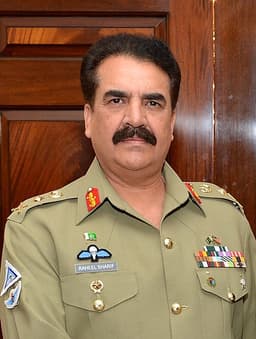
Raheel Sharif
General · Modern
56.9Total
Basic Information
Born
1909
1956
Died
1964
—
Era
Modern
Modern
Nationality
Syria
Pakistan
Occupation
General
General
Civilization
Middle Eastern
Indian
Score Comparison
Military (10%)
50.0
40.0
Political (20%)
39.4
68.0
Influence (20%)
49.4
58.0
Legacy (20%)
38.3
47.5
Leadership (15%)
57.6
65.0
Strategy (15%)
41.7
65.4
TOTAL
45.6
56.9
Adib Shishakli — Complete Timeline
1951 AD
Led the 1951 Syrian coup d'étatPolitical Action◆ Major
Adib Shishakli led a military coup on November 29, 1951, overthrowing the civilian government of President Hashim al-Atassi. He initially ruled behind the scenes as chief of staff before formally taking power.
CoupMilitaryDictatorship
Impact: nationaldestructive
1952 AD
Implemented land reform and infrastructure projectsReform
Shishakli's government enacted land reform laws that redistributed agricultural land to peasants and invested in infrastructure projects such as roads and irrigation. These measures aimed to modernize Syria's economy and reduce rural poverty.
Land ReformInfrastructureEconomic Development
Impact: nationalconstructive
1953 AD
Became President of SyriaPolitical Action◆ Major
Shishakli formally assumed the presidency of Syria in July 1953 after a referendum approved a new constitution. He consolidated power through a single-party system and suppressed political opposition, including the Ba'ath Party.
PresidencyAuthoritarianismConstitution
Impact: national
1954 AD
Overthrown by a military uprisingPolitical Action◆ Major
Shishakli was overthrown on February 25, 1954, by a military uprising led by officers from the Druze community and other factions. He fled to exile in Lebanon and later Brazil, where he was assassinated in 1964.
OverthrowExileMilitary Uprising
Impact: nationaltragic
Raheel Sharif — Complete Timeline
2013 AD
Appointment as Chief of Army StaffPolitical Action◆ Major
General Raheel Sharif was appointed as the 15th Chief of Army Staff of the Pakistan Army, succeeding General Ashfaq Parvez Kayani. His appointment came at a time of heightened terrorism and political instability, and he was seen as a reformist leader within the military.
Military LeadershipPakistan Army
Impact: national
2014 AD
Launch of Operation Zarb-e-AzbWar◆ Major
General Raheel Sharif launched Operation Zarb-e-Azb, a large-scale military offensive against militant groups in North Waziristan. The operation targeted Tehrik-i-Taliban Pakistan and other insurgents, resulting in the clearance of the region and a significant reduction in terrorist attacks across Pakistan.
Counter-TerrorismMilitary OperationNorth Waziristan
Impact: nationalconstructive
Execution of convicted terroristsPolitical Action◆ Major
Following the Peshawar school massacre, General Raheel Sharif oversaw the lifting of a moratorium on the death penalty for terrorism-related cases. Hundreds of convicted militants were executed, and military courts were established to expedite trials. This policy was controversial but widely supported domestically.
Death PenaltyCounter-TerrorismMilitary Courts
Impact: nationaldestructive
2015 AD
Formation of the Saudi-led Islamic Military AlliancePolitical Action◆ Major
General Raheel Sharif was appointed as the first commander-in-chief of the Islamic Military Alliance to Fight Terrorism (IMAFT), a Saudi-led coalition of Muslim countries. He retired from the Pakistan Army to take this role, marking a significant international engagement for a former Pakistani army chief.
International CoalitionCounter-TerrorismSaudi Arabia
Impact: global
Expert Analysis
Origins
Adib Shishakli was born in 1909 in Hama, Syria, into a middle-class Sunni Muslim family. He attended the Ottoman Military Academy and later the French-operated Syrian Military Academy, graduating as an officer in the French Army's Syrian Legion. His early career was shaped by the French mandate, where he served in various posts, including commanding a unit of the Syrian Legion. Shishakli's background as a military officer in a colonial context influenced his later authoritarian tendencies.
Raheel Sharif was born on June 16, 1956, in Quetta, Pakistan, into a Punjabi military family. His father, Muhammad Sharif, was a captain in the Pakistan Army. He attended the Pakistan Military Academy and was commissioned in the Punjab Regiment. Sharif's education included staff college courses in Pakistan and the United Kingdom, and he served in various command and staff positions. His early career saw participation in the 1971 war and peacekeeping missions, shaping his focus on counterinsurgency and military professionalism.
Rise to Power
Shishakli's rise began during the 1948 Arab-Israeli War, where he gained recognition as a competent officer. He became a key figure in the Syrian Army's political involvement, joining the secret military committee that plotted against the civilian government. On November 29, 1951, he led a coup against President Hashim al-Atassi, initially ruling behind the scenes through a puppet government. He formally assumed the presidency in July 1953 after a referendum approved a new constitution, consolidating power through a single-party system and suppressing opposition.
Raheel Sharif rose through the ranks due to his performance in command and staff roles. He served as a brigade commander, division commander, and later as Inspector General of Training and Evaluation. His appointment as Chief of Army Staff on November 29, 2013, came after his predecessor, General Ashfaq Parvez Kayani, completed his tenure. Sharif's rise was marked by his reputation as a professional soldier with a focus on counterterrorism, which aligned with Pakistan's security needs.
Leadership & Governance
Shishakli's leadership was autocratic and centralized. He banned political parties, curbed press freedom, and relied on the military and intelligence services to maintain control. He implemented land reform laws that redistributed agricultural land to peasants and invested in infrastructure projects such as roads and schools. However, his governance alienated minority groups, particularly the Druze community, whom he persecuted. His rule scored 39.4 in political acumen, reflecting his inability to build broad-based support.
Raheel Sharif's leadership style was professional and focused on institutional reform. He depoliticized the army, reducing its direct role in civilian governance, and prioritized internal security. Under his command, the military launched Operation Zarb-e-Azb in June 2014, targeting militant strongholds in North Waziristan. He also oversaw the execution of convicted terrorists after the Peshawar school massacre in December 2014. Sharif's political score of 68.0 reflects his effective management of civil-military relations and counterterrorism strategy.
Triumph & Tragedy
Shishakli's greatest success was the implementation of land reforms and infrastructure projects that modernized parts of Syria. He also maintained stability through authoritarian control. However, his greatest failure was his inability to integrate minority groups, leading to a Druze-led uprising that overthrew him on February 25, 1954. He fled into exile in Lebanon and later Brazil, where he was assassinated in 1964. His legacy remains as a failed dictator who suppressed dissent but achieved limited development.
Raheel Sharif's triumph was the successful execution of Operation Zarb-e-Azb, which significantly reduced terrorist attacks in Pakistan. He also enhanced the army's image through humanitarian efforts and disaster relief. However, his tenure saw continued instability in Balochistan and tensions with India. Critics argue that the military's role in politics remained unchecked despite his depoliticization efforts. His influence score of 58.0 indicates a significant but not transformative impact.
Character & Destiny
Shishakli was ruthless and ambitious, willing to use force to achieve his goals. His paranoia regarding ethnic minorities led to his downfall. He scored 57.6 in leadership, but his strategy score of 41.7 shows poor long-term planning. His character as a military strongman ensured his rule was short-lived.
Raheel Sharif is seen as disciplined and strategic, with a focus on institutionalizing counterterrorism. His leadership score of 65.0 and strategy score of 65.4 reflect his methodical approach. He retired voluntarily in 2016, setting a precedent for term limits, and later became commander of the Islamic Military Alliance. His destiny was shaped by his ability to navigate political pressures while maintaining military professionalism.
Legacy
Shishakli's legacy is minimal; he is remembered as one of many Syrian dictators who failed to build lasting institutions. His land reforms were later reversed, and his authoritarian model influenced future military rulers. His total score of 45.6 places him as a minor figure.
Raheel Sharif's legacy includes a more professional army and reduced terrorism. Operation Zarb-e-Azb is considered a turning point in Pakistan's war on terror. He also contributed to the formation of the Islamic Military Alliance. His total score of 56.9 reflects a significant but regionally confined impact.
Conclusion
Raheel Sharif had a greater impact than Adib Shishakli. Sharif's total score of 56.9 exceeds Shishakli's 45.6 by 11.3 points. Sharif's counterterrorism operations and institutional reforms have had lasting effects on Pakistan's security, while Shishakli's rule was brief and left no enduring positive legacy. Sharif's ability to balance military and political roles, coupled with his strategic initiatives, makes him the more influential figure.
Rankings
🥇
Raheel SharifLeader
Mil: 40.0Pol: 68.0Inf: 58.0
56.9
🥈
Adib Shishakli
Mil: 50.0Pol: 39.4Inf: 49.4
45.6
+11.3 behind
How This Comparison Works
Algorithm
Each figure is scored on 6 dimensions (0—100 scale) based on structured historical data: Military (10%), Political (20%), Influence (20%), Legacy (20%), Leadership (15%), Strategy (15%). The weighted total produces the final ranking.
Data Sources
Scores are computed from structured sub-indicators in the database. Scale factors adjust for era (Ancient ×0.85, Modern ×1.0) and civilization size (Eastern ×1.05, Other ×0.80) to account for differences in population and military scale.
Maximum 3 Figures
Comparisons are limited to 2—3 figures to ensure readability and statistical meaningfulness.
Error Margins
±5 points per dimension — Sub-scores are derived from historical records with inherent uncertainty. Two figures within 5 points on a dimension should be considered roughly equivalent in that area.
Total Score Accuracy
±3 points overall — The weighted combination of 6 dimensions produces a total score with approximately ±3 points of uncertainty. Differences of less than 3 points are not statistically significant— the figures are effectively tied.
Known Limitations
- Historical records are incomplete and uneven across civilizations
- Figures from oral-tradition societies may be underrepresented
- Occupation labels can misclassify multi-role figures
- Scores measure capability and impact, not moral character
- Quantitative scoring is a comparison tool, not absolute truth
Capability Radar
Military (10%) — Battles & Warfare
Battles
15
55
Win Rate
20
60
Expansion
10
10
Political (20%) — Governance & Reform
Reform
35
40
Diplomacy
30
50
Economy
25
30
Influence (20%) — Cultural & Global Reach
Cultural
15
40
Global
10
40
Legacy (20%) — Historical Impact
Historical
20
45
Longevity
10
30
Leadership (15%) — Power & Stability
Tenure
40
45
Stability
20
35
Strategy (15%) — Tactics & Innovation
Strategy
20
70
Tactics
25
65
Reform
30
75
Similar Comparisons
Comments & Discussion
No comments yet. Be the first to share your thoughts!