Loading...
Laurent Gbagbo vs Pinheiro Machado
Laurent Gbagbo leads by 0.7 pts · 2 figures compared
…
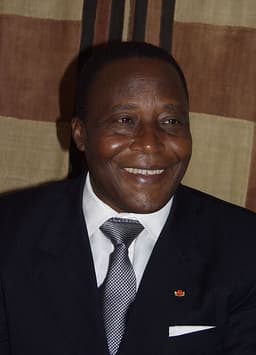
Laurent Gbagbo
Politician · Modern
47.5Total

Pinheiro Machado
Politician · Modern
46.8Total
Basic Information
Born
1945
1851
Died
—
1915
Era
Modern
Modern
Nationality
Ivory Coast
Brazil
Occupation
Politician
Politician
Civilization
Other
Western
Score Comparison
Military (10%)
45.0
50.0
Political (20%)
37.9
42.3
Influence (20%)
51.8
48.6
Legacy (20%)
40.0
40.8
Leadership (15%)
65.7
58.8
Strategy (15%)
45.0
42.5
TOTAL
47.5
46.8
Laurent Gbagbo — Complete Timeline
2000 AD
Elected President of Ivory CoastPolitical Action◆ Major
Gbagbo won the presidential election as the candidate of the Ivorian Popular Front, defeating incumbent Robert Gu
ElectionIvory CoastExclusion
Impact: national
2002 AD
Survived Failed Coup AttemptWar◆ Major
A failed coup attempt by disgruntled soldiers escalated into a civil war, splitting Ivory Coast into a government-controlled south and rebel-held north. The conflict resulted in thousands of deaths and displacement.
Civil WarCoupIvory Coast
Impact: nationaldestructive
2010 AD
Refused to Step Down After 2010 ElectionPolitical Action
Gbagbo refused to concede defeat after losing the presidential election to Alassane Ouattara, despite international recognition of Ouattara's victory. This sparked a second civil war that lasted five months and caused over 3,000 deaths.
Election CrisisCivil WarIvory Coast
Impact: regionaldestructive
2011 AD
Arrested and Sent to International Criminal CourtPolitical Action◆ Major
Gbagbo was arrested by forces loyal to Ouattara with French and UN support. He was transferred to the International Criminal Court in The Hague to face charges of crimes against humanity for his role in the post-election violence.
ICCCrimes Against HumanityArrest
Impact: globaldestructive
2019 AD
Acquitted by International Criminal CourtPolitical Action◆ Major
The ICC acquitted Gbagbo of all charges of crimes against humanity, citing insufficient evidence. The acquittal was controversial, with victims' groups expressing disappointment. Gbagbo was later allowed to return to Ivory Coast.
AcquittalICCIvory Coast
Impact: global
Pinheiro Machado — Complete Timeline
1902 AD
Elected President of the Federal SenatePolitical Action◆ Major
Pinheiro Machado was elected President of the Federal Senate of Brazil. He wielded significant power as a political boss, controlling patronage and influencing national policy. His leadership made him one of the most powerful figures in the Republic.
SenatePolitical PowerRepublic
Impact: national
1910 AD
Led the 'Salvacionista' CampaignPolitical Action◆ Major
Pinheiro Machado led the 'Salvacionista' campaign, a movement to intervene in state governments to remove opposition politicians. This campaign consolidated his power but also created widespread opposition and contributed to political instability.
Political InterventionPower StruggleRepublic
Impact: nationaldestructive
Supported the Hermes da Fonseca PresidencyPolitical Action◆ Major
Pinheiro Machado was a key supporter of Hermes da Fonseca's successful presidential campaign. His political machine delivered crucial votes, and he became the power behind the throne during da Fonseca's administration.
ElectionPolitical SupportPresidency
Impact: national
1915 AD
Assassinated by Francisco CoimbraPolitical Action◆ Major
Pinheiro Machado was stabbed to death by Francisco Coimbra, a political opponent, in the lobby of the Hotel dos Estrangeiros in Rio de Janeiro. His assassination shocked the nation and highlighted the intense political rivalries of the period.
AssassinationPolitical ViolenceSenate
Impact: nationaltragic
Expert Analysis
Origins
Laurent Gbagbo was born on May 31, 1945, in Gagnoa, Ivory Coast, into a modest family. He studied history at the University of Abidjan and later earned a doctorate from the University of Paris VII. His early career as a teacher and historian shaped his nationalist and anti-colonial views. He was imprisoned in the 1970s for his opposition to President Félix Houphouët-Boigny's regime, which deepened his resolve against political oppression.
José Gomes Pinheiro Machado was born on April 8, 1851, in Cruz Alta, Rio Grande do Sul, Brazil, into a wealthy ranching family. He studied law at the University of São Paulo but did not graduate. Instead, he entered politics early, serving as a provincial deputy and later as a federal senator. His background in the gaucho culture of southern Brazil influenced his authoritarian and pragmatic style.
Rise to Power
Gbagbo's rise began with the founding of the Ivorian Popular Front (FPI) in 1982, a socialist party that opposed Houphouët-Boigny's one-party rule. He went into exile in France but returned after the president's death in 1993. In 2000, he won the presidency in an election that excluded main rival Alassane Ouattara due to nationality requirements; the election was marred by violence and allegations of fraud.
Pinheiro Machado rose to power as a key figure in Brazil's First Republic. He was elected to the Senate in 1890 and became its president in 1902. His power stemmed from his role as a political boss (coronel) in Rio Grande do Sul, controlling patronage and votes. He orchestrated the 'Salvacionista' campaign to intervene in state governments, removing rivals and consolidating control. He was instrumental in Hermes da Fonseca's successful 1910 presidential campaign.
Leadership & Governance
Gbagbo's leadership was marked by nationalism and a focus on Ivorian sovereignty. He promoted policies favoring indigenous Ivorians, such as the concept of 'Ivoirité,' which excluded many northerners and immigrants from political participation. His governance became increasingly authoritarian, suppressing opposition and controlling media. He scored 65.7 in Leadership but only 37.9 in Political, reflecting his failure to build inclusive institutions.
Pinheiro Machado ruled through a network of patronage and coercion. As Senate president, he controlled legislative agendas and distributed government positions. His governance style was that of a classic 'coronel,' using violence and corruption to maintain power. He scored 58.8 in Leadership and 42.3 in Political, showing a similar authoritarian bent but with more skill in backroom dealing.
Triumph & Tragedy
Gbagbo's greatest success was winning the 2010 election against Ouattara, despite a flawed process. However, his refusal to concede after losing the election (according to international observers) led to a civil war that killed over 3,000 people. He was arrested in 2011 and sent to the International Criminal Court, but was acquitted in 2019 due to insufficient evidence. His acquittal was a personal victory but did little to restore his reputation.
Pinheiro Machado's triumph was his dominance over Brazilian politics for over a decade. He successfully installed allies and crushed opposition. His tragedy was his assassination on September 8, 1915, by Francisco Coimbra, a political opponent who stabbed him in a hotel lobby. The assassination highlighted the violent nature of Brazil's early republican politics and ended his influence abruptly.
Character & Destiny
Gbagbo was stubborn and principled, but also divisive. His refusal to compromise led to his downfall. Historians note that his 'Ivoirité' policy exacerbated ethnic tensions. His decision to hold onto power despite international pressure was a miscalculation that cost him his presidency and freedom.
Pinheiro Machado was ruthless and pragmatic. He was known as a 'strongman' who brooked no opposition. His character made him many enemies, and his failure to adapt to changing political dynamics left him vulnerable. His assassination was a direct result of his confrontational style.
Legacy
Gbagbo's legacy is mixed: he is remembered as a nationalist who fought for Ivorian sovereignty but also as a leader who plunged his country into civil war. His scores: Military 45.0, Influence 51.8, Legacy 40.0. The ICC acquittal has not erased the memory of the conflict.
Pinheiro Machado's legacy is as a symbol of the 'Old Republic's' corrupt and violent politics. He scored 50.0 in Military, 48.6 in Influence, and 40.8 in Legacy. His death marked the decline of coronelismo, but his methods persisted in Brazilian politics for decades.
Conclusion
Laurent Gbagbo had a greater impact than Pinheiro Machado, despite a small total score difference (47.5 vs 46.8). Gbagbo's actions triggered a civil war that reshaped Ivory Coast's political landscape and led to international intervention and ICC prosecution. Pinheiro Machado's influence was largely domestic and died with him. While both were authoritarian figures who met violent ends, Gbagbo's legacy is more significant on a global scale, affecting international law and the politics of West Africa. Thus, Gbagbo's impact surpasses Machado's.
Rankings
🥇
Laurent GbagboLeader
Mil: 45.0Pol: 37.9Inf: 51.8
47.5
🥈
Pinheiro Machado
Mil: 50.0Pol: 42.3Inf: 48.6
46.8
+0.7 behind
How This Comparison Works
Algorithm
Each figure is scored on 6 dimensions (0—100 scale) based on structured historical data: Military (10%), Political (20%), Influence (20%), Legacy (20%), Leadership (15%), Strategy (15%). The weighted total produces the final ranking.
Data Sources
Scores are computed from structured sub-indicators in the database. Scale factors adjust for era (Ancient ×0.85, Modern ×1.0) and civilization size (Eastern ×1.05, Other ×0.80) to account for differences in population and military scale.
Maximum 3 Figures
Comparisons are limited to 2—3 figures to ensure readability and statistical meaningfulness.
Error Margins
±5 points per dimension — Sub-scores are derived from historical records with inherent uncertainty. Two figures within 5 points on a dimension should be considered roughly equivalent in that area.
Total Score Accuracy
±3 points overall — The weighted combination of 6 dimensions produces a total score with approximately ±3 points of uncertainty. Differences of less than 3 points are not statistically significant— the figures are effectively tied.
Known Limitations
- Historical records are incomplete and uneven across civilizations
- Figures from oral-tradition societies may be underrepresented
- Occupation labels can misclassify multi-role figures
- Scores measure capability and impact, not moral character
- Quantitative scoring is a comparison tool, not absolute truth
Capability Radar
Military (10%) — Battles & Warfare
Battles
15
26
Win Rate
10
30
Expansion
5
32
Political (20%) — Governance & Reform
Reform
30
30
Diplomacy
25
50
Economy
30
20
Influence (20%) — Cultural & Global Reach
Cultural
20
20
Global
20
10
Legacy (20%) — Historical Impact
Historical
25
30
Longevity
15
15
Leadership (15%) — Power & Stability
Tenure
55
40
Stability
10
15
Strategy (15%) — Tactics & Innovation
Strategy
15
38
Tactics
20
42
Reform
10
43
Similar Comparisons
Comments & Discussion
No comments yet. Be the first to share your thoughts!