Loading...
Laurent Gbagbo vs Wavel Ramkalawan
Wavel Ramkalawan leads by 2.4 pts · 2 figures compared
…
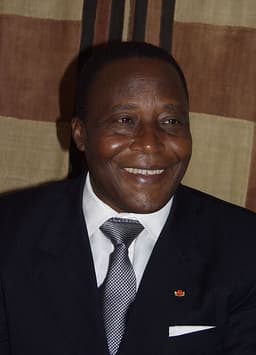
Laurent Gbagbo
Politician · Modern
47.5Total

Wavel Ramkalawan
Politician · Modern
49.9Total
Basic Information
Born
1945
1961
Died
—
—
Era
Modern
Modern
Nationality
Ivory Coast
Seychelles
Occupation
Politician
Politician
Civilization
Other
Other
Score Comparison
Military (10%)
45.0
28.8
Political (20%)
37.9
68.0
Influence (20%)
51.8
54.1
Legacy (20%)
40.0
44.2
Leadership (15%)
65.7
53.2
Strategy (15%)
45.0
43.1
TOTAL
47.5
49.9
Laurent Gbagbo — Complete Timeline
2000 AD
Elected President of Ivory CoastPolitical Action◆ Major
Gbagbo won the presidential election as the candidate of the Ivorian Popular Front, defeating incumbent Robert Gu
ElectionIvory CoastExclusion
Impact: national
2002 AD
Survived Failed Coup AttemptWar◆ Major
A failed coup attempt by disgruntled soldiers escalated into a civil war, splitting Ivory Coast into a government-controlled south and rebel-held north. The conflict resulted in thousands of deaths and displacement.
Civil WarCoupIvory Coast
Impact: nationaldestructive
2010 AD
Refused to Step Down After 2010 ElectionPolitical Action
Gbagbo refused to concede defeat after losing the presidential election to Alassane Ouattara, despite international recognition of Ouattara's victory. This sparked a second civil war that lasted five months and caused over 3,000 deaths.
Election CrisisCivil WarIvory Coast
Impact: regionaldestructive
2011 AD
Arrested and Sent to International Criminal CourtPolitical Action◆ Major
Gbagbo was arrested by forces loyal to Ouattara with French and UN support. He was transferred to the International Criminal Court in The Hague to face charges of crimes against humanity for his role in the post-election violence.
ICCCrimes Against HumanityArrest
Impact: globaldestructive
2019 AD
Acquitted by International Criminal CourtPolitical Action◆ Major
The ICC acquitted Gbagbo of all charges of crimes against humanity, citing insufficient evidence. The acquittal was controversial, with victims' groups expressing disappointment. Gbagbo was later allowed to return to Ivory Coast.
AcquittalICCIvory Coast
Impact: global
Wavel Ramkalawan — Complete Timeline
1998 AD
Led Opposition in Parliament for DecadesPolitical Action◆ Major
Ramkalawan served as Leader of the Opposition in the National Assembly for multiple terms, representing the Seychelles National Party (SNP). He was a vocal critic of the France-Albert Ren
OppositionParliamentDemocracy
Impact: national
2020 AD
Elected President of SeychellesPolitical Action◆ Major
Wavel Ramkalawan won the presidential election with 54% of the vote, defeating incumbent Danny Faure. He became the first opposition candidate to win the presidency since Seychelles' independence in 1976. His victory ended 43 years of rule by the socialist-leaning Parti Lepep.
ElectionDemocracySeychelles
Impact: nationalconstructive
2021 AD
Implemented Economic Reforms Post-COVIDReform◆ Major
Ramkalawan's government implemented economic reforms to revive Seychelles' tourism-dependent economy after the COVID-19 pandemic. Measures included debt restructuring, fiscal consolidation, and promoting foreign investment. The economy recovered but with social costs.
Economic ReformCOVID-19Tourism
Impact: national
Faced Criticism Over Press FreedomPolitical Action
Ramkalawan's government was criticized by media freedom groups for actions against journalists, including the arrest of a reporter. Critics argued that despite democratic change, press freedom did not improve significantly under his administration.
Press FreedomMediaCriticism
Impact: nationaldestructive
Advocated for Climate Action at UNPolitical Action
Ramkalawan spoke at the UN Climate Change Conference (COP26), urging global action on climate change. He highlighted Seychelles' vulnerability to rising sea levels and pushed for climate finance. His advocacy raised Seychelles' profile on climate issues.
Climate ChangeCOP26Advocacy
Impact: globalconstructive
Expert Analysis
Origins
Laurent Gbagbo was born on May 31, 1945, in Gagnoa, Ivory Coast, to a Catholic family. He studied history at the University of Abidjan and later in France, earning a doctorate. His early activism against the one-party rule of Félix Houphouët-Boigny led to imprisonment and exile. He founded the Ivorian Popular Front (FPI) in 1982, a socialist opposition party.
Wavel Ramkalawan was born on December 15, 1959, in Mahé, Seychelles. He studied theology at St. Paul's Theological College in Mauritius and was ordained as an Anglican priest. His political involvement began in the 1990s when he founded the Seychelles National Party (SNP), advocating for democratic reforms after the end of one-party rule under France-Albert René.
Rise to Power
Gbagbo's rise came after the death of Houphouët-Boigny in 1993. In 1995, he boycotted the presidential election due to electoral fraud, but in 2000, he ran and won against Robert Guéï after a popular uprising. However, the election was marred by violence and exclusion of potential opponents. Gbagbo took office in October 2000, inheriting a deeply divided country.
Ramkalawan's path was slower. He first ran for president in 1998, losing to René. He became Leader of the Opposition in the National Assembly, serving for decades. He lost elections in 2001, 2006, and 2011. Finally, in 2020, he won with 54% of the vote, defeating incumbent Danny Faure, becoming the first opposition candidate to win a presidential election in Seychelles.
Leadership & Governance
Gbagbo's governance was marked by nationalism and authoritarianism. He promoted "Ivoirité" policies that discriminated against northerners and immigrants, deepening ethnic tensions. He suppressed dissent, with security forces violently cracking down on protests. Economically, he invested in infrastructure but failed to address corruption or unite the country. His leadership scored 65.7, but political score was only 37.9 due to divisive tactics.
Ramkalawan's leadership was consultative and reform-oriented. As president, he focused on economic recovery after COVID-19, implementing fiscal reforms and diversifying the economy. He advocated for climate action, speaking at COP26. However, his government faced criticism for press freedom violations, with an arrest of a journalist in 2021. His political score of 68.0 reflects his ability to build consensus, but his leadership score of 53.2 indicates challenges in executing reforms.
Triumph & Tragedy
Gbagbo's greatest triumph was surviving a 2002 coup attempt and maintaining control over southern Ivory Coast. However, his refusal to accept defeat in the 2010 election led to a civil war that killed over 3,000 people. He was arrested in 2011 and sent to the ICC, where he was acquitted in 2019 due to lack of evidence. The acquittal was controversial, with victims' groups expressing outrage. His legacy score of 40.0 reflects the tragic consequences of his actions.
Ramkalawan's triumph was his historic election, symbolizing democratic consolidation in Seychelles. He successfully implemented economic reforms, stabilizing the economy post-COVID. His tragedy is the erosion of press freedom under his watch, with Seychelles dropping in press freedom rankings. His influence score of 54.1 and legacy of 44.2 indicate modest but positive impact, though his tenure is still ongoing.
Character & Destiny
Gbagbo was a stubborn, charismatic intellectual who believed in his right to rule. His refusal to compromise, even in the face of international pressure, led to his downfall. He scored 45.0 in strategy, showing poor decision-making in the 2010 crisis. His character was shaped by a victim mentality, viewing himself as a defender of Ivorian sovereignty.
Ramkalawan is a patient, diplomatic figure who persisted through decades of opposition. His Anglican priest background instilled a sense of moral purpose. He scored 43.1 in strategy, but his political acumen allowed him to finally win. His destiny was to break the ruling party's 43-year hold on power, but he faces challenges in balancing reform with preserving democratic freedoms.
Legacy
Gbagbo's legacy is deeply divisive. In Ivory Coast, he is seen by some as a nationalist hero and by others as a war criminal. His refusal to step down set a dangerous precedent in Africa, but his acquittal by the ICC also raised questions about international justice. Overall, his legacy score of 40.0 reflects a net negative impact.
Ramkalawan's legacy is still forming. He is a pioneer of democratic transition in Seychelles, but his record on press freedom may tarnish his image. His influence score of 54.1 suggests a moderate impact. He has not yet had the same transformative effect as some contemporaries.
Conclusion
While Wavel Ramkalawan scores higher overall (49.9 vs. 47.5), Laurent Gbagbo's impact on Ivorian history was more profound, albeit destructive. Gbagbo's actions directly caused a civil war and shaped regional politics, while Ramkalawan's democratic victory was significant but less consequential globally. However, the data suggests Ramkalawan's political and leadership scores are higher, indicating more effective governance. Taking a stance: Wavel Ramkalawan had a more positive impact, as he advanced democracy and stability in Seychelles, whereas Gbagbo's legacy is marred by conflict and division.
Rankings
🥇
Wavel RamkalawanLeader
Mil: 28.8Pol: 68.0Inf: 54.1
49.9
🥈
Laurent Gbagbo
Mil: 45.0Pol: 37.9Inf: 51.8
47.5
+2.4 behind
How This Comparison Works
Algorithm
Each figure is scored on 6 dimensions (0—100 scale) based on structured historical data: Military (10%), Political (20%), Influence (20%), Legacy (20%), Leadership (15%), Strategy (15%). The weighted total produces the final ranking.
Data Sources
Scores are computed from structured sub-indicators in the database. Scale factors adjust for era (Ancient ×0.85, Modern ×1.0) and civilization size (Eastern ×1.05, Other ×0.80) to account for differences in population and military scale.
Maximum 3 Figures
Comparisons are limited to 2—3 figures to ensure readability and statistical meaningfulness.
Error Margins
±5 points per dimension — Sub-scores are derived from historical records with inherent uncertainty. Two figures within 5 points on a dimension should be considered roughly equivalent in that area.
Total Score Accuracy
±3 points overall — The weighted combination of 6 dimensions produces a total score with approximately ±3 points of uncertainty. Differences of less than 3 points are not statistically significant— the figures are effectively tied.
Known Limitations
- Historical records are incomplete and uneven across civilizations
- Figures from oral-tradition societies may be underrepresented
- Occupation labels can misclassify multi-role figures
- Scores measure capability and impact, not moral character
- Quantitative scoring is a comparison tool, not absolute truth
Capability Radar
Military (10%) — Battles & Warfare
Battles
15
20
Win Rate
10
25
Expansion
5
26
Political (20%) — Governance & Reform
Reform
30
55
Diplomacy
25
60
Economy
30
50
Influence (20%) — Cultural & Global Reach
Cultural
20
30
Global
20
25
Legacy (20%) — Historical Impact
Historical
25
35
Longevity
15
30
Leadership (15%) — Power & Stability
Tenure
55
45
Stability
10
55
Strategy (15%) — Tactics & Innovation
Strategy
15
29
Tactics
20
34
Reform
10
38
Similar Comparisons
Comments & Discussion
No comments yet. Be the first to share your thoughts!