Loading...
This comparison has not been analyzed yet.
One-time AI generation (~1 minute). Scores and timeline are already available below.
Lalitaditya Muktapida vs Sigismund of Bohemia
Lalitaditya Muktapida leads by 18.2 pts · 2 figures compared
…

Lalitaditya Muktapida
Emperor · Medieval
66.5Total
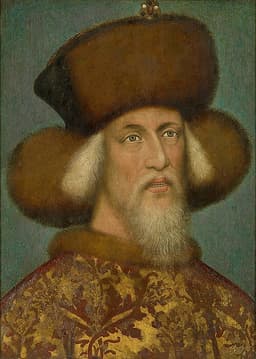
Sigismund of Bohemia
Emperor · Medieval
48.3Total
Basic Information
Born
724
1368
Died
760
1437
Era
Medieval
Medieval
Nationality
India
Bohemia
Occupation
Emperor
Emperor
Civilization
Indian
Western
Score Comparison
Military (10%)
78.5
40.0
Political (20%)
59.3
36.5
Influence (20%)
72.0
53.3
Legacy (20%)
56.0
46.7
Leadership (15%)
72.0
62.2
Strategy (15%)
70.0
45.0
TOTAL
66.5
48.3
Lalitaditya Muktapida — Complete Timeline
738 AD
Defeat of the ArabsWar◆ Major
Lalitaditya allied with the Tibetan king to defeat an Arab invasion led by the Umayyad governor of Sindh. This victory checked Arab expansion into northern India and secured the Karkota Empire's western borders.
BattleArab InvasionUmayyad
Impact: regional
740 AD
Conquest of Central AsiaWar◆ Major
Lalitaditya Muktapida led a military campaign into Central Asia, defeating the Turks and extending Karkota influence to the Oxus River. He captured territories including parts of modern-day Afghanistan, Uzbekistan, and Tajikistan.
ConquestCentral AsiaKarkota Empire
Impact: regional
745 AD
Invasion of TibetWar◆ Major
Lalitaditya invaded Tibet, defeating the Tibetan army and capturing the capital Lhasa. He forced the Tibetan king to pay tribute and established Karkota dominance over the Tibetan plateau for a period.
InvasionTibetKarkota
Impact: regional
750 AD
Construction of the Martand Sun TempleCultural◆ Major
Lalitaditya commissioned the Martand Sun Temple in Kashmir, a grand architectural masterpiece dedicated to the Sun god Surya. The temple featured a central shrine surrounded by 84 smaller shrines, showcasing Kashmiri architectural style.
TempleArchitectureKashmir
Impact: regionalconstructive
Sigismund of Bohemia — Complete Timeline
1414 AD
Council of ConstancePolitical Action
Sigismund convened the Council of Constance to end the Western Schism and address heresy. The council condemned Jan Hus to death, leading to his execution in 1415, which inflamed tensions in Bohemia and sparked the Hussite Wars.
CouncilJan HusReligious Schism
Impact: globaldestructive
1431 AD
Battle of DomažliceWar◆ Major
Sigismund's imperial army was routed by Hussite forces at Doma
Hussite WarsBattleNegotiation
Impact: regional
1433 AD
Coronation as Holy Roman EmperorPolitical Action◆ Major
Sigismund was crowned Holy Roman Emperor in Rome by Pope Eugene IV. This coronation marked the end of the Western Schism and restored imperial authority, though Sigismund's power was limited by ongoing conflicts.
CoronationImperial AuthorityPapal Relations
Impact: global
This comparison has not been analyzed yet.
One-time AI generation (~1 minute). Scores and timeline are already available below.
Rankings
🥇
Lalitaditya MuktapidaLeader
Mil: 78.5Pol: 59.3Inf: 72.0
66.5
🥈
Sigismund of Bohemia
Mil: 40.0Pol: 36.5Inf: 53.3
48.3
+18.2 behind
How This Comparison Works
Algorithm
Each figure is scored on 6 dimensions (0—100 scale) based on structured historical data: Military (10%), Political (20%), Influence (20%), Legacy (20%), Leadership (15%), Strategy (15%). The weighted total produces the final ranking.
Data Sources
Scores are computed from structured sub-indicators in the database. Scale factors adjust for era (Ancient ×0.85, Modern ×1.0) and civilization size (Eastern ×1.05, Other ×0.80) to account for differences in population and military scale.
Maximum 3 Figures
Comparisons are limited to 2—3 figures to ensure readability and statistical meaningfulness.
Error Margins
±5 points per dimension — Sub-scores are derived from historical records with inherent uncertainty. Two figures within 5 points on a dimension should be considered roughly equivalent in that area.
Total Score Accuracy
±3 points overall — The weighted combination of 6 dimensions produces a total score with approximately ±3 points of uncertainty. Differences of less than 3 points are not statistically significant— the figures are effectively tied.
Known Limitations
- Historical records are incomplete and uneven across civilizations
- Figures from oral-tradition societies may be underrepresented
- Occupation labels can misclassify multi-role figures
- Scores measure capability and impact, not moral character
- Quantitative scoring is a comparison tool, not absolute truth
Capability Radar
Military (10%) — Battles & Warfare
Battles
85
45
Win Rate
90
40
Expansion
90
25
Political (20%) — Governance & Reform
Reform
70
30
Diplomacy
75
40
Economy
80
25
Influence (20%) — Cultural & Global Reach
Cultural
65
30
Global
60
30
Legacy (20%) — Historical Impact
Historical
70
45
Longevity
50
35
Leadership (15%) — Power & Stability
Tenure
75
60
Stability
70
20
Strategy (15%) — Tactics & Innovation
Strategy
85
30
Tactics
80
35
Reform
70
20
Similar Comparisons
Comments & Discussion
No comments yet. Be the first to share your thoughts!