Loading...
Gung Ye vs Sigismund of Bohemia
Sigismund of Bohemia leads by 10.5 pts · 2 figures compared
…

Gung Ye
Emperor · Medieval
37.8Total
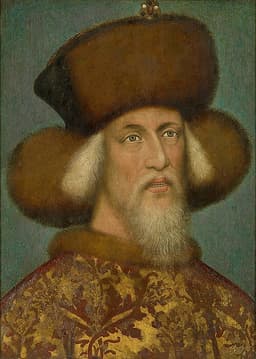
Sigismund of Bohemia
Emperor · Medieval
48.3Total
Basic Information
Born
869
1368
Died
918
1437
Era
Medieval
Medieval
Nationality
Korea
Bohemia
Occupation
Emperor
Emperor
Civilization
Eastern
Western
Score Comparison
Military (10%)
20.0
40.0
Political (20%)
26.4
36.5
Influence (20%)
47.1
53.3
Legacy (20%)
39.2
46.7
Leadership (15%)
38.1
62.2
Strategy (15%)
45.0
45.0
TOTAL
37.8
48.3
Gung Ye — Complete Timeline
901 AD
Foundation of Later GoguryeoPolitical Action
Gung Ye, a former Buddhist monk and Silla prince, founded the kingdom of Later Goguryeo (Taebong) in central Korea. He claimed descent from Goguryeo royalty and sought to revive the ancient kingdom, initiating the Later Three Kingdoms period.
FoundationLater Three KingdomsRebellion
Impact: regional
Claim of Divine DescentCultural
Gung Ye claimed to be a reincarnation of the Buddha and declared himself a living deity. He demanded worship from his subjects and used religious claims to legitimize his rule, but this alienated many Buddhists and contributed to his downfall.
Religious ClaimLegitimacyCult of Personality
Impact: nationaldestructive
904 AD
Adoption of the Name 'Later Goguryeo'Political Action◆ Major
Gung Ye officially renamed his kingdom to Later Goguryeo (Taebong) and declared himself king. He adopted the title 'King of Goguryeo' and implemented policies to revive the legacy of the ancient Goguryeo kingdom.
RenamingLegacyPolitical Symbolism
Impact: national
910 AD
Persecution of Buddhism and ParanoiaCultural◆ Major
Gung Ye turned against Buddhism, persecuting monks and destroying temples. He became increasingly paranoid, executing many officials and family members, including his wife, on suspicion of treason. His tyranny alienated his supporters.
PersecutionTyrannyParanoia
Impact: nationaldestructive
918 AD
Deposition and DeathPolitical Action
Gung Ye was deposed by his generals, led by Wang Geon (later King Taejo of Goryeo), who rebelled against his tyranny. He was killed by the rebels, and Wang Geon established the Goryeo dynasty, ending Later Goguryeo.
DepositionDeathEnd of Dynasty
Impact: regionaltragic
Sigismund of Bohemia — Complete Timeline
1414 AD
Council of ConstancePolitical Action
Sigismund convened the Council of Constance to end the Western Schism and address heresy. The council condemned Jan Hus to death, leading to his execution in 1415, which inflamed tensions in Bohemia and sparked the Hussite Wars.
CouncilJan HusReligious Schism
Impact: globaldestructive
1431 AD
Battle of DomažliceWar◆ Major
Sigismund's imperial army was routed by Hussite forces at Doma
Hussite WarsBattleNegotiation
Impact: regional
1433 AD
Coronation as Holy Roman EmperorPolitical Action◆ Major
Sigismund was crowned Holy Roman Emperor in Rome by Pope Eugene IV. This coronation marked the end of the Western Schism and restored imperial authority, though Sigismund's power was limited by ongoing conflicts.
CoronationImperial AuthorityPapal Relations
Impact: global
Expert Analysis
Origins
Gung Ye was born around 869 AD as a prince of Silla, the kingdom that had unified Korea. His exact parentage is disputed, but he was likely a son of King Gyeongmun or a related royal. Due to political turmoil, he was forced to flee the capital and became a Buddhist monk in the mountains. He lost an eye in his youth, which added to his mystique. His early life was marked by instability and resentment toward the Silla aristocracy.
Sigismund of Bohemia was born on February 15, 1368, in Nuremberg, the son of Holy Roman Emperor Charles IV and Elizabeth of Pomerania. He was a member of the House of Luxembourg. He received a thorough education and was groomed for leadership. He became King of Hungary in 1387 through marriage to Mary of Hungary, and later King of Germany, Bohemia, and Holy Roman Emperor.
Rise to Power
Gung Ye rose to prominence during the Later Three Kingdoms period in Korea. In 891 AD, he joined the rebel army of Gi Hwon, but soon formed his own force. He captured several regions and declared himself king of Later Goguryeo in 901 AD, claiming descent from the ancient Goguryeo kingdom. His turning point came in 904 when he moved his capital to Cheorwon and consolidated power. He was supported by local warlords like Wang Geon, who later betrayed him.
Sigismund's rise was through dynastic marriage and political maneuvering. He became King of Hungary in 1387 after marrying Mary, but faced opposition from the nobility. He fought campaigns against the Ottoman Empire and secured his position. In 1410, he was elected King of Germany, and in 1414 he convened the Council of Constance to end the Western Schism. He was crowned Holy Roman Emperor in 1433, marking the peak of his power.
Leadership & Governance
Gung Ye's leadership was autocratic and increasingly paranoid. He claimed to be a living Buddha and demanded worship. He persecuted Buddhists, destroyed temples, and executed officials without trial. His governance alienated his supporters. For example, he executed his own wife and sons on suspicion of treason. His policies lacked stability, and he relied on fear rather than loyalty. He scored 38.1 in leadership and 26.4 in political score.
Sigismund's leadership was more diplomatic but often indecisive. He attempted to balance imperial authority with the demands of nobles. He convened the Council of Constance, which ended the schism but also executed Jan Hus, sparking the Hussite Wars. He failed to suppress the Hussites militarily, suffering defeats like the Battle of Domažlice in 1431. He then negotiated the Compacts of Basel, granting concessions. His political score of 36.5 reflects his struggles.
Triumph & Tragedy
Gung Ye's greatest success was founding Later Goguryeo, which laid the groundwork for the Goryeo dynasty. His military campaigns expanded territory. However, his tyranny led to his deposition and death in 918 AD. He was killed by his own generals, and his kingdom was taken over by Wang Geon, who founded Goryeo. His legacy is marred by his paranoia and persecution.
Sigismund's triumph was ending the Western Schism and securing his coronation as emperor. He also strengthened the Hungarian kingdom against the Ottomans. His tragedy was the Hussite Wars, which devastated Bohemia and tarnished his reputation. He died in 1437 without fully stabilizing his realms. His score of 62.2 in leadership is higher than Gung Ye's 38.1.
Character & Destiny
Gung Ye's character was shaped by his disfigurement and exile. He was intelligent but cruel, and his claim to divinity was a tool for control. His paranoia led to his downfall. Historical assessments describe him as a failed tyrant. His total score of 37.8 reflects his short-lived and destructive rule.
Sigismund was pragmatic and persistent, but his indecision and broken promises (e.g., safe conduct for Jan Hus) damaged his credibility. He was a skilled diplomat but poor military commander. His score of 48.3 indicates a more effective but still flawed leader.
Legacy
Gung Ye's legacy is overshadowed by Wang Geon, who founded Goryeo. He is remembered as a cautionary tale of tyranny. His kingdom was absorbed into Goryeo, and his influence on Korean history is minimal, scoring 39.2 in legacy.
Sigismund's legacy is more significant. He ended the Western Schism, and his actions led to the Hussite movement's partial acceptance. The Compacts of Basel influenced religious tolerance. His score of 46.7 in legacy reflects his role in European history.
Conclusion
Sigismund of Bohemia had a greater impact than Gung Ye. Sigismund scored 48.3 overall versus Gung Ye's 37.8. Sigismund's actions shaped European politics and religion, while Gung Ye's rule was brief and destructive. Sigismund's legacy in ending the schism and influencing the Hussite movement outweighs Gung Ye's failed kingdom. Sigismund is the more significant historical figure.
Rankings
🥇
Sigismund of BohemiaLeader
Mil: 40.0Pol: 36.5Inf: 53.3
48.3
🥈
Gung Ye
Mil: 20.0Pol: 26.4Inf: 47.1
37.8
+10.5 behind
How This Comparison Works
Algorithm
Each figure is scored on 6 dimensions (0—100 scale) based on structured historical data: Military (10%), Political (20%), Influence (20%), Legacy (20%), Leadership (15%), Strategy (15%). The weighted total produces the final ranking.
Data Sources
Scores are computed from structured sub-indicators in the database. Scale factors adjust for era (Ancient ×0.85, Modern ×1.0) and civilization size (Eastern ×1.05, Other ×0.80) to account for differences in population and military scale.
Maximum 3 Figures
Comparisons are limited to 2—3 figures to ensure readability and statistical meaningfulness.
Error Margins
±5 points per dimension — Sub-scores are derived from historical records with inherent uncertainty. Two figures within 5 points on a dimension should be considered roughly equivalent in that area.
Total Score Accuracy
±3 points overall — The weighted combination of 6 dimensions produces a total score with approximately ±3 points of uncertainty. Differences of less than 3 points are not statistically significant— the figures are effectively tied.
Known Limitations
- Historical records are incomplete and uneven across civilizations
- Figures from oral-tradition societies may be underrepresented
- Occupation labels can misclassify multi-role figures
- Scores measure capability and impact, not moral character
- Quantitative scoring is a comparison tool, not absolute truth
Capability Radar
Military (10%) — Battles & Warfare
Battles
45
45
Win Rate
40
40
Expansion
40
25
Political (20%) — Governance & Reform
Reform
25
30
Diplomacy
20
40
Economy
15
25
Influence (20%) — Cultural & Global Reach
Cultural
15
30
Global
5
30
Legacy (20%) — Historical Impact
Historical
25
45
Longevity
10
35
Leadership (15%) — Power & Stability
Tenure
35
60
Stability
10
20
Strategy (15%) — Tactics & Innovation
Strategy
30
30
Tactics
35
35
Reform
20
20
Similar Comparisons
Comments & Discussion
No comments yet. Be the first to share your thoughts!