Loading...
Oba Ozolua vs Sigismund of Bohemia
Oba Ozolua leads by 8.4 pts · 2 figures compared
…
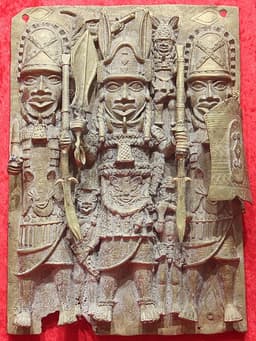
Oba Ozolua
Emperor · Medieval
56.7Total
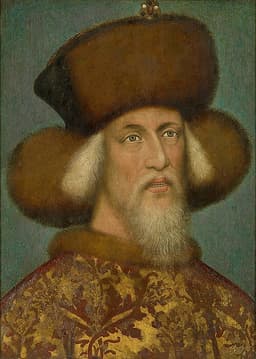
Sigismund of Bohemia
Emperor · Medieval
48.3Total
Basic Information
Born
1473
1368
Died
1504
1437
Era
Medieval
Medieval
Nationality
Benin Kingdom
Bohemia
Occupation
Emperor
Emperor
Civilization
Other
Western
Score Comparison
Military (10%)
72.5
40.0
Political (20%)
43.7
36.5
Influence (20%)
55.7
53.3
Legacy (20%)
48.3
46.7
Leadership (15%)
74.0
62.2
Strategy (15%)
57.5
45.0
TOTAL
56.7
48.3
Oba Ozolua — Complete Timeline
1480 AD
Conquest of IdahWar◆ Major
Oba Ozolua led a successful military campaign against the Igala kingdom of Idah, defeating their forces and securing Benin's northern border. This victory established Benin as the dominant power in the region.
ConquestBeninIgala
Impact: regional
1485 AD
Expansion into Yoruba territoryWar◆ Major
Ozolua extended Benin's control westward into Yoruba lands, conquering towns such as Akure and Owo. These campaigns brought significant territory under Benin's influence and established tributary relationships.
ConquestBeninYoruba
Impact: regional
1490 AD
Construction of moats and wallsReform
Ozolua ordered the construction of additional defensive earthworks around Benin City, including deep moats and ramparts. These fortifications enhanced the city's defenses against potential attacks from rival kingdoms.
FortificationBenin CityDefense
constructive
Sigismund of Bohemia — Complete Timeline
1414 AD
Council of ConstancePolitical Action
Sigismund convened the Council of Constance to end the Western Schism and address heresy. The council condemned Jan Hus to death, leading to his execution in 1415, which inflamed tensions in Bohemia and sparked the Hussite Wars.
CouncilJan HusReligious Schism
Impact: globaldestructive
1431 AD
Battle of DomažliceWar◆ Major
Sigismund's imperial army was routed by Hussite forces at Doma
Hussite WarsBattleNegotiation
Impact: regional
1433 AD
Coronation as Holy Roman EmperorPolitical Action◆ Major
Sigismund was crowned Holy Roman Emperor in Rome by Pope Eugene IV. This coronation marked the end of the Western Schism and restored imperial authority, though Sigismund's power was limited by ongoing conflicts.
CoronationImperial AuthorityPapal Relations
Impact: global
Expert Analysis
Origins
Oba Ozolua, born around 1460 in the Kingdom of Benin (modern-day Nigeria), was the son of Oba Ewuare the Great. He inherited a centralized state with a strong military tradition. Little is known of his early life, but he was trained in warfare and governance, preparing for his eventual rise.
Sigismund of Bohemia was born in 1368 in Nuremberg, the son of Holy Roman Emperor Charles IV and Elizabeth of Pomerania. As a member of the Luxembourg dynasty, he was groomed for imperial rule. He received a broad education and was involved in diplomacy from a young age, marrying Mary of Hungary to secure claims to Hungary and Croatia.
Rise to Power
Ozolua ascended to the throne around 1481 after a contested succession. He quickly consolidated power by subduing rival chiefs and launching campaigns against neighboring states. His conquest of Idah in the 1480s secured Benin's northern border and demonstrated his military prowess. By 1500, he had extended Benin's control westward into Yoruba territory, capturing Akure and Owo.
Sigismund's rise was more complex. He became King of Hungary in 1387 through marriage, but faced constant challenges from nobles and external threats. His election as King of the Romans in 1410 and coronation as Holy Roman Emperor in 1433 marked the peak of his political power. However, his involvement in the Council of Constance (1414-1418) and the subsequent Hussite Wars defined his reign.
Leadership & Governance
Ozolua ruled as an absolute monarch, centralizing authority and expanding Benin's territory through military force. He invested in infrastructure, including the construction of defensive moats and walls around Benin City, which enhanced the capital's security. His governance focused on conquest and tribute, with little emphasis on administrative reforms. His military score of 72.5 reflects his success as a commander, but his political score of 43.7 indicates limited institution-building.
Sigismund's leadership was characterized by diplomacy and religious conflict. He convened the Council of Constance to end the Western Schism, but the execution of Jan Hus ignited the Hussite Wars. Sigismund's military score of 40.0 reflects his poor performance against the Hussites, notably at the Battle of Domažlice (1431), where his army was routed. Politically, he scored 36.5, as his reign was marked by constant negotiation and compromise with both the Church and secular rulers.
Triumph & Tragedy
Ozolua's greatest triumph was the expansion of Benin's territory, doubling its size through conquests like the defeat of Idah and the subjugation of Yoruba towns. His construction of fortifications strengthened Benin City. However, his aggressive expansion strained resources and sowed resentment among conquered peoples, leading to rebellions after his death. His legacy score of 48.3 reflects the ephemeral nature of his conquests.
Sigismund's triumph was the Council of Constance, which ended the Western Schism and restored papal unity. His coronation as Holy Roman Emperor in 1433 was a symbolic achievement. His tragedy was the Hussite Wars, which devastated Bohemia and exposed his military weakness. The Compacts of Basel (1436) granted concessions to the Hussites, but the conflict left a legacy of religious division. Sigismund's influence score of 53.3 is modest, as his reign failed to stabilize Central Europe.
Character & Destiny
Ozolua was a warrior king, decisive and ruthless, whose character drove his expansionist policies. He faced constant threats from rivals and external enemies, which honed his military skills. His leadership score of 74.0 indicates strong command, but his strategic score of 57.5 suggests a focus on immediate gains rather than long-term planning. His destiny was to build a short-lived empire that crumbled under successors.
Sigismund was a diplomat and compromiser, often indecisive. His character led to inconsistent policies, especially toward the Hussites, whom he alternately fought and negotiated with. His leadership score of 62.2 reflects his ability to hold together a fractured empire, but his strategic score of 45.0 reveals a lack of clear vision. His destiny was to be the last Luxembourg emperor, his legacy overshadowed by the Hussite crisis.
Legacy
Ozolua's legacy is mixed. He is remembered as a conqueror who expanded Benin, but his empire did not endure. The moats and walls he built remained, but his military achievements were surpassed by later obas. His overall score of 56.7 places him as a notable but not transformative figure in West African history.
Sigismund's legacy is tied to the Council of Constance and the Hussite Wars. He failed to suppress the Hussites, but his actions contributed to the eventual recognition of religious diversity. His legacy score of 46.7 is lower than Ozolua's, reflecting his lack of lasting impact. He is often seen as a transitional figure, unable to prevent the decline of imperial authority.
Conclusion
Oba Ozolua had a greater impact than Sigismund of Bohemia, as evidenced by his higher total score of 56.7 compared to 48.3. Ozolua's military conquests expanded Benin's territory and influence, while Sigismund's reign was marked by failure to contain the Hussite rebellion. Although both faced challenges, Ozolua's achievements in warfare and territorial expansion were more concrete. Sigismund's diplomatic efforts at Constance were significant, but his inability to consolidate power and his military defeats diminish his legacy. Thus, Ozolua emerges as the more impactful figure.
Rankings
🥇
Oba OzoluaLeader
Mil: 72.5Pol: 43.7Inf: 55.7
56.7
🥈
Sigismund of Bohemia
Mil: 40.0Pol: 36.5Inf: 53.3
48.3
+8.4 behind
How This Comparison Works
Algorithm
Each figure is scored on 6 dimensions (0—100 scale) based on structured historical data: Military (10%), Political (20%), Influence (20%), Legacy (20%), Leadership (15%), Strategy (15%). The weighted total produces the final ranking.
Data Sources
Scores are computed from structured sub-indicators in the database. Scale factors adjust for era (Ancient ×0.85, Modern ×1.0) and civilization size (Eastern ×1.05, Other ×0.80) to account for differences in population and military scale.
Maximum 3 Figures
Comparisons are limited to 2—3 figures to ensure readability and statistical meaningfulness.
Error Margins
±5 points per dimension — Sub-scores are derived from historical records with inherent uncertainty. Two figures within 5 points on a dimension should be considered roughly equivalent in that area.
Total Score Accuracy
±3 points overall — The weighted combination of 6 dimensions produces a total score with approximately ±3 points of uncertainty. Differences of less than 3 points are not statistically significant— the figures are effectively tied.
Known Limitations
- Historical records are incomplete and uneven across civilizations
- Figures from oral-tradition societies may be underrepresented
- Occupation labels can misclassify multi-role figures
- Scores measure capability and impact, not moral character
- Quantitative scoring is a comparison tool, not absolute truth
Capability Radar
Military (10%) — Battles & Warfare
Battles
55
45
Win Rate
60
40
Expansion
65
25
Political (20%) — Governance & Reform
Reform
35
30
Diplomacy
40
40
Economy
45
25
Influence (20%) — Cultural & Global Reach
Cultural
45
30
Global
30
30
Legacy (20%) — Historical Impact
Historical
50
45
Longevity
40
35
Leadership (15%) — Power & Stability
Tenure
60
60
Stability
50
20
Strategy (15%) — Tactics & Innovation
Strategy
55
30
Tactics
50
35
Reform
40
20
Similar Comparisons
Comments & Discussion
No comments yet. Be the first to share your thoughts!