Loading...
Kliment Voroshilov vs Lakshmibai
Lakshmibai leads by 8.4 pts · 2 figures compared
…

Kliment Voroshilov
General · Modern
48.6Total
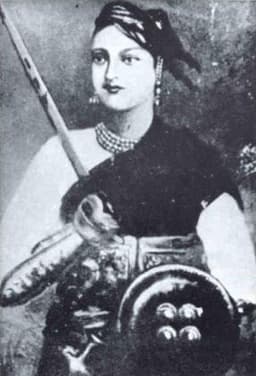
Lakshmibai
General · Modern
57.0Total
Basic Information
Born
1881
1828
Died
1969
1858
Era
Modern
Modern
Nationality
USSR
India
Occupation
General
General
Civilization
Western
Indian
Score Comparison
Military (10%)
50.0
55.0
Political (20%)
32.2
36.5
Influence (20%)
56.4
82.0
Legacy (20%)
46.7
52.0
Leadership (15%)
62.0
43.8
Strategy (15%)
36.8
60.0
TOTAL
48.6
57.0
Kliment Voroshilov — Complete Timeline
1939 AD
Commanded the Winter War - Soviet FailureWar
Voroshilov commanded the Soviet forces during the Winter War against Finland. The Red Army suffered heavy casualties and failed to achieve a quick victory. The poor performance exposed the weaknesses of the Soviet military and led to Voroshilov's dismissal as Defense Commissar.
Winter WarSoviet UnionDefeat
Impact: regionaltragic
Commanded the Leningrad Military DistrictPolitical Action◆ Major
Voroshilov was appointed commander of the Leningrad Military District in 1939. He was responsible for preparing the Soviet forces for the Winter War against Finland. His leadership was marked by poor planning and underestimation of Finnish resistance.
Winter WarSoviet UnionLeningrad
Impact: regional
1940 AD
Dismissed as People's Commissar for DefensePolitical Action◆ Major
After the disastrous Winter War, Voroshilov was dismissed as People's Commissar for Defense in May 1940. He was replaced by Semyon Timoshenko. Voroshilov retained his political positions but lost direct military command, marking the end of his active military career.
Winter WarSoviet UnionDismissal
Impact: nationaldestructive
1941 AD
Appointed Chairman of the State Defense CommitteePolitical Action
Voroshilov was appointed a member of the State Defense Committee in 1941, the supreme wartime authority. He was also given command of the Northwestern Direction but failed to stop the German advance. He was removed from frontline command and given ceremonial roles for the remainder of the war.
World War IISoviet UnionState Defense Committee
Impact: national
Lakshmibai — Complete Timeline
1857 AD
Refusal to Surrender JhansiPolitical Action◆ Major
Lakshmibai refused to surrender Jhansi to the British after the outbreak of the Indian Rebellion, choosing to fight. She organized the defense of the city and became a key leader of the rebellion in central India.
RebellionLeadership
Impact: regional
1858 AD
Defense of JhansiWar◆ Major
Lakshmibai led the defense of Jhansi against British forces under Sir Hugh Rose during the Indian Rebellion of 1857. Despite fierce resistance, the fort fell after a two-week siege, and she escaped to continue the fight.
SiegeRebellion
Impact: regional
Battle of Kotah-ki-SeraiWar◆ Major
Lakshmibai was killed in action at the Battle of Kotah-ki-Serai near Gwalior, fighting against British forces. Her death marked the end of organized resistance in central India during the rebellion, and she became a symbol of Indian resistance.
BattleDeathRebellion
Impact: regionaltragic
Capture of GwaliorWar
Lakshmibai and rebel forces captured Gwalior from the Scindia dynasty, which was allied with the British. This victory briefly established a rebel stronghold, but was soon reversed by British counterattacks.
Military CampaignRebellion
Impact: regional
Expert Analysis
Origins
Kliment Voroshilov was born on February 4, 1881, in Verkhnee, Russian Empire, into a poor working-class family. He had limited formal education and worked as a metalworker before joining the Bolshevik party in 1903. His early revolutionary activities included organizing strikes and participating in the 1905 Revolution, leading to arrests and exile. In contrast, Lakshmibai was born on November 19, 1828, in Varanasi, India, into a Brahmin family. Her father, Moropant Tambe, was a courtier in the service of Peshwa Baji Rao II. She was educated at home, learning horse riding, swordsmanship, and archery, which was unusual for women of her time. At age 14, she married the Maharaja of Jhansi, Gangadhar Rao, becoming the Rani of Jhansi.
Rise to Power
Voroshilov rose through the ranks during the Russian Civil War (1918-1921) as a close ally of Joseph Stalin. He commanded the 1st Cavalry Army and played a key role in the defense of Tsaritsyn (later Stalingrad). His political loyalty led to his appointment as People's Commissar for Defense in 1934, despite limited military competence. Lakshmibai became Rani of Jhansi in 1843. After her husband's death in 1853, the British East India Company refused to recognize her adopted son's right to the throne, applying the Doctrine of Lapse. She petitioned for her rights but was ignored. When the Indian Rebellion of 1857 erupted, she became a symbol of resistance, leading her forces against the British.
Leadership & Governance
Voroshilov's leadership style was marked by political obedience rather than military innovation. He purged many experienced officers during the Great Purge (1937-1938), weakening the Red Army. His command during the Winter War (1939-1940) was disastrous: Soviet forces suffered over 300,000 casualties against Finland, a nation with a fraction of the population. His governance focused on loyalty to Stalin, scoring low in military (50.0) and strategy (36.8). Lakshmibai, in contrast, led by example. She organized the defense of Jhansi with limited resources, inspiring her troops. Her political score (36.5) reflects her inability to secure wider alliances, but her military leadership was effective, scoring 55.0. She employed guerrilla tactics and fortified the city, holding out against a superior British force for two weeks.
Triumph & Tragedy
Voroshilov's greatest success was his political survival. He served in high positions for decades, including as Chairman of the Presidium of the Supreme Soviet (nominal head of state) from 1953 to 1960. However, his failures are stark: the Winter War exposed his incompetence, and he was dismissed as Defense Commissar in 1940. During World War II, he was sidelined from major commands. Lakshmibai's triumph was her defense of Jhansi and her capture of Gwalior in 1858, briefly establishing a rebel stronghold. Her tragedy was her death in battle at Kotah-ki-Serai, fighting against overwhelming odds. Her rebellion ultimately failed, but she became a martyr.
Character & Destiny
Voroshilov was characterized by unwavering loyalty to Stalin, which allowed him to survive the purges that killed many of his contemporaries. He was cautious and lacked strategic vision, as seen in his low strategy score (36.8). His destiny was to be a figurehead rather than a decisive leader. Lakshmibai was courageous and determined, refusing to surrender despite certain defeat. Her leadership score (43.8) reflects her ability to inspire, but her political naivety limited her effectiveness. Her destiny was to die fighting, cementing her legend.
Legacy
Voroshilov's legacy is mixed. He is remembered as a symbol of Soviet military incompetence, but also as a loyal Stalinist. The Voroshilov tank series (KV tanks) were named after him, though he had little involvement in their design. His influence score (56.4) reflects his long tenure. Lakshmibai's legacy is far greater in the popular imagination. She is revered as a national heroine in India, a symbol of resistance against colonial rule. Her story inspired the Indian independence movement and continues to be celebrated in literature and film. Her influence score (82.0) is significantly higher than Voroshilov's.
Conclusion
Lakshmibai had greater impact despite her shorter career. Her total score (57.0) exceeds Voroshilov's (48.6) by 8.4 points. While Voroshilov's failures hindered Soviet military effectiveness, Lakshmibai's courage and sacrifice inspired generations. Her legacy transcends her era, while Voroshilov's is largely confined to historical footnotes. Therefore, Lakshmibai is the more significant figure.
Rankings
🥇
LakshmibaiLeader
Mil: 55.0Pol: 36.5Inf: 82.0
57.0
🥈
Kliment Voroshilov
Mil: 50.0Pol: 32.2Inf: 56.4
48.6
+8.4 behind
How This Comparison Works
Algorithm
Each figure is scored on 6 dimensions (0—100 scale) based on structured historical data: Military (10%), Political (20%), Influence (20%), Legacy (20%), Leadership (15%), Strategy (15%). The weighted total produces the final ranking.
Data Sources
Scores are computed from structured sub-indicators in the database. Scale factors adjust for era (Ancient ×0.85, Modern ×1.0) and civilization size (Eastern ×1.05, Other ×0.80) to account for differences in population and military scale.
Maximum 3 Figures
Comparisons are limited to 2—3 figures to ensure readability and statistical meaningfulness.
Error Margins
±5 points per dimension — Sub-scores are derived from historical records with inherent uncertainty. Two figures within 5 points on a dimension should be considered roughly equivalent in that area.
Total Score Accuracy
±3 points overall — The weighted combination of 6 dimensions produces a total score with approximately ±3 points of uncertainty. Differences of less than 3 points are not statistically significant— the figures are effectively tied.
Known Limitations
- Historical records are incomplete and uneven across civilizations
- Figures from oral-tradition societies may be underrepresented
- Occupation labels can misclassify multi-role figures
- Scores measure capability and impact, not moral character
- Quantitative scoring is a comparison tool, not absolute truth
Capability Radar
Military (10%) — Battles & Warfare
Battles
20
35
Win Rate
15
40
Expansion
10
20
Political (20%) — Governance & Reform
Reform
10
20
Diplomacy
30
30
Economy
10
15
Influence (20%) — Cultural & Global Reach
Cultural
30
60
Global
20
50
Legacy (20%) — Historical Impact
Historical
40
65
Longevity
30
55
Leadership (15%) — Power & Stability
Tenure
70
25
Stability
40
15
Strategy (15%) — Tactics & Innovation
Strategy
15
40
Tactics
10
45
Reform
5
30
Similar Comparisons
Comments & Discussion
No comments yet. Be the first to share your thoughts!