Loading...
Kunwar Singh vs Qin Shi Huang
Qin Shi Huang leads by 44.2 pts · 2 figures compared
…

Kunwar Singh
Revolutionary · Modern
41.0Total
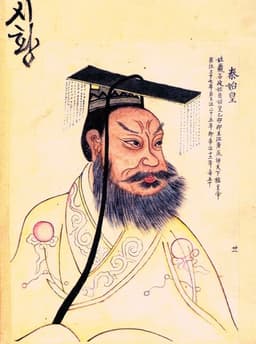
Qin Shi Huang
Emperor · Ancient
85.2Total
Basic Information
Born
1777
-259
Died
1858
-210
Era
Modern
Ancient
Nationality
India
China
Occupation
Revolutionary
Emperor
Civilization
Indian
Eastern
Score Comparison
Military (10%)
47.5
80.0
Political (20%)
30.7
90.0
Influence (20%)
47.9
85.0
Legacy (20%)
40.0
90.0
Leadership (15%)
35.4
78.0
Strategy (15%)
43.7
82.0
TOTAL
41.0
85.2
Kunwar Singh — Complete Timeline
1857 AD
Battle of ArrahWar◆ Major
Kunwar Singh led a rebel force in besieging the British garrison at Arrah in Bihar. The siege lasted eight days before British relief forces arrived, forcing Kunwar Singh to retreat.
Indian Rebellion of 1857Siege
Impact: regional
1858 AD
Battle of JagdishpurWar
Kunwar Singh defeated a British force at Jagdishpur, his ancestral home. He recaptured the town and held it briefly before British reinforcements arrived, forcing him to retreat into the hills.
Indian Rebellion of 1857Battle
Impact: regional
Death from woundsOther◆ Major
Kunwar Singh died from wounds sustained in battle near Jagdishpur. He had led the rebellion in Bihar for over a year, and his death marked the end of organized resistance in the region.
Indian Rebellion of 1857Death
Impact: regionaltragic
Qin Shi Huang — Complete Timeline
246 BC
Construction of the Mausoleum and Terracotta ArmyOther◆ Major
Qin Shi Huang commissioned a vast mausoleum complex near Xi'an, guarded by thousands of life-sized terracotta soldiers, horses, and chariots. The project employed hundreds of thousands of workers and reflected his obsession with immortality and imperial power.
Impact: global
230 BC
Conquest of the Six Warring StatesWar
From 230 to 221 BCE, Ying Zheng led the Qin state in a series of campaigns that conquered the Han, Zhao, Wei, Chu, Yan, and Qi states. This unified China under a single ruler for the first time, ending the Warring States period.
Impact: global
221 BC
Standardization of Writing, Currency, and MeasurementsReform◆ Major
Qin Shi Huang ordered the standardization of Chinese script, currency, and weights and measures across the unified empire. This facilitated administration, trade, and cultural integration, laying a foundation for future dynasties.
Impact: globalconstructive
Proclamation of the Qin DynastyPolitical Action
After conquering the last independent state, Ying Zheng declared himself Shi Huangdi (First Emperor), founding the Qin Dynasty. He adopted a new title to signify his supreme authority and initiated centralized imperial rule.
Impact: global
214 BC
Initiation of the Great Wall ConstructionOther◆ Major
Qin Shi Huang ordered the connection and extension of existing northern fortifications to create a unified defensive wall against nomadic Xiongnu raids. This project involved massive conscripted labor and became the precursor to the later Great Wall.
Impact: regional
213 BC
Burning of Books and Burying of ScholarsPolitical Action◆ Major
On the advice of Li Si, Qin Shi Huang ordered the burning of historical records and philosophical texts not aligned with Legalist doctrine. He also had 460 Confucian scholars buried alive to suppress dissent and consolidate ideological control.
Impact: nationaldestructive
Expert Analysis
kunwar-singh-vs-qin-shi-huang
# The First Emperor and the Last Zamindar
In the winter of 210 BC, the First Emperor of China lay dying on a tour of his empire, his breath failing as he traveled through the very lands he had conquered. Two thousand years later, in April 1858, an eighty-year-old zamindar named Kunwar Singh lay bleeding from a battle wound near his ancestral home in Jagdishpur, his last words urging his followers to keep fighting. One man built an empire that would echo through millennia; the other led a rebellion that flickered brightly and died. What separates a figure who reshapes civilization from one who inspires only a footnote? The answer lies not merely in power or ambition, but in the historical currents that carried them.
Origins
Qin Shi Huang was born into chaos. The year 259 BC placed him in the Warring States period, a brutal era when seven Chinese states fought incessantly for supremacy. As a prince of the Qin state, he absorbed a culture of Legalist philosophy that prized order, discipline, and ruthless efficiency over moral sentiment. His father died when he was thirteen, thrusting him into a world where survival demanded cunning and force. The boy king learned early that mercy was weakness, and that unity could only be forged through iron.
Kunwar Singh entered the world in 1777, a zamindar in the village of Jagdishpur, Bihar, under the vast and seemingly eternal British Raj. His family had held land for generations, serving as local lords under the Mughal Empire and then under the British East India Company. Unlike Qin Shi Huang, he inherited stability, not crisis. The British had already conquered most of India, and the old order of independent kingdoms had crumbled. His world was one of accommodation, not conquest—until the British began dismantling the very structures that allowed men like him to rule.
Rise to Power
Qin Shi Huang’s path to power was a decade-long military campaign of breathtaking scope. From 230 to 221 BC, he unleashed his generals against the six rival states—Han, Zhao, Wei, Chu, Yan, and Qi—one by one. Each campaign was a masterwork of strategy, using bribery, spies, and overwhelming force. When the last king surrendered, Ying Zheng did not simply claim victory; he declared himself *Shi Huangdi*—“First Emperor”—a title that erased the past and declared a new beginning. He was thirty-eight years old.
Kunwar Singh’s rise was far more accidental. In 1857, when sepoys in the British army mutinied at Meerut, the rebellion spread like wildfire across northern India. Kunwar Singh was eighty years old, a retired landlord with no military training. But when the rebels in Bihar needed a leader, they turned to him—not for his ambition, but for his reputation as a just and respected elder. He accepted reluctantly, but once committed, he fought with a ferocity that surprised both the British and himself.
Leadership & Governance
Qin Shi Huang governed as no one before him had. In 221 BC, he ordered the standardization of writing, currency, and measurements across his vast empire. He connected the northern walls into what would become the Great Wall, conscripting hundreds of thousands of laborers. He imposed a single legal code, abolished feudalism, and divided the realm into administrative prefectures governed by appointed officials. His methods were brutal—in 213 BC, he ordered the burning of all books except those on medicine, agriculture, and divination, and buried alive scholars who resisted—but they created the bureaucratic skeleton of Imperial China that would endure for two thousand years.
Kunwar Singh’s leadership was of a different kind. He had no empire to build, only a rebellion to lead. At the Battle of Arrah in 1857, he besieged a British garrison for eight days, using his knowledge of the local terrain to harass and outmaneuver a far better-armed enemy. He fought not to create a new order, but to restore an old one—a world where local lords like himself governed their lands without foreign interference. His military tactics were guerrilla in nature: strike, retreat, and survive. He held no territory for long, but he kept the rebellion alive in Bihar for over a year.
Triumph & Tragedy
Qin Shi Huang’s greatest triumph was the unification itself. By 210 BC, he had created a single Chinese civilization from warring fragments. His greatest tragedy was the fragility of his legacy. He died while searching for an elixir of immortality, and his empire collapsed within four years of his death. The Qin Dynasty was gone, but the template he had built—centralized bureaucracy, standardized systems, a unified script—would be revived by the Han and become the permanent foundation of Chinese civilization.
Kunwar Singh’s triumph came at the Battle of Jagdishpur in April 1858, where he recaptured his ancestral home from the British, leading his men in a desperate charge. His tragedy was that he died the same day, from wounds sustained in an earlier skirmish. He never saw the rebellion’s end, which came months later when the British crushed the final pockets of resistance. The rebellion failed, but his name became a symbol of resistance in Bihar.
Character & Destiny
Qin Shi Huang was paranoid, brilliant, and consumed by the fear of death. He built a mausoleum guarded by thousands of life-sized terracotta soldiers, a silent army for the afterlife. He sent expeditions to find the islands of the immortals. His cruelty was not random but calculated—he believed that only absolute control could prevent the return of chaos. His destiny was to be both creator and destroyer, the man who forged China and the man who nearly destroyed it.
Kunwar Singh was pragmatic, stubborn, and driven by a sense of duty rather than glory. He was no visionary; he fought because the British had humiliated his class and threatened his way of life. His character was shaped by the limits of his era—he could not imagine a unified India, only a restored local order. His destiny was to be a symbol, not a founder.
Legacy
Qin Shi Huang’s legacy is immeasurable. The name “China” itself derives from the Qin Dynasty. The Great Wall, the terracotta army, the standardized script—these are not just artifacts; they are the bones of a civilization. His political model, though brutal, became the blueprint for every Chinese dynasty that followed. He is remembered as both tyrant and unifier, a figure of awe and horror.
Kunwar Singh’s legacy is smaller but no less real. In Bihar, he is a folk hero, celebrated in songs and statues. The Indian independence movement later claimed him as a precursor, a man who fought against colonial rule when it seemed invincible. But his rebellion was local, his vision limited, and his name largely unknown outside his region.
Conclusion
The difference between Qin Shi Huang and Kunwar Singh is not one of courage or intelligence, but of historical timing. The First Emperor lived in an age when empires could be built from scratch, when a single man could impose order on chaos. Kunwar Singh lived in an age when empires were already built, and the forces of colonialism were too vast for any local rebellion to overturn. One man created a world; the other resisted a world that was crushing him. Both were extraordinary, but only one had the fortune to shape history on a grand scale. The lesson is sobering: greatness is not just about what you do, but when you are born to do it.
Rankings
🥇
Qin Shi HuangLeader
Mil: 80.0Pol: 90.0Inf: 85.0
85.2
🥈
Kunwar Singh
Mil: 47.5Pol: 30.7Inf: 47.9
41.0
+44.2 behind
How This Comparison Works
Algorithm
Each figure is scored on 6 dimensions (0—100 scale) based on structured historical data: Military (10%), Political (20%), Influence (20%), Legacy (20%), Leadership (15%), Strategy (15%). The weighted total produces the final ranking.
Data Sources
Scores are computed from structured sub-indicators in the database. Scale factors adjust for era (Ancient ×0.85, Modern ×1.0) and civilization size (Eastern ×1.05, Other ×0.80) to account for differences in population and military scale.
Maximum 3 Figures
Comparisons are limited to 2—3 figures to ensure readability and statistical meaningfulness.
Error Margins
±5 points per dimension — Sub-scores are derived from historical records with inherent uncertainty. Two figures within 5 points on a dimension should be considered roughly equivalent in that area.
Total Score Accuracy
±3 points overall — The weighted combination of 6 dimensions produces a total score with approximately ±3 points of uncertainty. Differences of less than 3 points are not statistically significant— the figures are effectively tied.
Known Limitations
- Historical records are incomplete and uneven across civilizations
- Figures from oral-tradition societies may be underrepresented
- Occupation labels can misclassify multi-role figures
- Scores measure capability and impact, not moral character
- Quantitative scoring is a comparison tool, not absolute truth
Capability Radar
Military (10%) — Battles & Warfare
Battles
35
85
Win Rate
40
90
Expansion
15
90
Political (20%) — Governance & Reform
Reform
10
95
Diplomacy
25
75
Economy
15
90
Influence (20%) — Cultural & Global Reach
Cultural
35
95
Global
20
85
Legacy (20%) — Historical Impact
Historical
40
95
Longevity
30
95
Leadership (15%) — Power & Stability
Tenure
20
70
Stability
15
65
Strategy (15%) — Tactics & Innovation
Strategy
30
85
Tactics
45
80
Reform
10
95
Similar Comparisons
Comments & Discussion
古简译解者6/17/2026
比较得有点偏——秦始皇焚书坑儒是铁打的事实,但别忘了他也统一文字、修驰道、定度量衡,这些才让华夏有了雏形。昆瓦尔·辛格呢?1857年起义里他算个亮点,可他的“王朝”连两年都没撑过。历史的标尺不是谁死得更悲壮,而是谁改变了文明的轨迹。辛格是地方英雄,而始皇帝是中国元基因的缔造者——这差距不是“历史潮流”,而是质的不同。
热土怀旧人6/17/2026
你们总拿秦国那一套比大义!昆瓦尔·辛格八十岁还带伤上阵,就为赶走英国人,保住祖地。秦始皇是铁腕统一,可他那套严刑峻法让多少人妻离子散?辛格打的是民族尊严战,不靠帝号,只靠民心。你们说他规模小,可小人物也能撬动历史——1857年那场火把英国人的底气烧掉了不少。别光数兵马,听听土地里的呐喊。
野史嚼铁汉6/17/2026
拿秦始皇跟一个地主比?笑掉大牙。始皇帝灭六国、建长城、烧百家书,那是搅动山河的手笔。辛格呢?不过是英军镇压起义时的一个次要角色,死前连个像样的城池都没守住。历史要讲“影响因子”——你的名字三千年后还有人写,那才叫厉害。辛格的名字只在印度地方志里晃一晃,而始皇帝连西方史书都得提他。这不等比,这是降维打击。
Chronicler51756/17/2026
Qin Shi Huang didn't just conquer—he standardized script, axle widths, and even the law across a fractured land. Kunwar Singh? He fought a guerrilla war that never threatened British control, dying clutching a wound from a musket. One's a titan of unified civilization, the other a spark in a peasant revolt. Don't conflate legacy with mere resistance; Qin engineered a system that outlasted his dynasty, while Singh's rebellion faded into a footnote of 1857. Scale and impact are everything here.
Chronicler38126/17/2026
The comparison leans too heavily on romantic narrative. Let's talk numbers: Qin ruled over millions of subjects, mobilized hundreds of thousands for the Great Wall and his tomb. Kunwar Singh commanded maybe a few thousand irregulars in a regional uprising. One built the first Chinese infrastructure network; the other defended a single district. It's not about "historical currents"—it's about scale of control. Singh was a local skirmish; Qin was a world-historical transformation. Don't inflate th