Loading...
Ku Hung-ming vs Mario Soares
Mario Soares leads by 12.8 pts · 2 figures compared
…
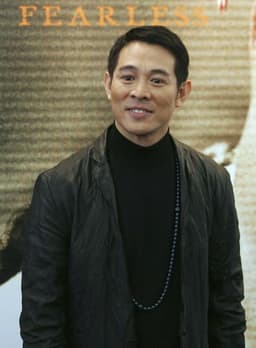
Ku Hung-ming
Politician · Modern
51.0Total
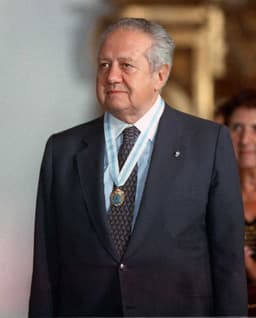
Mario Soares
Politician · Modern
63.8Total
Basic Information
Born
1857
1924
Died
1928
—
Era
Modern
Modern
Nationality
China
Portugal
Occupation
Politician
Politician
Civilization
Eastern
Western
Score Comparison
Military (10%)
13.9
14.6
Political (20%)
78.0
84.0
Influence (20%)
53.3
68.0
Legacy (20%)
40.8
68.0
Leadership (15%)
72.3
78.0
Strategy (15%)
35.4
40.8
TOTAL
51.0
63.8
Ku Hung-ming — Complete Timeline
1898 AD
Translated Confucian Classics into EnglishCultural◆ Major
Ku Hung-ming translated the Analects of Confucius and other classics into English, making them accessible to Western readers. His translations were praised for their literary quality and fidelity.
TranslationConfucianismScholarship
Impact: globalconstructive
1912 AD
Refused to Cut His QueuePolitical Action
After the fall of the Qing dynasty, Ku Hung-ming refused to cut his queue, a symbol of Manchu rule. He wore it as a statement of cultural loyalty, becoming a symbol of resistance to Westernization.
Cultural IdentityQueueResistance
Impact: national
1915 AD
Published 'The Spirit of the Chinese People'Cultural◆ Major
Ku Hung-ming published 'The Spirit of the Chinese People' in English, defending Confucian values against Western criticism. The book gained international attention and influenced Western perceptions of China.
ConfucianismCultural DefensePublication
Impact: globalconstructive
Taught at Peking UniversityCultural
Ku Hung-ming taught English literature and Confucian philosophy at Peking University. His lectures attracted students and intellectuals, though his conservative views sparked debate.
EducationPeking UniversityConfucianism
Impact: regionalconstructive
Mario Soares — Complete Timeline
1973 AD
Founding of the Portuguese Socialist PartyPolitical Action◆ Major
Soares co-founded the Portuguese Socialist Party (PS) in West Germany, in exile from the Estado Novo regime. The party became a key force in the democratic transition after the Carnation Revolution.
Political PartyDemocracyExile
Impact: nationalconstructive
1974 AD
Return from Exile after Carnation RevolutionPolitical Action◆ Major
After the Carnation Revolution overthrew the Estado Novo, Soares returned from exile to Portugal. He was greeted by large crowds and immediately entered the political negotiations for the new democratic regime.
Carnation RevolutionDemocracyReturn
Impact: nationalconstructive
1976 AD
Election as Prime MinisterPolitical Action◆ Major
Soares became the first democratically elected Prime Minister of Portugal after the Carnation Revolution, leading a minority Socialist government. His election marked the consolidation of democratic institutions.
ElectionDemocracyGovernment
Impact: nationalconstructive
1985 AD
Negotiation of Portugal's Accession to the EECPolitical Action◆ Major
As Prime Minister, Soares led the negotiations for Portugal's accession to the European Economic Community (EEC). The treaty was signed in 1985, integrating Portugal into the European project and modernizing its economy.
European UnionIntegrationTreaty
Impact: regionalconstructive
1986 AD
Election as President of PortugalPolitical Action◆ Major
Soares was elected President of the Republic, becoming the first civilian president since the Carnation Revolution. He served two five-year terms, providing stability and continuity during Portugal's consolidation of democracy.
PresidencyDemocracyElection
Impact: nationalconstructive
Expert Analysis
Origins
Ku Hung-ming (1857-1928) was born in Penang, Malaya, to a Chinese family. He was educated in Europe, studying literature and science at the University of Edinburgh and later in Germany, becoming fluent in multiple languages. His early exposure to Western thought later fueled his defense of Confucianism. Mario Soares (1924-2017) was born in Lisbon, Portugal, to a republican family. His father was a priest and later a politician. Soares studied law and history at the University of Lisbon, becoming involved in opposition activities against the Estado Novo regime. His early experiences with political repression shaped his democratic convictions.
Rise to Power
Ku Hung-ming rose to prominence as a cultural critic after the fall of the Qing dynasty. He gained attention for his English-language writings defending Confucian values, such as 'The Spirit of the Chinese People' (1915). His refusal to cut his queue became a symbol of cultural resistance. He taught at Peking University, influencing a generation of intellectuals. Mario Soares rose through political activism. He co-founded the Portuguese Socialist Party in 1973 while in exile in West Germany. After the Carnation Revolution on April 25, 1974, he returned to Portugal and was greeted by massive crowds. He became Prime Minister in 1976, leading the first democratic government since 1926.
Leadership & Governance
Ku Hung-ming's leadership was intellectual and symbolic. He used his eloquence to challenge Western imperialism and promote Confucian ethics. He did not hold political office but influenced thought through his translations and essays. His governance style was confrontational, often polemical. Mario Soares's leadership was pragmatic and institutional. As Prime Minister, he stabilized Portugal's democracy, navigating economic crises and military threats. He negotiated Portugal's accession to the European Economic Community in 1985, integrating the country into Europe. His presidency (1986-1996) provided stability and continuity. Soares's political score of 84.0 reflects his effective governance, while Ku's 78.0 indicates his influence in a different sphere.
Triumph & Tragedy
Ku Hung-ming's greatest success was his defense of Chinese culture during a time of Western dominance. His translations of Confucian classics opened Chinese philosophy to the West. However, his rigid traditionalism made him increasingly irrelevant as China modernized. He died in poverty and obscurity. Mario Soares's triumph was the establishment of Portuguese democracy. He led the country through its transition and into the European community. His failures include economic difficulties during his premiership and the inability to fully address social inequalities. Despite this, his legacy as the 'father of democracy' is secure.
Character & Destiny
Ku Hung-ming was eccentric and stubborn. His refusal to cut his queue was a personal statement of cultural loyalty. He was brilliant but impractical, often alienating allies with his sharp tongue. His destiny was to be a symbol of a lost era. Mario Soares was charismatic and resilient. He endured exile and imprisonment, yet remained committed to democracy. His character enabled him to build coalitions and navigate crises. His destiny was to lead Portugal into a new era of freedom and prosperity.
Legacy
Ku Hung-ming's legacy is primarily cultural. He is remembered as a Confucian apologist and a bridge between East and West. His works continue to be studied, but his influence on political change is minimal. He scores 40.8 in legacy. Mario Soares's legacy is profound and tangible. He is credited with consolidating Portuguese democracy and integrating Portugal into Europe. His political party remains a major force. He scores 68.0 in legacy, reflecting his lasting impact on governance and institutions.
Conclusion
Mario Soares had a greater impact on history. His political score of 84.0 and legacy score of 68.0 far exceed Ku Hung-ming's 78.0 and 40.8. Soares shaped a nation's destiny, while Ku influenced only a small circle of intellectuals. The score gap of 12.8 points underscores this. Soares's work in building democracy and European integration has enduring effects, whereas Ku's cultural defense, though valuable, did not alter China's trajectory. Thus, Soares is the more significant figure.
Rankings
🥇
Mario SoaresLeader
Mil: 14.6Pol: 84.0Inf: 68.0
63.8
🥈
Ku Hung-ming
Mil: 13.9Pol: 78.0Inf: 53.3
51.0
+12.8 behind
How This Comparison Works
Algorithm
Each figure is scored on 6 dimensions (0—100 scale) based on structured historical data: Military (10%), Political (20%), Influence (20%), Legacy (20%), Leadership (15%), Strategy (15%). The weighted total produces the final ranking.
Data Sources
Scores are computed from structured sub-indicators in the database. Scale factors adjust for era (Ancient ×0.85, Modern ×1.0) and civilization size (Eastern ×1.05, Other ×0.80) to account for differences in population and military scale.
Maximum 3 Figures
Comparisons are limited to 2—3 figures to ensure readability and statistical meaningfulness.
Error Margins
±5 points per dimension — Sub-scores are derived from historical records with inherent uncertainty. Two figures within 5 points on a dimension should be considered roughly equivalent in that area.
Total Score Accuracy
±3 points overall — The weighted combination of 6 dimensions produces a total score with approximately ±3 points of uncertainty. Differences of less than 3 points are not statistically significant— the figures are effectively tied.
Known Limitations
- Historical records are incomplete and uneven across civilizations
- Figures from oral-tradition societies may be underrepresented
- Occupation labels can misclassify multi-role figures
- Scores measure capability and impact, not moral character
- Quantitative scoring is a comparison tool, not absolute truth
Capability Radar
Military (10%) — Battles & Warfare
Battles
14
21
Win Rate
17
24
Expansion
21
26
Political (20%) — Governance & Reform
Reform
73
95
Diplomacy
78
90
Economy
75
70
Influence (20%) — Cultural & Global Reach
Cultural
30
70
Global
20
65
Legacy (20%) — Historical Impact
Historical
20
85
Longevity
15
75
Leadership (15%) — Power & Stability
Tenure
68
85
Stability
82
75
Strategy (15%) — Tactics & Innovation
Strategy
20
33
Tactics
27
35
Reform
31
35
Similar Comparisons
Comments & Discussion
No comments yet. Be the first to share your thoughts!