Loading...
Kassim Majaliwa vs Mario Soares
Mario Soares leads by 21.3 pts · 2 figures compared
…
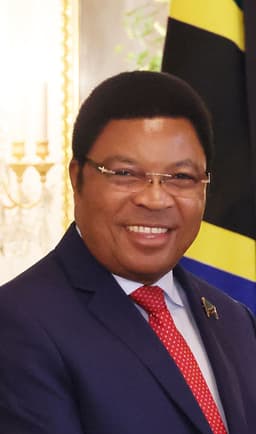
Kassim Majaliwa
Politician · Modern
42.5Total
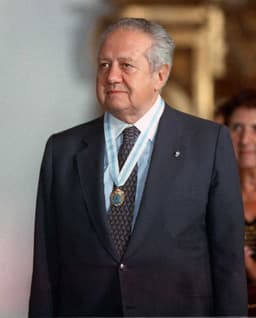
Mario Soares
Politician · Modern
63.8Total
Basic Information
Born
1960
1924
Died
—
—
Era
Modern
Modern
Nationality
Tanzania
Portugal
Occupation
Politician
Politician
Civilization
Other
Western
Score Comparison
Military (10%)
16.7
14.6
Political (20%)
40.8
84.0
Influence (20%)
47.1
68.0
Legacy (20%)
36.7
68.0
Leadership (15%)
65.0
78.0
Strategy (15%)
40.4
40.8
TOTAL
42.5
63.8
Kassim Majaliwa — Complete Timeline
2015 AD
Appointed Prime Minister of TanzaniaPolitical Action◆ Major
Kassim Majaliwa was appointed Prime Minister by President John Magufuli after the 2015 election. He succeeded Mizengo Pinda and became the head of government, responsible for coordinating cabinet activities and policy implementation.
AppointmentGovernmentTanzania
Impact: nationalconstructive
2020 AD
Oversaw COVID-19 ResponsePolitical Action
As Prime Minister, Majaliwa coordinated Tanzania's response to the COVID-19 pandemic, including public health measures and economic support programs. The government initially downplayed the pandemic but later adopted more conventional measures.
COVID-19Public HealthGovernment Response
Impact: national
2021 AD
Reappointed Under President SuluhuPolitical Action
Following President Magufuli's death, new President Samia Suluhu Hassan reappointed Majaliwa as Prime Minister in 2021. He continued in the role, supporting Suluhu's administration and policy direction.
ReappointmentGovernment Continuity
Impact: nationalconstructive
Mario Soares — Complete Timeline
1973 AD
Founding of the Portuguese Socialist PartyPolitical Action◆ Major
Soares co-founded the Portuguese Socialist Party (PS) in West Germany, in exile from the Estado Novo regime. The party became a key force in the democratic transition after the Carnation Revolution.
Political PartyDemocracyExile
Impact: nationalconstructive
1974 AD
Return from Exile after Carnation RevolutionPolitical Action◆ Major
After the Carnation Revolution overthrew the Estado Novo, Soares returned from exile to Portugal. He was greeted by large crowds and immediately entered the political negotiations for the new democratic regime.
Carnation RevolutionDemocracyReturn
Impact: nationalconstructive
1976 AD
Election as Prime MinisterPolitical Action◆ Major
Soares became the first democratically elected Prime Minister of Portugal after the Carnation Revolution, leading a minority Socialist government. His election marked the consolidation of democratic institutions.
ElectionDemocracyGovernment
Impact: nationalconstructive
1985 AD
Negotiation of Portugal's Accession to the EECPolitical Action◆ Major
As Prime Minister, Soares led the negotiations for Portugal's accession to the European Economic Community (EEC). The treaty was signed in 1985, integrating Portugal into the European project and modernizing its economy.
European UnionIntegrationTreaty
Impact: regionalconstructive
1986 AD
Election as President of PortugalPolitical Action◆ Major
Soares was elected President of the Republic, becoming the first civilian president since the Carnation Revolution. He served two five-year terms, providing stability and continuity during Portugal's consolidation of democracy.
PresidencyDemocracyElection
Impact: nationalconstructive
Expert Analysis
Origins
Kassim Majaliwa was born in 1960 in Lindi, Tanzania, into a farming family. He studied at the University of Dar es Salaam, earning a degree in education, and later worked as a teacher and school administrator before entering politics. His background was rooted in local governance, serving as a district commissioner and regional commissioner. Mario Soares was born in 1924 in Lisbon, Portugal, into a middle-class family. His father was a republican and anti-fascist, which influenced Soares's early political activism. He studied history and philosophy at the University of Lisbon, then law, but was expelled for his opposition to the Estado Novo regime. He became a lawyer defending political prisoners, which marked his early commitment to democracy.
Rise to Power
Majaliwa rose through the ranks of the ruling Chama Cha Mapinduzi (CCM) party. He served as a Member of Parliament from 2010 and as Deputy Minister for Regional Administration and Local Government. In 2015, President John Magufuli appointed him Prime Minister, a position he assumed on November 20, 2015, succeeding Mizengo Pinda. His rise was steady, based on party loyalty and administrative competence. Soares's rise was dramatic and exile-driven. He co-founded the Portuguese Socialist Party in 1973 in West Germany, operating underground. After the Carnation Revolution on April 25, 1974, he returned from exile to a hero's welcome. He became Foreign Minister in the provisional government, then led the Socialists to victory in the 1976 election, becoming Portugal's first democratically elected Prime Minister since the 1920s on July 23, 1976.
Leadership & Governance
Majaliwa's leadership style is that of a technocrat and administrator. He has focused on implementing the policies of Presidents Magufuli and Samia Suluhu Hassan, overseeing government operations, and coordinating responses to crises like the COVID-19 pandemic. His governance is characterized by continuity and loyalty, with limited independent initiative. For example, he managed public health measures and economic support programs during the pandemic, but major policy direction came from the presidency. Soares was a transformative leader, combining idealism with pragmatism. As Prime Minister, he stabilized Portugal's nascent democracy, steering it away from communist influence and toward Western integration. He negotiated Portugal's accession to the European Economic Community (EEC), signing the treaty in 1985, which tied Portugal to European democratic norms and economic growth. His leadership scored 78.0 in Leadership versus Majaliwa's 65.0.
Triumph & Tragedy
Majaliwa's greatest success is his longevity in office, being reappointed by President Suluhu in 2021 after Magufuli's death, demonstrating political stability. He also oversaw Tanzania's COVID-19 response, though its effectiveness is debated. His failures include association with Magufuli's authoritarian tendencies, such as crackdowns on media and opposition, and limited personal impact on national policy. Soares's triumphs include founding the Socialist Party, becoming the first democratically elected Prime Minister, and leading Portugal into the EEC. He also served two terms as President (1986-1996), symbolizing democratic continuity. His tragedy was the fragility of his early governments, which fell due to lack of majority, and his failure to fully modernize Portugal's economy during his tenure. Soares's Political score is 84.0, far above Majaliwa's 40.8, reflecting his foundational role in democracy.
Character & Destiny
Majaliwa is a cautious, loyal figure, shaped by the CCM party machine. His character is that of a reliable administrator, not a visionary. This has kept him in power but limited his historical footprint. Soares was a charismatic, resilient, and principled democrat. His exile and persecution under the Estado Novo forged a commitment to freedom and human rights. His character directly shaped Portugal's destiny, as he chose democratic socialism over communism, aligning the country with Western Europe. Historians often call him the 'Father of Portuguese Democracy' for his role in the transition.
Legacy
Majaliwa's legacy is still forming, but he is likely to be remembered as a competent prime minister in a transitional period. His influence on Tanzania's political system is modest, as power remains concentrated in the presidency. Soares's legacy is monumental: he is a founding father of Portuguese democracy, and his efforts led to Portugal's integration into Europe. The EEC accession transformed Portugal's economy and society. His Influence score is 68.0, Legacy 68.0, while Majaliwa's Influence is 47.1 and Legacy 36.7.
Conclusion
Mario Soares had a far greater impact than Kassim Majaliwa. Soares's total score of 63.8 versus Majaliwa's 42.5 reflects his role in founding a democracy and integrating a nation into Europe. Majaliwa, while a stable administrator, operates within an established system and has not fundamentally altered Tanzania's trajectory. Soares's actions shaped Portugal's destiny for generations, while Majaliwa's influence is limited to his tenure. The clear position is that Soares is the more significant historical figure.
Rankings
🥇
Mario SoaresLeader
Mil: 14.6Pol: 84.0Inf: 68.0
63.8
🥈
Kassim Majaliwa
Mil: 16.7Pol: 40.8Inf: 47.1
42.5
+21.3 behind
How This Comparison Works
Algorithm
Each figure is scored on 6 dimensions (0—100 scale) based on structured historical data: Military (10%), Political (20%), Influence (20%), Legacy (20%), Leadership (15%), Strategy (15%). The weighted total produces the final ranking.
Data Sources
Scores are computed from structured sub-indicators in the database. Scale factors adjust for era (Ancient ×0.85, Modern ×1.0) and civilization size (Eastern ×1.05, Other ×0.80) to account for differences in population and military scale.
Maximum 3 Figures
Comparisons are limited to 2—3 figures to ensure readability and statistical meaningfulness.
Error Margins
±5 points per dimension — Sub-scores are derived from historical records with inherent uncertainty. Two figures within 5 points on a dimension should be considered roughly equivalent in that area.
Total Score Accuracy
±3 points overall — The weighted combination of 6 dimensions produces a total score with approximately ±3 points of uncertainty. Differences of less than 3 points are not statistically significant— the figures are effectively tied.
Known Limitations
- Historical records are incomplete and uneven across civilizations
- Figures from oral-tradition societies may be underrepresented
- Occupation labels can misclassify multi-role figures
- Scores measure capability and impact, not moral character
- Quantitative scoring is a comparison tool, not absolute truth
Capability Radar
Military (10%) — Battles & Warfare
Battles
27
21
Win Rate
30
24
Expansion
31
26
Political (20%) — Governance & Reform
Reform
30
95
Diplomacy
35
90
Economy
30
70
Influence (20%) — Cultural & Global Reach
Cultural
10
70
Global
10
65
Legacy (20%) — Historical Impact
Historical
10
85
Longevity
10
75
Leadership (15%) — Power & Stability
Tenure
40
85
Stability
40
75
Strategy (15%) — Tactics & Innovation
Strategy
35
33
Tactics
37
35
Reform
39
35
Similar Comparisons
Comments & Discussion
No comments yet. Be the first to share your thoughts!